Lobed brain coral
Lobophyllia hemprichii
A mound of fleshy, cushioned lobes glowing red, green and grey – the stony coral that looks the softest on the reef.
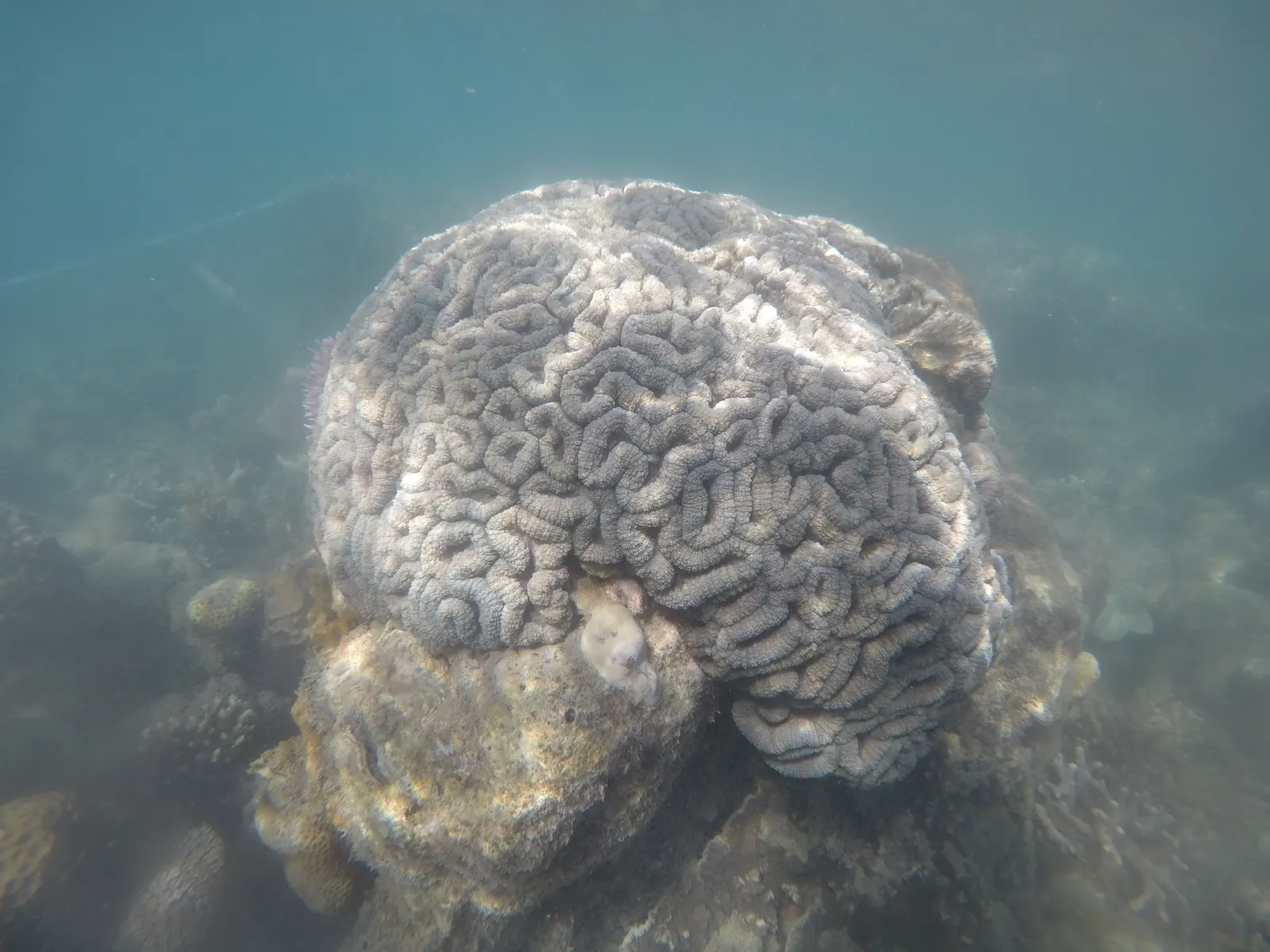
At first sight the lobed brain coral (Lobophyllia hemprichii) looks more like a pile of fleshy cushions than a stony coral: the colony surface is covered in thick, wavy-edged lobes coated in swollen, velvety living tissue. The tissue is so thick – up to several centimetres – that the hard skeleton disappears completely beneath it. Its palette is among the richest on the reef: red, maroon, green, blue-grey and cream forms often grow side by side in a mosaic on a single mound, where neighbouring colonies meet.
The chunky lobes are in fact giant polyps: each lobe is one huge polyp, or a fused giant with several mouths, ranking among the largest polyps of all stony corals. By day the swollen tissue works as a "solar farm" for its zooxanthellae algae; at night thick tentacles unfurl from the centres of the lobes and the colony actively hunts plankton. It is a slow-growing, long-lived species that reproduces on summer nights after the full moon, during the great coral spawning events.
Around Hurghada you will find it on the reef slopes and on the coral heads of the plateaus, typically between 5 and 25 metres, though it also appears in the shallower gardens – the colourful colonies are favourites of night and wide-angle photographers. The thick, soft-looking tissue may be tempting, but it is precisely the most vulnerable part: a touch can tear it open and the wound infects easily. The rule never changes: admire, photograph, never touch.
Did you know?
A single lobed brain coral "mound" is often really a mosaic of several distinct colonies: the red, green and grey patches are separate genetic individuals that fused over decades into one flamboyant heap – a stone-shaped apartment block where every flat has different wallpaper.
Where can you meet it?
You will find the most colourful colonies on the slopes of the Giftun Islands, on the coral heads of Abu Ramada and among the pinnacles of El Aruk, typically at 5–25 metres.
Frequently asked questions
Because its limestone skeleton is covered in unusually thick, fleshy living tissue – up to several centimetres of it. The skeleton is just as rock-hard as any stony coral's, only well hidden beneath the "upholstery".
No – and with this species the rule matters most. The thick tissue is full of water; even a touch meant to be gentle can rupture it, and the wound can become infected. One curious finger can ruin what took decades to build.
The colours come partly from the zooxanthellae algae and partly from the coral's own protective, fluorescent pigments – the latter shield the tissue from strong sunlight like sunscreen. On top of that, several genetic individuals can fuse on one mound, each with its own colour.
Best sites for Lobed brain coral
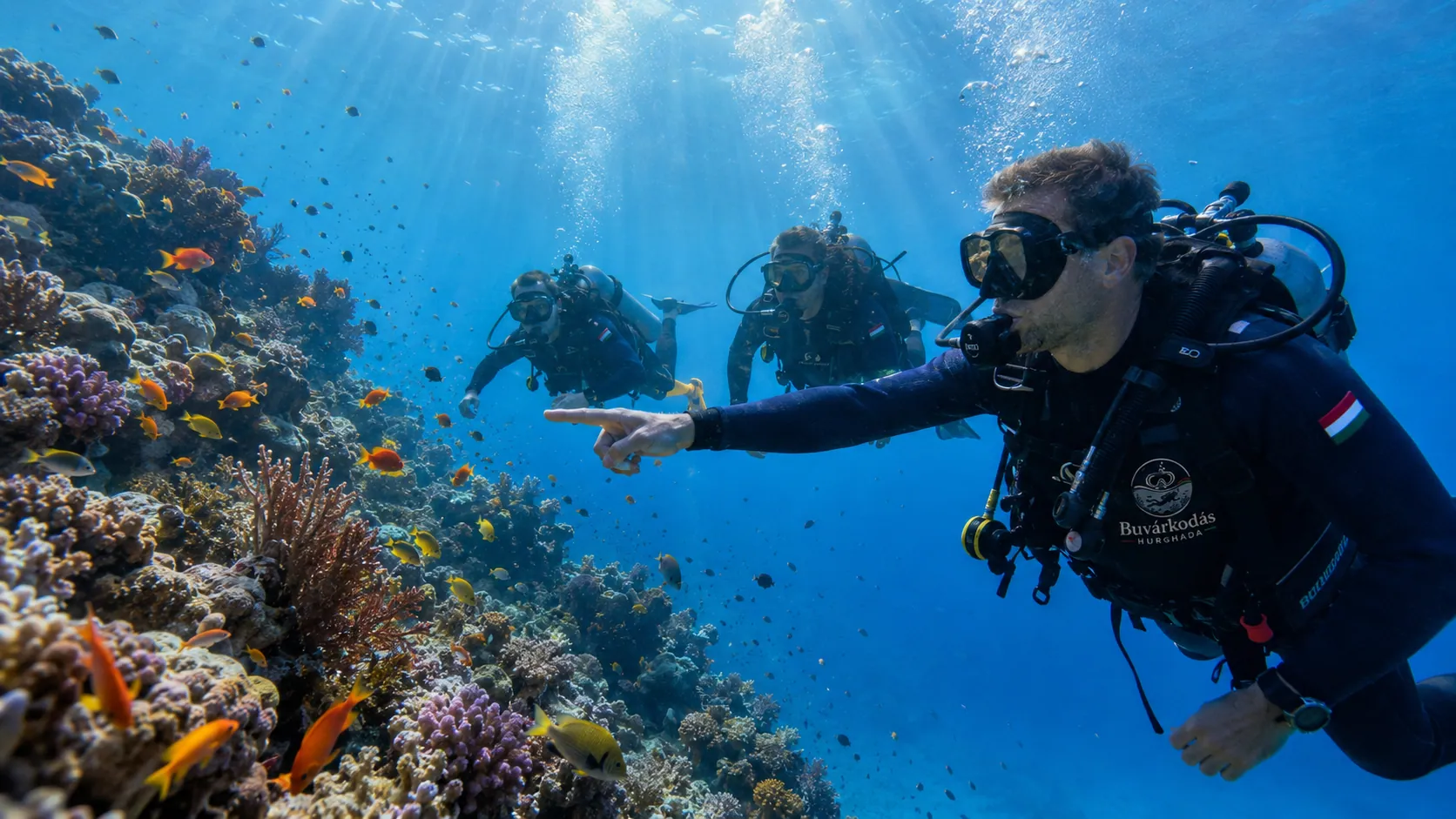
Giftun-szigetek
A national park island pair with a dozen dive sites: coral gardens, turtles and perhaps the richest fish life in the area.
- Depth
- 5–25m
- Boat
- 45min
- Species
- 6
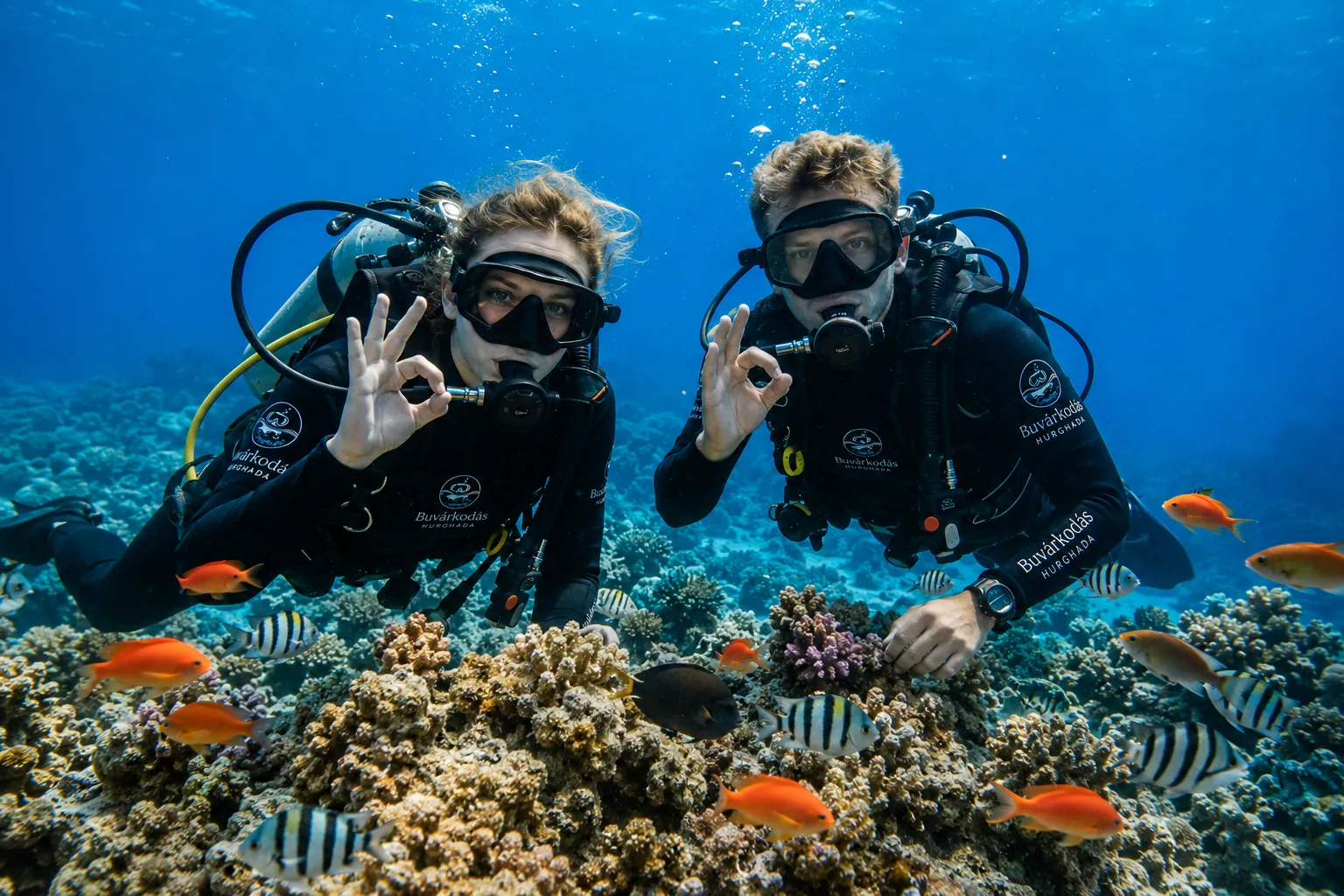
Abu Ramada („Az Akvárium”)
The Aquarium nickname is well earned: the fish schools swirling around the coral towers can be so dense you lose sight of the reef.
- Depth
- 6–26m
- Boat
- 50min
- Species
- 6
El Aruk (Gigi)
A playground of coral towers on white sand: easy navigation, clouds of glassfish and light made for photography.
- Depth
- 5–14m
- Boat
- 35min
- Species
- 5
The Red Sea will not wait forever.
Book today – seats on the boat are limited, your excitement is not.