Longnose butterflyfish
Forcipiger flavissimus
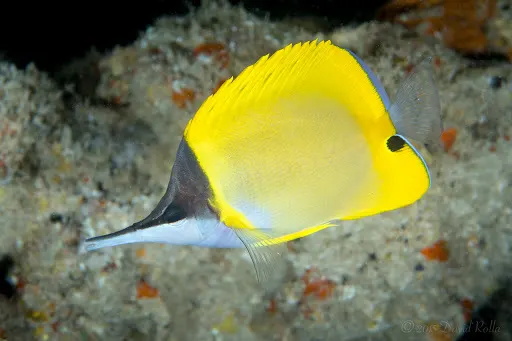
Brilliant yellow body, a black mask and a long snout that works like tweezers – the reef's precision instrument, plucking food from the tightest cracks.
The longnose butterflyfish (Forcipiger flavissimus) is unmistakable: a lemon-yellow body, a black triangular face mask and an elongated, tube-like snout give it away instantly. The genus name Forcipiger means "forceps-bearer" – and that snout is exactly the point. Near the tail it carries a small black dot: a false eye that confuses predators, who cannot tell which way the fish will bolt.
The long snout is no ornament but a precision tool: the fish uses it to pluck hydroids, the tentacles of bristle worms and even the tube feet of sea urchins from deep between coral branches and rock cracks – morsels no other fish can reach. It usually patrols the reef wall in pairs, methodically inspecting every crevice and hollow. Among butterflyfish it has one of the widest ranges of all, from East Africa all the way to the coast of Mexico.
Around Hurghada you will meet it mostly along steep reef walls and coral-covered outcrops, from 2 metres down to recreational limits. It does not form schools, so it takes an attentive eye: watch for the yellow flash along the wall. Snorkelers can spot it on shallower wall sections, and as a diver you can often follow it for minutes as it "tweezes" its way from crack to crack.
Did you know?
It has a near-perfect double, Forcipiger longirostris, with an even longer snout – often only experts can tell the two apart. The tricky twin even comes in a rare all-black colour form, like the yellow fish's own shadow swimming along the reef.
Where can you meet it?
It is at home on steep-walled reefs: pairs turn up regularly on the walls of Carless Reef and Umm Gamar and along the Small Giftun drop-off.
Frequently asked questions
It works like tweezers: the fish uses it to reach tiny prey hidden deep between coral branches and in cracks – worm tentacles, hydroids, sea-urchin tube feet. It feeds where no other fish's mouth fits, so it has no competition.
Yes, though less often than other butterflyfish: it prefers walls and slightly deeper sections. Along shallower reef edges you still have a good chance – the yellow glows from far away.
It is a false eye: a predator assumes that end is the head and strikes in the wrong direction. Meanwhile the real eye hides inside the black face mask – a double bluff many butterflyfish rely on.
Best sites for Longnose butterflyfish
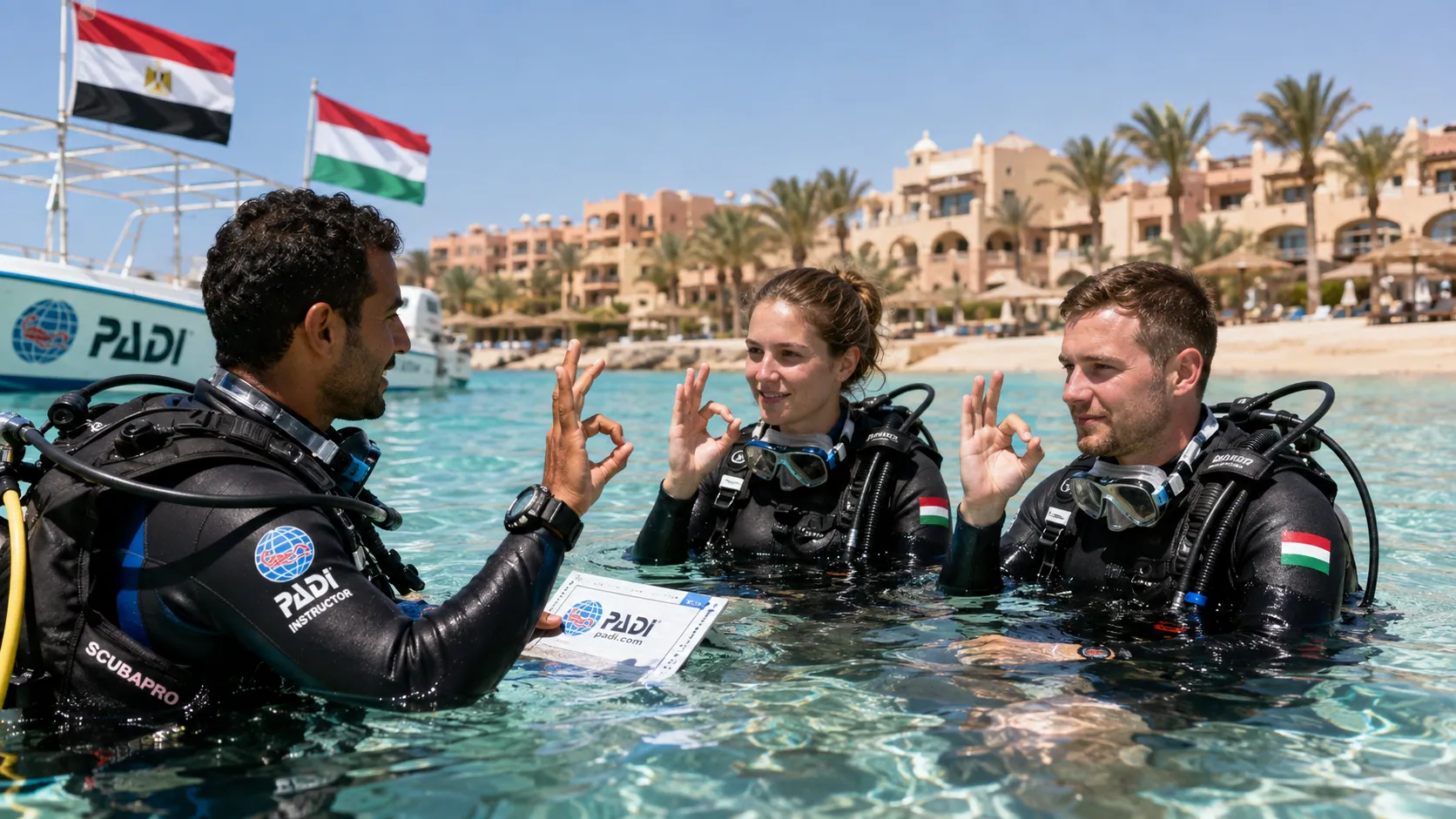
Carless Reef
An offshore twin-erg reef famous for its legendary moray colony – for experienced divers, weather permitting.
- Depth
- 12–30m
- Boat
- 70min
- Species
- 5
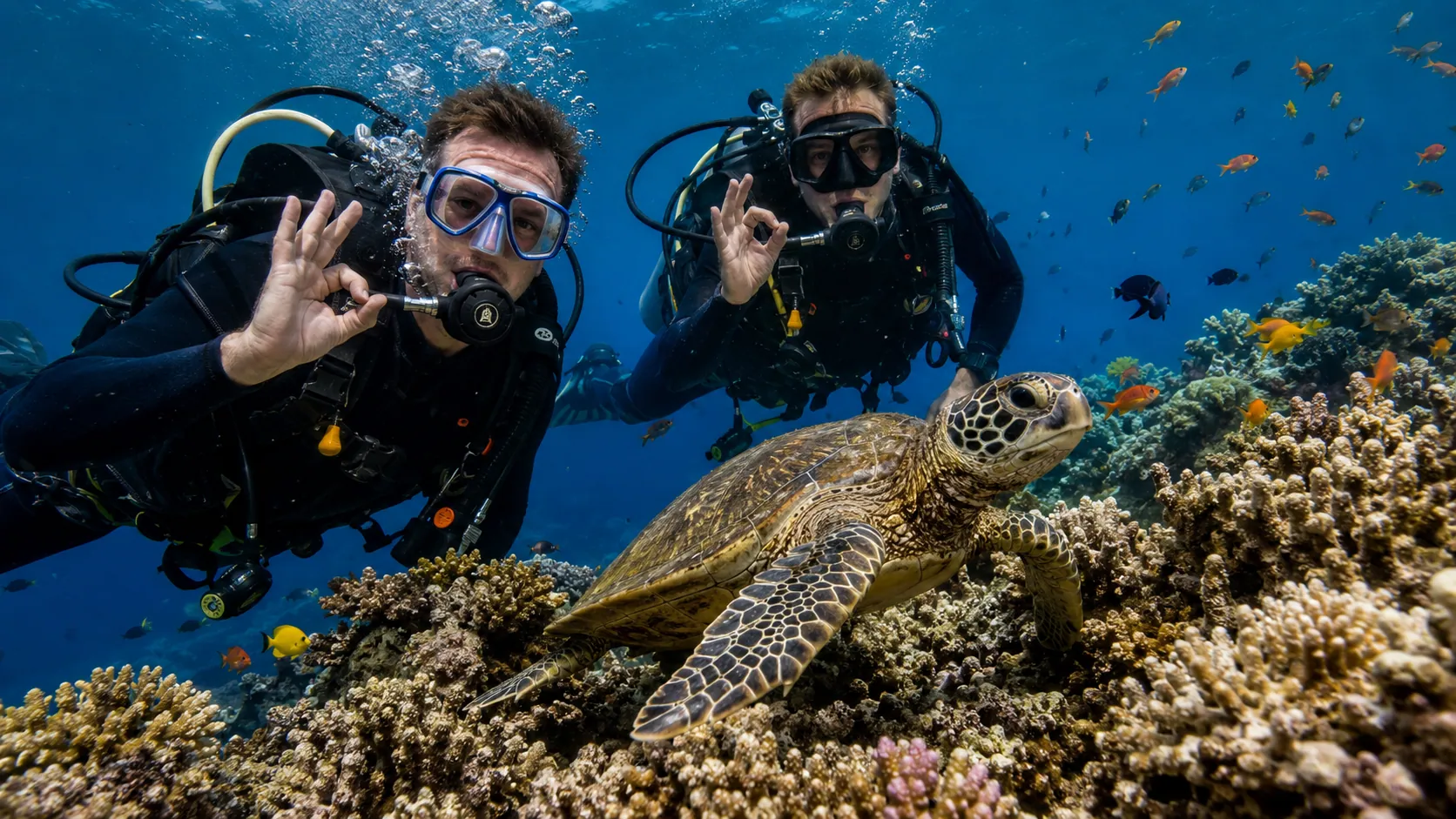
Umm Gamar
An elongated island in the north: a plateau with three coral towers, small caves and big predators out in the blue.
- Depth
- 10–30m
- Boat
- 75min
- Species
- 5
Small Giftun fal
Hurghada's classic drift dive: a sheer wall with gorgonian fans, eagle rays and a coral-tower plateau at 20–30 metres.
- Depth
- 8–30m
- Boat
- 50min
- Species
- 5
The Red Sea will not wait forever.
Book today – seats on the boat are limited, your excitement is not.