Longnose hawkfish
Oxycirrhites typus
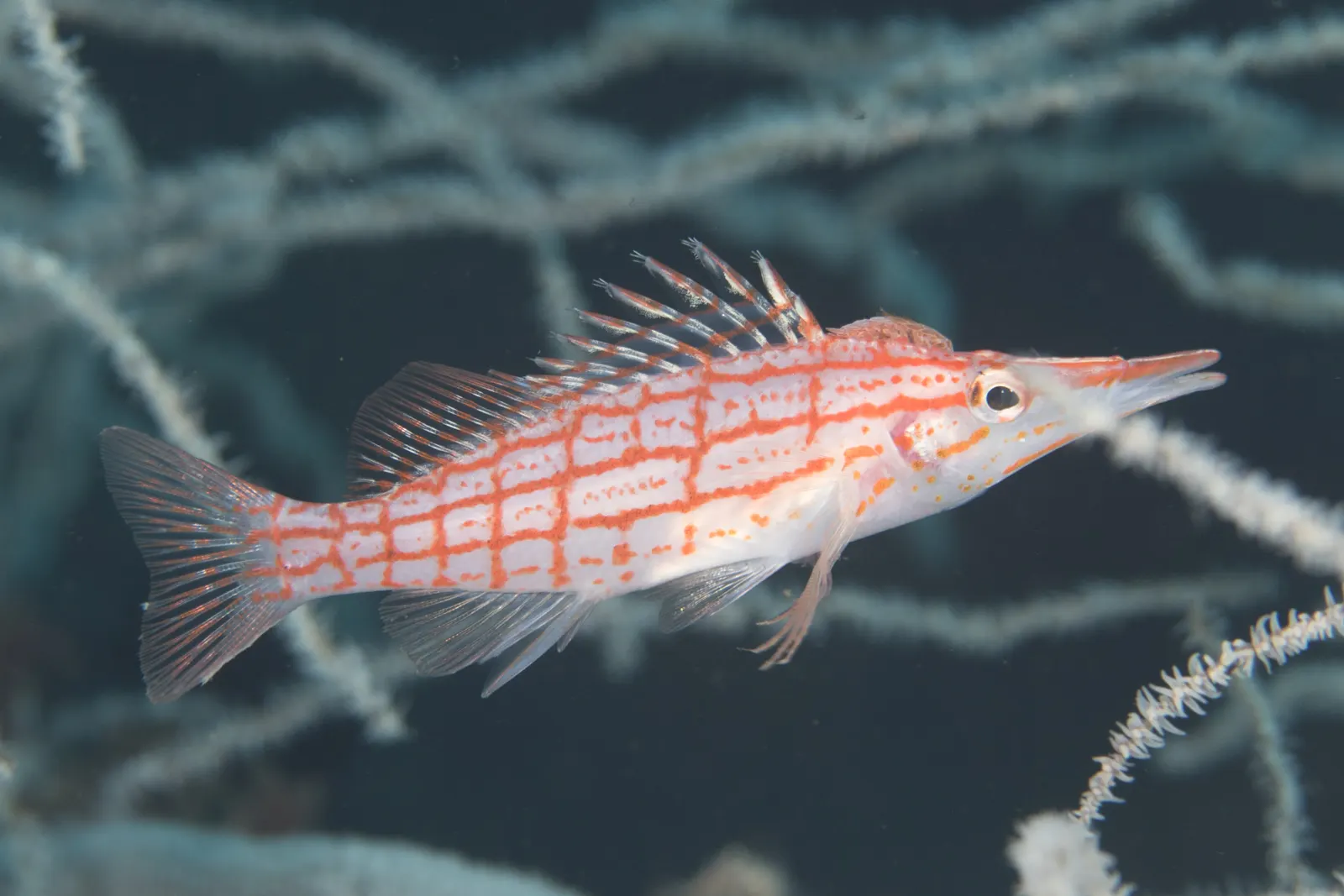
With its red checkered pattern it looks like a bird dressed in a picnic blanket – the hidden little hawk of the deep sea fans.
The longnose hawkfish (Oxycirrhites typus) is one of the most coveted models in underwater photography: red lines crosshatch its white body as if it wore a checkered picnic blanket, and its long, tweezer-like snout makes it unmistakable. Despite its tiny size it is recognisable from afar – if you can find it at all, because the pattern blends surprisingly well into the branches of sea fans.
Hawkfish owe their name to a raptor-like lifestyle: they perch on a high point, scan the surroundings, then strike at small crustaceans and planktonic animals drifting past. The longnose hawkfish chooses gorgonians, sea fans and black corals as its watchtower – but these typically grow deeper than 20–25 metres, which makes this species a reward for deeper dives. It has no swim bladder, so instead of hovering it "sits" wedged between the branches, moving only in short hops.
Around Hurghada, look for it on the deeper walls and current-swept outer reefs, always among the branches of large fan corals. Finding one is a proper treasure hunt: sweep your torch across the plane of the fan and watch for the red grid pattern. Once spotted, approach slowly – the hawkfish usually just hops to the far side of the fan, giving a patient photographer several chances.
Did you know?
Hawkfish have no swim bladder, so they cannot hover – they literally have to sit. With thickened, finger-like pectoral fin rays they grip the coral branches even in strong current, like a bird on a bough bending in a storm.
Where can you meet it?
It favours the gorgonians of deep walls: you have a chance on the deeper sections of Carless Reef and Umm Gamar and among the fan corals of Small Giftun – at depths meant for experienced divers.
Frequently asked questions
For three reasons: it is tiny, well camouflaged and lives deep. At depth, where red light is already absorbed, the red grid pattern looks almost grey and melts perfectly into the fan coral's branches. Without a torch you have little chance – ask your dive guide for help.
Typically around 20–30 metres, because its host gorgonians and large sea fans grow there. This species is a classic highlight of deeper, AOWD-level dives – the walls of Carless Reef or Umm Gamar are ideal.
It usually does not swim far – it is attached to its fan and just hops to the other side of the branches. The trick is patience: stay motionless in front of the fan, never touch the coral, and after a few minutes the fish settles back in its original spot.
Best sites for Longnose hawkfish
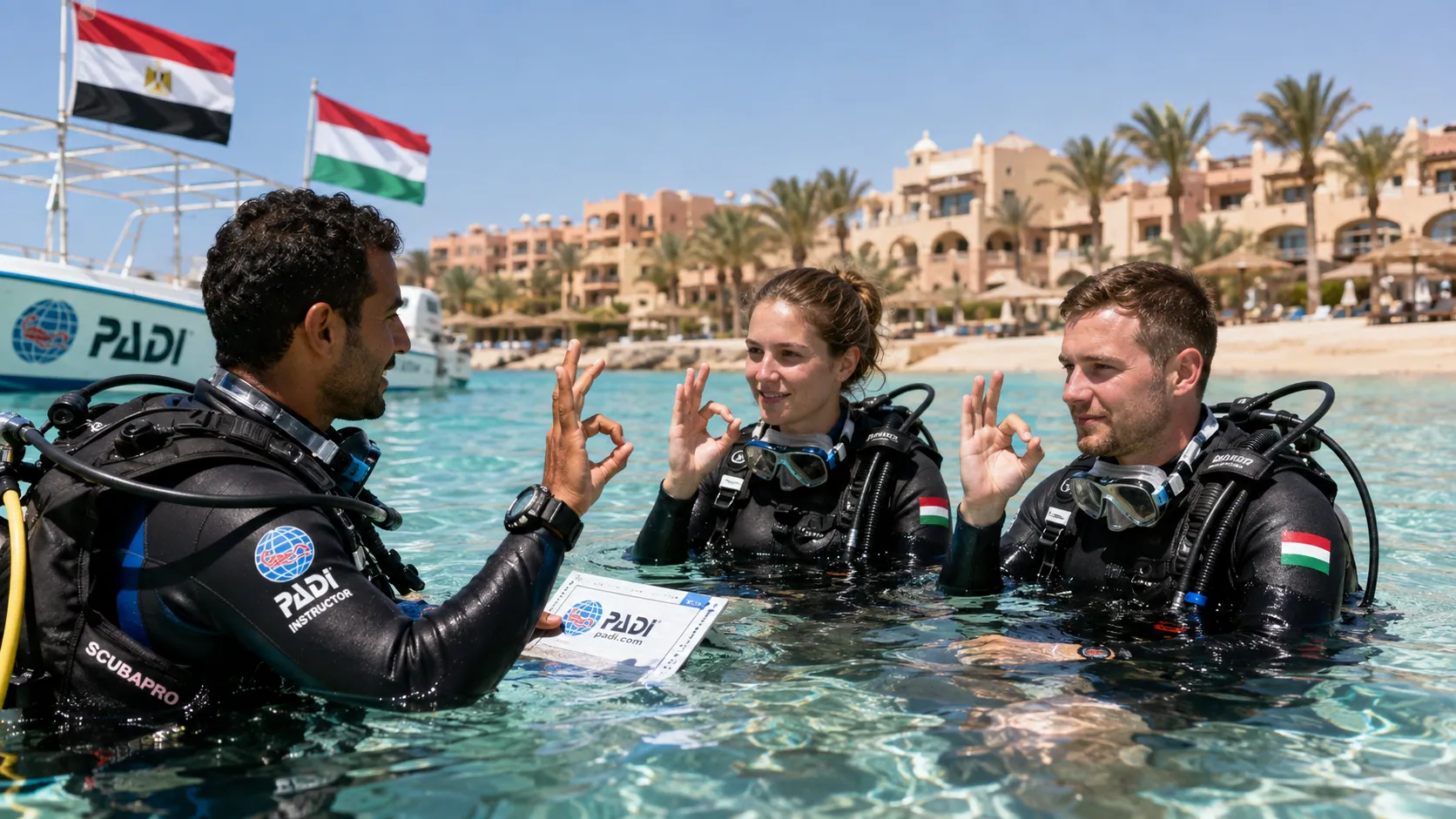
Carless Reef
An offshore twin-erg reef famous for its legendary moray colony – for experienced divers, weather permitting.
- Depth
- 12–30m
- Boat
- 70min
- Species
- 5
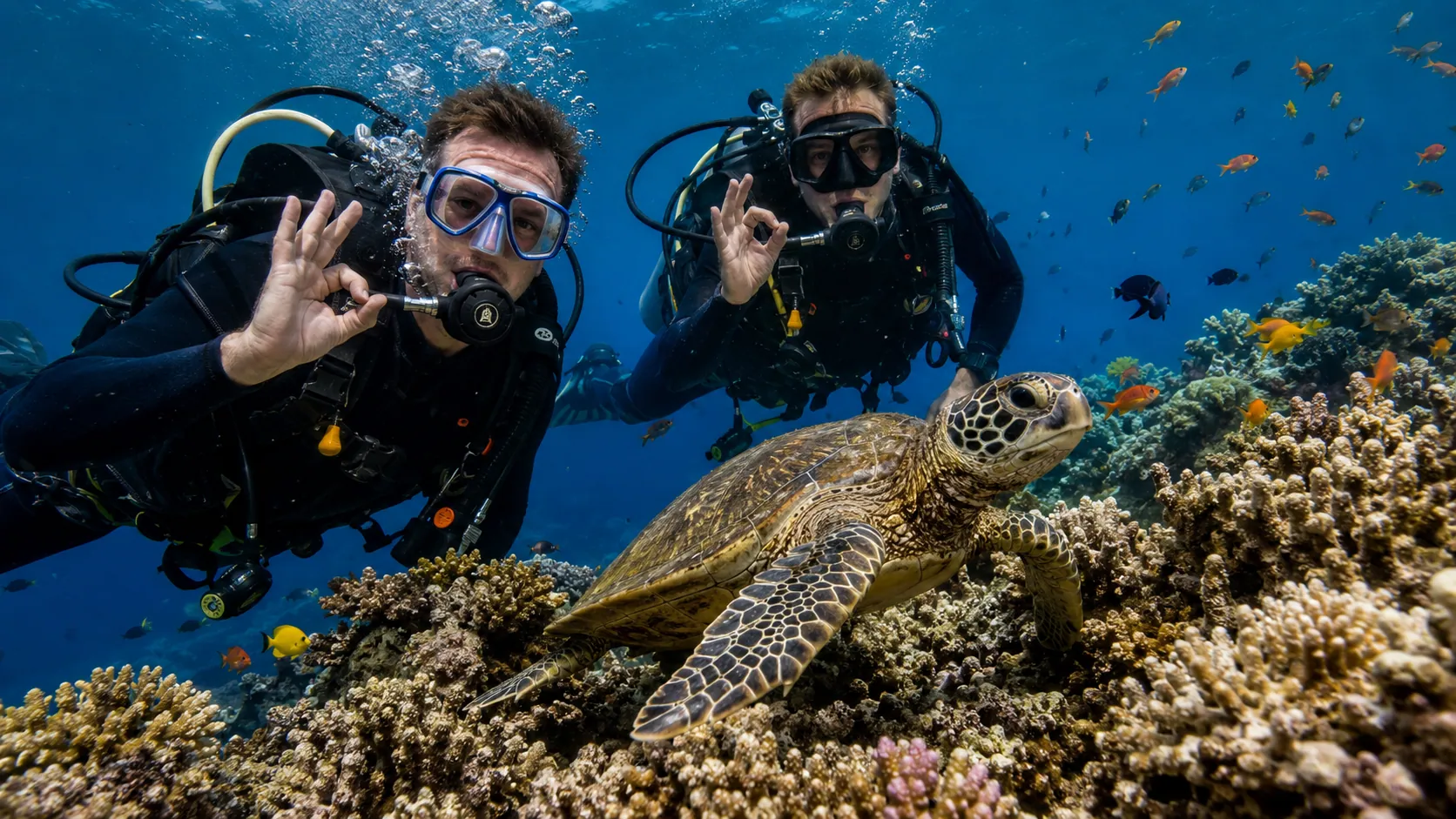
Umm Gamar
An elongated island in the north: a plateau with three coral towers, small caves and big predators out in the blue.
- Depth
- 10–30m
- Boat
- 75min
- Species
- 5
Small Giftun fal
Hurghada's classic drift dive: a sheer wall with gorgonian fans, eagle rays and a coral-tower plateau at 20–30 metres.
- Depth
- 8–30m
- Boat
- 50min
- Species
- 5
The Red Sea will not wait forever.
Book today – seats on the boat are limited, your excitement is not.