Longnose parrotfish
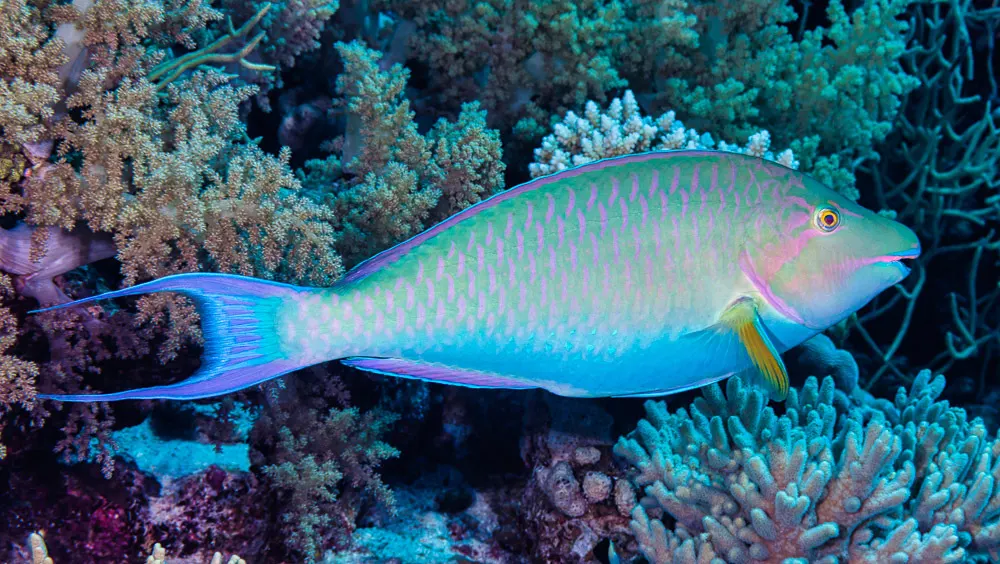
Hipposcarus harid
The elegant pale giant of the sandy lagoons: with its elongated snout and loose schools it is a signature sight of Hurghada's shallows.
The longnose parrotfish (Hipposcarus harid) stands out immediately from the colourful parrotfish crowd: its body is pale silvery-cream, and its snout is longer and more pointed than in other species – hence the name. Mature males take on delicate colours: their heads and fins turn soft turquoise and peach, and the two tips of the tail stretch into long streamers. The species is especially common in the Red Sea, where it was first described by the famous naturalist Peter Forsskål.
While most parrotfish crunch hard coral rock, the longnose parrotfish prefers grazing the sandy bottoms and rubble zones: it picks algae off sand-dusted stones and loose sediment. By day it often travels in loose, coordinated schools through the lagoons – a mesmerising sight as a dozen pale bodies glide over you. It too is protogynous: it starts life as a female, and the largest individuals become males.
Around Hurghada look for the pale shimmering schools in sandy lagoons and sheltered reefs: they cruise regularly through the lagoon of Shaab El Erg (Dolphin House), over the Shaab Sabina sandbank and in the shallows of the Giftun Islands. Since it favours the 2–15 metre zone it is a great snorkeling subject too – and at night it sleeps at the foot of the corals wrapped in a mucus cocoon.
Did you know?
It makes its own sleeping bag every night: it blows a transparent cocoon of mucus around itself that hides its scent from night-hunting morays – and in the morning it simply swims out, leaving the "bedding" behind.
Where can you meet it?
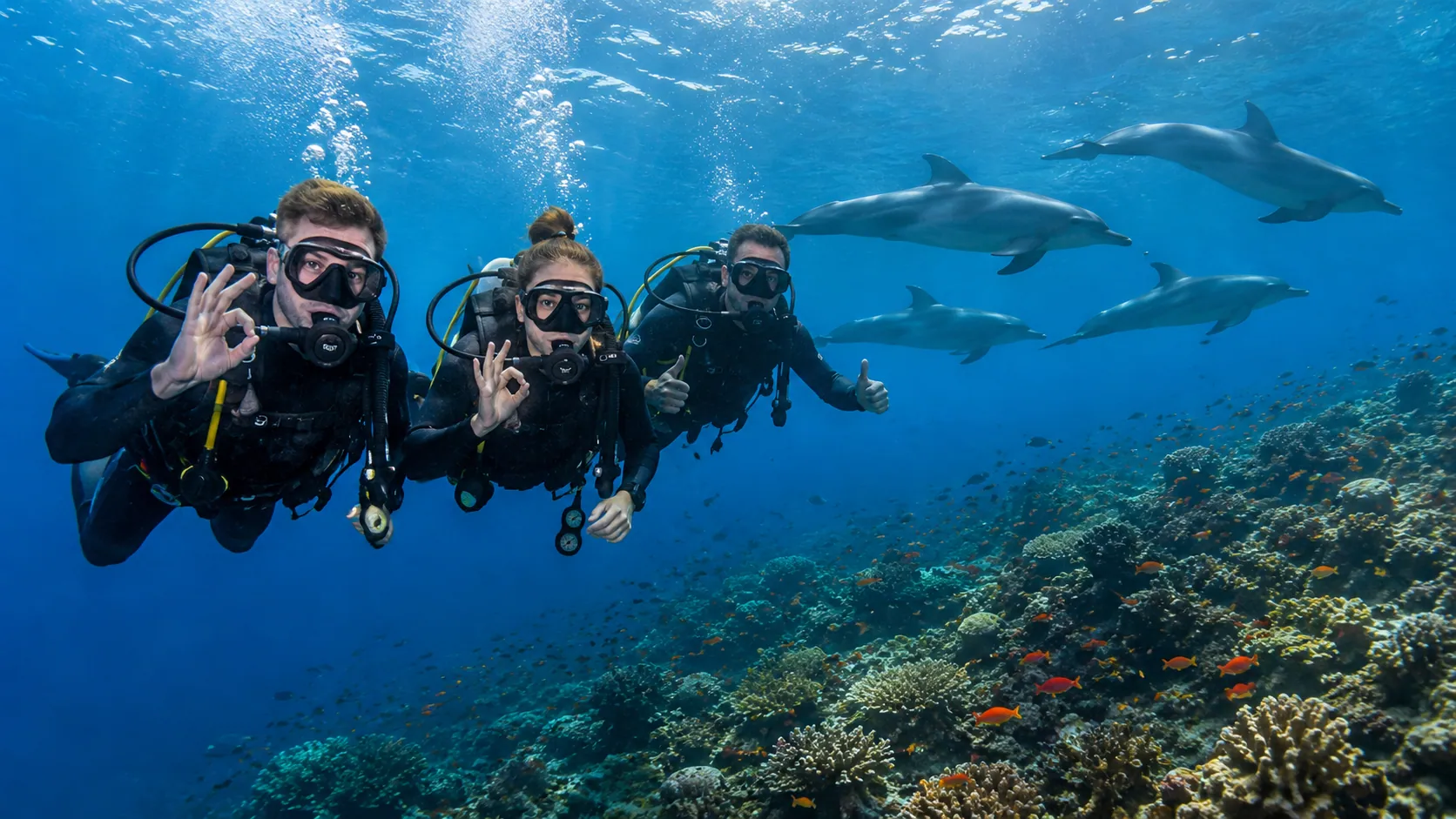
A species of sandy lagoons: you can meet its schools in the Dolphin House (Shaab El Erg) lagoon, over the Shaab Sabina sandbank and in the shallows of the Giftun Islands.
Frequently asked questions
Three things give it away: its pale silvery-cream body, its elongated snout, and its habit of schooling in sandy lagoons – while its colourful relatives tend to crunch the coral rock alone.
Yes, it is a very snorkel-friendly species: it favours shallow sandy lagoons and its schools often cruise just below the surface. You have a good chance of meeting them in the Dolphin House lagoon and at Shaab Sabina.
Yes: like many parrotfish it spends the night in a transparent envelope blown from mucus, which masks its scent from predators. On a night dive you may spot the "gift-wrapped" fish sleeping at the base of the corals – just don't hold your light on them for long.
Best sites for Longnose parrotfish
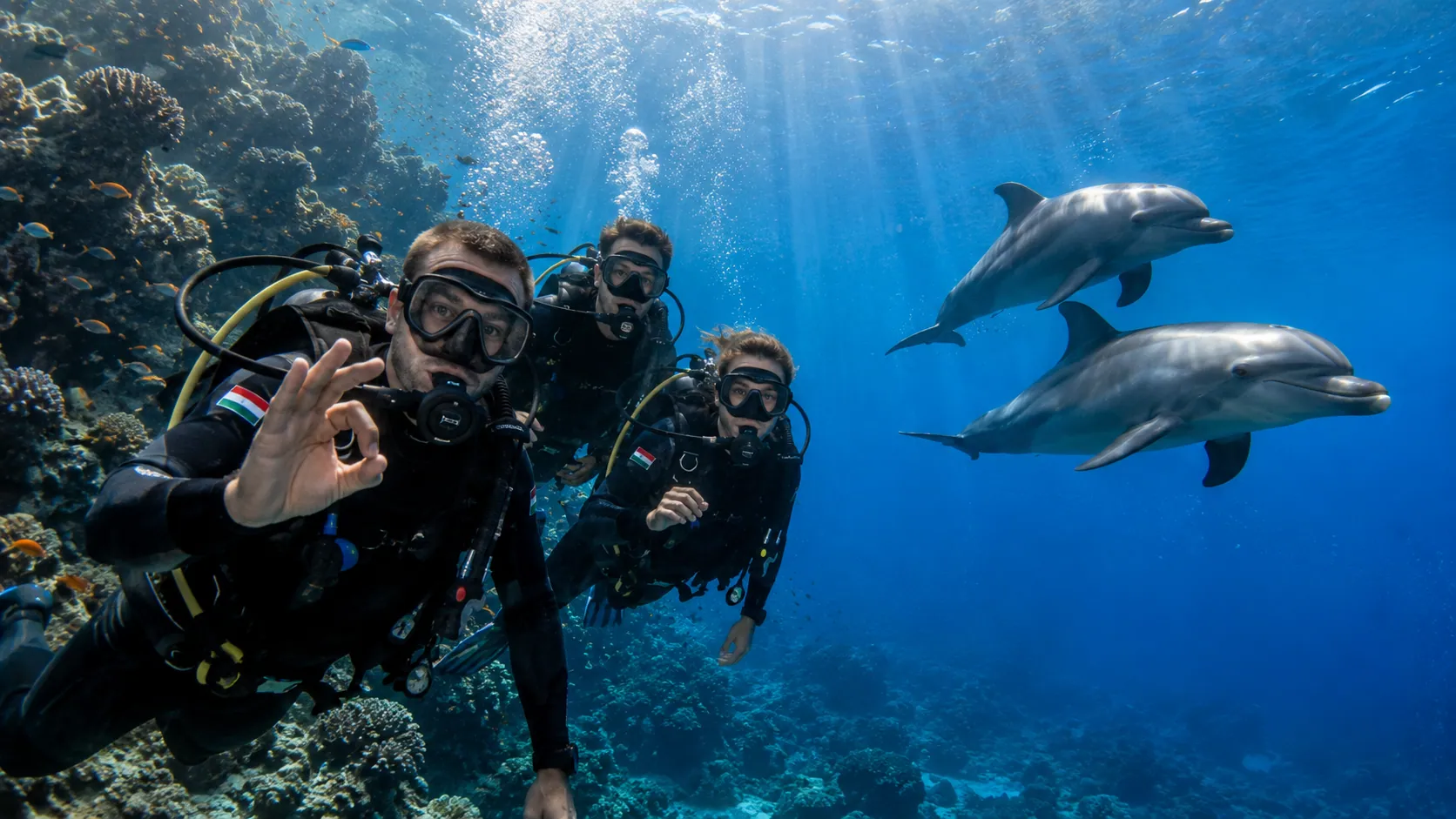
Dolphin House (Sha'ab El Erg)
A horseshoe reef with a sheltered lagoon where you can swim with wild dolphins – Hurghada's most famous dive site.
- Depth
- 5–16m
- Boat
- 90min
- Species
- 5
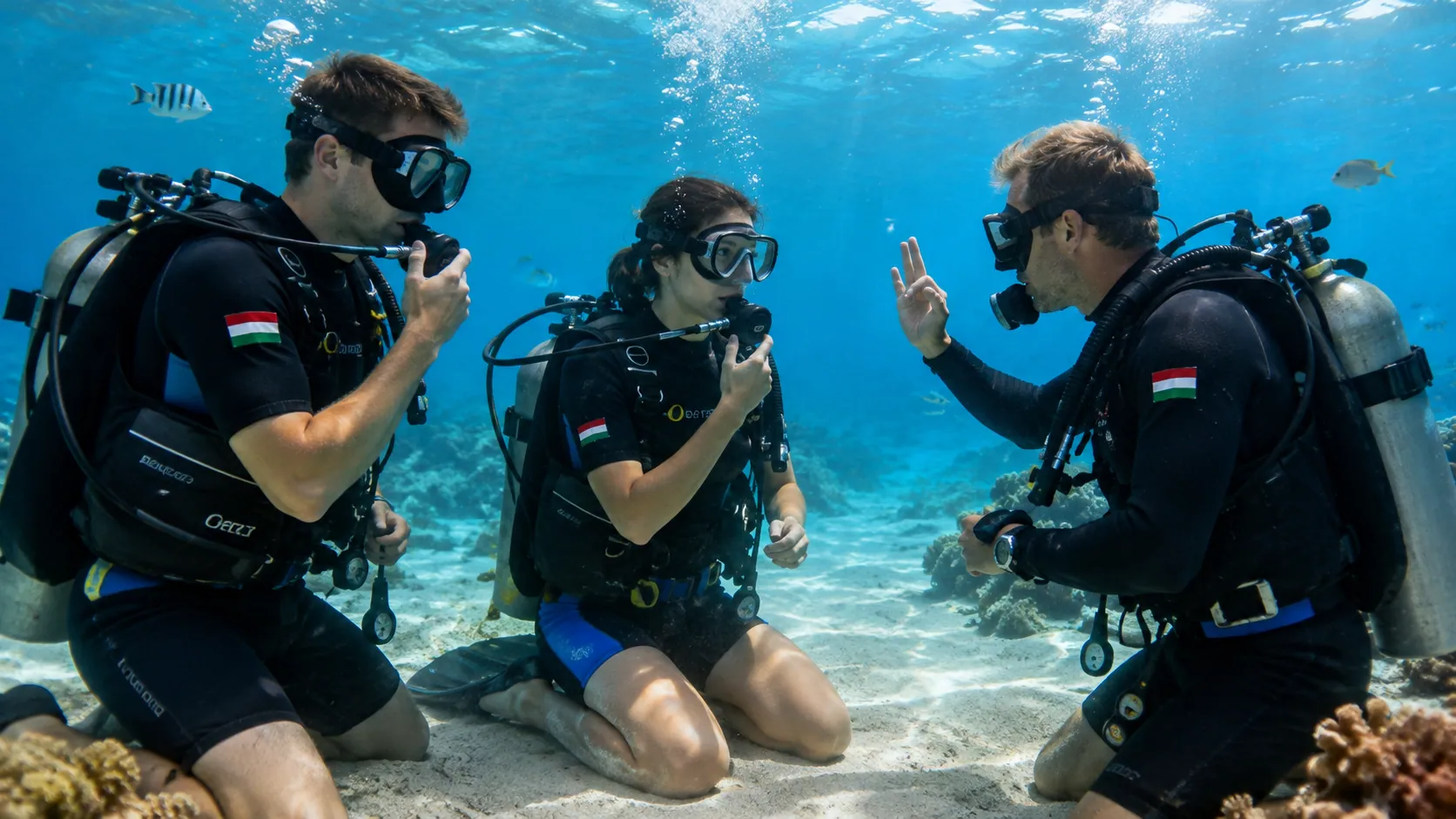
Sha'ab Sabina
A sheltered shallow reef with a sandy lagoon – this is where most of our try dives and OWD skill sessions happen.
- Depth
- 4–12m
- Boat
- 40min
- Species
- 5
Giftun-szigetek
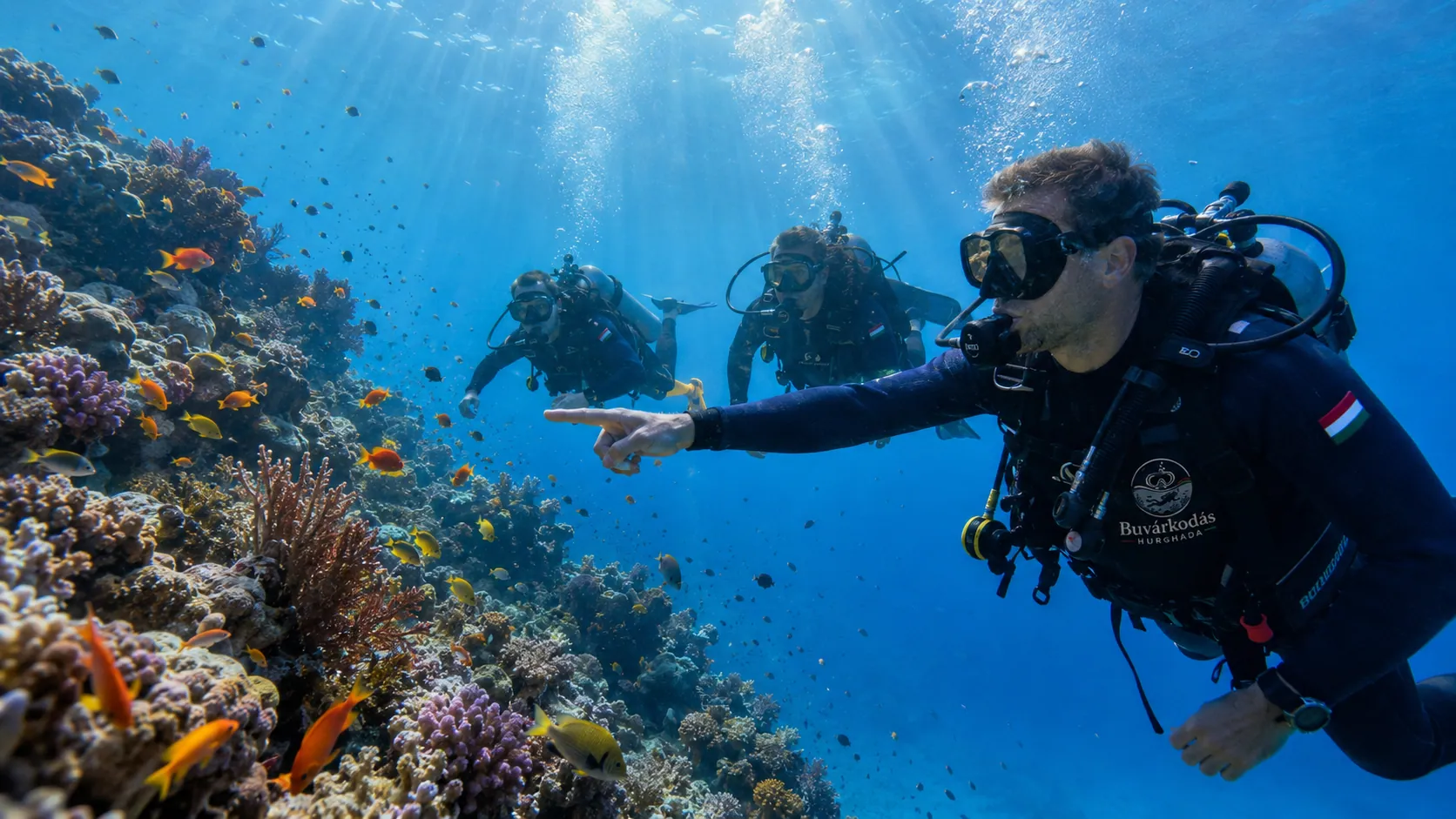
A national park island pair with a dozen dive sites: coral gardens, turtles and perhaps the richest fish life in the area.
- Depth
- 5–25m
- Boat
- 45min
- Species
- 6
The Red Sea will not wait forever.
Book today – seats on the boat are limited, your excitement is not.