Lunar fusilier
Caesio lunaris
A river of silvery-blue flashes sweeping along the reef wall – a school of lunar fusiliers is one of the most spectacular sights the blue water can offer.
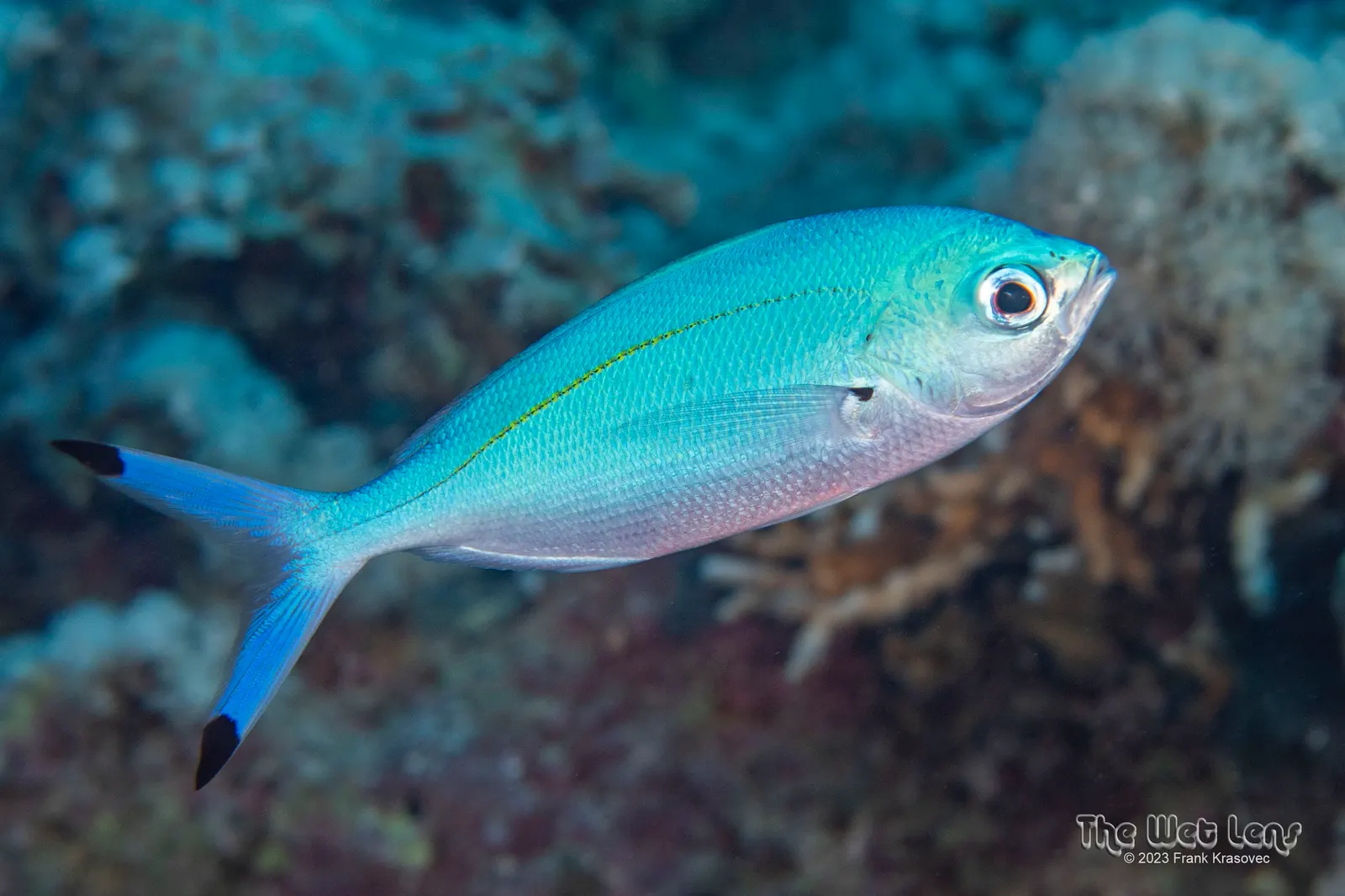
The lunar fusilier (Caesio lunaris) has a streamlined, torpedo-shaped body of brilliant blue, with black tips on its forked tail. Juveniles carry a bright yellow tail that gradually turns blue as they mature. Fusiliers are relatives of the snappers, but while snappers hunt near the bottom, fusiliers have conquered the open water column: with their highly protrusible mouths they pick tiny plankton from the water one by one, at an astonishing rate.
You will almost never see one alone: lunar fusiliers travel the current-swept side of the reef in schools of hundreds, sometimes thousands, often mixed with other fusilier species. The school moves as a single organism – when a trevally or tuna strikes, the group collapses into a flickering, swirling ball within seconds. At night the school disperses, the fish tuck themselves into reef crevices and their colour dulls to reddish tones to melt into the dark.
Around Hurghada you meet them most often along the deeper, current-exposed reef walls: the school first appears out of the blue as a silent, glittering cloud, surrounds you, and moves on just as suddenly. It pays to glance away from the wall into open water now and then – arriving fusilier schools often mean bigger predators are hunting nearby. Snorkeling over shallower plateaus you can also experience the school parting around you.
Did you know?
A fusilier's mouth telescopes forward like a tube, letting it pick individual plankton from the water several times per second – all while swimming at full speed inside the school.
Where can you meet it?
Look for them along current-exposed reef walls: they are almost always swirling off Umm Gamar and Carless Reef, and large schools are also common on the outer sides of the Giftun Islands and El Fanadir.
Frequently asked questions
Yes – although the big schools prefer deeper reef walls, they regularly pass over shallow plateaus too. Snorkeling on the current-exposed outer side of a reef, there is a good chance a glittering blue cloud will pass beneath you.
Each fish senses its neighbours' movements and the pressure waves in the water through its lateral line, so a turn ripples through the school in a flash. This is their main defence: picking a single fish out of the flickering mass is nearly impossible for a predator.
Not at all – it is a completely harmless plankton feeder. The worst that can happen is that the school distracts you so much you forget to check your air.
Best sites for Lunar fusilier
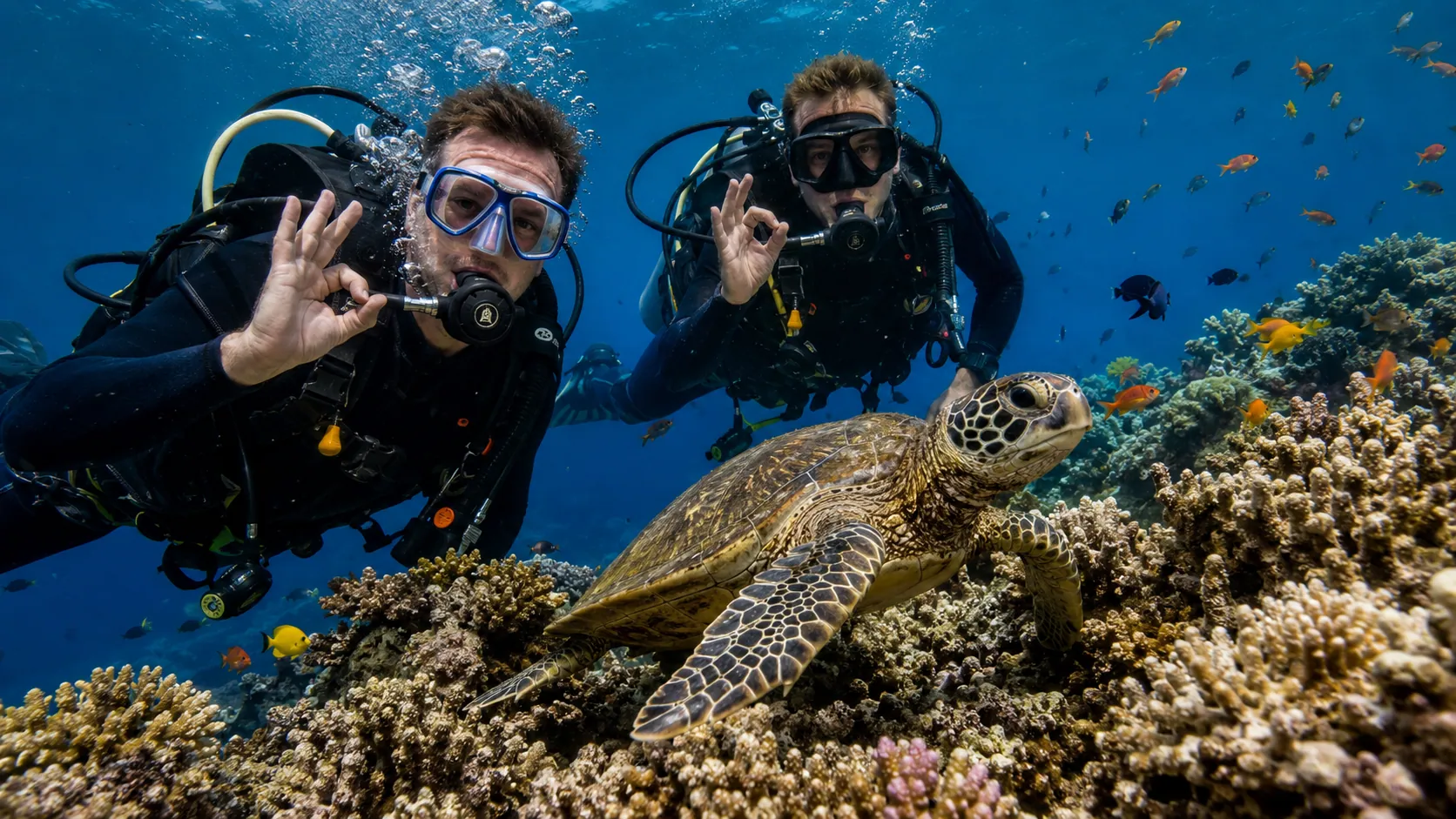
Umm Gamar
An elongated island in the north: a plateau with three coral towers, small caves and big predators out in the blue.
- Depth
- 10–30m
- Boat
- 75min
- Species
- 5
Carless Reef
An offshore twin-erg reef famous for its legendary moray colony – for experienced divers, weather permitting.
- Depth
- 12–30m
- Boat
- 70min
- Species
- 5
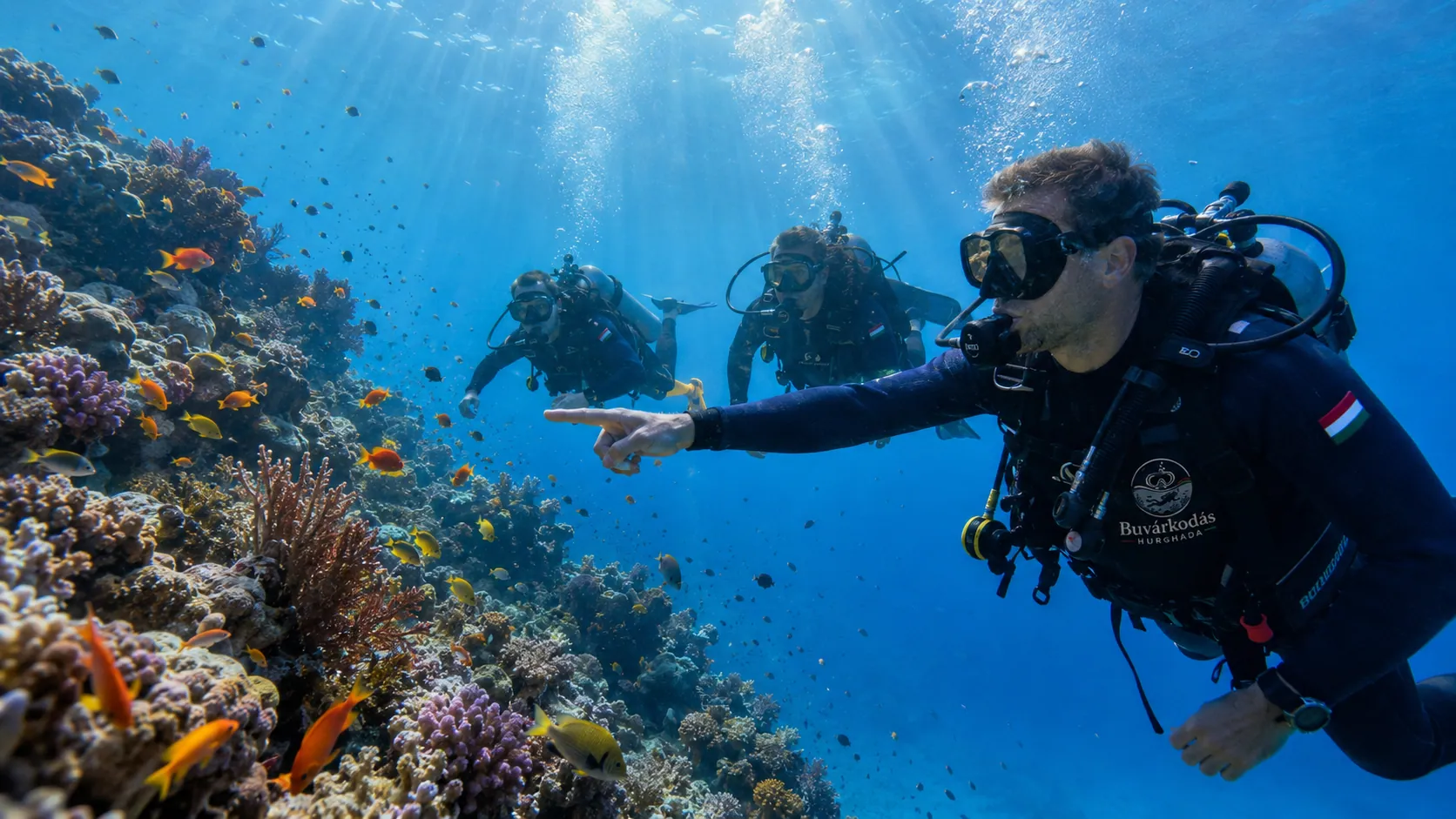
Giftun-szigetek
A national park island pair with a dozen dive sites: coral gardens, turtles and perhaps the richest fish life in the area.
- Depth
- 5–25m
- Boat
- 45min
- Species
- 6
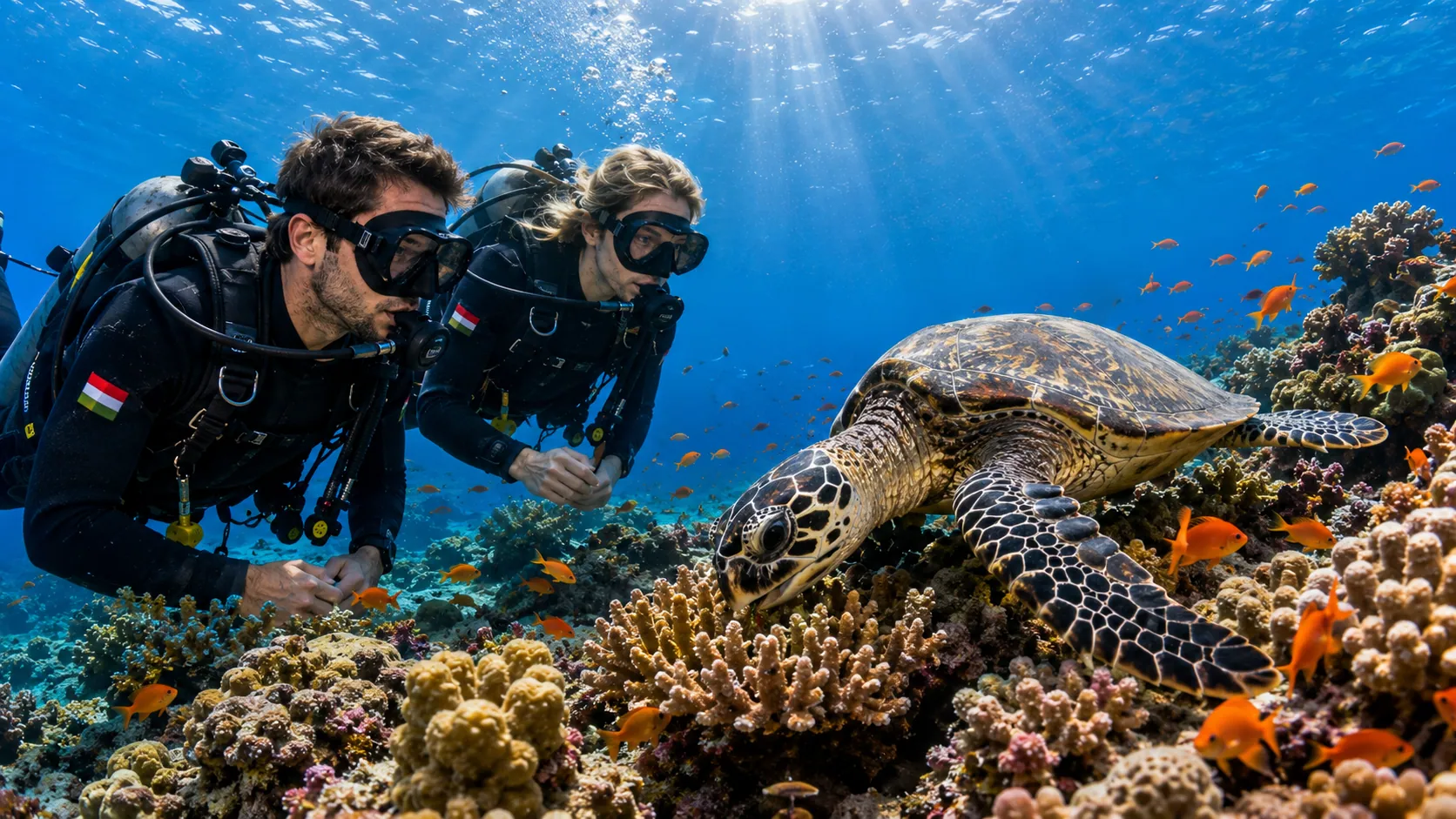
The Red Sea will not wait forever.
Book today – seats on the boat are limited, your excitement is not.