Mushroom coral
Fungia fungites
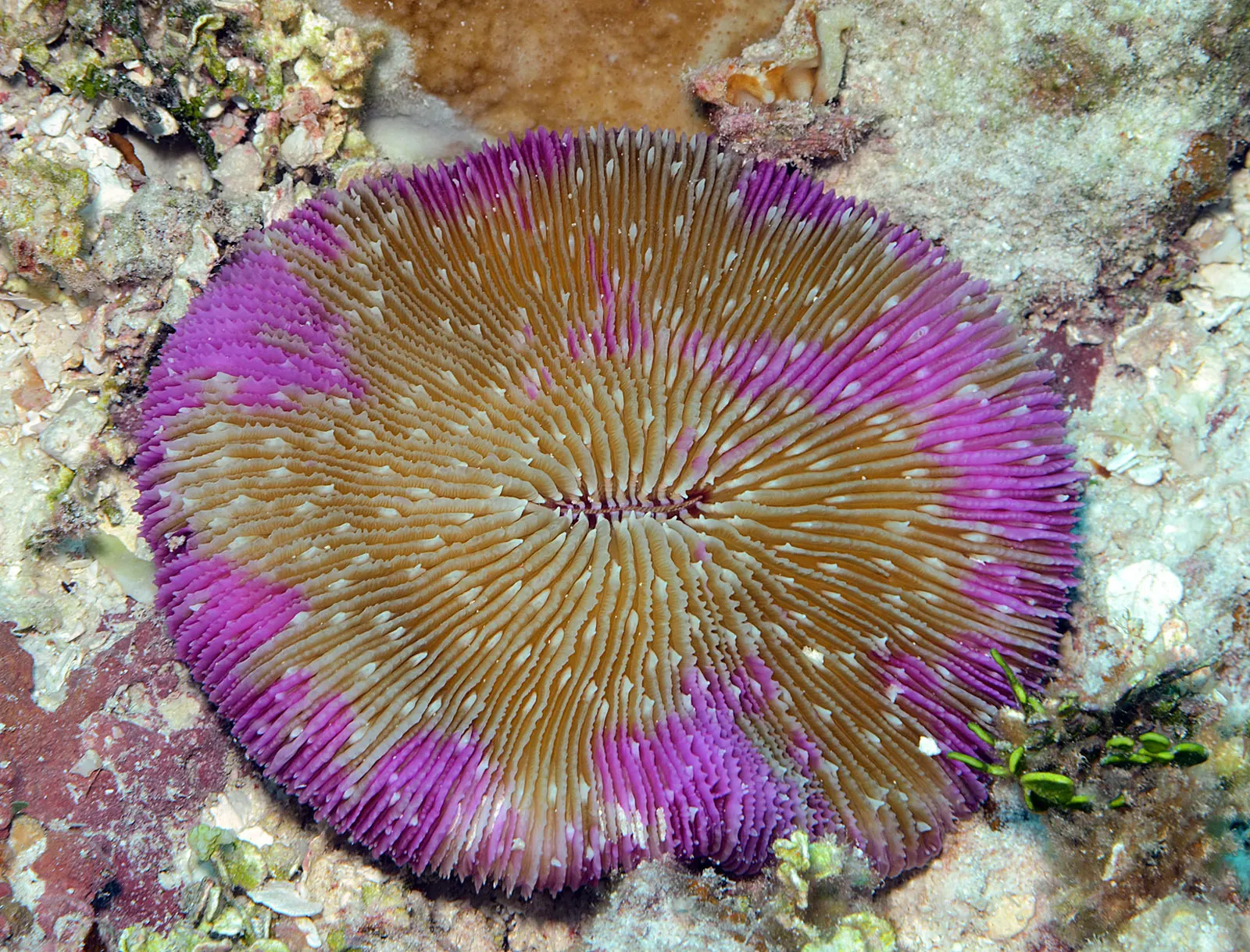
The coral that can walk: the mushroom coral is not a colony but a single giant polyp lying free on the sand – and it can wander off if it needs to.
The mushroom coral (Fungia fungites) does everything differently from its relatives: it forms no colony but is a single, disc-shaped giant polyp of 10–30 cm. Thin limestone blades – septa – radiate across the disc exactly like the gills under a mushroom's cap, and an elongated slit hides at the centre: its mouth. It is mostly brownish or greenish, sometimes with a pink tinge. And its greatest trick: it is not attached to the reef at all, but lies free on sand and rubble.
Its life even begins like a mushroom's: the young coral grows fixed to the reef on a little stalk, until one day it simply snaps off and begins its independent, free-living life. From then on it is a surprisingly mobile "stone": by inflating its tissues with water it can inch its way along, shake off sand that buries it, and even right itself within hours or days if a wave flips it onto its back. Like other corals it is fed by zooxanthellae algae, and at night it catches plankton with its tentacles.
Around Hurghada, look for it in the sandy channels between coral towers and on lagoon floors: on the sand flats of El Aruk and Gota Abu Ramada and in the bay of Abu Hashish, dozens of discs often lie near one another. It is easy to mistake for a lifeless stone at first – and that is the danger: never pick it up, never turn it over and never put it "back in its place", because what looks like tidying up to you is injury to the coral. Leave it where it lies: that is exactly where it wants to be.
Did you know?
The mushroom coral is one of the few corals that can change location: it pumps its tissues full of water and inches across the sand – and if the surge flips it onto its back, it rights itself under its own power with slow "gymnastics".
Where can you meet it?
It lives on the sandy patches between coral towers: on the sand flats of El Aruk and Gota Abu Ramada and in the Abu Hashish lagoon you often find whole "mushroom fields".
Frequently asked questions
A living animal: one enormous coral polyp with its own mouth and tentacles. It is vulnerable precisely because it looks like a stone – lifting or flipping it injures its tissues and protective mucus. It lies where it wants to be; the best thing you can do is leave it there.
Because it has specialised in sand: as a juvenile it grows attached to the reef on a stalk, then breaks free to become a free-living disc. This lets it occupy sandy habitats where attached corals could not survive – and its ability to move saves it when sand buries it.
The mushroom coral's stinging cells are stronger than the average stony coral's and can cause a mild burning on sensitive skin – but the main reason we don't touch is its protection. With good buoyancy above the sand you will never make contact anyway.
Best sites for Mushroom coral
El Aruk (Gigi)
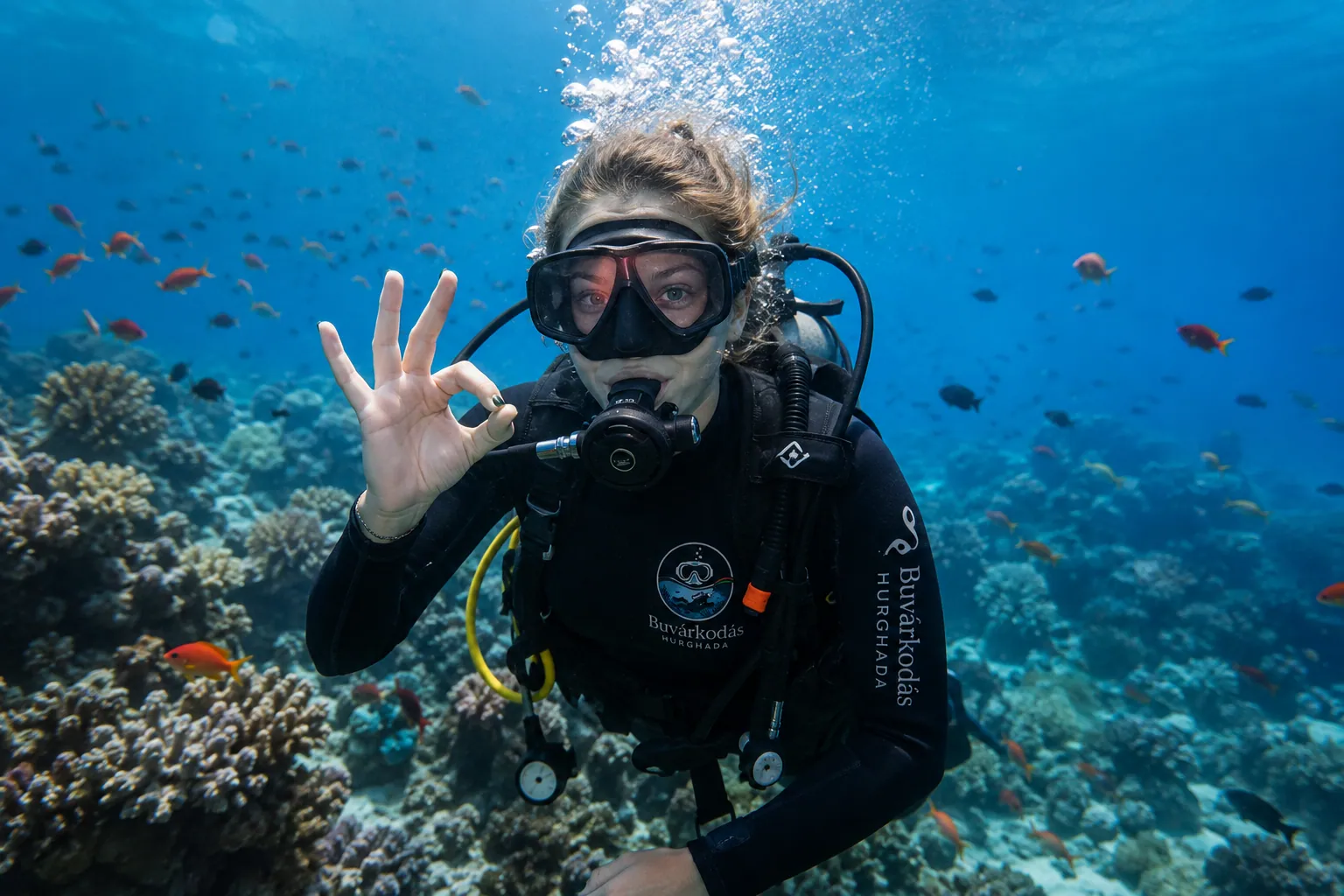
A playground of coral towers on white sand: easy navigation, clouds of glassfish and light made for photography.
- Depth
- 5–14m
- Boat
- 35min
- Species
- 5
Gota Abu Ramada
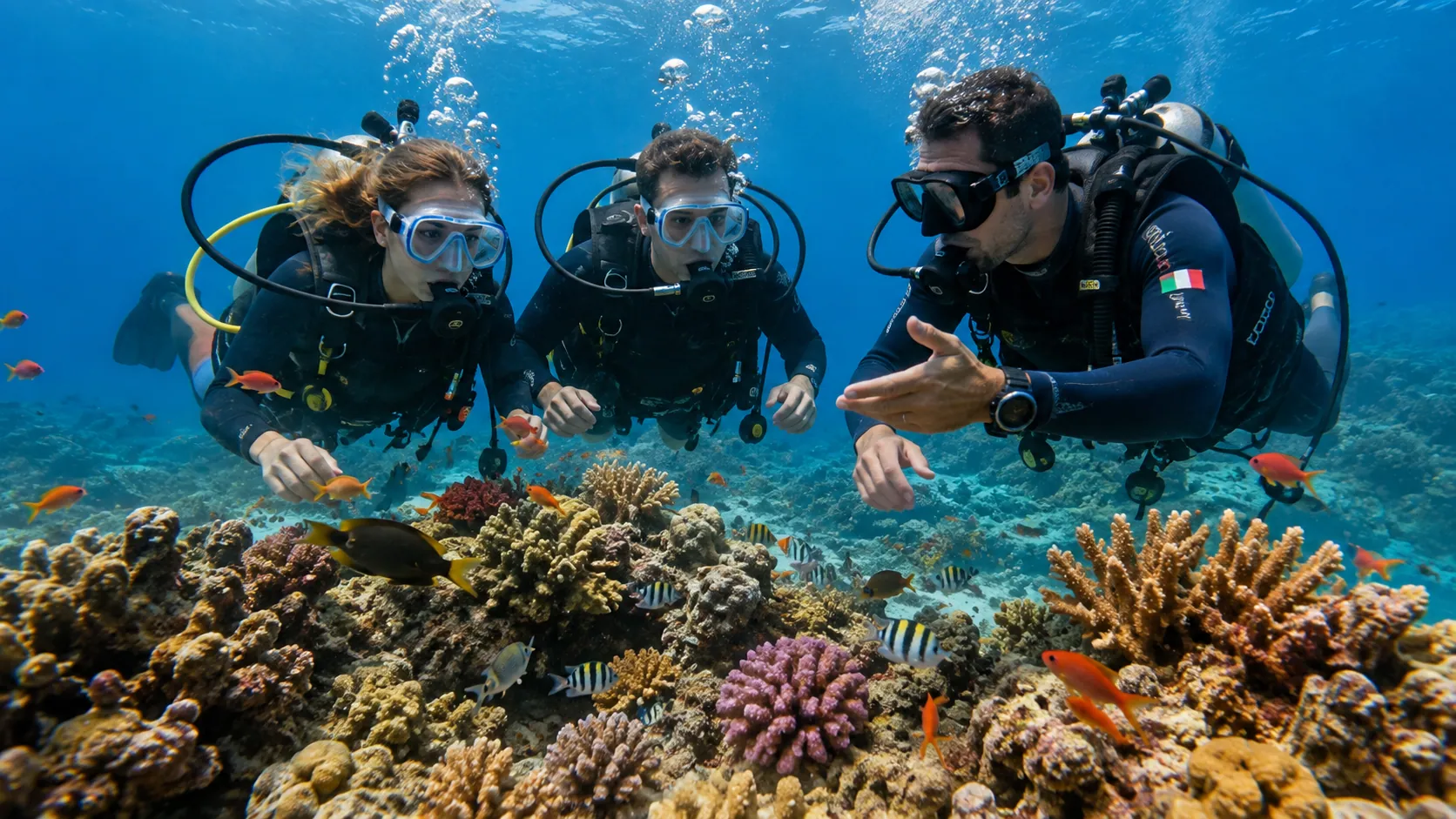
A shallow oval reef with a sandy bottom and schools of butterflyfish – perfect for training, second and night dives.
- Depth
- 4–14m
- Boat
- 55min
- Species
- 5
Abu Hashish-fok
A quiet southern cape with seagrass meadows and an atmospheric cavern – turtles almost for sure, a dugong with some luck.
- Depth
- 5–20m
- Boat
- 60min
- Species
- 5
The Red Sea will not wait forever.
Book today – seats on the boat are limited, your excitement is not.