Napoleon wrasse
Cheilinus undulatus
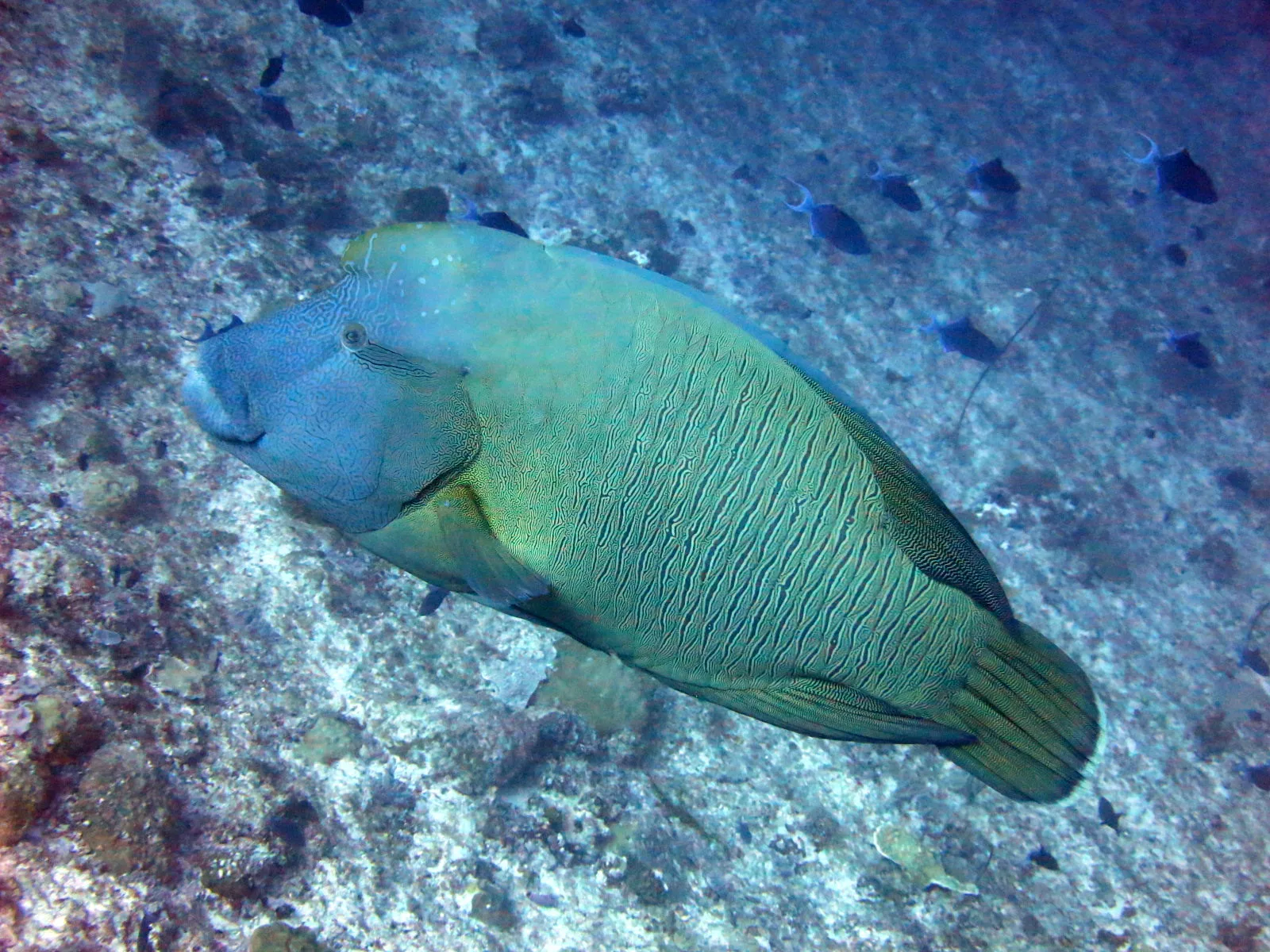
A human-sized gentle giant that eyes divers with genuine curiosity – the Napoleon wrasse is one of the Red Sea most charismatic fish.
The Napoleon wrasse (Cheilinus undulatus) is the largest wrasse in the world: fully grown males reach 1.5–1.8 metres and can weigh over 150 kg. It takes its name from the bulging hump on its forehead, reminiscent of Napoleon's famous hat. With its thick lips and powerful teeth it crunches prey no other predator will touch: spiny sea urchins, toxic boxfishes and even crown-of-thorns starfish.
It is a protogynous hermaphrodite: every individual is born female, and only the largest, strongest fish later transform into males. It grows slowly, matures late and can live beyond 30 years – which makes it extremely vulnerable to overfishing. The IUCN lists the species as Endangered; in Egypt it is protected and fishing for it is banned.
Around Hurghada you will meet it on the big reef plateaus and along the walls, usually patrolling alone. Individuals used to divers are remarkably curious: they often swim in very close and give you a thorough once-over with their distinctive rotating eyes. Feeding is strictly forbidden – and entirely unnecessary, as it comes over on its own to see who you are.
Did you know?
The Napoleon wrasse is born female, and only the largest individuals ever transform into males. The species is now endangered and protected – every encounter with one is an increasingly precious gift.
Where can you meet it?
We meet it most often on the reefs of the Giftun Islands, along the wall of Small Giftun and on the plateaus of Umm Gamar and Carless Reef.
Frequently asked questions
Not at all: despite its impressive size it is completely peaceful. It approaches divers purely out of curiosity, and there is no reason to fear its bite. One rule applies: never feed it – feeding changes its natural behaviour and ultimately harms the species most.
Your best chances are on the big reefs: the plateaus of the Giftun Islands, the wall of Small Giftun and around Umm Gamar and Carless Reef. It does not show up on every dive, but the large, diver-friendly individuals return regularly to the same spots.
It grows slowly, reproduces late and is sold at enormous prices as a luxury food in Asia – a combination that has decimated populations in many regions. In Egypt the species is protected and fishing is banned, making the Red Sea one of the best places left on Earth to meet one.
Best sites for Napoleon wrasse
Giftun-szigetek
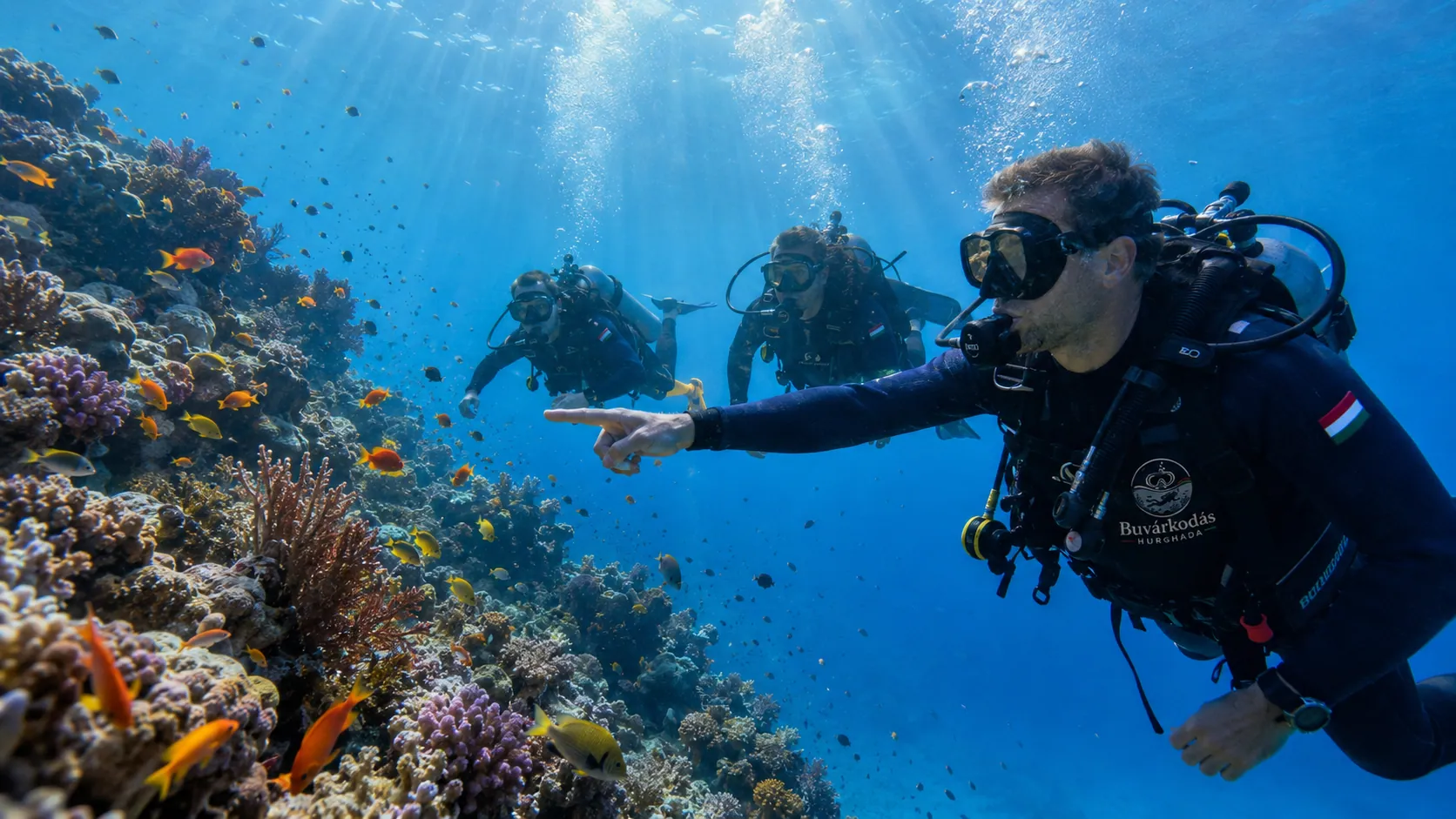
A national park island pair with a dozen dive sites: coral gardens, turtles and perhaps the richest fish life in the area.
- Depth
- 5–25m
- Boat
- 45min
- Species
- 6
Small Giftun fal
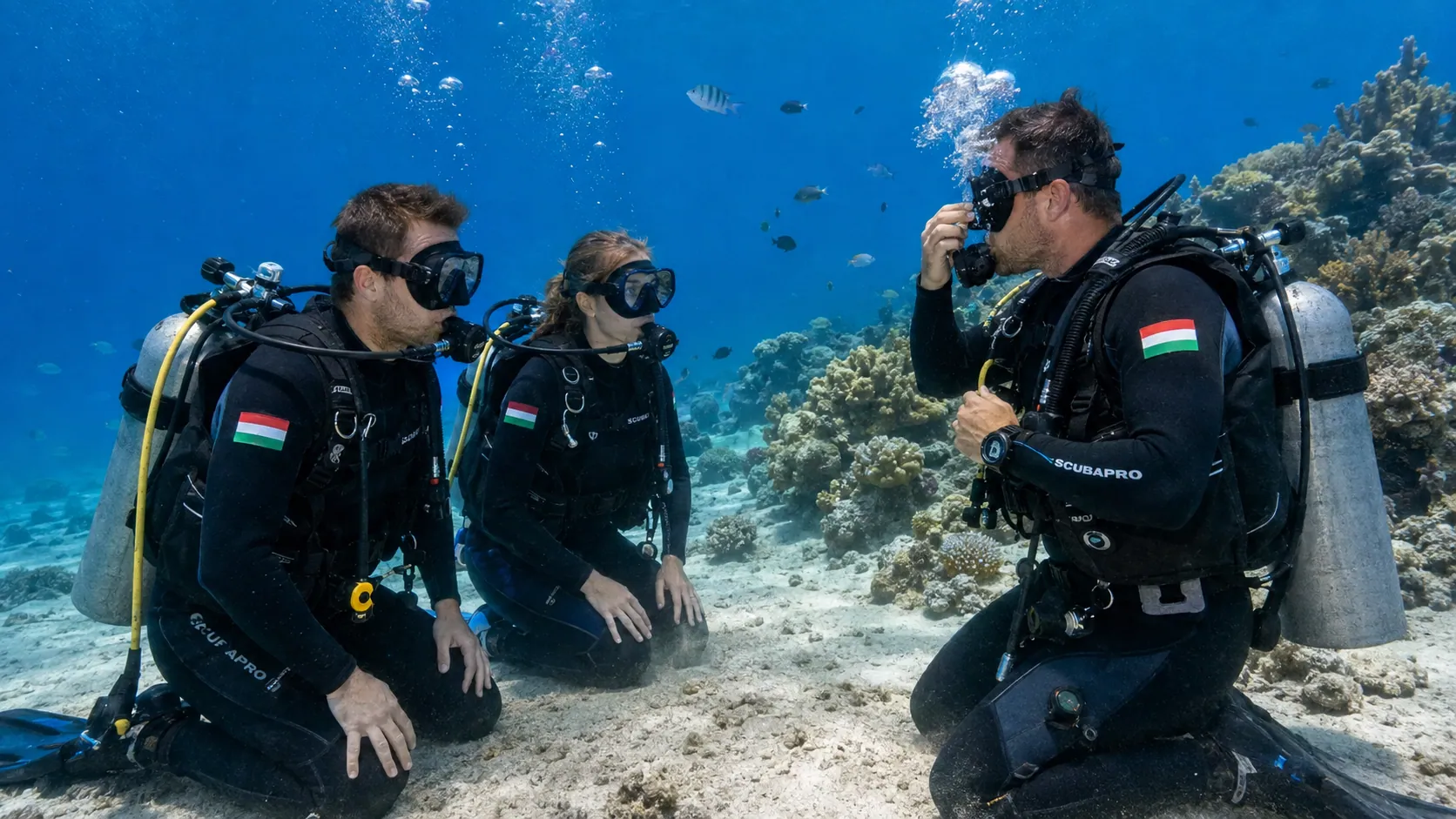
Hurghada's classic drift dive: a sheer wall with gorgonian fans, eagle rays and a coral-tower plateau at 20–30 metres.
- Depth
- 8–30m
- Boat
- 50min
- Species
- 5
Umm Gamar
An elongated island in the north: a plateau with three coral towers, small caves and big predators out in the blue.
- Depth
- 10–30m
- Boat
- 75min
- Species
- 5
The Red Sea will not wait forever.
Book today – seats on the boat are limited, your excitement is not.