Net fire coral
Millepora dichotoma
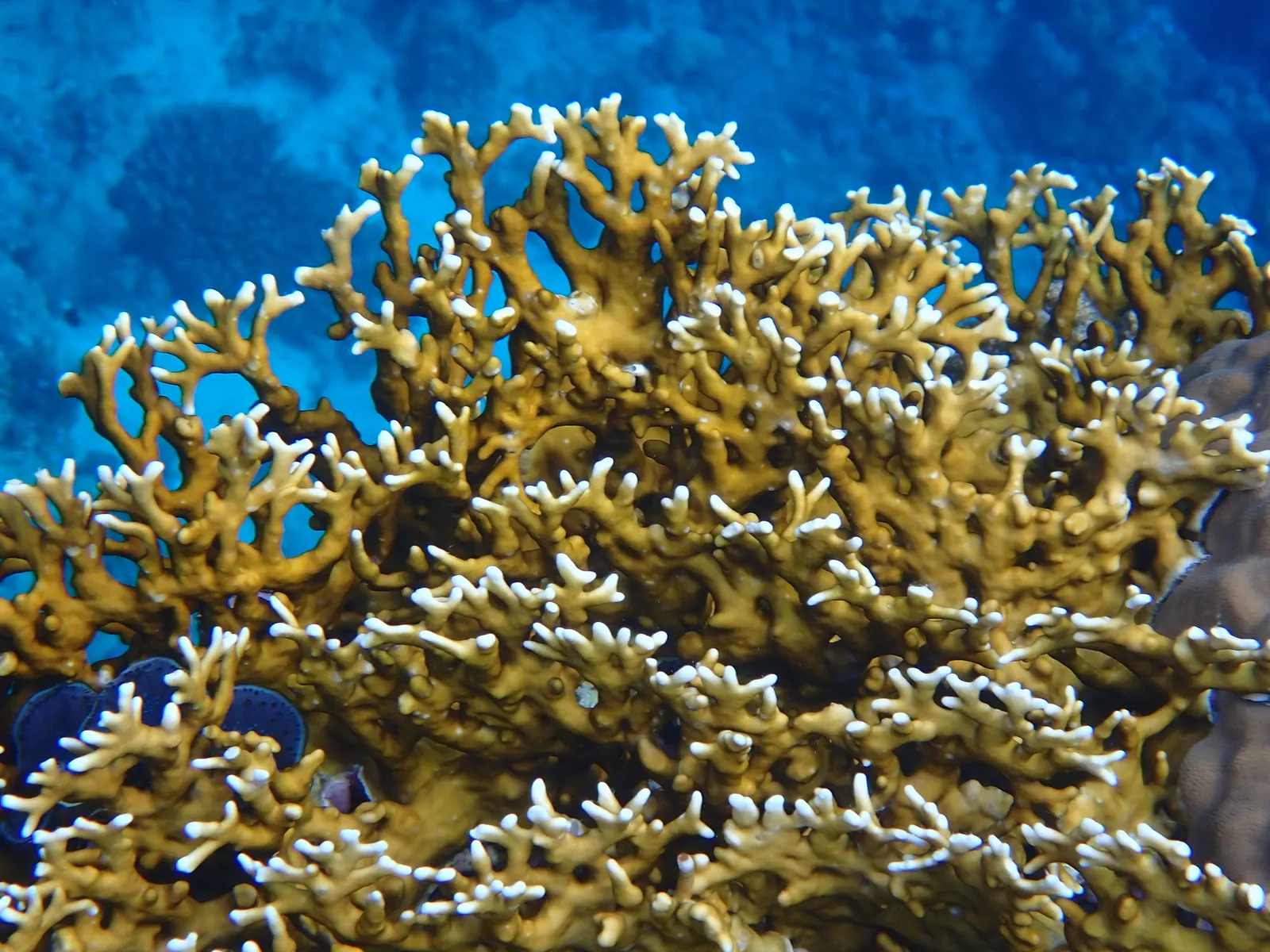
Mustard-yellow, white-edged fans on the reef edge – beautiful, but the name is well earned: touch it and you get a burning lesson.
The net fire coral is easy to recognise: it grows mustard-yellow or ochre fans of net-like fused branches with distinctive white tips. The colonies always stand perpendicular to the current like a row of stretched sails – that is how they sieve tiny plankton from the water. The surface looks almost smooth, because the polyps emerge from pinprick pores rather than from cups like true stony corals.
And here comes the twist: fire coral is not actually a coral at all, but a hydrozoan – more closely related to jellyfish and the Portuguese man o' war than to reef-building corals. Its hair-thin defensive polyps, barely visible to the naked eye, are armed with powerful stinging cells that fire instantly on contact. The result is a nasty burning, itching rash that can bother you for days – so the golden rule applies double here: never grab the reef and keep a safe distance, especially in surge.
Around Hurghada the net fire coral is one of the most common residents of reef edges and wave-washed reef tops – you will meet it everywhere on the El Fanadir wall, around the Giftun Islands and on the Gota Abu Ramada plateau, even while snorkeling. It is an important indicator of reef health and shelter for countless small fish, so watch it, photograph it, but keep your hands and fins well away – both the coral and your skin will thank you.
Did you know?
Fire coral is biologically not a coral but a relative of jellyfish: the burn comes from the same type of stinging cells as a jellyfish sting – except here the culprit is a rock-hard, limestone-skeleton "jellyfish colony".
Where can you meet it?
It lines nearly every Hurghada reef edge: the El Fanadir wall, the reef tops of the Giftun Islands and the shallow Shaab Sabina plateau are full of its yellow fans.
Frequently asked questions
Yes – contact causes an immediate burning, nettle-rash-like pain that can itch for hours or days. If it happens, rinse with seawater (not fresh water, which fires more stinging cells), vinegar can help, and tell your dive guide. The best protection is good buoyancy: fire coral never hurts anyone who doesn't touch the reef.
The white tips are the youngest, actively growing parts of the colony, where symbiotic algae are still sparse. There is a practical bonus for you too: the contrast of yellow body and white edge lets you identify fire coral from a distance – and steer around it in time.
Fire coral is one of the fastest-growing reef builders in the Red Sea: its massive limestone skeleton shields the reef edge from wave action, and its dense nets shelter tiny fish and crabs. For divers it is a neighbour that demands caution – for the reef, an indispensable master builder.
Best sites for Net fire coral
El Fanadir
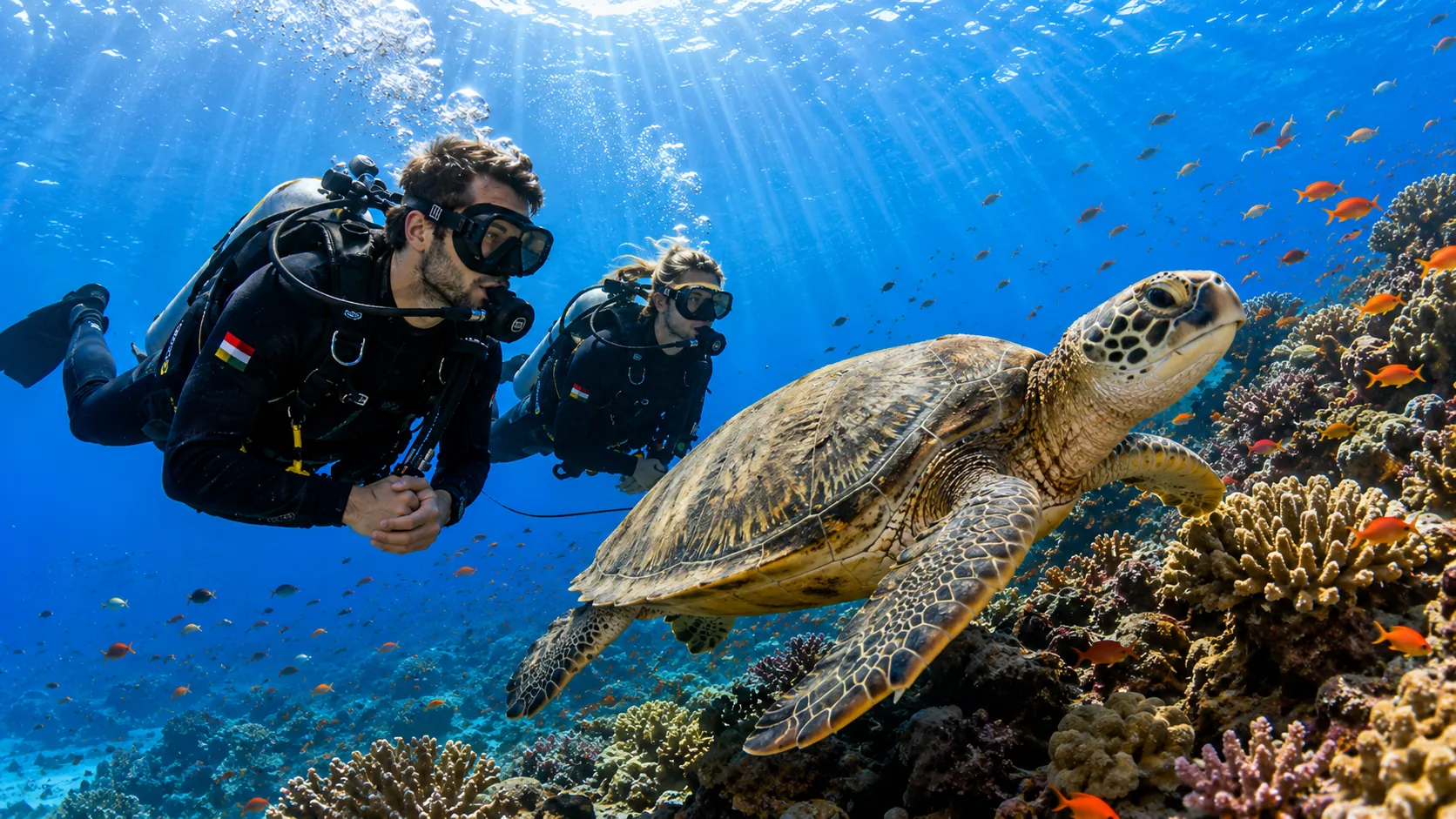
A long reef ridge barely half an hour from the marina: a gentle wall, blue-spotted rays and seagrass patches with turtles.
- Depth
- 6–25m
- Boat
- 30min
- Species
- 5
Giftun-szigetek
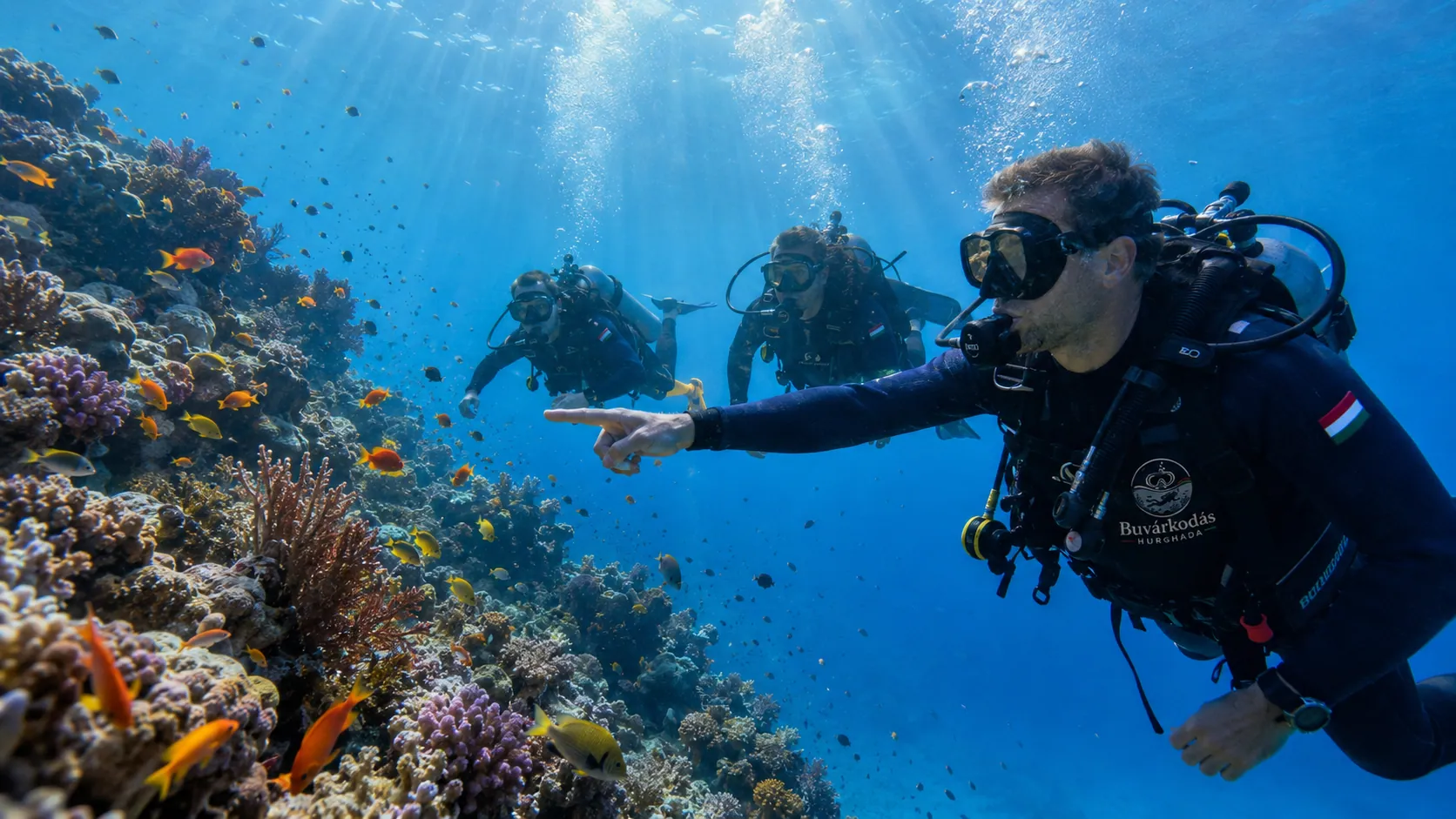
A national park island pair with a dozen dive sites: coral gardens, turtles and perhaps the richest fish life in the area.
- Depth
- 5–25m
- Boat
- 45min
- Species
- 6
Gota Abu Ramada
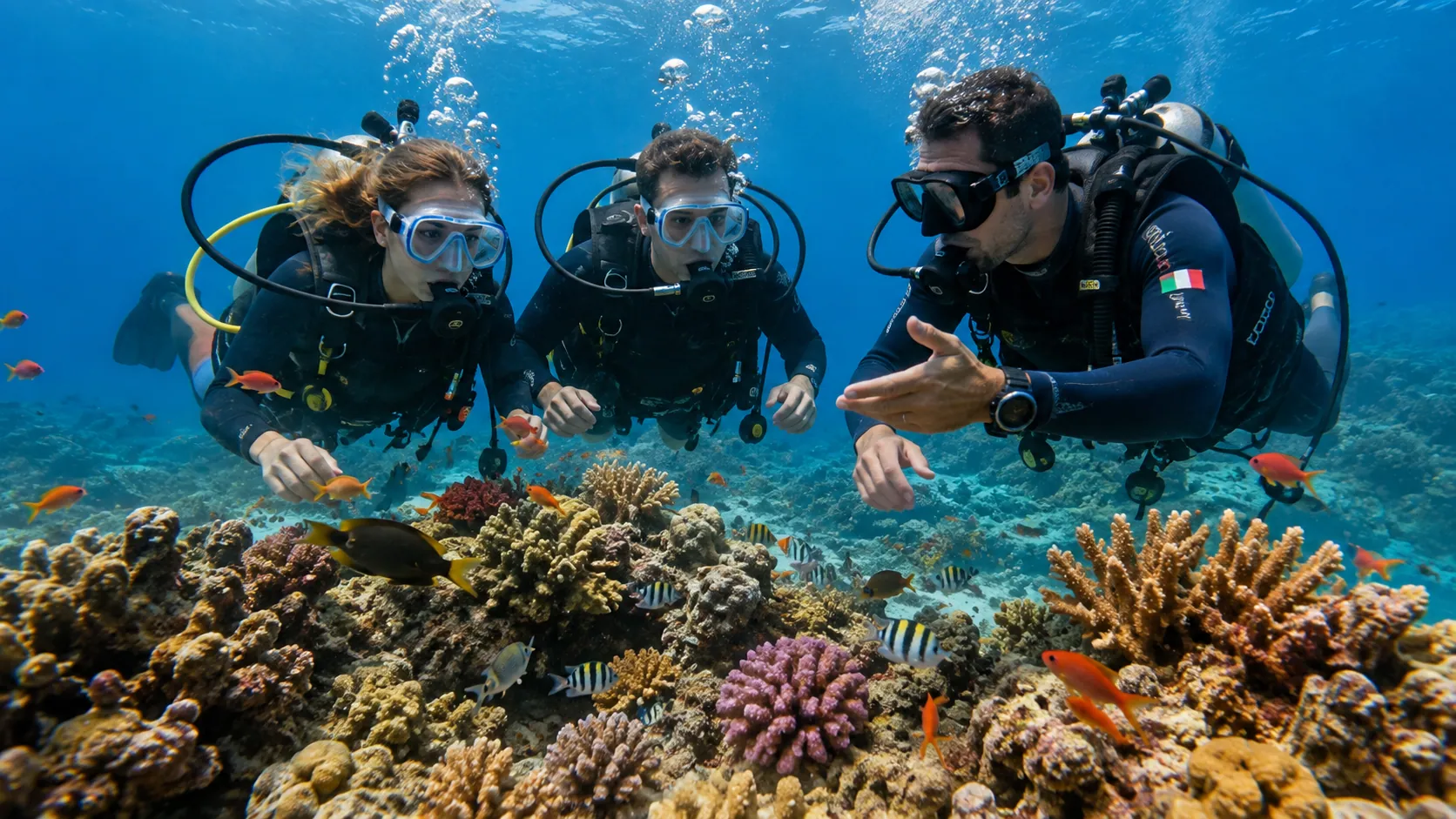
A shallow oval reef with a sandy bottom and schools of butterflyfish – perfect for training, second and night dives.
- Depth
- 4–14m
- Boat
- 55min
- Species
- 5
The Red Sea will not wait forever.
Book today – seats on the boat are limited, your excitement is not.