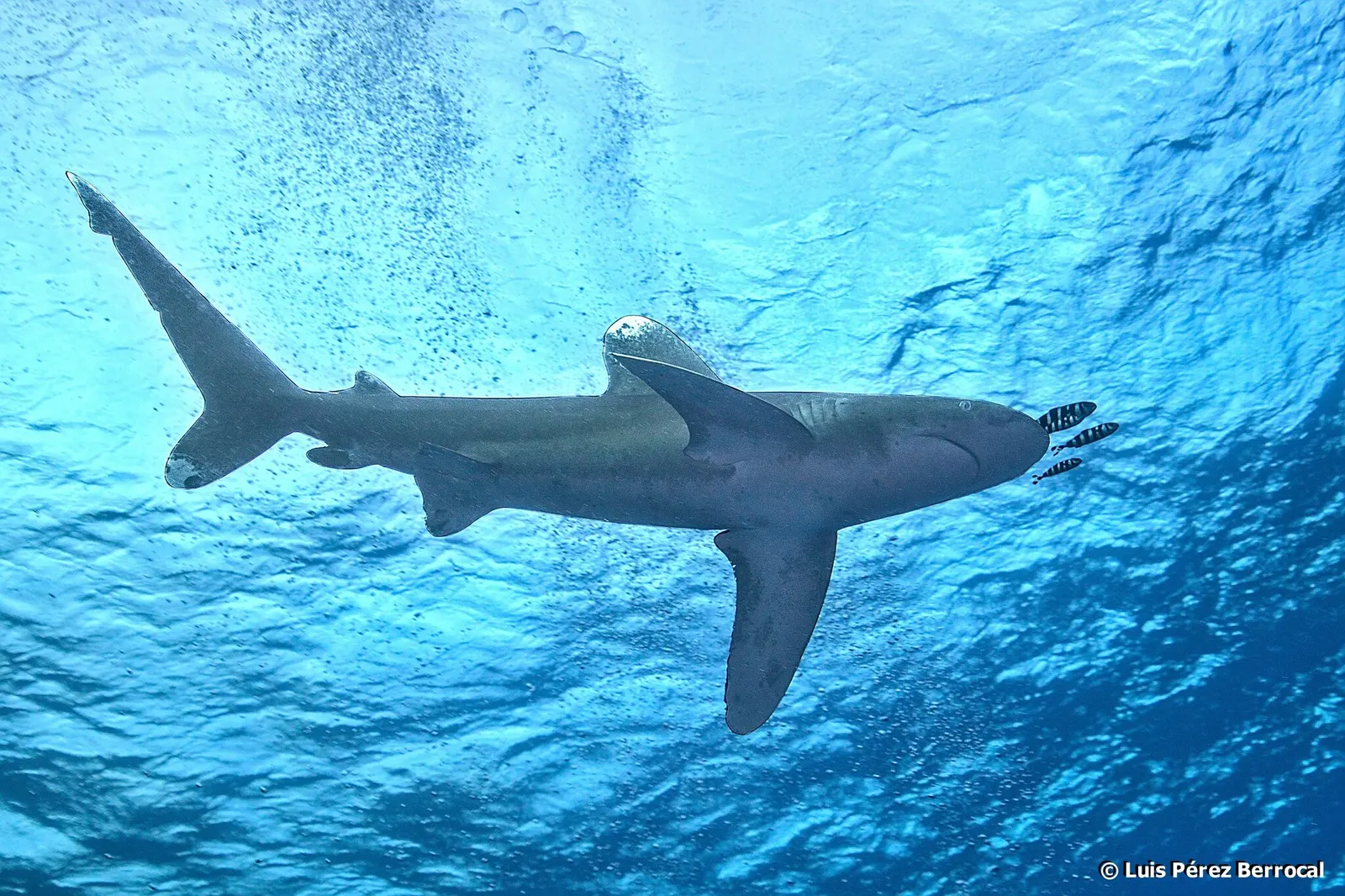
Oceanic whitetip shark
Carcharhinus longimanus
The legendary wanderer of the open ocean: cruising slow and confident on long, white-mottled fins, it is one of the Red Sea's most charismatic sharks.
The oceanic whitetip (Carcharhinus longimanus) is unmistakable: its huge, rounded, paddle-like pectoral and dorsal fins are tipped with white, marbled blotches. Even its scientific name refers to those "long hands". Growing to two to two and a half metres, it is a wanderer of the open ocean, usually cruising near the surface at an unhurried pace with a small escort of pilot fish riding ahead of its snout.
In the sparse world of open water, curiosity is the key to survival: the oceanic whitetip investigates every floating object, because anything might be food. That is why it approaches divers more closely than any reef shark – out of interest, not aggression. Meanwhile the species' fortunes have turned dramatic: once one of the most abundant large predators in the world's oceans, overfishing has driven it to critically endangered status, so every encounter is an exceptional gift – and in Egypt it is strictly protected.
Let us be honest: you will practically never meet it at Hurghada's daily dive sites – this shark is the autumn-winter star of the deep offshore reefs (the Brothers, Elphinstone, Daedalus), reached by liveaboard safari. Very rarely, mostly in autumn, a wandering individual may still appear in the blue water off Hurghada's outer reefs – Umm Gamar, Carless Reef. If that happens, follow your guide's instructions and stay with the group, and you will live through one of diving's greatest experiences.
Did you know?
The oceanic whitetip was once likely one of the most numerous wild animals on Earth weighing over 45 kilograms – today it is critically endangered. Its fortunes reversed within a single human lifetime, and every living individual now testifies to the value of protection.
How to behave around it
The oceanic whitetip is a curious shark that may approach closely – that is interest, not attack. The rules are simple: stay with the group and near the reef wall, keep the shark in sight, adopt a vertical posture if it comes very close, and never swim alone in open blue water or float alone at the surface. Your guide knows the protocol exactly – follow their lead.
Where can you meet it?
Its true home is at the deep offshore reefs reached by liveaboard; around Hurghada a wanderer appears only very rarely, mostly in autumn, in the blue off Umm Gamar and Carless Reef.
Frequently asked questions
Practically no – this species lives at the deep offshore reefs, and even there it shows mainly from autumn to early winter. If you are coming specifically for it, you will need a liveaboard safari; an appearance on Hurghada's reefs is an extraordinary rarity.
It is bolder and more curious than reef sharks, so diving with it has its rules – but on organised, guided dives thousands of divers meet it every year without incident. The key is calm, group-based, rule-following behaviour: then the encounter is not a risk but the experience of a lifetime.
Those are pilot fish: they "surf" the pressure wave the shark creates, enjoy its protection and snack on leftovers from its meals. The whitetip and its entourage form one of the open ocean's most iconic double acts.
Best sites for Oceanic whitetip shark
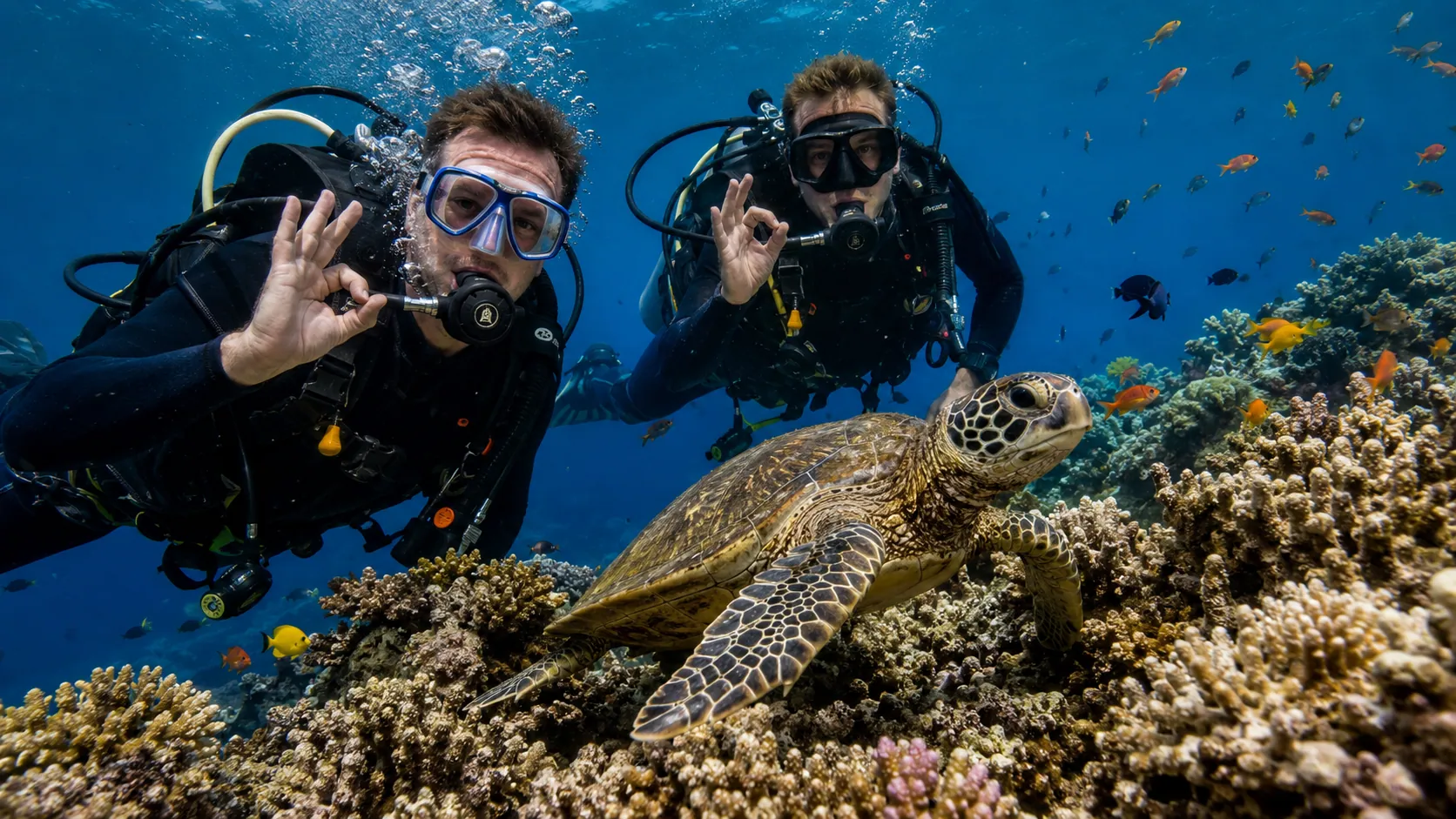
Umm Gamar
An elongated island in the north: a plateau with three coral towers, small caves and big predators out in the blue.
- Depth
- 10–30m
- Boat
- 75min
- Species
- 5
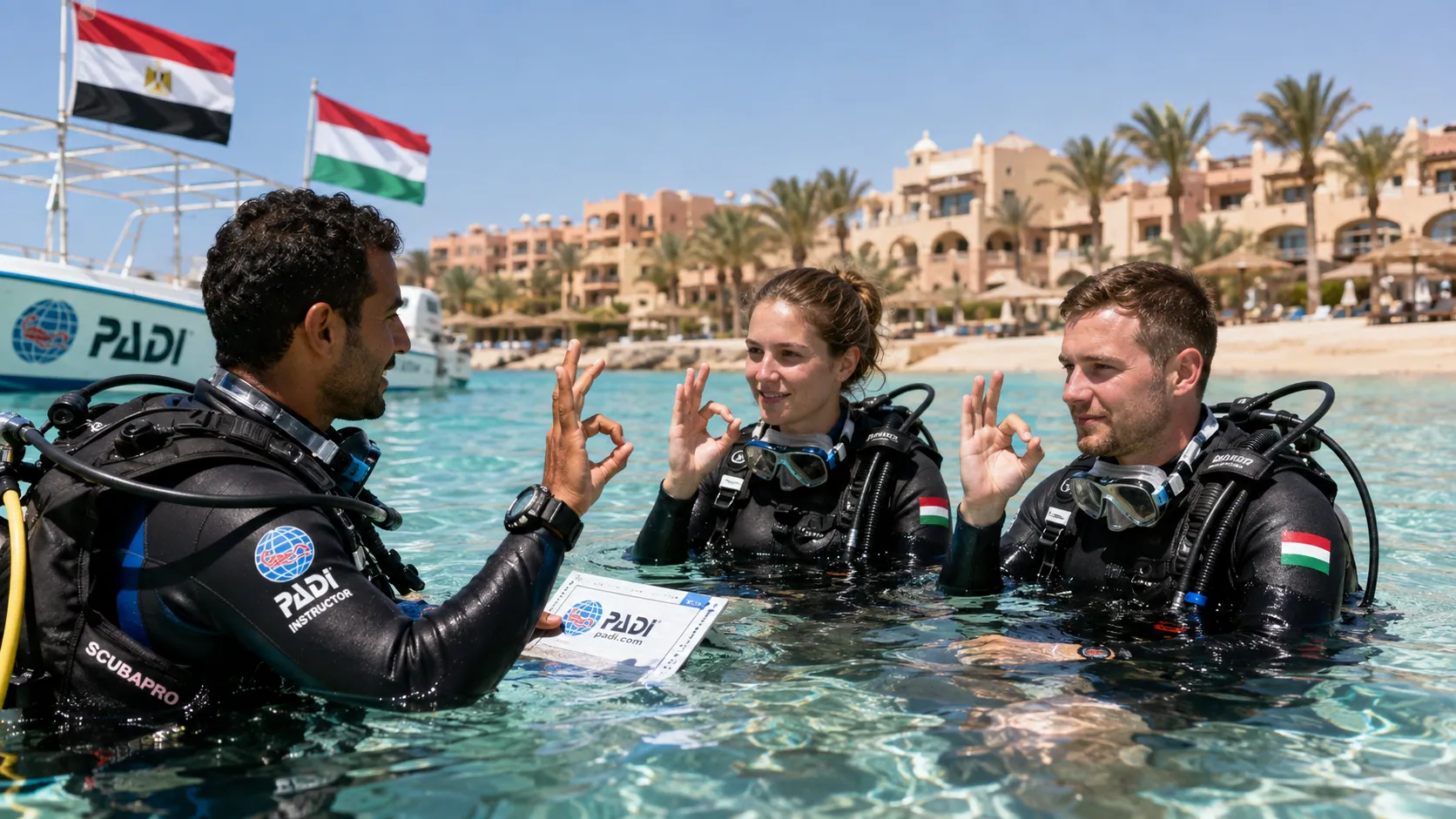
Carless Reef
An offshore twin-erg reef famous for its legendary moray colony – for experienced divers, weather permitting.
- Depth
- 12–30m
- Boat
- 70min
- Species
- 5
The Red Sea will not wait forever.
Book today – seats on the boat are limited, your excitement is not.