Orange cup coral
Tubastraea coccinea
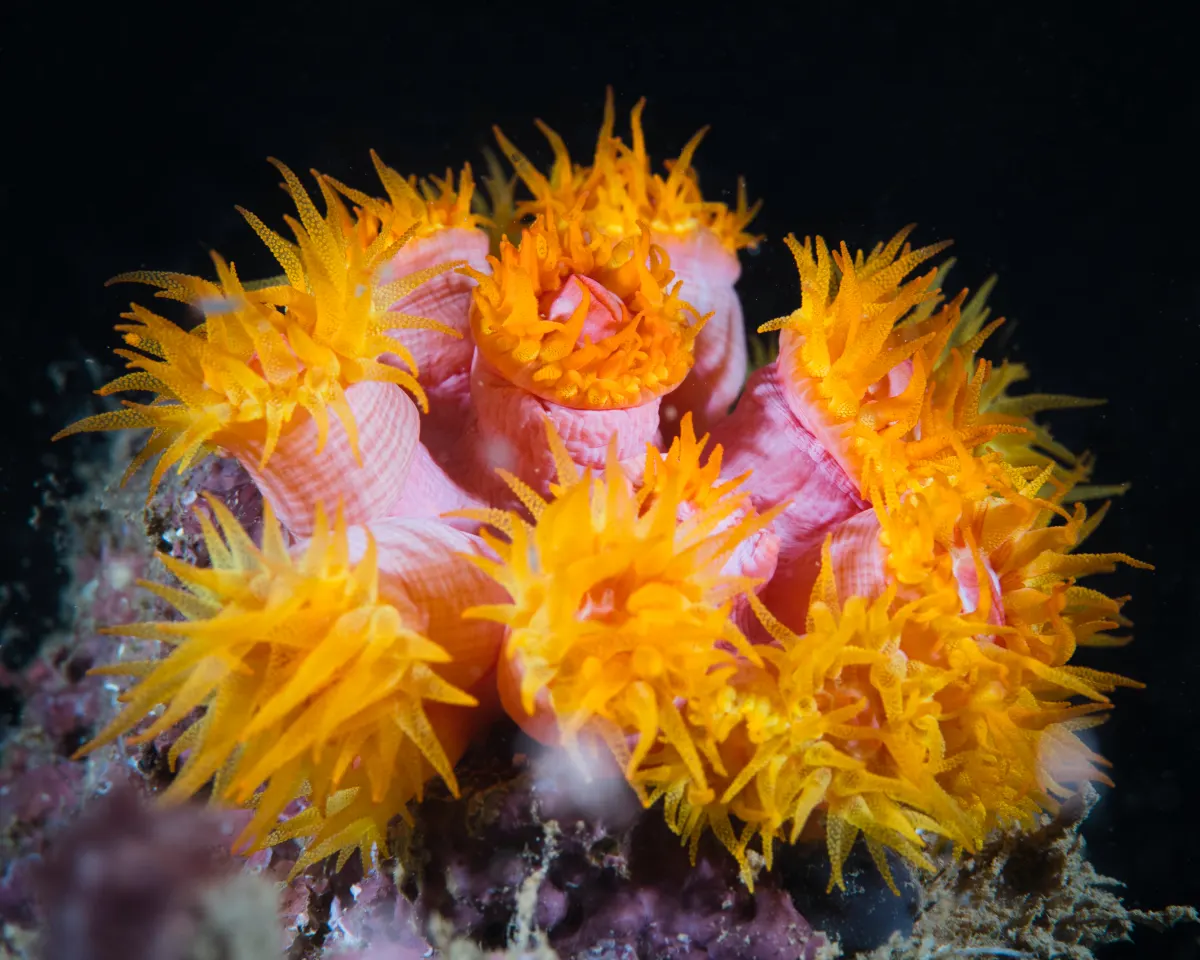
On a night dive it opens into a blazing orange bouquet – by day it looks like a modest knobbly colony in the shadow of the wrecks.
The orange cup coral (Tubastraea coccinea) is a stony coral of small clustered, tube-like cups that keeps its polyps closed during the day – all you see then is a heap of orange-pink knobs in the dark corners. The show starts after sunset: from every cup unfolds a wreath of fiery orange, translucent tentacles, and within minutes the colony turns into a flowering bouquet. On a night dive it is one of the most rewarding photo subjects.
Its secret is that, unlike most corals, it has no zooxanthellae – no photosynthetic algae partners – so it does not depend on sunlight and earns all its energy by hunting. At night the tentacles snatch plankton and tiny crustaceans, which is why it opens when the plankton is thickest. Since it needs no light, it thrives where other corals would starve: cave mouths, the undersides of overhangs, the shade of vertical walls.
At Hurghada its most spectacular colonies live on the El Mina wreck: in places they cover the shaded steel of the hull like a continuous orange carpet. It is also common in the recesses of Umm Gamar and Carless Reef. The species is not protected, but the rule is the same as for every coral: watch it, photograph it, never break a piece off – and never buy coral souvenirs in the bazaar.
Did you know?
The "sun coral" name is misleading: it is the one coral that does not need the sun. Living without algae partners, it could survive in total darkness – which is exactly why it is among the first to colonise shipwreck steel.
Where can you meet it?
The finest colonies live on the shaded steel plates of the El Mina wreck; on a night dive you also find it open on the walls of Umm Gamar and Carless Reef.
Frequently asked questions
Because it lives by hunting, not by light: plankton rises in the water column at night, so the coral opens its tentacles after dark. By day it stays closed to protect itself from nibbling fish – if you want to see it open, join us on a night dive.
On the El Mina wreck – it covers the shaded steel in places like an orange carpet. The wreck lies at 25–30 metres, so that is more of an advanced dive; on the wall reefs (Umm Gamar, Carless) you find smaller colonies shallower.
It is a stony coral but not a true reef-builder: it forms small separate colonies and, lacking algae, builds its skeleton more slowly. Think of it as the reef decorator – in exchange it survives where the master builders could never grow.
Best sites for Orange cup coral
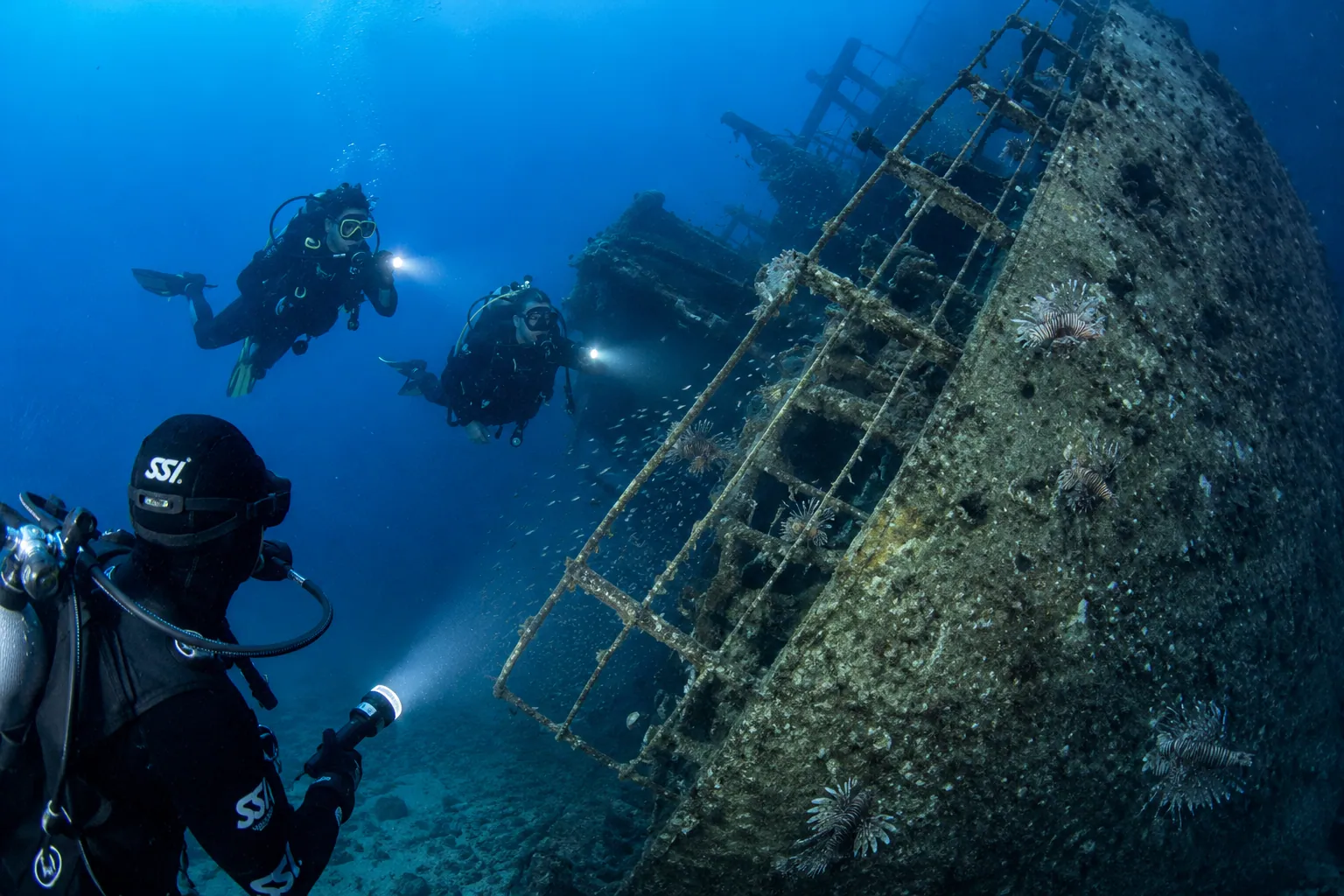
El Mina roncs
A genuine warship wreck 20 minutes from the marina: an Egyptian minesweeper sunk in 1969, resting on sand at 30 metres.
- Depth
- 16–30m
- Boat
- 20min
- Species
- 5
Umm Gamar
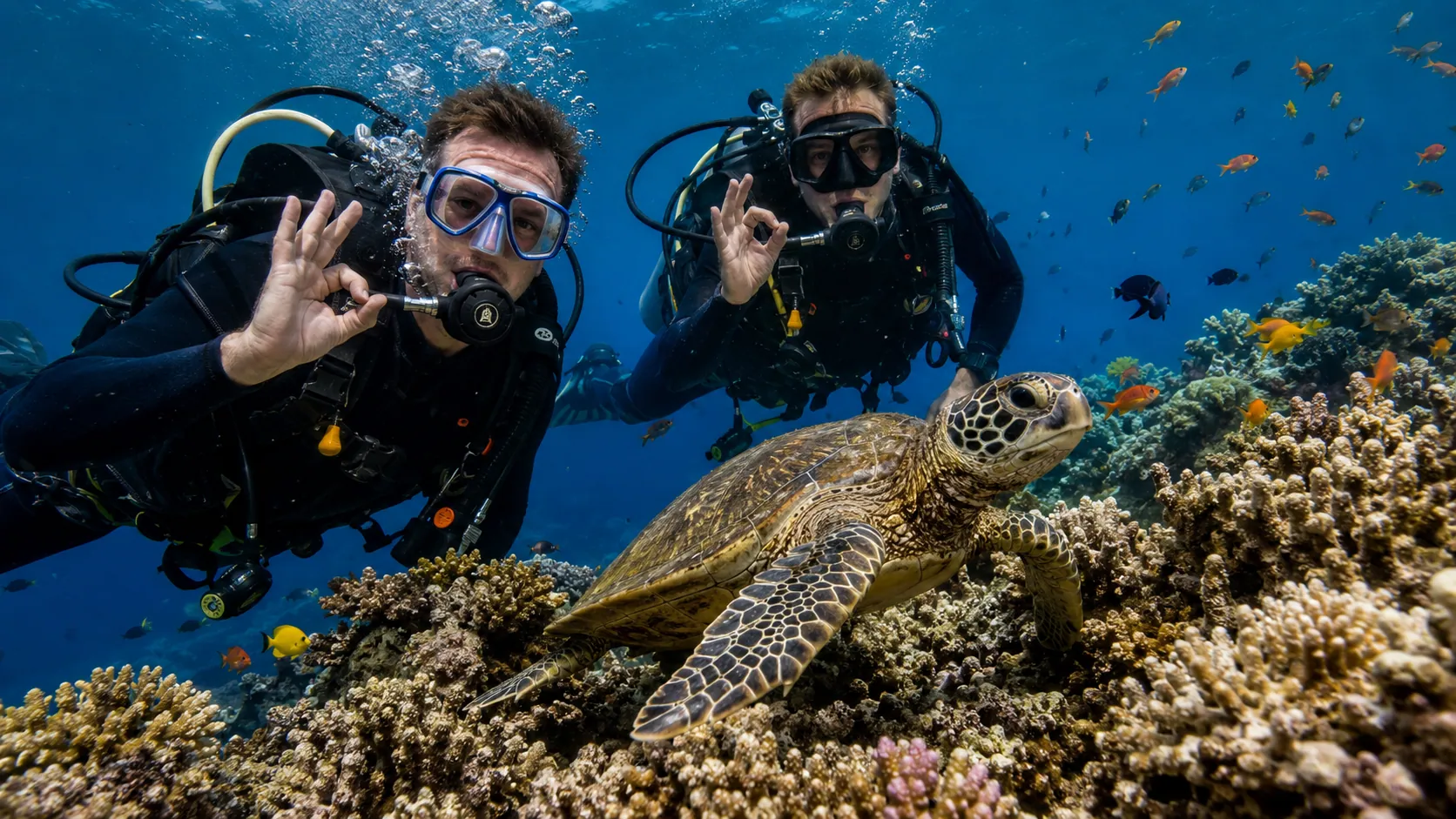
An elongated island in the north: a plateau with three coral towers, small caves and big predators out in the blue.
- Depth
- 10–30m
- Boat
- 75min
- Species
- 5
Carless Reef
An offshore twin-erg reef famous for its legendary moray colony – for experienced divers, weather permitting.
- Depth
- 12–30m
- Boat
- 70min
- Species
- 5
The Red Sea will not wait forever.
Book today – seats on the boat are limited, your excitement is not.