Orangespine unicornfish
Naso elegans
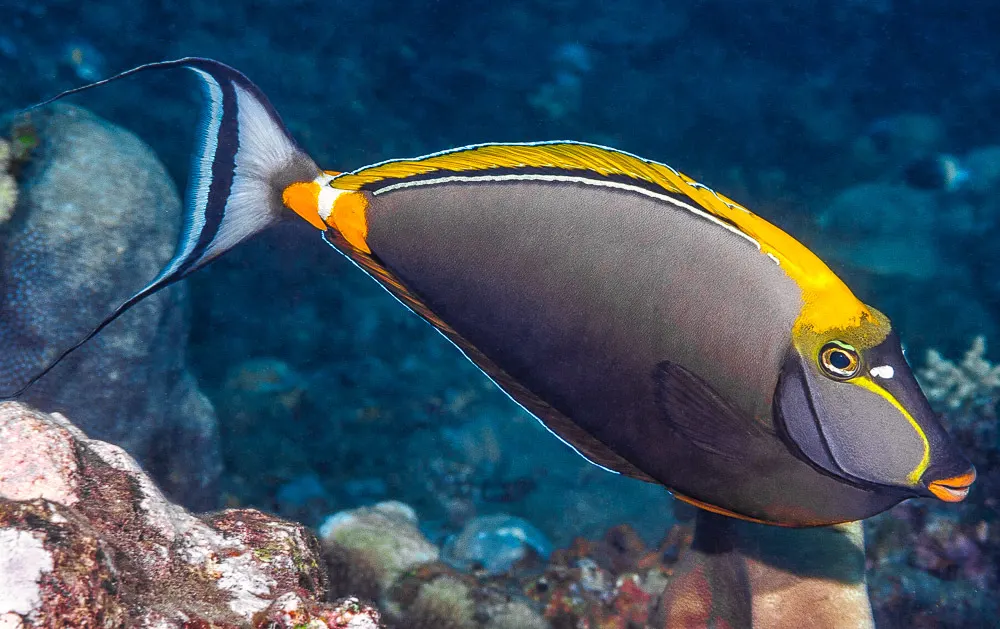
A unicornfish with no horn at all – making up for it with orange lips, a yellow dorsal fin and two blazing orange tail blades.
The orangespine unicornfish (Naso elegans) is one of the most elegant-looking fish on the reef – its scientific name "elegans" is no accident. Its grey-brown body is crowned by a brilliant yellow dorsal fin, its lips are orange as if wearing lipstick, and at the tail base sit two pairs of fixed, razor-sharp blades set in vivid orange patches. Males trail long filaments from the two corners of the tail fin.
Despite its name, this unicornfish has no horn whatsoever – within the genus Naso it belongs to the group whose forehead stayed smooth. It feeds on leafy algae, grazing alone or in loose pairs on the reef slope and in coral gardens by day. It is an alert, agile fish: approach and it glides away with dignity, but it never bolts in panic, which makes it a rewarding photo subject.
It is native to the Indian Ocean and the Red Sea – here it replaces its Pacific cousin Naso lituratus, with which it is often confused. Around Hurghada it turns up regularly along the walls of Small Giftun, in the Gota Abu Ramada coral garden and at the El Aruk pinnacles, typically between 3 and 25 metres. It also appears in the shallows for snorkelers, especially where algae growth is lush.
Did you know?
Its name misleads twice over: it is a unicornfish that never grows a horn, and it was long thought to be the Red Sea form of the Pacific Naso lituratus – today we know it is a species of its own, told apart by its yellow dorsal fin.
How to behave around it
A peaceful herbivore, but the orange blades at its tail base are fixed and very sharp – the orange colour is an explicit warning. Do not reach for it or try to herd it; watched from a respectful distance it is entirely harmless.
Where can you meet it?
Seen most often along the Small Giftun walls, in the Gota Abu Ramada coral garden and at the El Aruk pinnacles, from the shallows down to 25 metres.
Frequently asked questions
Not to divers – it is a peaceful algae grazer that simply keeps its distance. The orange blades at its tail base are sharp and cannot fold away, though, so handling is out of the question. Watch it, photograph it, don't touch it – that's all.
Because it belongs to the genus Naso, several members of which really do wear horns – the name stuck through family ties. In this species the forehead stayed smooth; you recognise it instead by its orange lips and yellow dorsal fin.
Yes, it also grazes in shallow coral gardens where algae grow thickly. The finest large individuals, though, are usually met while diving along the reef slope.
Best sites for Orangespine unicornfish
Small Giftun fal
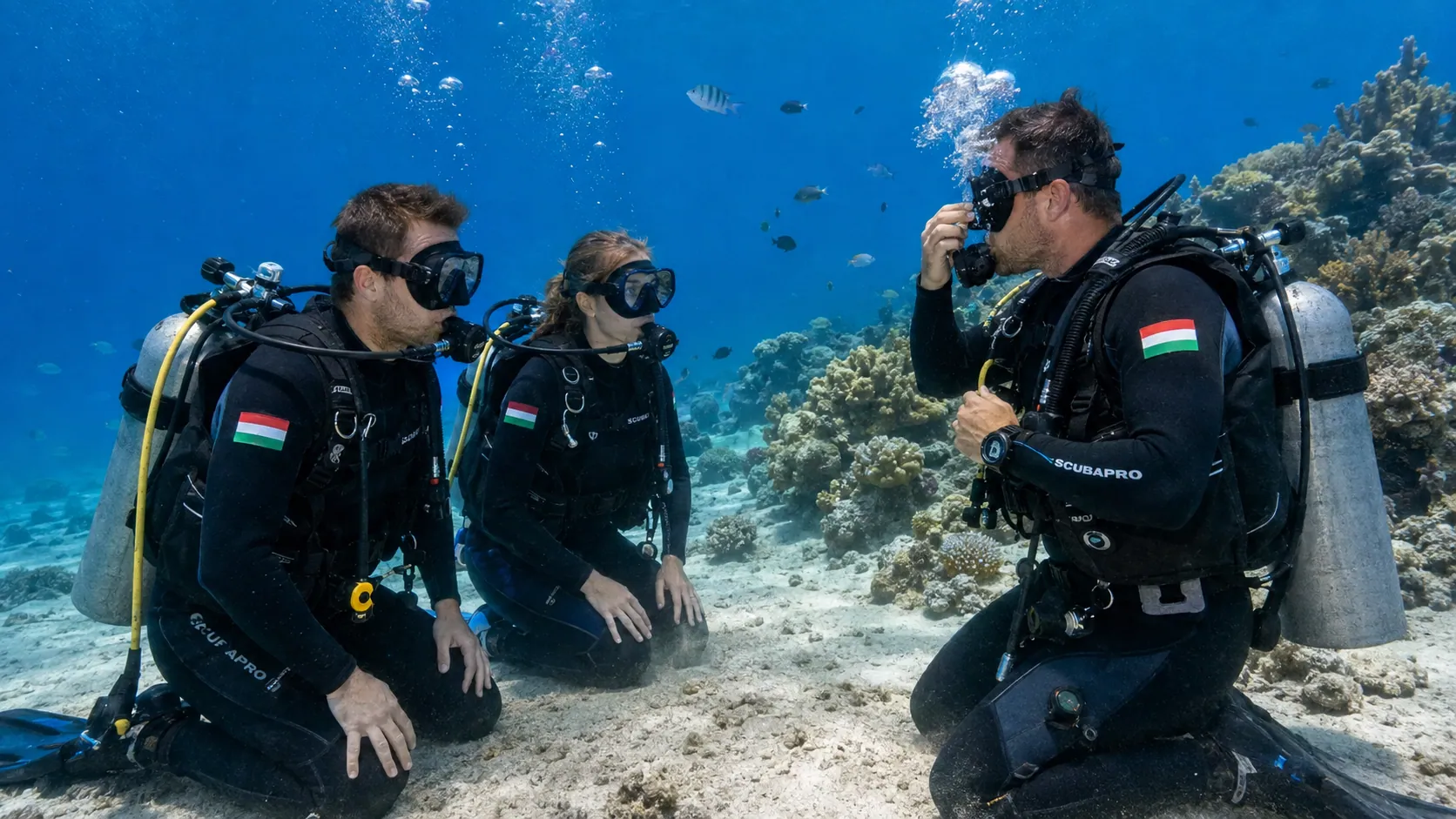
Hurghada's classic drift dive: a sheer wall with gorgonian fans, eagle rays and a coral-tower plateau at 20–30 metres.
- Depth
- 8–30m
- Boat
- 50min
- Species
- 5
Gota Abu Ramada
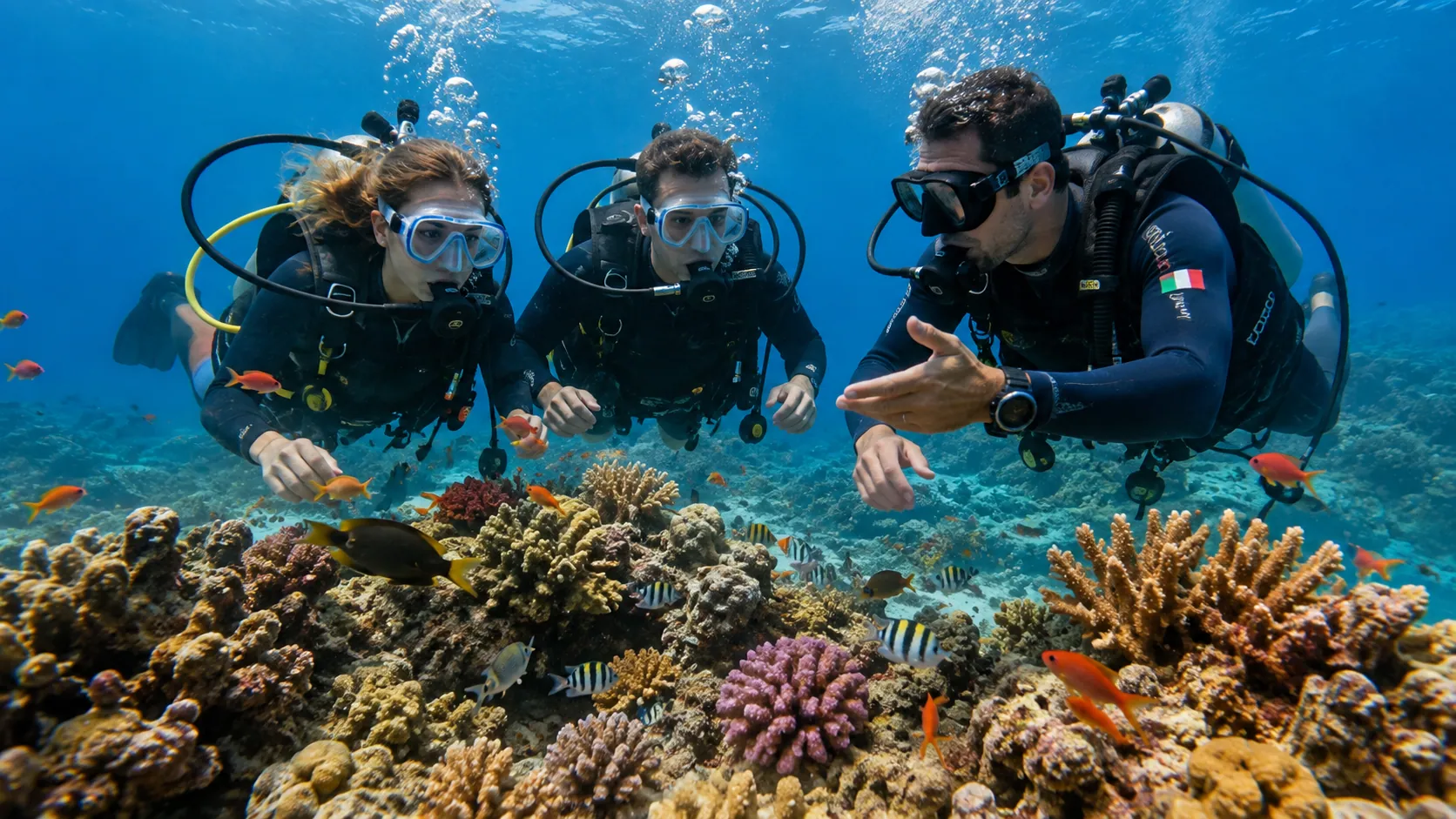
A shallow oval reef with a sandy bottom and schools of butterflyfish – perfect for training, second and night dives.
- Depth
- 4–14m
- Boat
- 55min
- Species
- 5
El Aruk (Gigi)
A playground of coral towers on white sand: easy navigation, clouds of glassfish and light made for photography.
- Depth
- 5–14m
- Boat
- 35min
- Species
- 5
The Red Sea will not wait forever.
Book today – seats on the boat are limited, your excitement is not.