Organ pipe coral
Tubipora musica
A grey-green cushion of polyps on the outside, crimson "organ pipes" within: one of the reef's prettiest secrets hides just beneath the surface.
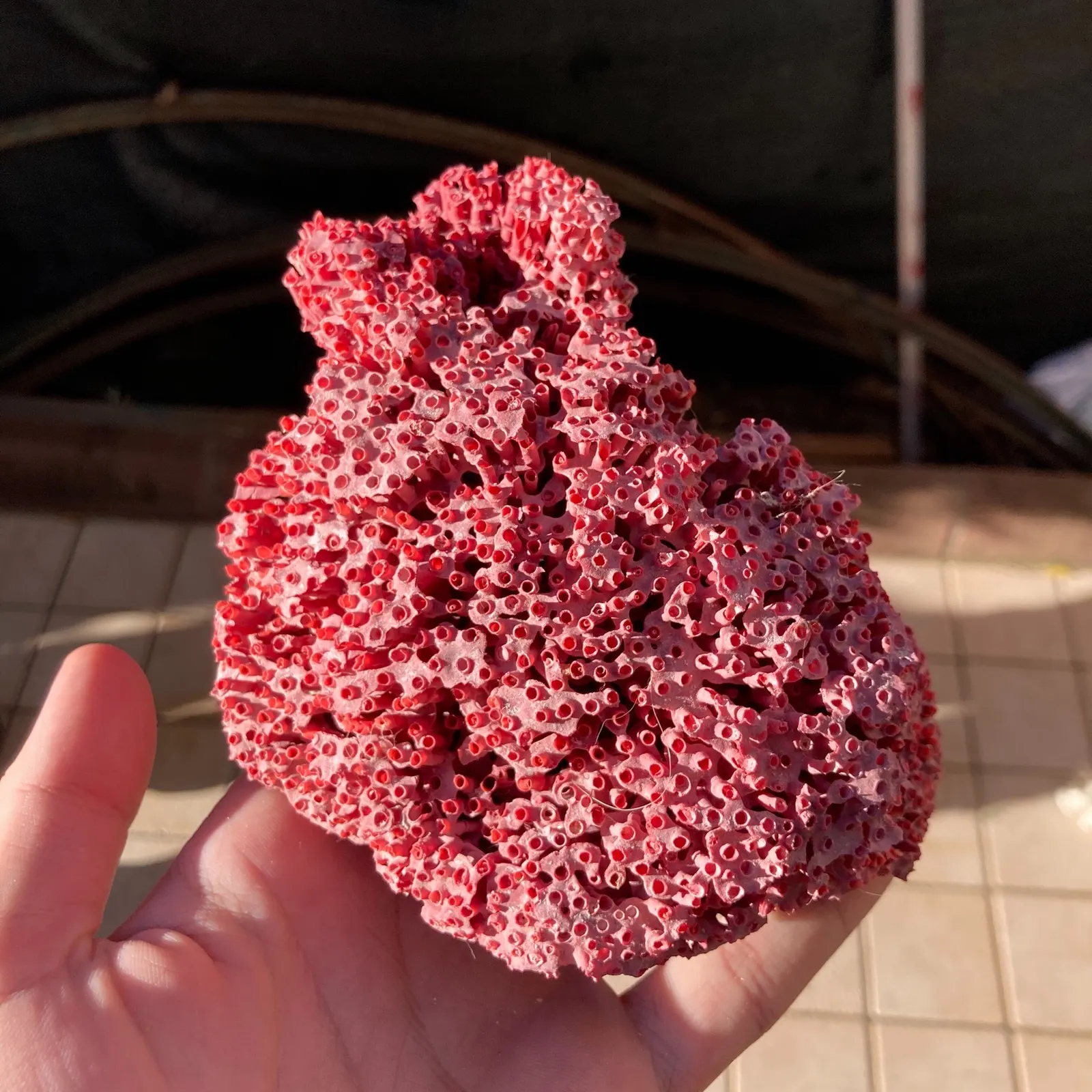
In life the organ pipe coral (Tubipora musica) gives little away: the colony's surface is covered by a dense cushion of grey-green, eight-armed polyps, and you could easily mistake it for an ordinary soft coral. The secret is the skeleton: thousands of parallel crimson limestone tubes joined by thin horizontal platforms – exactly like the pipe ranks of a church organ. Hence the scientific name: musica.
Biologically, the organ pipe coral is a true eccentric. Its eight-armed polyps place it among the relatives of the soft corals, yet it builds a solid calcite skeleton – almost unheard of in that whole group. The red colour comes from iron pigments built into the skeleton, and it persists after the coral dies: the bright red fragments you spot in reef rubble are nearly always Tubipora remains.
It is common on Hurghada's shallow reef tops and coral gardens, and easy to find while snorkeling once you learn to recognise the grey-green polyp cushion. One important rule: the organ pipe coral is protected under the CITES convention, which means collecting, buying or exporting the red skeleton pieces from Egypt is illegal – however tempting they look. A coral souvenir is not a keepsake, it is a crime.
Did you know?
The red skeleton of the organ pipe coral was polished into jewellery and used in traditional medicine for centuries – today the species is CITES-protected and trade in it is strictly banned.
Where can you meet it?
Common in Hurghada's shallow coral gardens: it appears regularly on the reef tops of Giftun and Small Giftun islands and on the Gota Abu Ramada plateau.
Frequently asked questions
Because in life the red skeleton is completely hidden by the cushion of grey-green polyps – the colour only shows on broken, bare skeleton pieces. If you spot a bright red, tubular fragment in reef rubble, it is almost certainly an organ pipe coral remnant.
No. The organ pipe coral is protected under CITES, and exporting any coral from Egypt is illegal – it can mean a serious fine at the airport. Take a photo instead: pictures are duty-free and last much longer.
Trick question: by its eight-armed polyps it is a relative of the soft corals, yet it builds a hard limestone skeleton. A "soft coral in armour" – one of the strangest exceptions in the coral world.
Best sites for Organ pipe coral
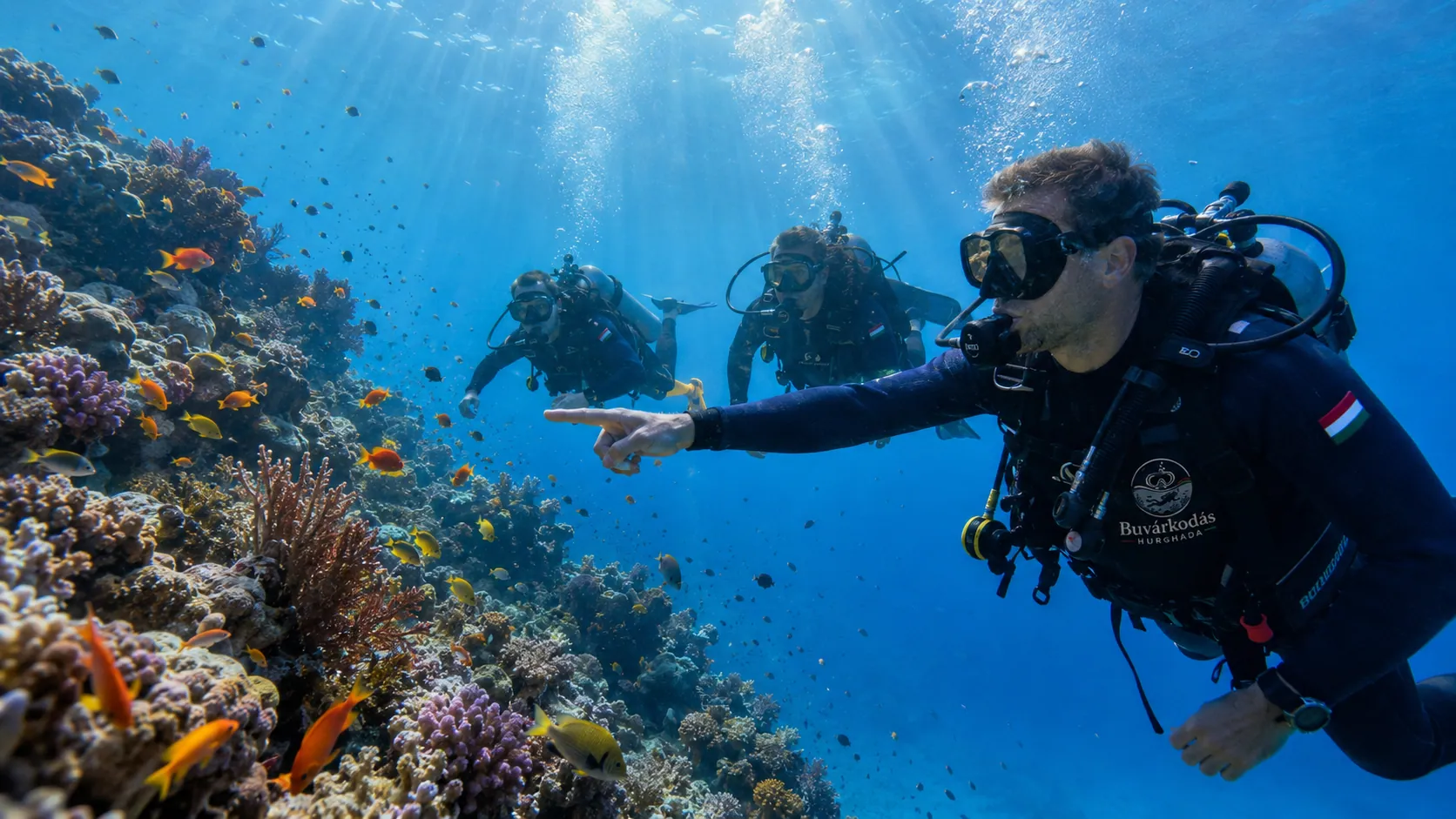
Giftun-szigetek
A national park island pair with a dozen dive sites: coral gardens, turtles and perhaps the richest fish life in the area.
- Depth
- 5–25m
- Boat
- 45min
- Species
- 6
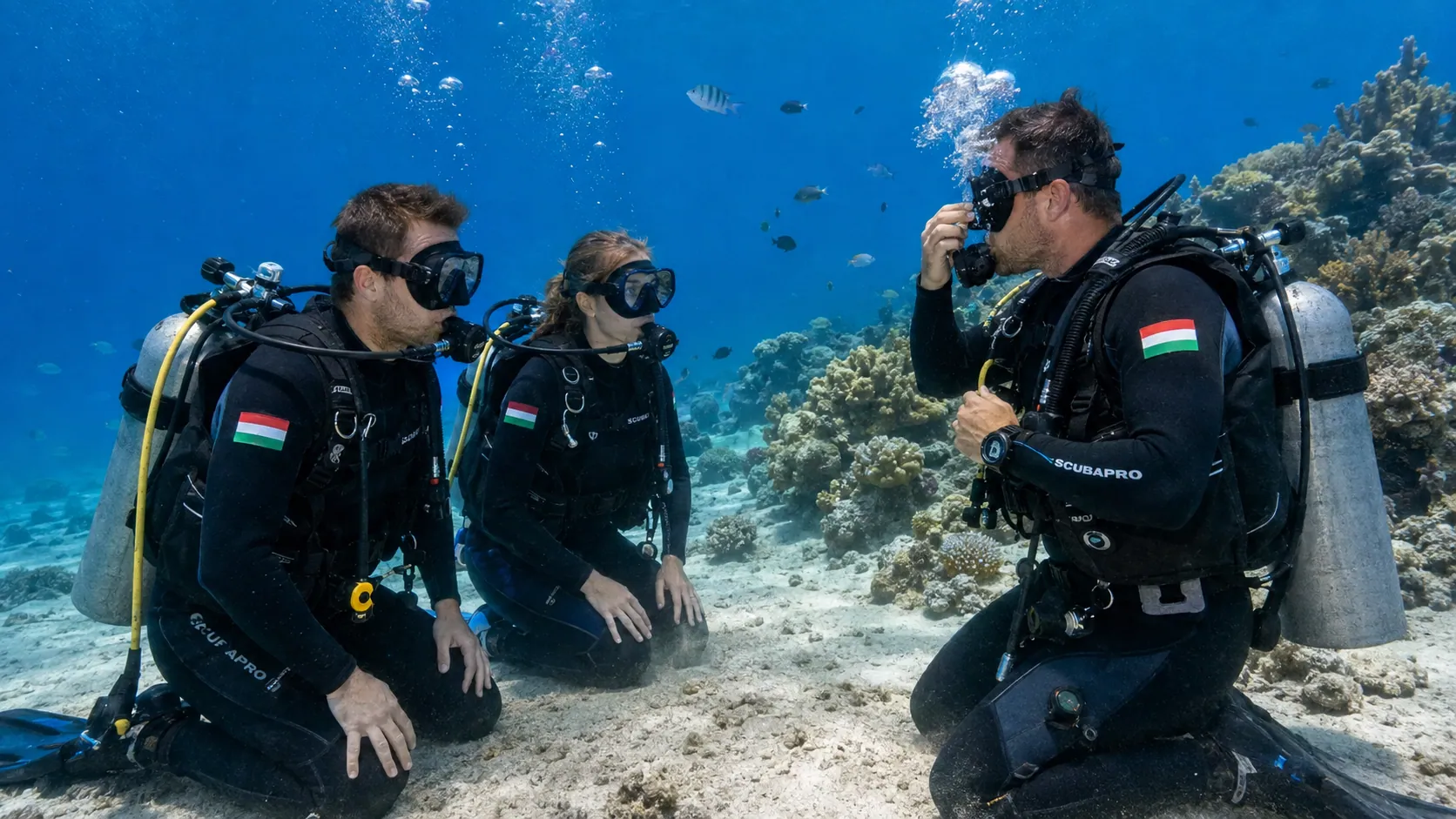
Small Giftun fal
Hurghada's classic drift dive: a sheer wall with gorgonian fans, eagle rays and a coral-tower plateau at 20–30 metres.
- Depth
- 8–30m
- Boat
- 50min
- Species
- 5
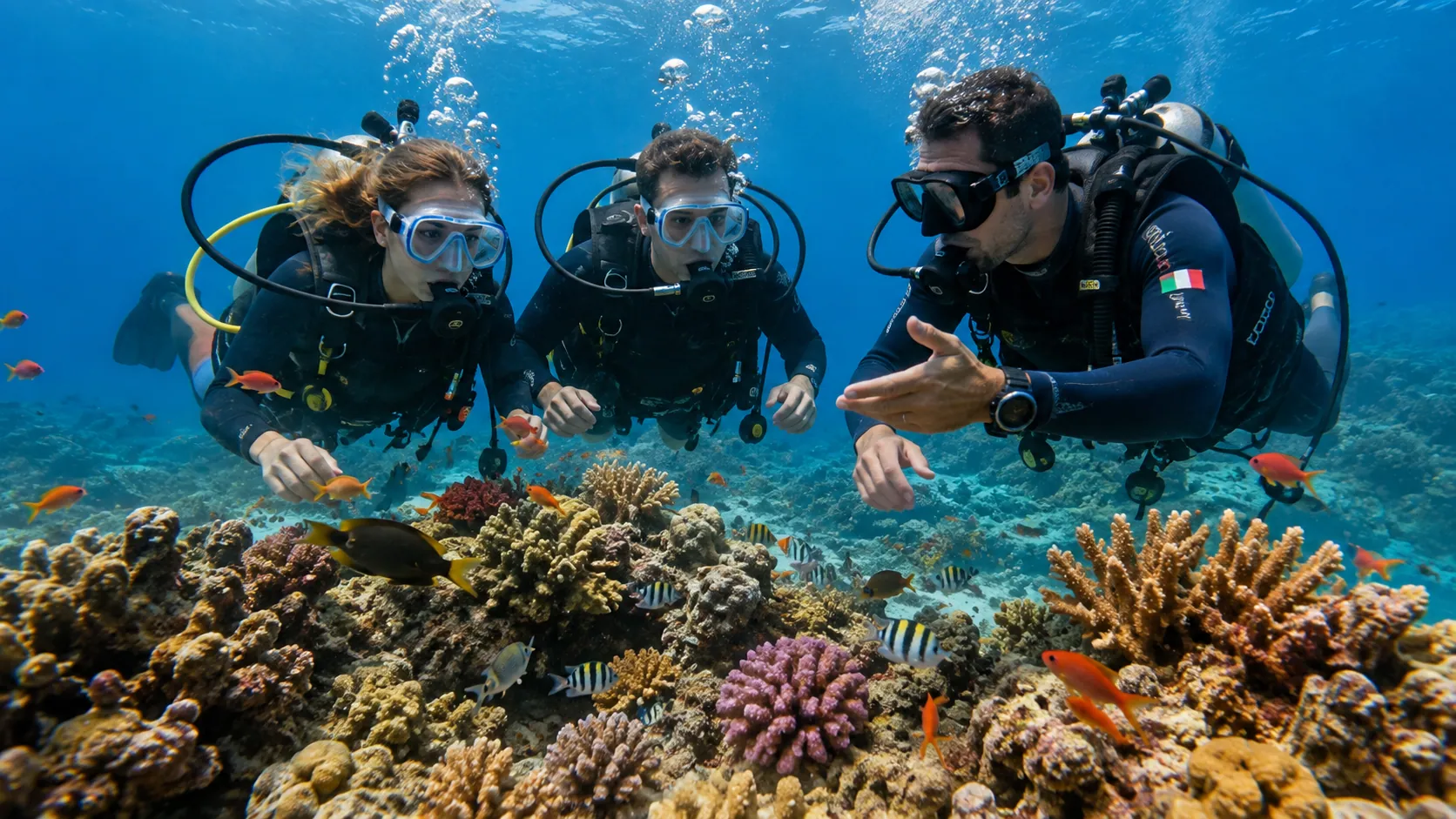
Gota Abu Ramada
A shallow oval reef with a sandy bottom and schools of butterflyfish – perfect for training, second and night dives.
- Depth
- 4–14m
- Boat
- 55min
- Species
- 5
The Red Sea will not wait forever.
Book today – seats on the boat are limited, your excitement is not.