Panther torpedo ray
Torpedo panthera
The Red Sea's living battery: this panther-patterned ray hunts and defends itself with genuine electric shocks – free to watch, very much not to touch.
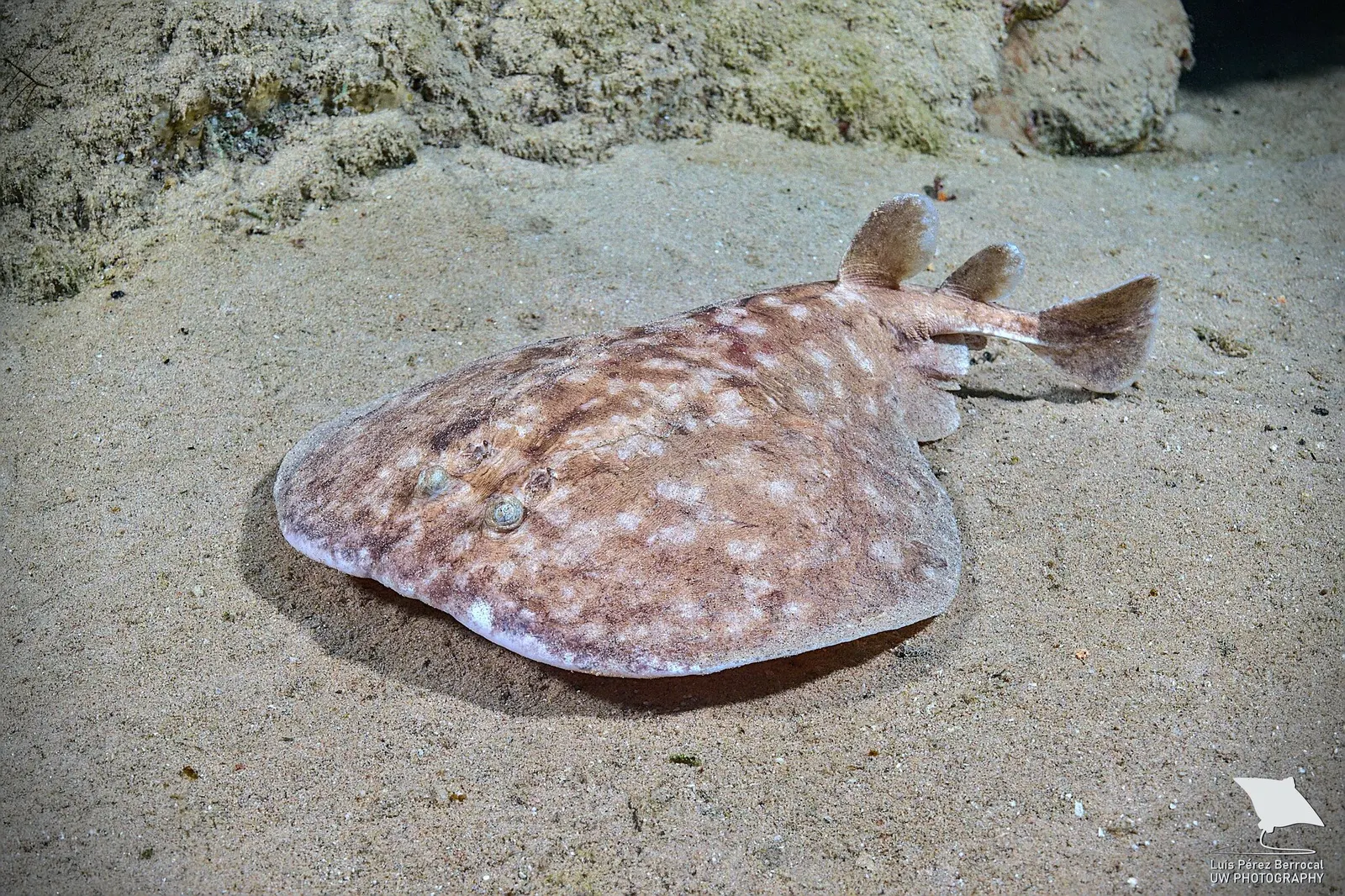
The panther torpedo ray (Torpedo panthera) is a round, pancake-shaped, sand-coloured ray whose back is decorated with pale, panther-like rings – hence the name. Unlike stingrays it carries no tail spine: its weapon is a pair of kidney-shaped electric organs on either side of the head, capable of delivering a genuine electric shock. These are built from modified muscle tissue stacked into columns of cells – working exactly like a battery of cells wired in series.
By day it usually rests buried in the sand with only its eyes and spiracles showing. It hunts at night: hovering just above the bottom, it stuns small fish and invertebrates with a well-aimed discharge, then eats them at its leisure. Electricity is also its defence – most predators need only one encounter to remember that this particular "pancake" is best left alone. Its slow, unhurried swimming style says it all: it has no need to flee.
Around Hurghada you will find it in sandy lagoons and on the sand patches between reefs – the bay of Abu Hashish, the sand flats of El Fanadir and the lagoon of Gota Abu Ramada are its typical haunts. The diver's rule is simple: never touch it, and never settle onto the sand right above it – its shock is not life-threatening, but it is very unpleasant, and a startle underwater is a hazard in itself. Keep a respectful distance and you can calmly observe one of the most remarkable rays in the sea.
Did you know?
Ancient Greek and Roman physicians placed live torpedo rays on patients' heads or feet to treat headaches and gout – the world's first "electrotherapy". The ray's Greek name, narke (numbness), also gave us the word "narcosis".
How to behave around it
The torpedo ray does not attack, but touching or kneeling on one hidden in the sand can earn you a strong electric shock. Keep your distance, never touch it, and on sandy bottoms always check where you place your hands and knees.
Where can you meet it?
Look for it on sandy bottoms: it turns up most often in the lagoon of Abu Hashish, on the sand flats of El Fanadir and in the sandy "aquarium" of Gota Abu Ramada.
Frequently asked questions
Yes, a genuine electric discharge from modified muscle organs beside its head – a shock from a larger animal feels roughly like touching an electric fence. It is not life-threatening for a healthy adult, but it is painful, and a startled, sudden movement underwater is a risk in itself.
The torpedo ray's body is an almost perfect disc and its tail is short and stubby with small fins – no whip-like spiny tail. Stingrays are more diamond-shaped with long thin tails. Rule of thumb: round pancake = electricity, long whip tail = venomous spine. Touch neither!
Rarely: by day it hides buried in the sand and prefers deeper sand flats, so it is mostly divers who meet it. If you do spot one in shallow sand while snorkeling, watch it from the surface – duck-diving down for a closer look is not a good idea.
Best sites for Panther torpedo ray
Abu Hashish-fok
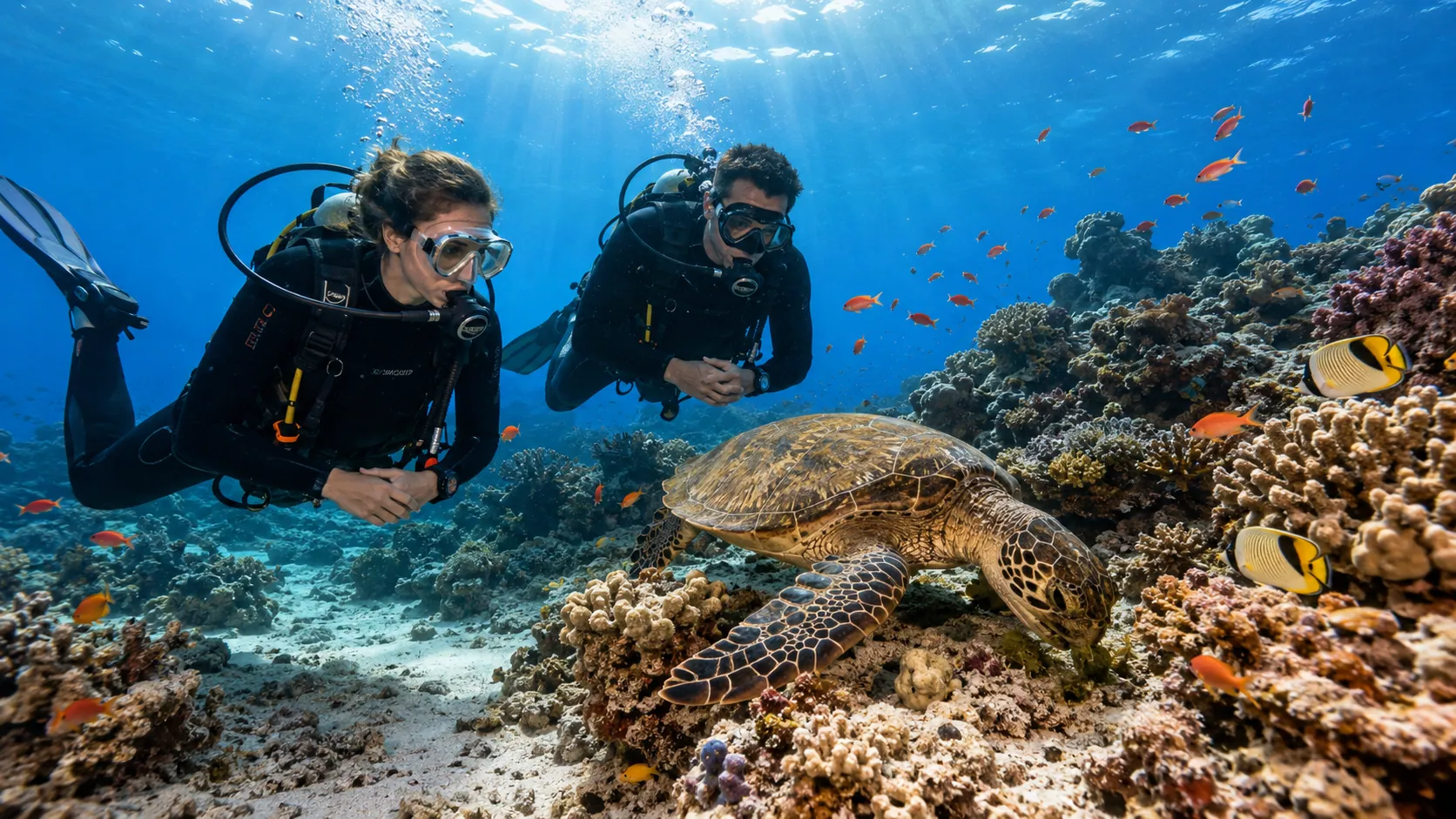
A quiet southern cape with seagrass meadows and an atmospheric cavern – turtles almost for sure, a dugong with some luck.
- Depth
- 5–20m
- Boat
- 60min
- Species
- 5
El Fanadir
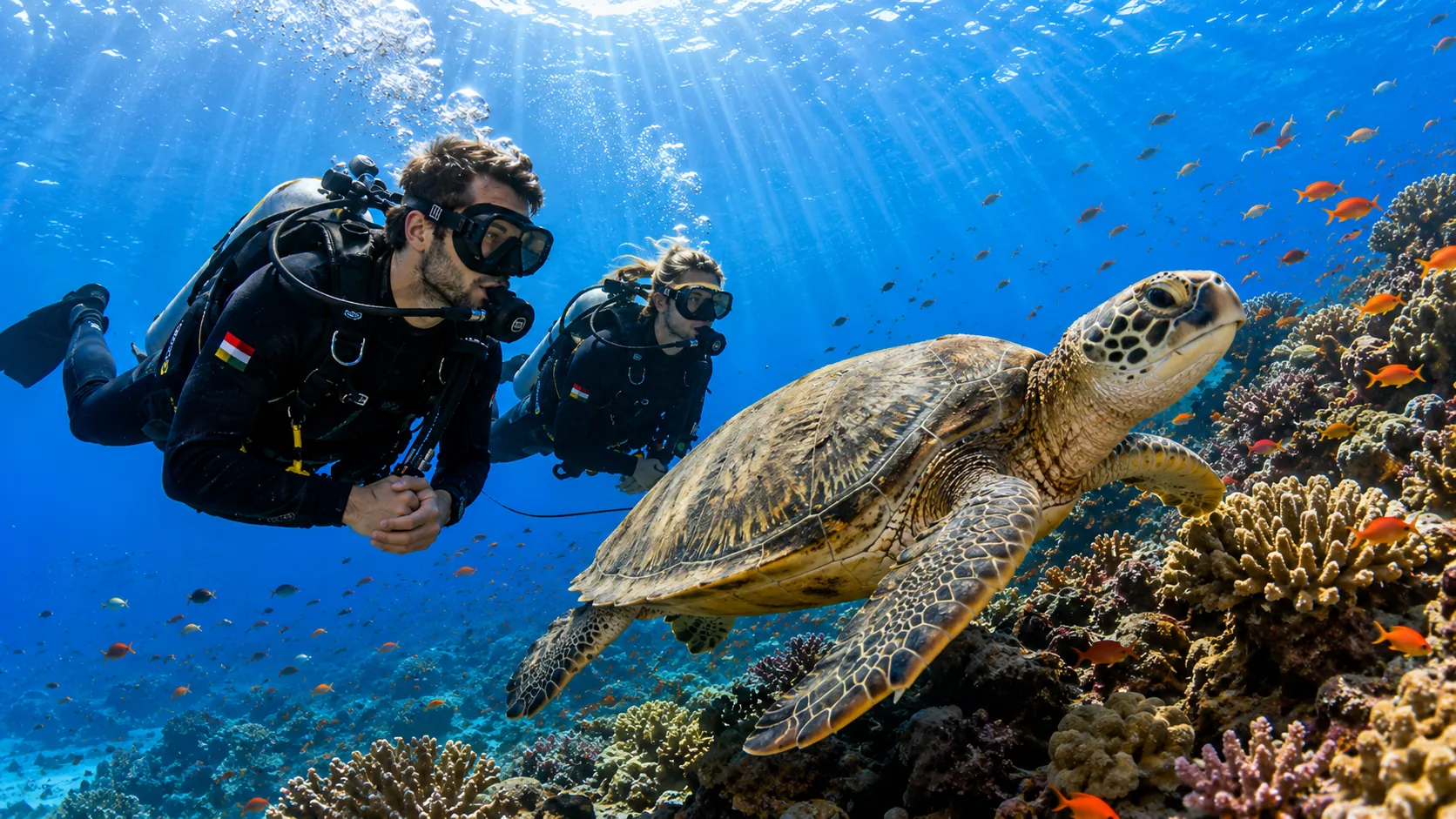
A long reef ridge barely half an hour from the marina: a gentle wall, blue-spotted rays and seagrass patches with turtles.
- Depth
- 6–25m
- Boat
- 30min
- Species
- 5
Gota Abu Ramada
A shallow oval reef with a sandy bottom and schools of butterflyfish – perfect for training, second and night dives.
- Depth
- 4–14m
- Boat
- 55min
- Species
- 5
The Red Sea will not wait forever.
Book today – seats on the boat are limited, your excitement is not.