Parrotfish
Chlorurus sordidus
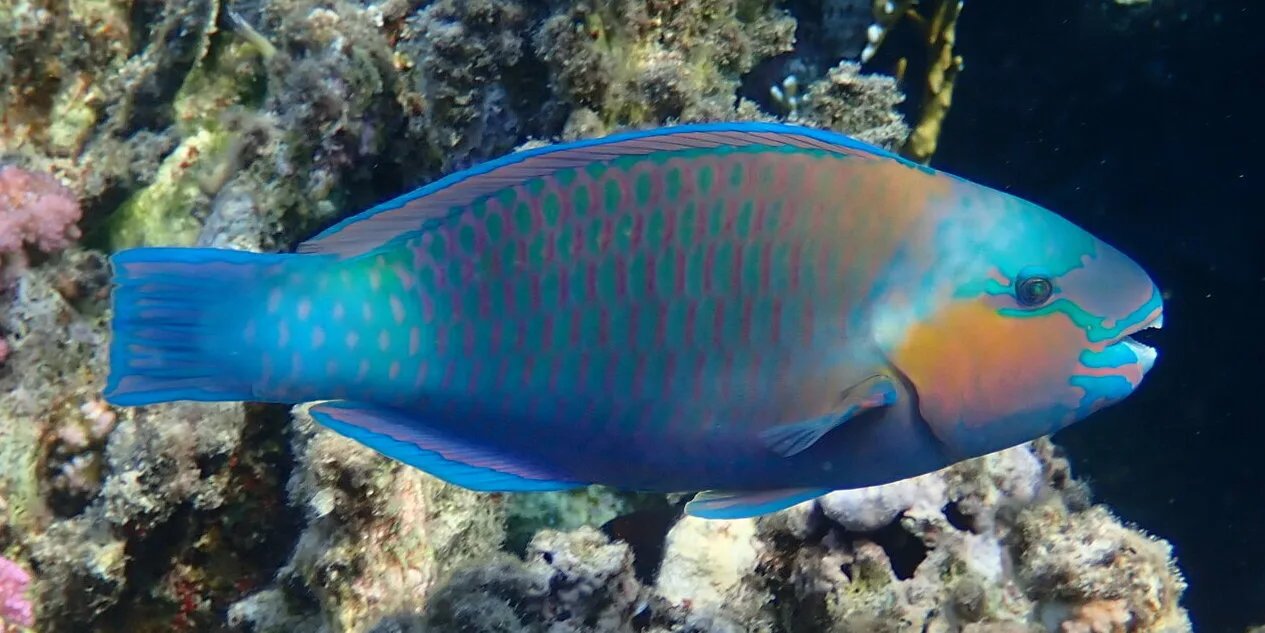
The parrotfish grazes the reef all day with its beak-like teeth – manufacturing some of the world's finest white sand in the process.
The parrotfish (Chlorurus sordidus) takes its name from its fused teeth, which resemble a parrot's beak and scrape algae off the coral rock. Grinding teeth in its throat mill the swallowed rock to a fine flour, and the indigestible limestone is excreted as fine white sand. Adults, dressed in blues and greens, grow to 30–50 cm.
The parrotfish is one of the reef's most important "gardeners": by constantly grazing the algae it stops them overgrowing and smothering the corals. It feeds almost non-stop through the day – you can hear its distinctive scraping, crunching sound from far away underwater. At night, several parrotfish species spin a transparent mucus cocoon around themselves that hides their scent from predators.
On Hurghada's reefs it is impossible not to meet one: everywhere in the coral gardens you hear and see them at work. They are easy to watch while snorkeling over the shallow reef tops too. And next time you see a patch of sand between the corals, look closer – chances are you are admiring the output of a parrotfish "workshop".
Did you know?
A single larger parrotfish produces up to 90–100 kg of white sand a year from the coral rock it grinds down. A significant share of the sand on dream tropical beaches is, quite literally, the work of parrotfish.
Where can you meet it?
It is an everyday sight in the coral gardens of the Giftun Islands and Gota Abu Ramada and on the reef tops of El Fanadir – easy to watch even while snorkeling.
Frequently asked questions
It is not dangerous to divers at all. Its beak-like teeth are astonishingly strong – they crunch coral rock – but it uses them purely for grazing and is completely indifferent to people. You can calmly watch it at work from very close range.
All year round, in every coral garden around Hurghada – you often hear the distinctive scraping before you spot the fish itself. It is also easy to observe while snorkeling over the shallow reef tops, for example at Giftun and Gota Abu Ramada.
Yes, to a significant degree: it excretes the indigestible limestone of the grazed coral rock as fine white sand – tens of kilograms per fish every year. On top of that it spins a mucus cocoon around itself at night – sand factory by day, sleeping bag by night.
Best sites for Parrotfish
Giftun-szigetek
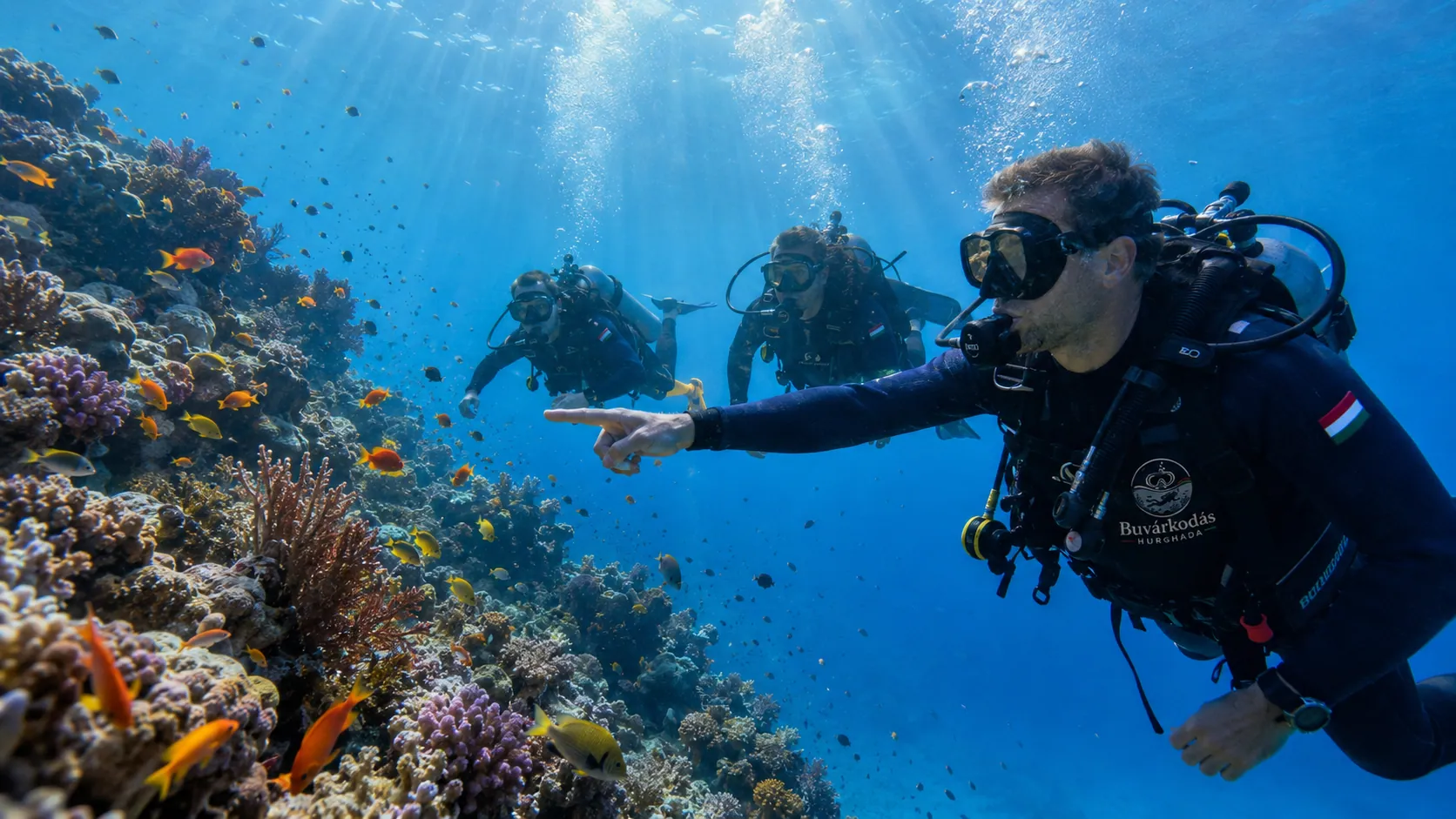
A national park island pair with a dozen dive sites: coral gardens, turtles and perhaps the richest fish life in the area.
- Depth
- 5–25m
- Boat
- 45min
- Species
- 6
Gota Abu Ramada
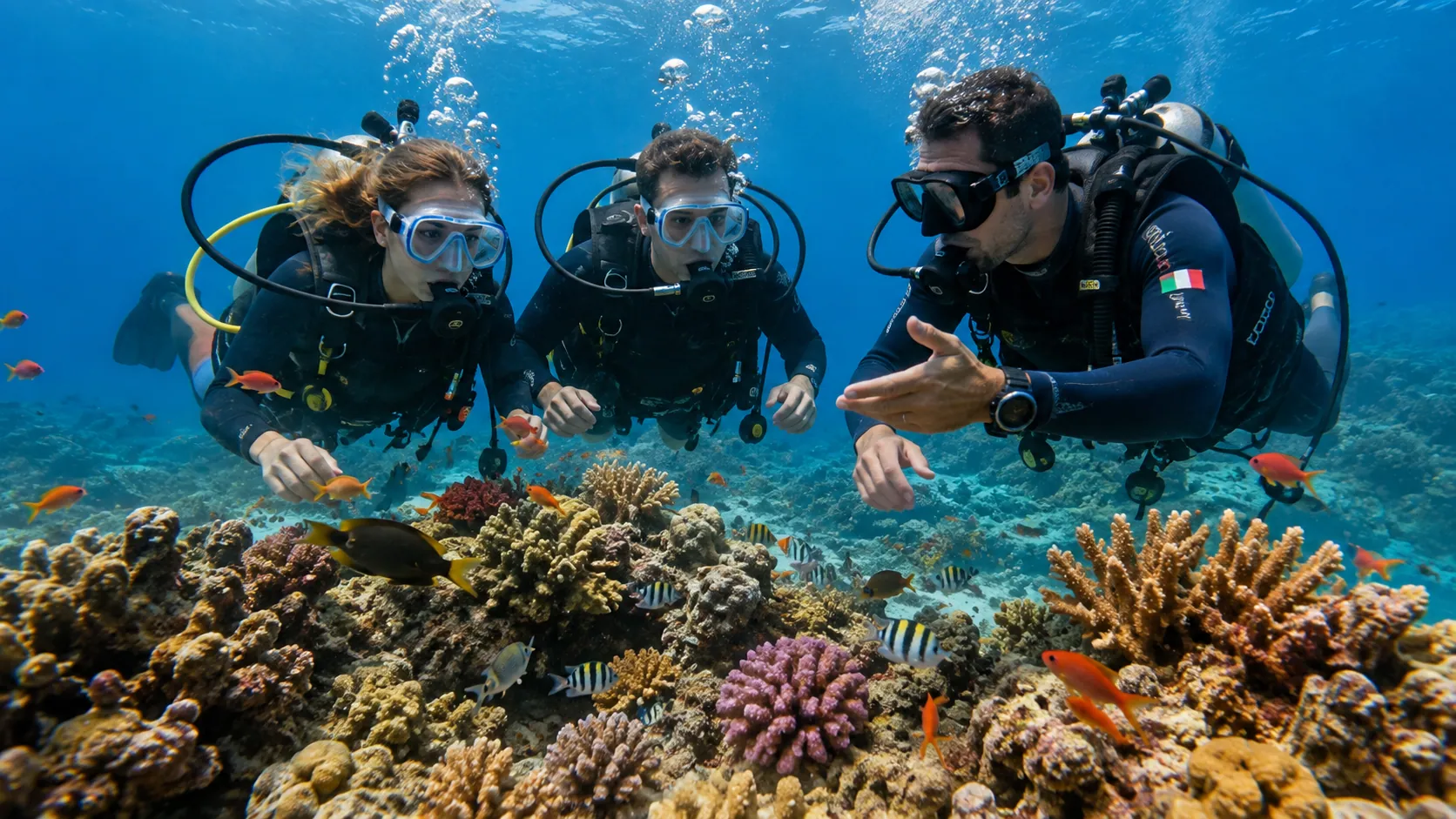
A shallow oval reef with a sandy bottom and schools of butterflyfish – perfect for training, second and night dives.
- Depth
- 4–14m
- Boat
- 55min
- Species
- 5
El Fanadir
A long reef ridge barely half an hour from the marina: a gentle wall, blue-spotted rays and seagrass patches with turtles.
- Depth
- 6–25m
- Boat
- 30min
- Species
- 5
The Red Sea will not wait forever.
Book today – seats on the boat are limited, your excitement is not.