Pharaoh table coral
Acropora pharaonis
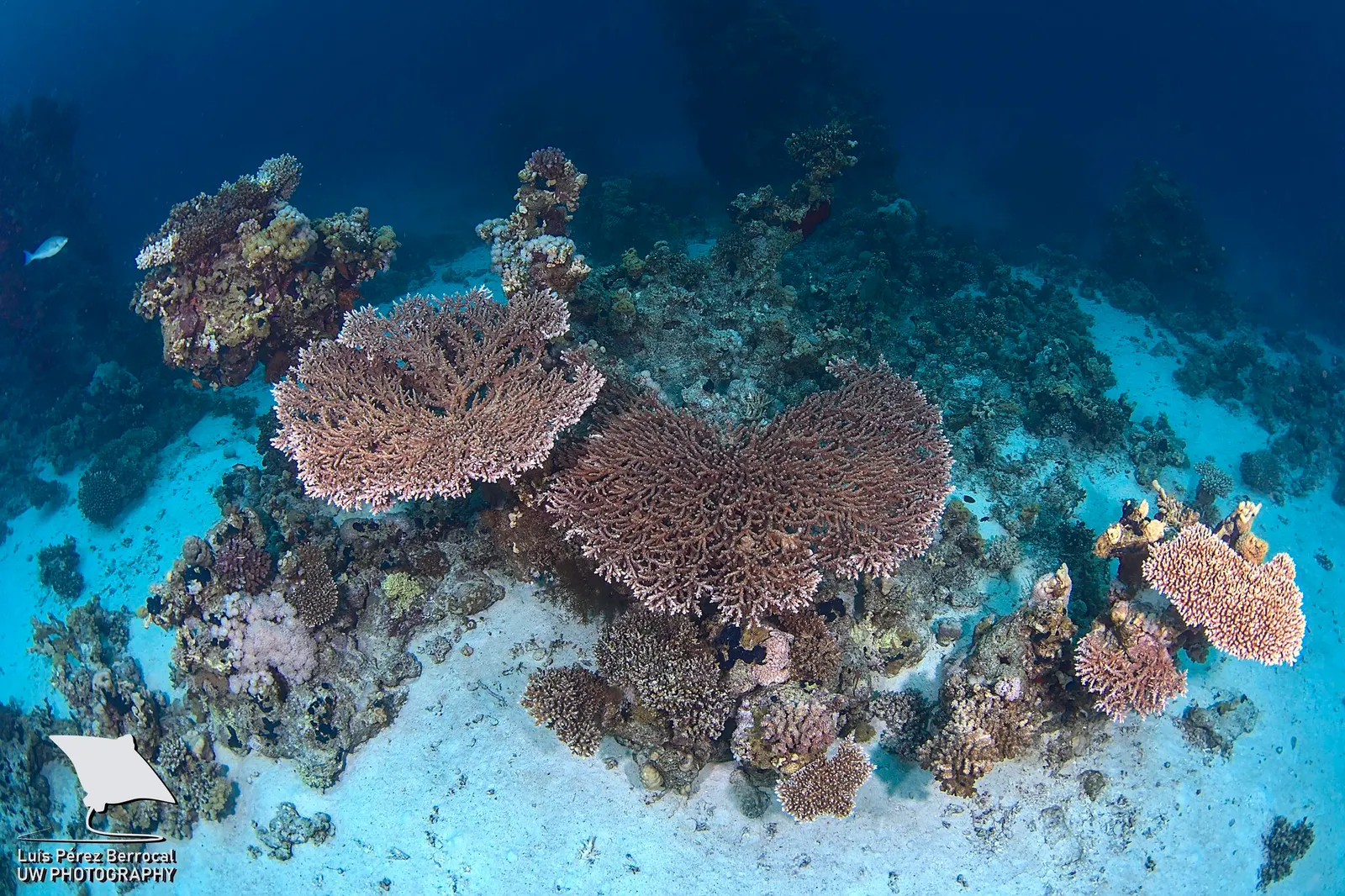
The reef's floating terraces: the pharaoh table coral grows tabletops up to two metres across, sheltering whole schools of fish beneath them.
You cannot miss a pharaoh table coral (Acropora pharaonis): from a short, thick stalk it spreads wide, horizontal tabletops, often in several tiers, up to two metres across. The table's surface is covered in a dense forest of tiny upward-pointing branchlets, each tipped with a larger, tube-like axial polyp – the tell-tale signature of the genus Acropora. Its colour ranges from greyish brown to creamy green, and it lives mainly in the light-rich 5–20 metre zone of the outer reef slopes.
A table coral is really the joint construction of many thousands of tiny polyps, its limestone skeleton powered by the zooxanthellae algae living in their tissues: photosynthesis supplies most of the coral's energy – which is why the table always grows towards the light, spreading out flat. Acropora are among the fastest-growing stony corals, yet a large table still takes decades to build. Once a year, on spring nights after the full moon, the colonies spawn in synchrony: millions of egg-and-sperm bundles rise towards the surface like snowfall in reverse.
Around Hurghada you'll find the finest rows of tables on the outer slopes of the Giftun Islands, along the El Fanadir wall and on the Umm Gamar plateaus – and do look underneath: schools of glassfish, soldierfish and sometimes a resting turtle hide in their shade. The good news: northern Red Sea corals are among the most heat-tolerant on the planet, surviving summer temperatures that would cause mass bleaching elsewhere. Your job is simple: hold perfect buoyancy and keep your distance – one careless fin kick can snap off decades of growth, because the table's edge is surprisingly fragile.
Did you know?
A two-metre coral table represents decades of work – and studies show that Acropora corals of the Gulf of Aqaba and northern Red Sea can endure water up to 5 °C above their summer maximum without bleaching. That is why scientists call this region the corals' last refuge.
Where can you meet it?
Common on all the outer reef slopes: the most spectacular table colonies line the Giftun Island slopes, the El Fanadir wall and the Umm Gamar plateaus.
Frequently asked questions
A little of all three – but officially an animal. The colony consists of thousands of tiny polyps building a shared limestone skeleton (the "rock"), while the algae living in their tissues produce energy from sunlight like plants. This triple alliance built every reef in the Red Sea.
Two reasons: coral is a living animal whose protective mucus layer is damaged by a single touch, opening the door to infection; and the table's rim is brittle – one grab or fin kick can snap off decades of growth. The sharp skeleton will also cut your hand – everyone wins by keeping a distance.
Acropora are the sprinters of the reef, adding up to several centimetres a year – yet a 1.5–2 metre table still represents 20–50 years of work. That is why every broken piece hurts: what you snap in a second takes the reef decades to rebuild.
Best sites for Pharaoh table coral
Giftun-szigetek
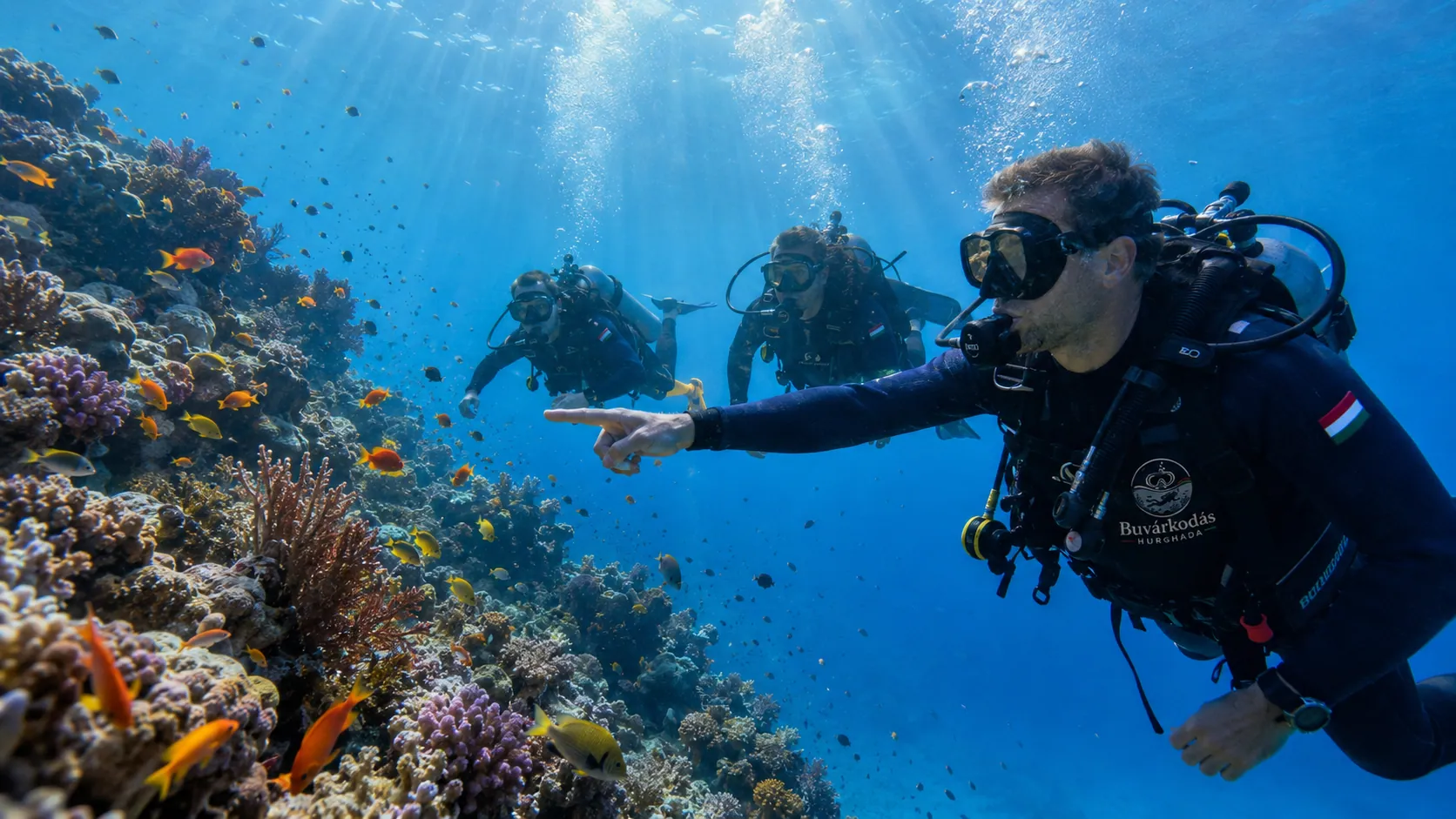
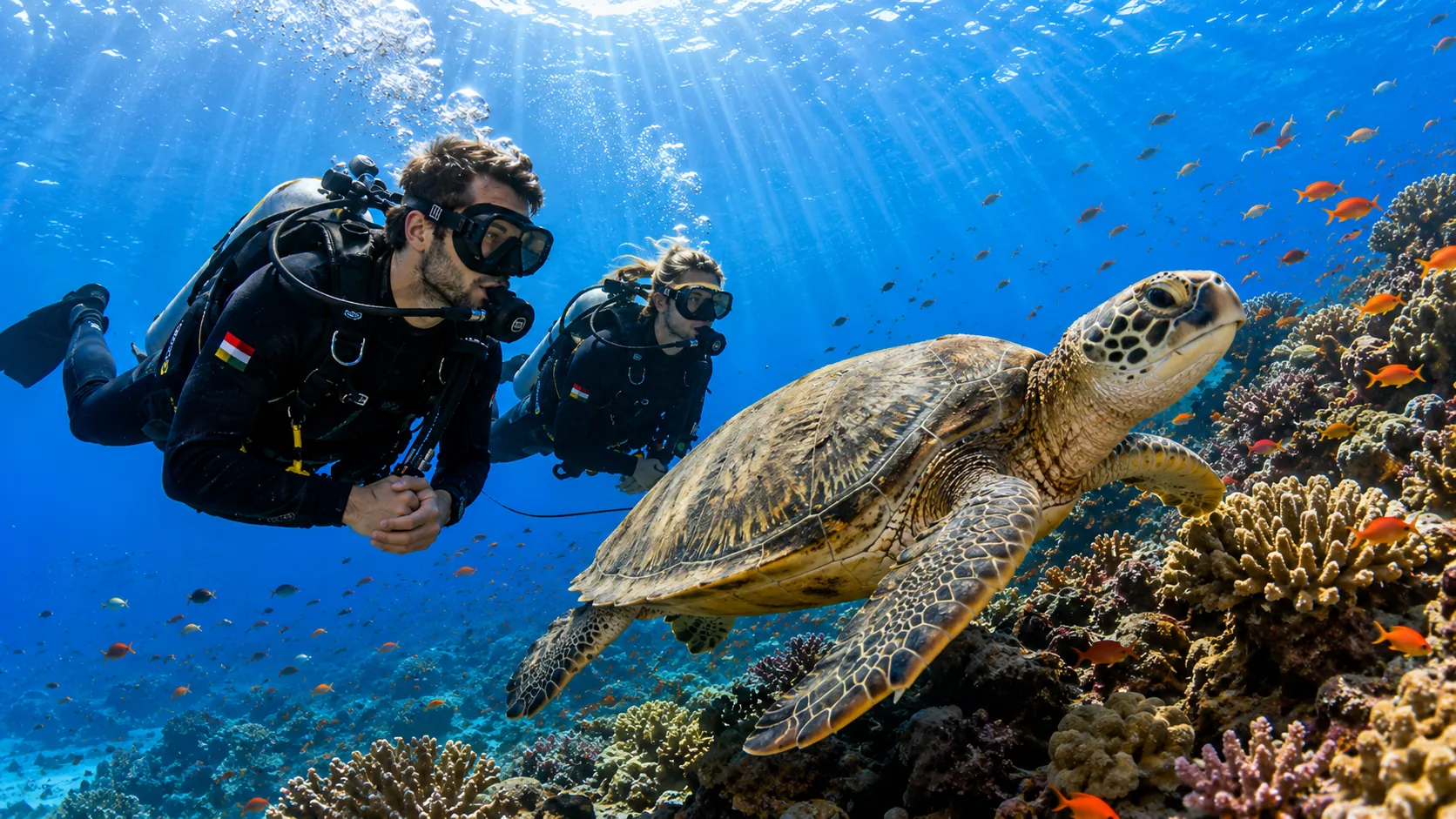
A national park island pair with a dozen dive sites: coral gardens, turtles and perhaps the richest fish life in the area.
- Depth
- 5–25m
- Boat
- 45min
- Species
- 6
Small Giftun fal
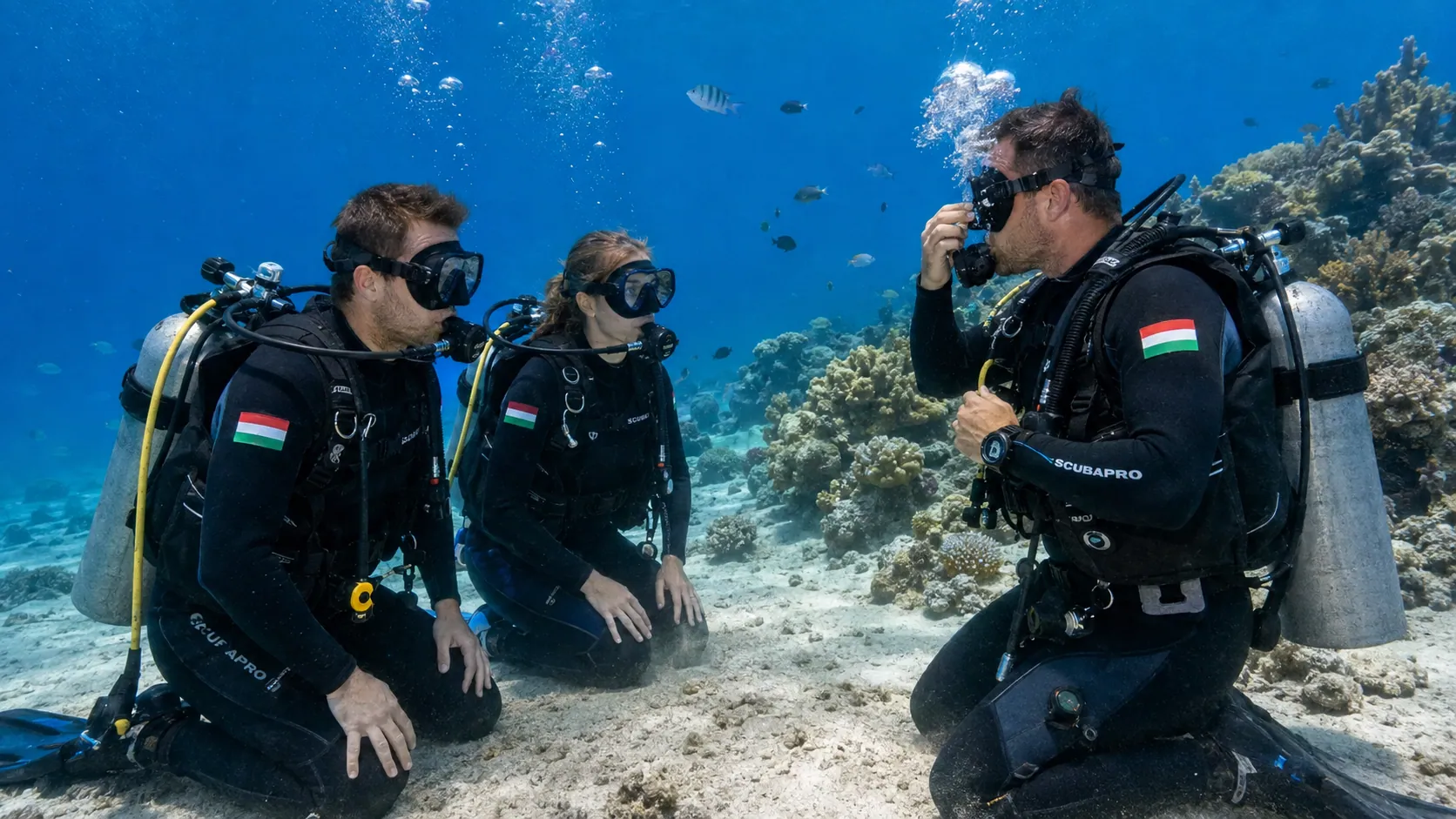
Hurghada's classic drift dive: a sheer wall with gorgonian fans, eagle rays and a coral-tower plateau at 20–30 metres.
- Depth
- 8–30m
- Boat
- 50min
- Species
- 5
El Fanadir
A long reef ridge barely half an hour from the marina: a gentle wall, blue-spotted rays and seagrass patches with turtles.
- Depth
- 6–25m
- Boat
- 30min
- Species
- 5
The Red Sea will not wait forever.
Book today – seats on the boat are limited, your excitement is not.