Plate fire coral
Millepora platyphylla
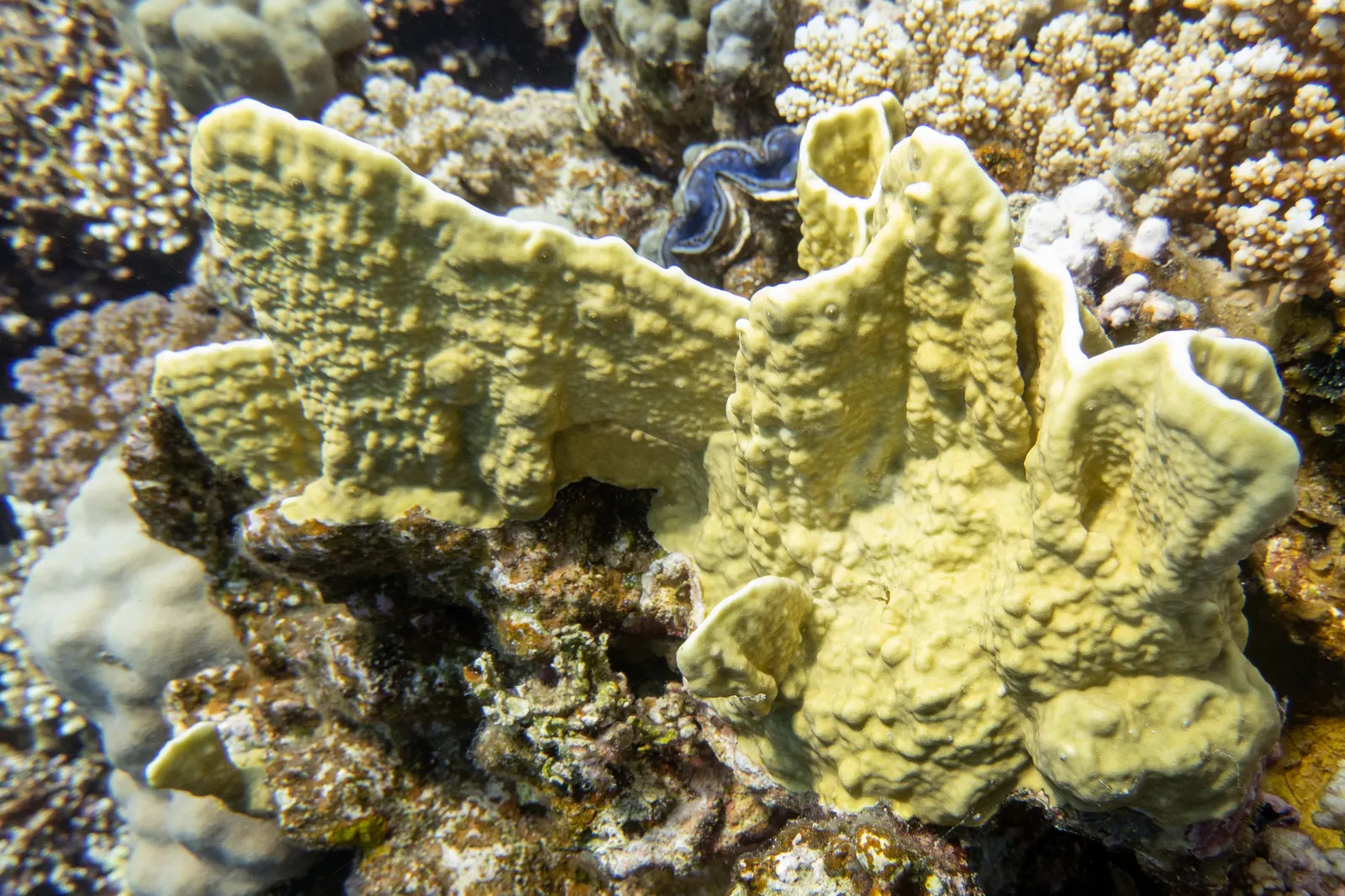
Vertical, honeycomb-fused yellow-brown plates on the wave-beaten reef top – the Red Sea's toughest "do not touch" sign.
The plate fire coral is the big, rugged cousin of the fire corals: it grows thick vertical limestone plates that often fuse into winding, honeycomb-like wall systems. Its colour runs from mustard yellow to brownish, and here too the plate edges are paler. At first glance it can pass for dead rock, because the surface looks smooth – in reality thousands of pinprick pores hide hair-thin polyps armed with stinging cells.
Fire corals are not true corals but hydrozoans, relatives of jellyfish – and Millepora platyphylla is one of the most potently stinging of them all. The chunky plate shape is no accident: this species withstands the roughest wave action, which is exactly why it grows thickest where the reef top meets the open sea. Its colonies regenerate quickly from breakage, and detached fragments simply grow on as new colonies – which is why you sometimes see entire "fields of walls".
Around Hurghada you will find it on the exposed sides of the outer reefs: large continuous colonies grow on the reef tops of Umm Gamar and Abu Ramada and along the shallow rim of El Fanadir. Snorkelers often glide right over it – which is exactly why it pays to know it: never stand on it or grab it, not even with gloves. For the reef it is a wave-breaking fortress; for you it should stay strictly a spectacle.
Did you know?
Despite its stinging reputation, fire coral is a team player: broken fragments do not die but roll away and found new colonies – after a storm, a whole clone army can settle the reef top this way.
Where can you meet it?
Most impressive on the wave-beaten tops of the outer reefs: metre-wide plate walls grow along the rims of Umm Gamar and Abu Ramada, and it is common in the El Fanadir shallows too.
Frequently asked questions
Two faces of the same genus: the net fire coral grows delicate fan-like nets in the current, while the plate fire coral builds thick vertical walls in the surf zone. Their stings are equally unpleasant – so the rule is the same: look, don't touch.
Only if you stand on it or get pushed against it by surge – it never hurts anyone on its own. So never stop to "rest" on coral on a shallow reef top, and keep plenty of clearance below you. The burning rash can itch for days, so prevention beats cure.
Because that is where competition is thinnest: fragile corals cannot survive the pounding, but the plate fire coral's thick limestone walls can. On top of that, moving water delivers a constant stream of plankton and oxygen – what is a disaster zone for others is an all-you-can-eat buffet for it.
Best sites for Plate fire coral
Umm Gamar
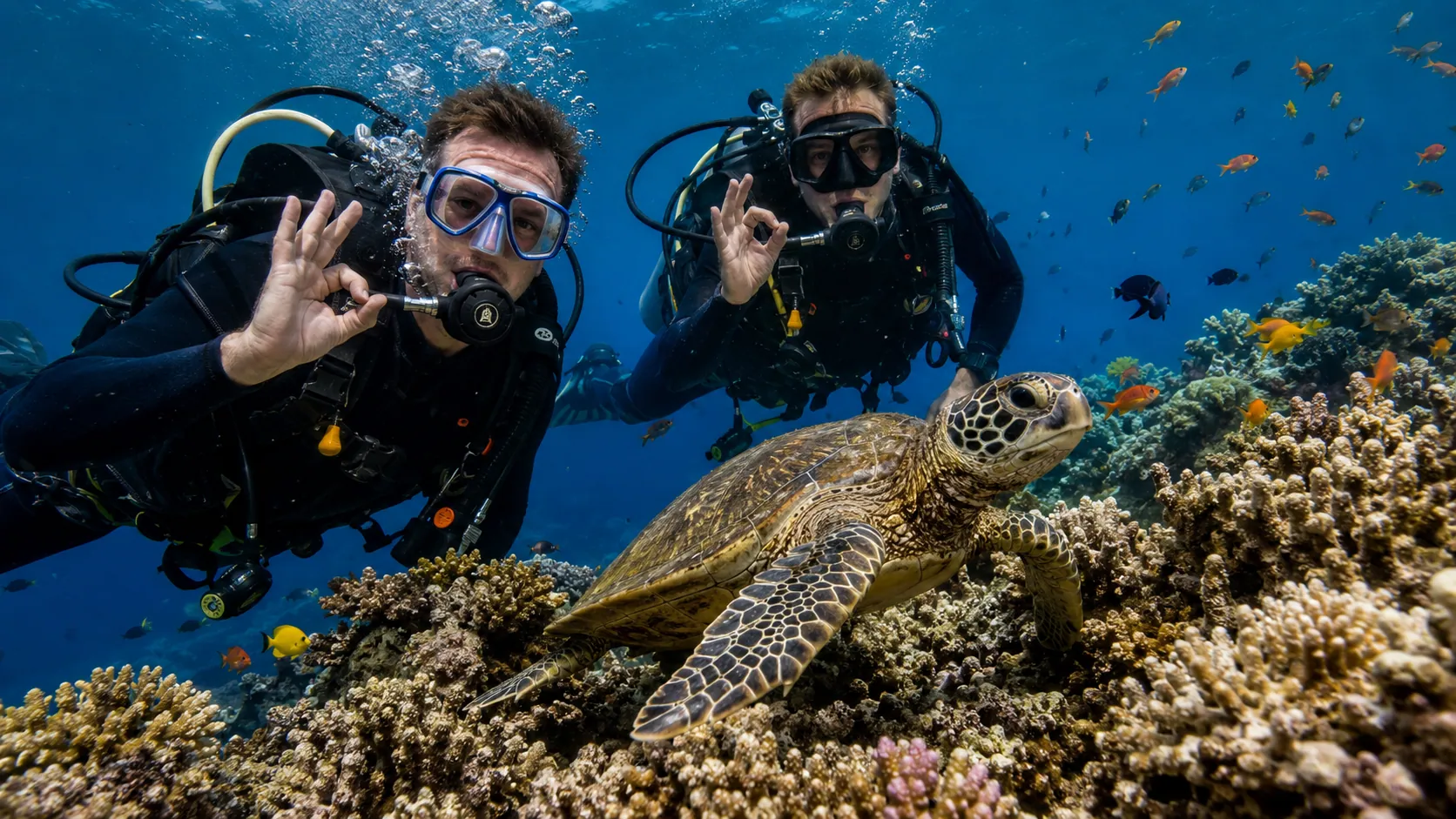
An elongated island in the north: a plateau with three coral towers, small caves and big predators out in the blue.
- Depth
- 10–30m
- Boat
- 75min
- Species
- 5
Abu Ramada („Az Akvárium”)
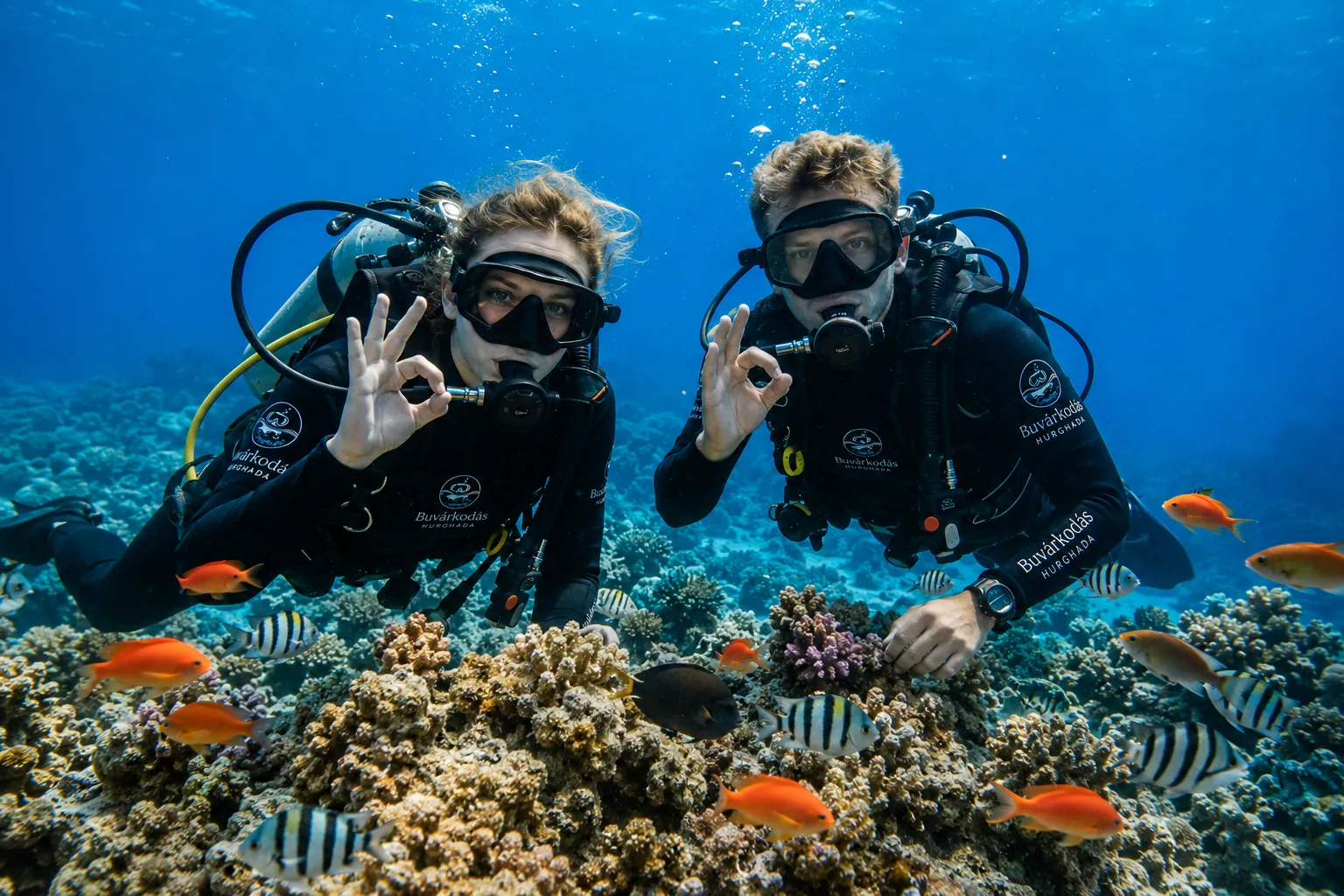
The Aquarium nickname is well earned: the fish schools swirling around the coral towers can be so dense you lose sight of the reef.
- Depth
- 6–26m
- Boat
- 50min
- Species
- 6
El Fanadir
A long reef ridge barely half an hour from the marina: a gentle wall, blue-spotted rays and seagrass patches with turtles.
- Depth
- 6–25m
- Boat
- 30min
- Species
- 5
The Red Sea will not wait forever.
Book today – seats on the boat are limited, your excitement is not.