Spot-fin porcupinefish
Diodon hystrix
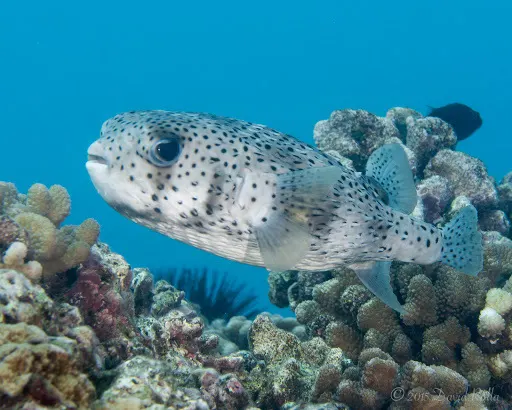
Huge puppy eyes and flattened spines: by day the porcupinefish blinks sleepily under a ledge, but in an emergency it turns into a spiky ball.
The spot-fin porcupinefish (Diodon hystrix) is the largest of the porcupinefish family: around Hurghada you will meet specimens of 50–70 cm. On its greyish-brown, black-speckled body the long spines lie flat when the fish is relaxed, so at first you simply see a big-headed, huge-eyed, gentle-looking fish. But when a predator corners it, it gulps water into its stomach, inflates to nearly three times its size and the spines bristle in every direction – a spiky ball that not even a shark can swallow.
It is a night hunter: by day it rests in wrecks, caves and under overhangs, setting out to forage after dark. With its immensely powerful beak of four fused teeth it cracks open sea urchins, clams, snails and crabs – armour that other fish cannot even dent. Its oversized eyes are adapted to low light, which is why it looks so sleepy during the day.
Around Hurghada it is not an everyday sight but a regular one: by day it tucks into the dark corners of wrecks and the recesses of reef walls – the El Mina wreck almost always hosts one or two. On a night dive you can watch it actively swimming and hunting. It is slow and peaceful; let it move at its own pace, and never provoke it into inflating – for the fish that is severe, potentially life-threatening stress.
Did you know?
An inflated porcupinefish does not just get bigger: its stomach can expand up to a hundredfold to hold the swallowed water, and the stretching skin makes the flattened spines pop out automatically – mechanically, with no muscle effort at all.
Where can you meet it?
By day it favours dark corners: check inside the El Mina wreck, under the overhangs of Gota Abu Ramada and in the recesses of the Abu Ramada wall, and on a night dive you can meet it out hunting.
Frequently asked questions
Not to divers: it is a peaceful, slow fish that would rather retreat into a hole than confront you. Its spines are purely defensive and its organs are toxic – but only to whoever would eat it. One rule: never poke it or force it to inflate.
By day, scan the dark corners of wrecks and overhangs with a torch – the El Mina wreck is the safest bet. The real experience, though, is a night dive: that is when it comes out to hunt and you can watch it on the move.
Hopefully not – inflating is an emergency response that costs the fish enormous energy, and the stress can even kill it. As responsible divers we are proud precisely when the porcupinefish drifts beside us relaxed, spines flat.
Best sites for Spot-fin porcupinefish
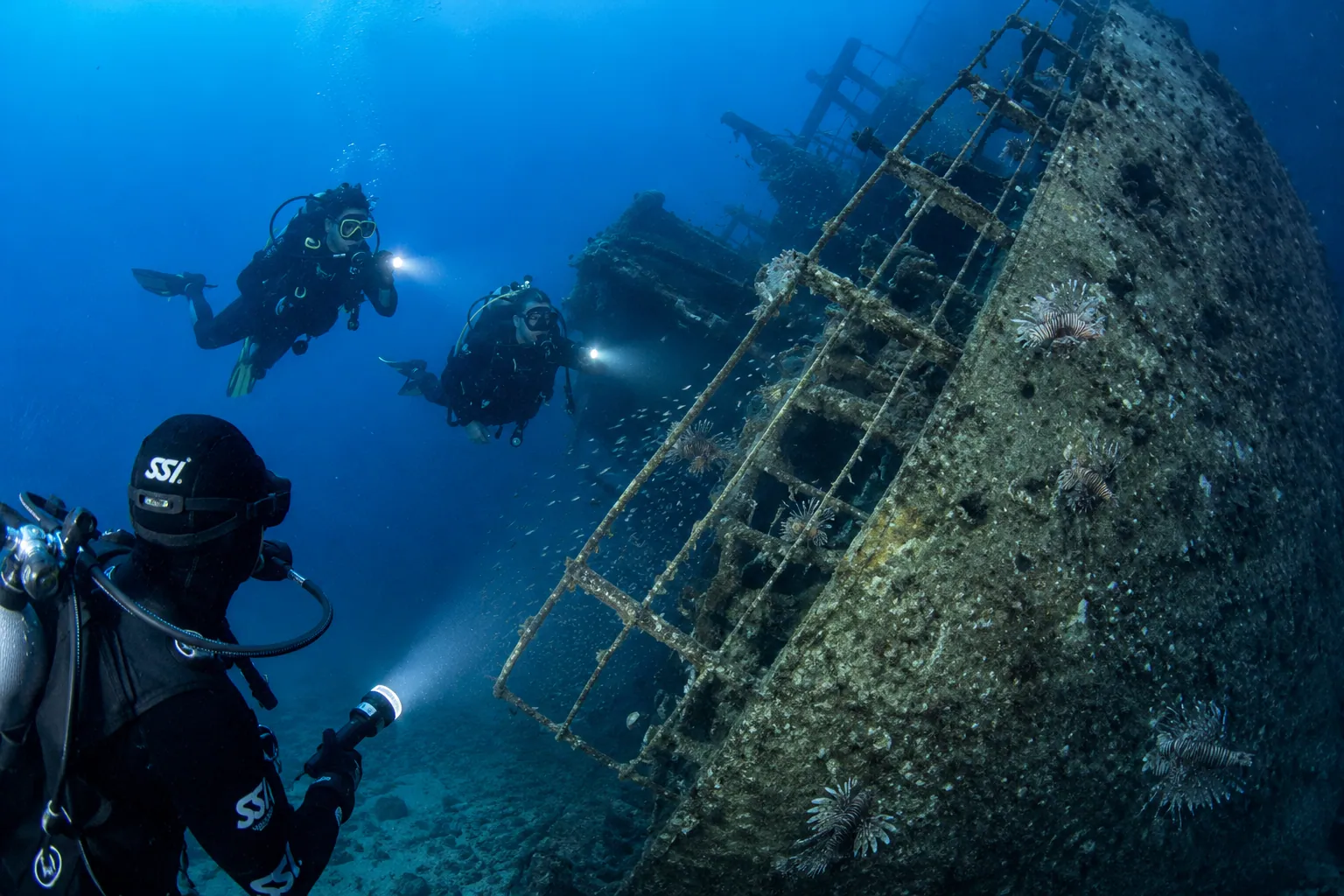
El Mina roncs
A genuine warship wreck 20 minutes from the marina: an Egyptian minesweeper sunk in 1969, resting on sand at 30 metres.
- Depth
- 16–30m
- Boat
- 20min
- Species
- 5
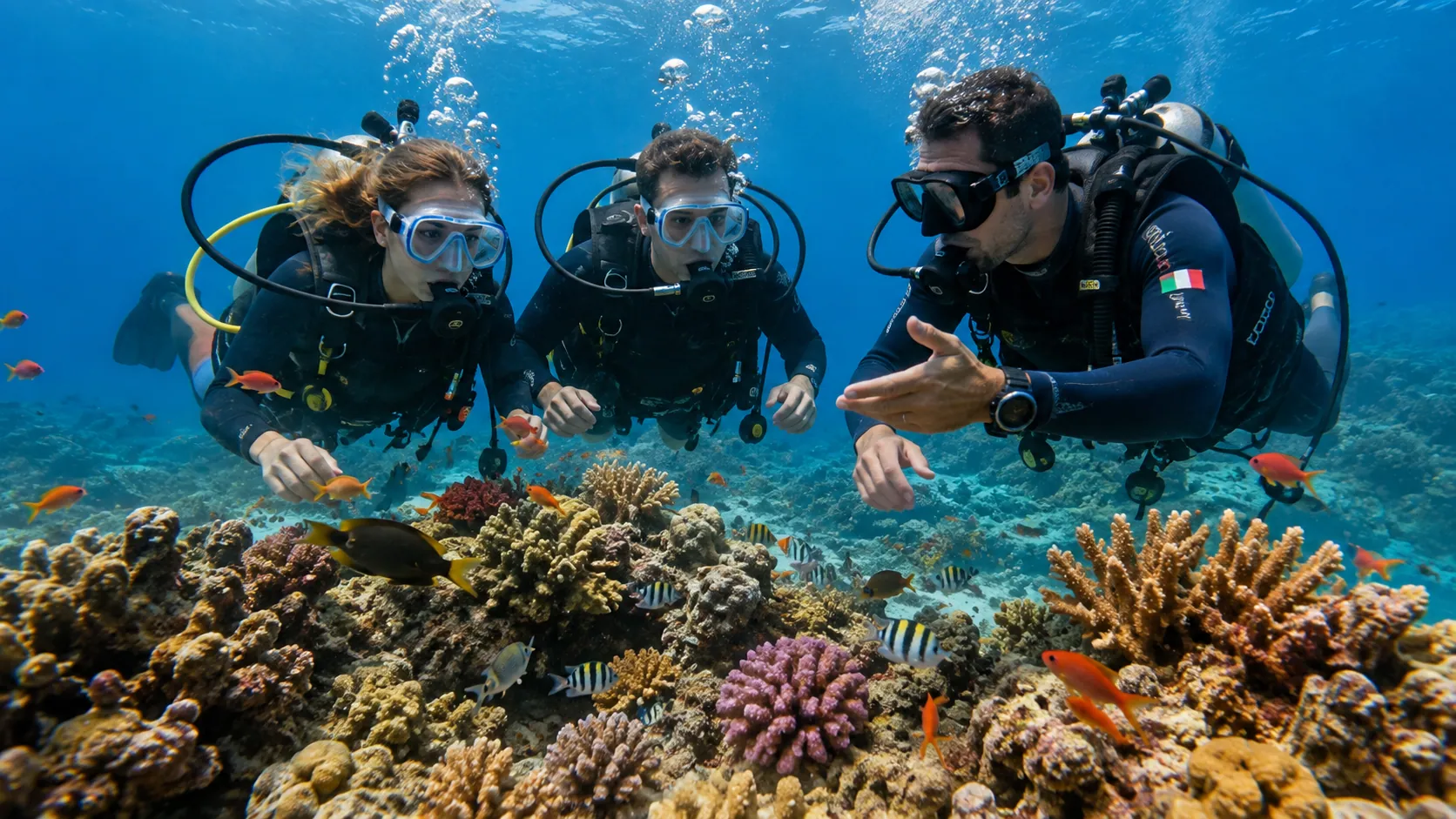
Gota Abu Ramada
A shallow oval reef with a sandy bottom and schools of butterflyfish – perfect for training, second and night dives.
- Depth
- 4–14m
- Boat
- 55min
- Species
- 5
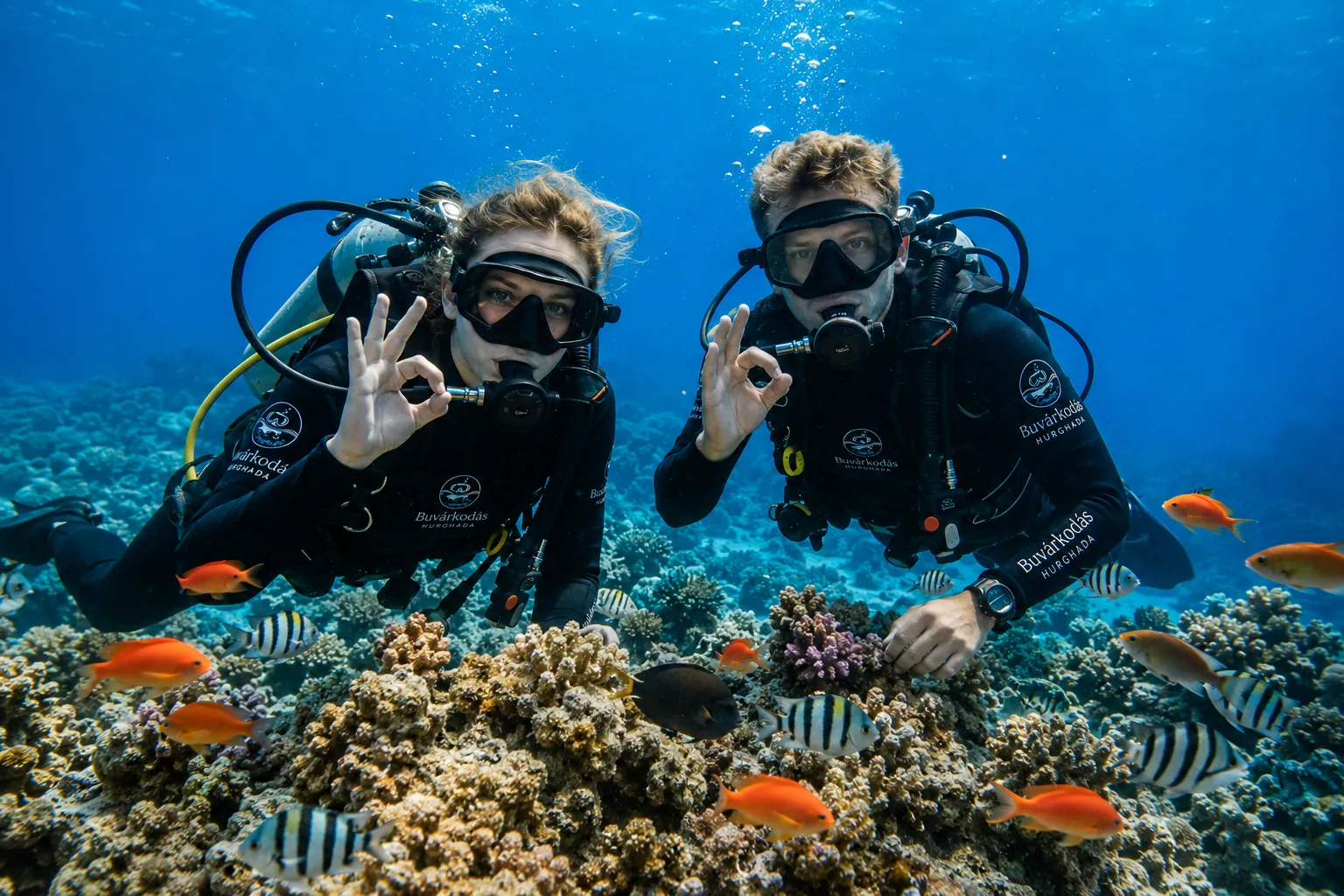
Abu Ramada („Az Akvárium”)
The Aquarium nickname is well earned: the fish schools swirling around the coral towers can be so dense you lose sight of the reef.
- Depth
- 6–26m
- Boat
- 50min
- Species
- 6
The Red Sea will not wait forever.
Book today – seats on the boat are limited, your excitement is not.