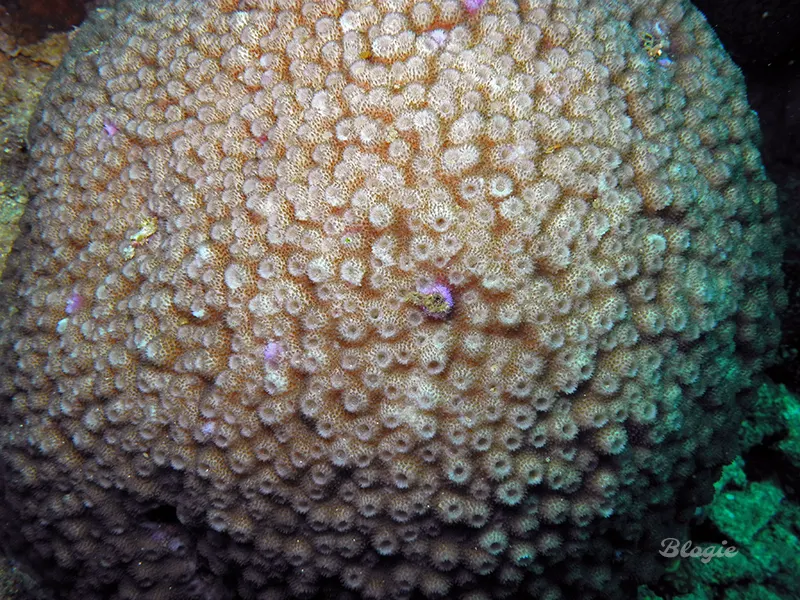
Porous star coral
Astreopora myriophthalma
Its cream-coloured dome is dotted with thousands of tiny crater-like openings – even its scientific name means "ten thousand eyes".
The colony of the porous star coral (Astreopora myriophthalma) is hemispherical or dome-shaped, its surface densely covered in small, cone-rimmed, crater-like corallites – hence the species name myriophthalma, meaning "ten thousand eyes". The skeleton between the cups is spongy and porous too, which gives the coral its common name. It is mostly cream-white, pale yellow or light brown, with a finely rough, almost granular surface. Underwater it looks like nothing so much as a dome scattered with tiny moon craters.
You would never guess it from the stocky dome, but Astreopora belongs to the family Acroporidae – making it a close relative of the graceful, branching staghorn corals. It too lives with zooxanthellae: the photosynthesis of the single-celled algae in its tissues covers most of its energy needs, so it favours well-lit parts of the reef. It grows slowly, a few centimetres a year, and reproduces by mass spawning: on nights around the summer full moons it releases gamete bundles into the water, which develop into planula larvae that found colonies on new surfaces.
Around Hurghada you will find it on sunlit reef tops and upper slopes, typically between 3 and 20 metres – the coral garden of Small Giftun, the plateau of Carless Reef and the lagoon of Abu Hashish are good hunting grounds. Since it grows in the shallows, you can discover it while snorkeling as well. The dome looks sturdy, but that is deceptive: a thin layer of living tissue covers the fragile, porous skeleton, so never stand on it or grab it – a palm-sized injury can take years to heal.
Did you know?
It may look like a solid boulder, but the porous star coral actually belongs to the family of the delicate, branching staghorn corals (Acroporidae) – the "heavyweight" member of the same family, building a dome instead of branches.
Where can you meet it?
It favours sunny reef tops: you have a good chance of finding handsome domes in the Small Giftun coral garden, on the Carless Reef plateau and in the shallows of Abu Hashish.
Frequently asked questions
Look for a cream or pale brown dome whose surface is dotted with small, crater-like, cone-rimmed openings – like a miniature lunar landscape. The skeleton between the cups is spongy and porous rather than smooth, which sets it apart from similar boulder corals.
The species name myriophthalma is Greek for "countless-eyed", referring to the tiny corallites densely covering the surface. Each "eye" is home to a single polyp – and a large dome really does house many thousands of them.
Yes: it often grows at just 3–5 metres on the reef top, so in clear water it is easy to make out with a mask. Just follow the usual rule – float above it and never stand on the coral, not even a fin-tip touch.
Best sites for Porous star coral
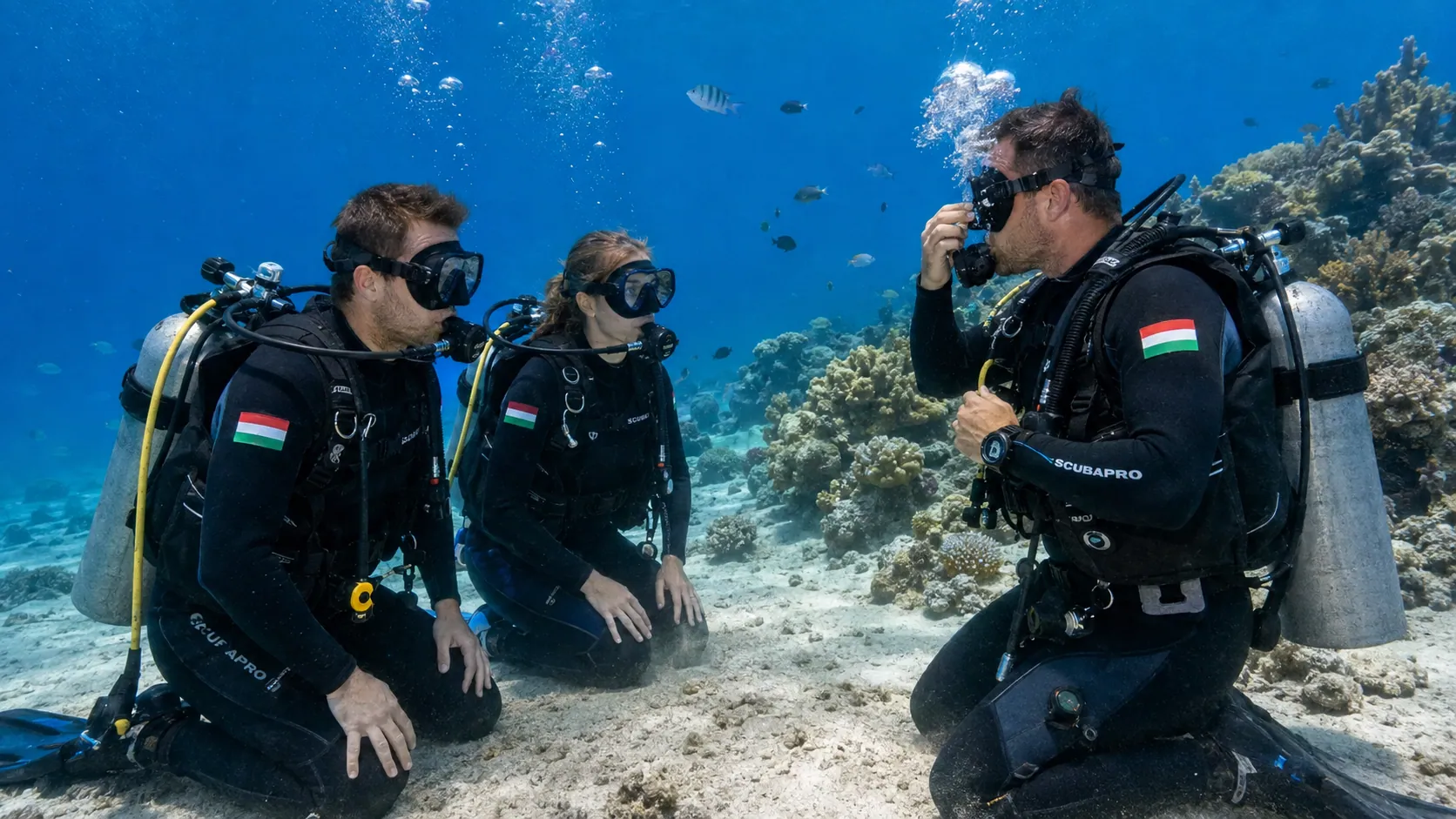
Small Giftun fal
Hurghada's classic drift dive: a sheer wall with gorgonian fans, eagle rays and a coral-tower plateau at 20–30 metres.
- Depth
- 8–30m
- Boat
- 50min
- Species
- 5
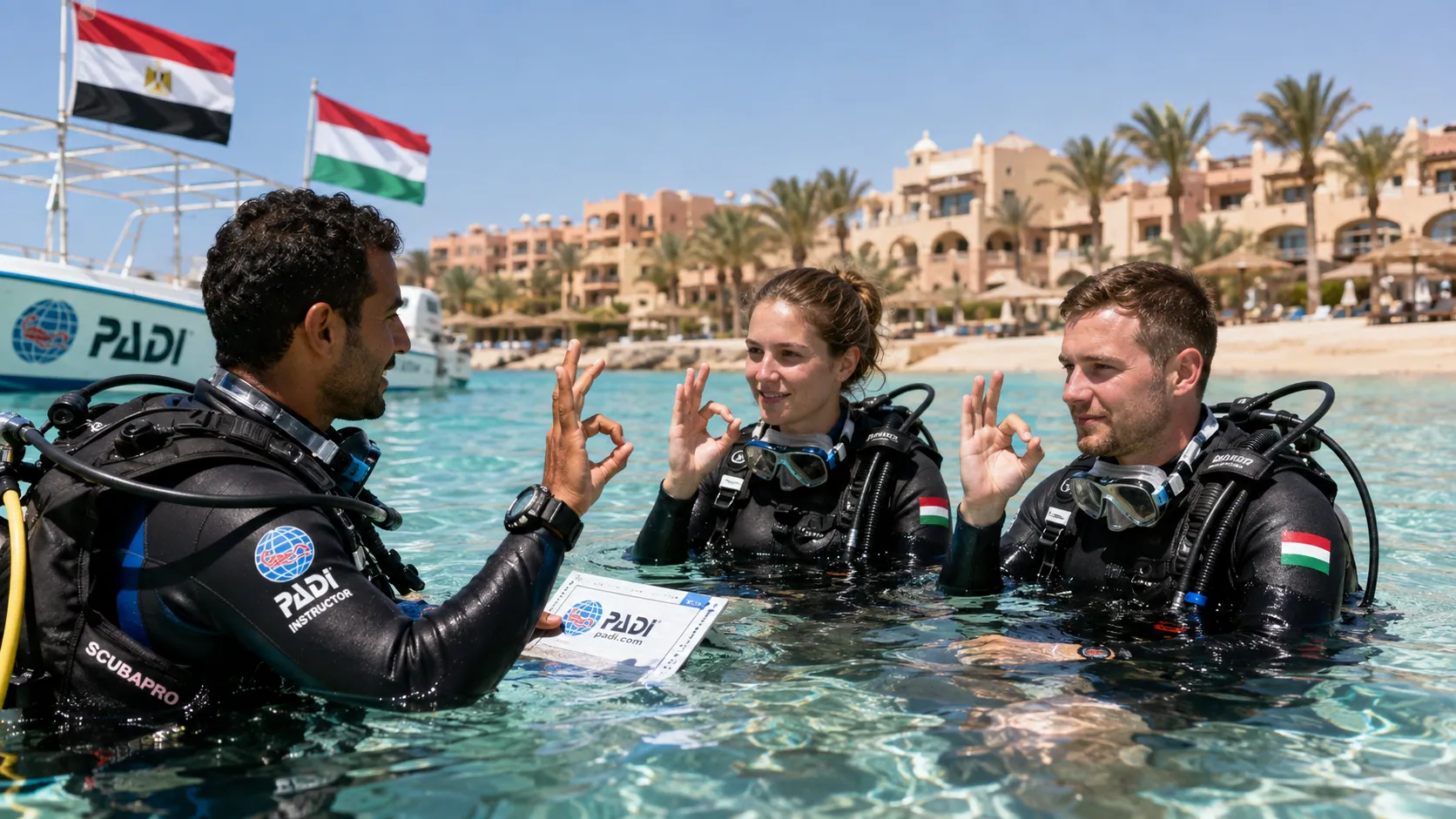
Carless Reef
An offshore twin-erg reef famous for its legendary moray colony – for experienced divers, weather permitting.
- Depth
- 12–30m
- Boat
- 70min
- Species
- 5
Abu Hashish-fok
A quiet southern cape with seagrass meadows and an atmospheric cavern – turtles almost for sure, a dugong with some luck.
- Depth
- 5–20m
- Boat
- 60min
- Species
- 5
The Red Sea will not wait forever.
Book today – seats on the boat are limited, your excitement is not.