Pulsating soft coral
Heteroxenia fuscescens
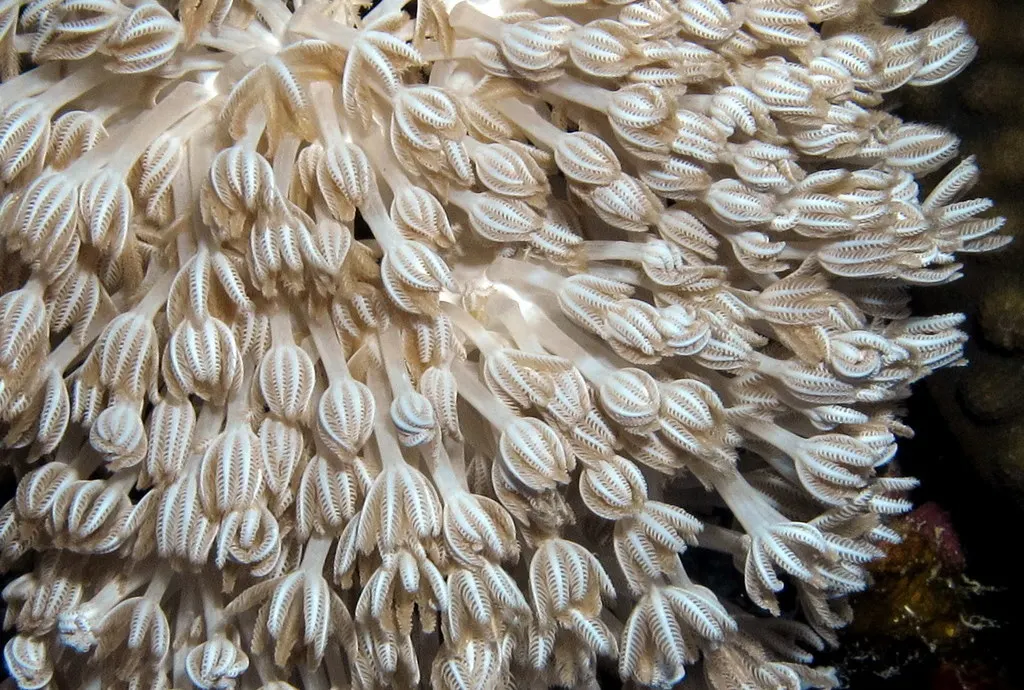
The reef's living pulse: thousands of tiny hand-like polyps open and close in rhythm, as if the whole colony were breathing to one beat.
You recognise the pulsating soft coral (Heteroxenia fuscescens) not by its colour but by its motion: the feathery polyps of the cream-to-greyish-brown colony open and clench about once a second, like countless tiny grasping hands. In the animal world this is a remarkable sight – hardly any sessile, attached creature moves rhythmically like this. Pause above a colony on a dive and it is hard to look away.
The pumping is no idle trick: the motion flushes fresh water between the polyps, sweeping away oxygen so the symbiotic algae (zooxanthellae) living in its tissues can photosynthesise far more efficiently. The colony essentially runs its own ventilation fan – it costs a lot of energy, but the investment pays off handsomely. Heteroxenia is also a fast pioneer, among the first to settle freshly bared reef surfaces.
It is found on shallow reef tops and plateaus almost everywhere around Hurghada, which makes it a great subject for snorkelers too. When diving, keep your distance and mind your fin kicks: soft corals are fragile, and one careless move can erase years of growth. Watch as long as you like – but never touch.
Did you know?
Researchers at Eilat showed that pulsation can boost the colony's photosynthetic efficiency up to tenfold – and the coral pauses for only one short daily "siesta", typically in the afternoon.
Where can you meet it?
On shallow reef tops almost everywhere around Hurghada: it forms whole fields in the coral gardens of the Giftun Islands, in the Gota Abu Ramada "aquarium" and on the El Fanadir plateau.
Frequently asked questions
An animal – a colony of many thousands of tiny polyps. The plant-like look is deceptive: symbiotic algae in its tissues let it run partly on "solar power", but the coral itself also feeds from the water like a predator.
The motion flushes fresh water between the polyps and sweeps away accumulated oxygen, letting the algae inside the coral photosynthesise far more efficiently. It is as if the colony were running its own fan – costly in energy, but well worth it.
Yes – in fact the pulsating soft coral loves exactly the shallow, sunlit reef tops, so you can meet it in just 1–2 metres of water. Float calmly above it and watch the rhythm – but standing on or touching coral is forbidden.
Best sites for Pulsating soft coral
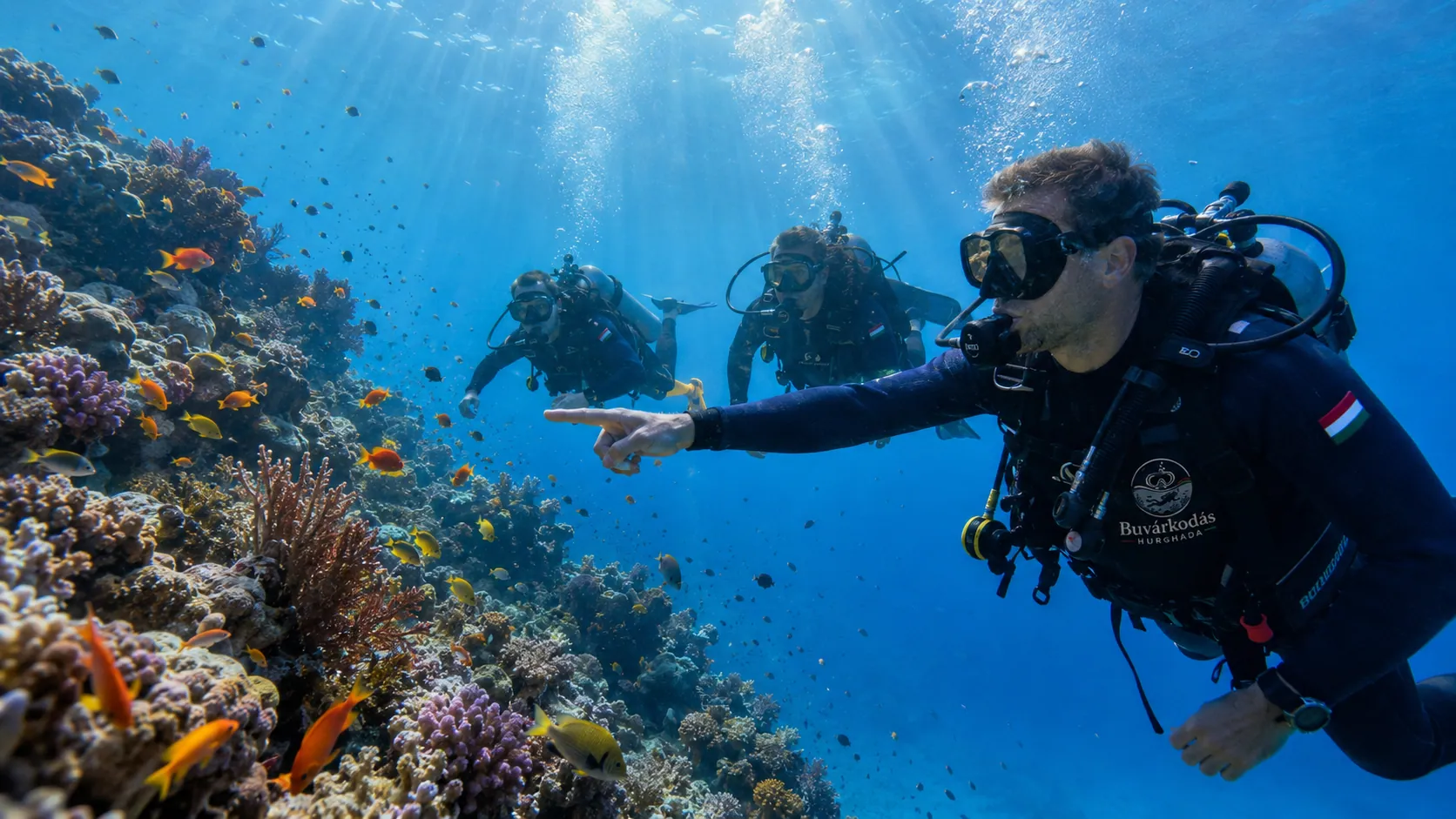
Giftun-szigetek
A national park island pair with a dozen dive sites: coral gardens, turtles and perhaps the richest fish life in the area.
- Depth
- 5–25m
- Boat
- 45min
- Species
- 6
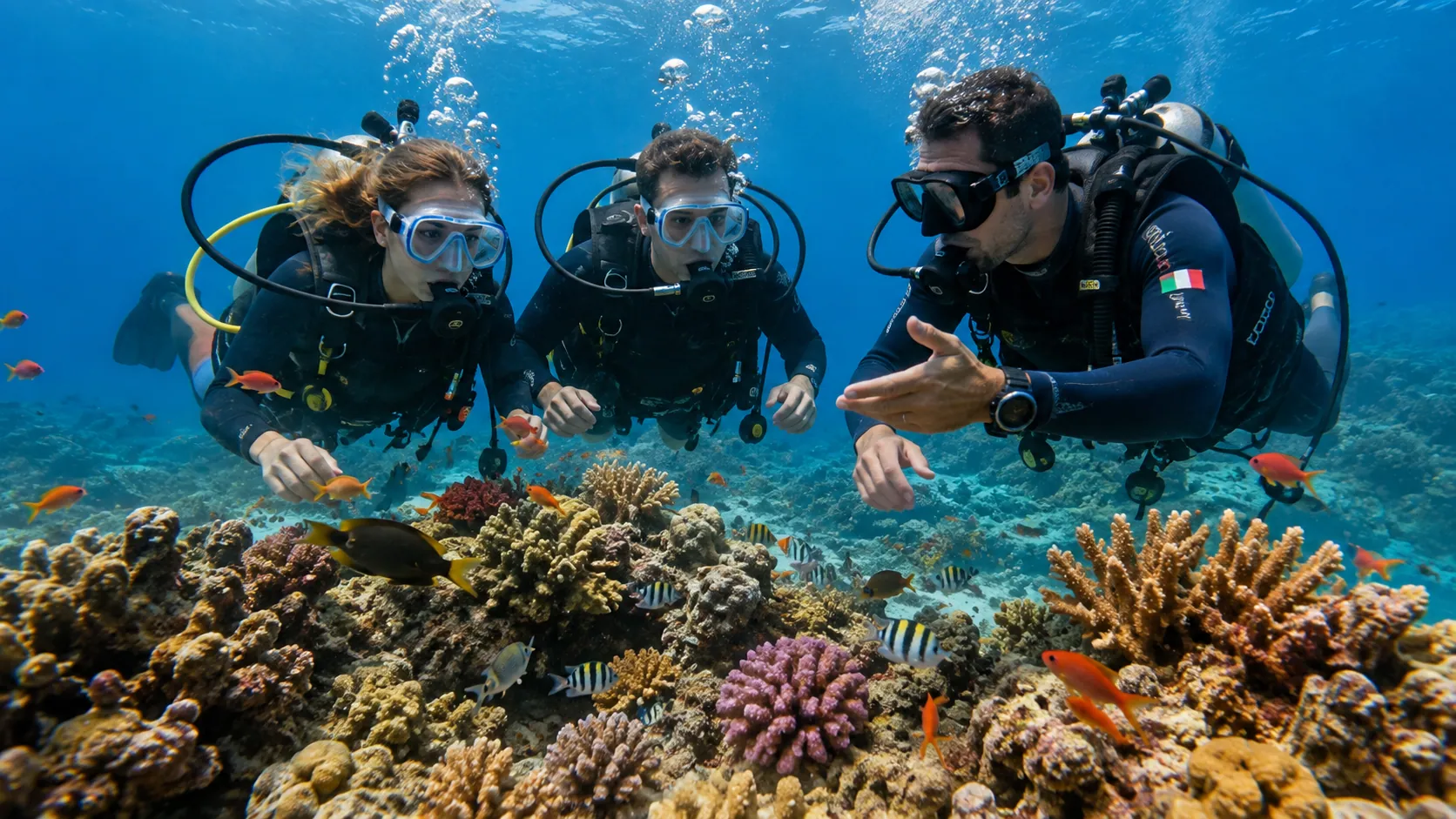
Gota Abu Ramada
A shallow oval reef with a sandy bottom and schools of butterflyfish – perfect for training, second and night dives.
- Depth
- 4–14m
- Boat
- 55min
- Species
- 5
El Fanadir
A long reef ridge barely half an hour from the marina: a gentle wall, blue-spotted rays and seagrass patches with turtles.
- Depth
- 6–25m
- Boat
- 30min
- Species
- 5
The Red Sea will not wait forever.
Book today – seats on the boat are limited, your excitement is not.