Red Sea anemonefish
Amphiprion bicinctus
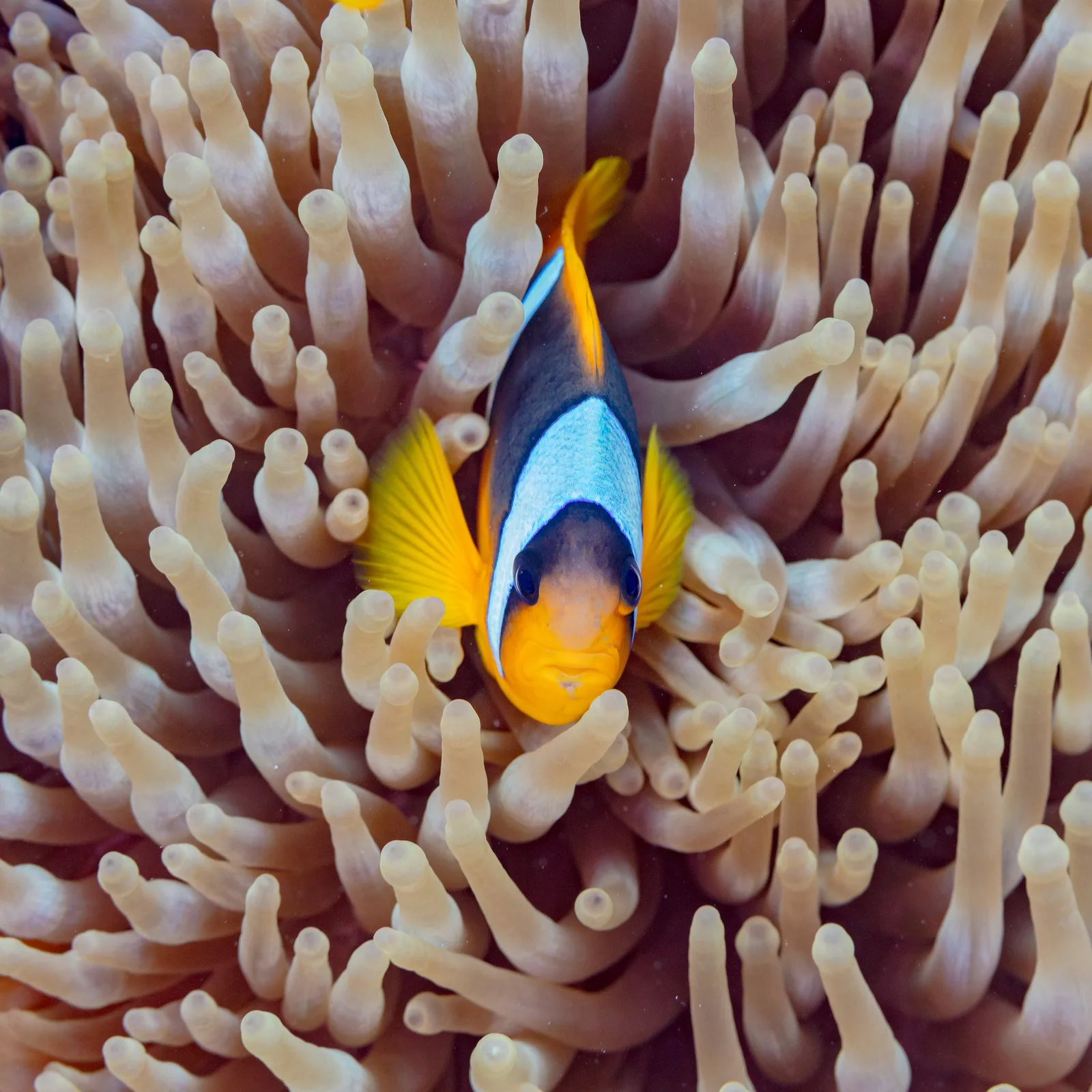
The Red Sea own Nemo: the two-band anemonefish lives nowhere else, watching the world from among its anemone's tentacles.
The Red Sea anemonefish (Amphiprion bicinctus) is endemic to the Red Sea and the Gulf of Aden – you will not meet it anywhere else on Earth. Its orange-brown body carries two white bars, hence the name "two-band" anemonefish. It spends its whole life in a single sea anemone whose stinging tentacles would paralyse other fish – but a special mucus layer protects it from the stings.
Anemonefish live in a strict hierarchy: each anemone is ruled by a dominant female, who lives alongside one breeding male and a few smaller "queueing" juveniles. The partnership is mutual: the fish drives off anemone-nibbling species and fans fresh water between the tentacles, receiving a safe home in return. The eggs are laid at the base of the anemone and are tended mostly by the male.
You will meet them on nearly every dive around Hurghada: the anemones sitting on the reef plateaus catch your eye from far away. As you approach, the fish do not flee but boldly swim out to meet you, "dancing" in defence of their home – a favourite scene of underwater photographers. On the shallow reef tops they are easy to watch while snorkeling too.
Did you know?
Every anemonefish is born male. If the anemone's dominant female dies, the largest male transforms into a female within a few weeks and takes over the leadership of the colony.
Where can you meet it?
It lives on almost every Hurghada reef: you are guaranteed to meet it in the coral gardens of the Giftun Islands, on the El Fanadir plateau and among the anemones of Gota Abu Ramada and El Aruk.
Frequently asked questions
The anemonefish is completely harmless – at most it will heroically "charge" you with its few centimetres of body, which is more touching than frightening. The anemone's stinging cells can cause a mild burning on sensitive skin, so the rule is the same as always: watch as long as you like, but do not touch.
A close cousin: Nemo was based on the Pacific Amphiprion ocellaris, while ours is Amphiprion bicinctus, found only in the Red Sea and the Gulf of Aden. So Hurghada's anemonefish is a little more exclusive – this species can only be seen here.
The anemonefish is coated in a special mucus layer that it gradually "tunes" to its anemone, so the stinging cells never fire at it. For other fish the anemone is a deadly trap – for the anemonefish it is the safest home in the world.
Best sites for Red Sea anemonefish
Giftun-szigetek
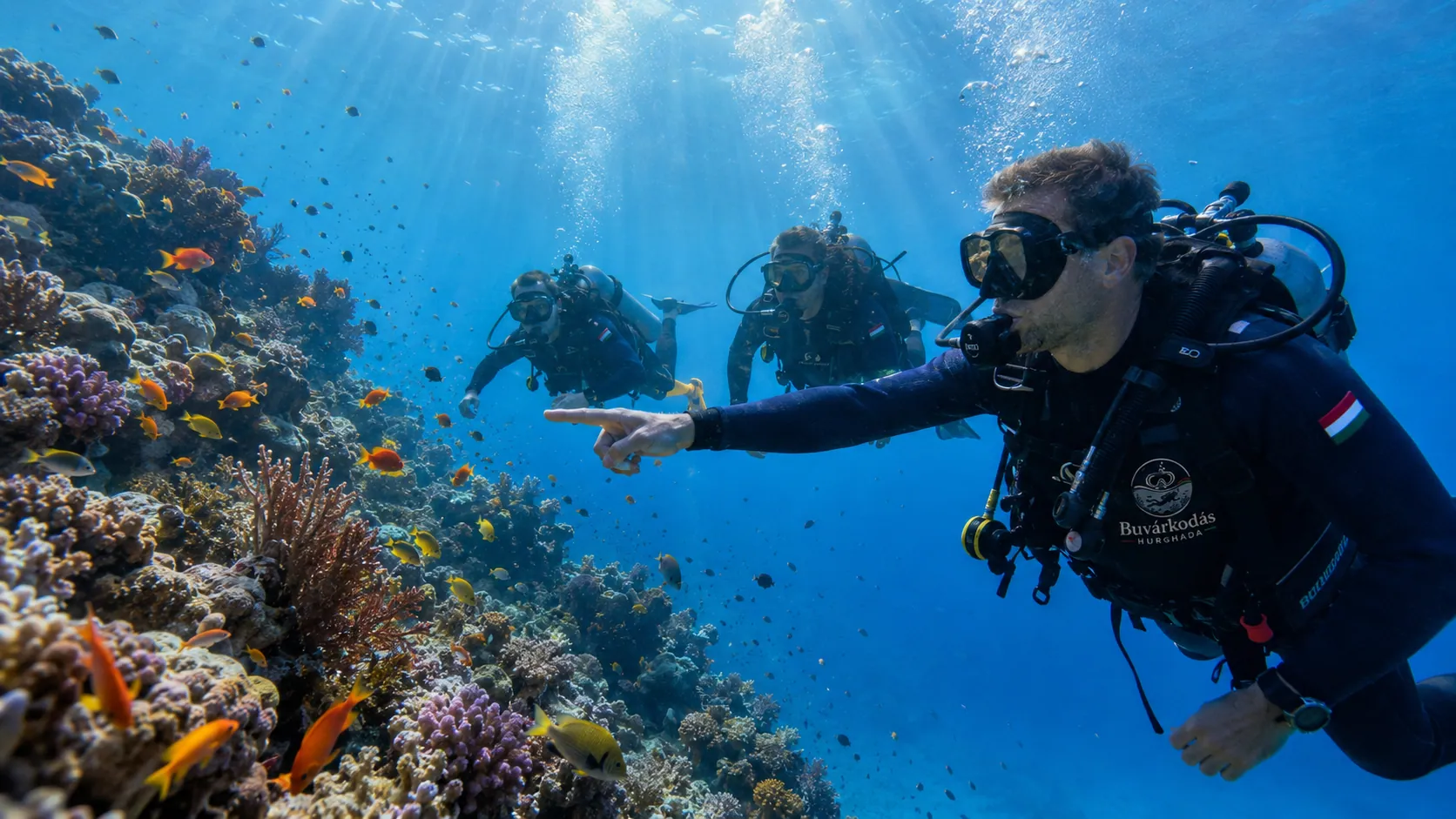
A national park island pair with a dozen dive sites: coral gardens, turtles and perhaps the richest fish life in the area.
- Depth
- 5–25m
- Boat
- 45min
- Species
- 6
El Fanadir
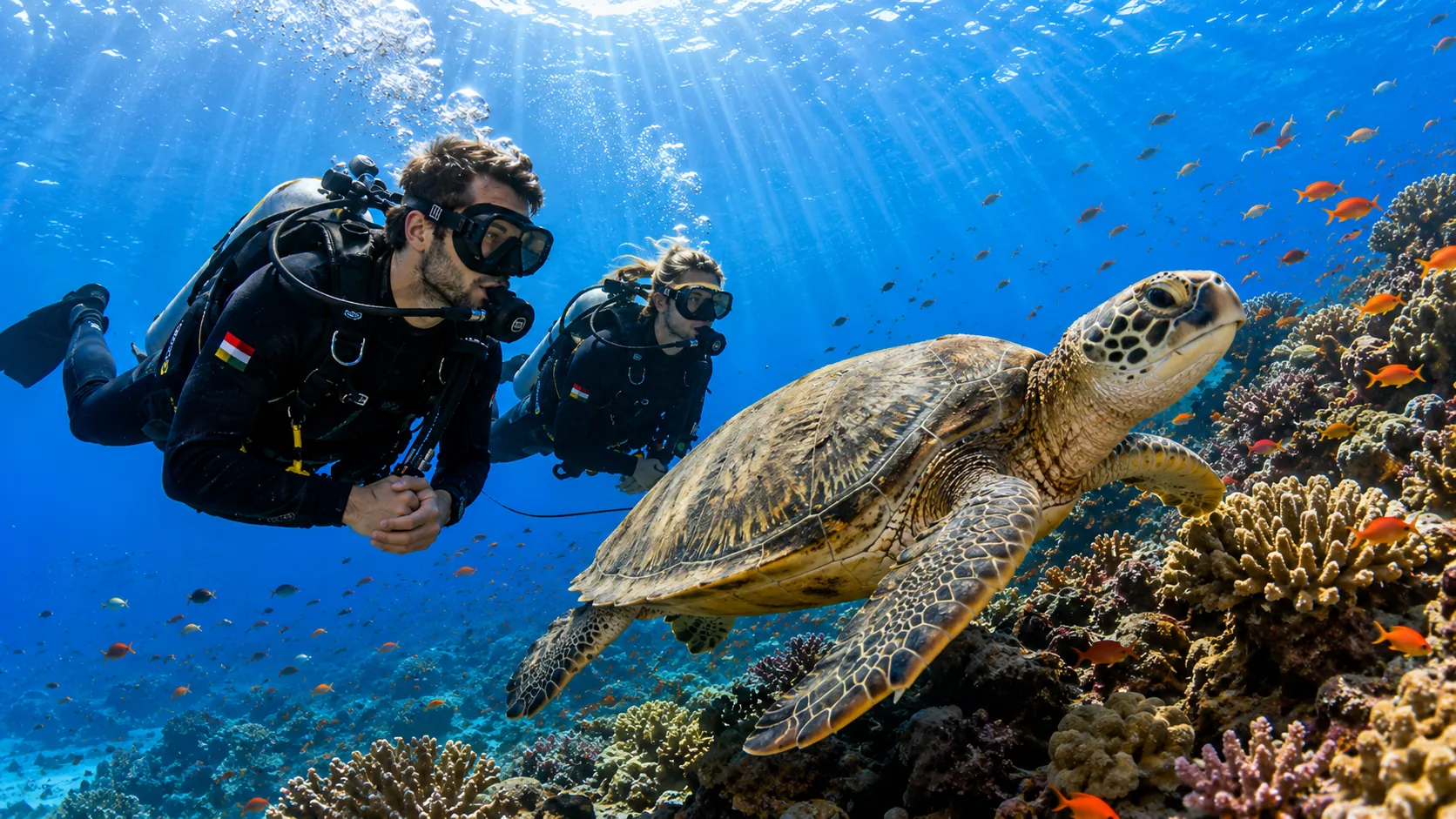
A long reef ridge barely half an hour from the marina: a gentle wall, blue-spotted rays and seagrass patches with turtles.
- Depth
- 6–25m
- Boat
- 30min
- Species
- 5
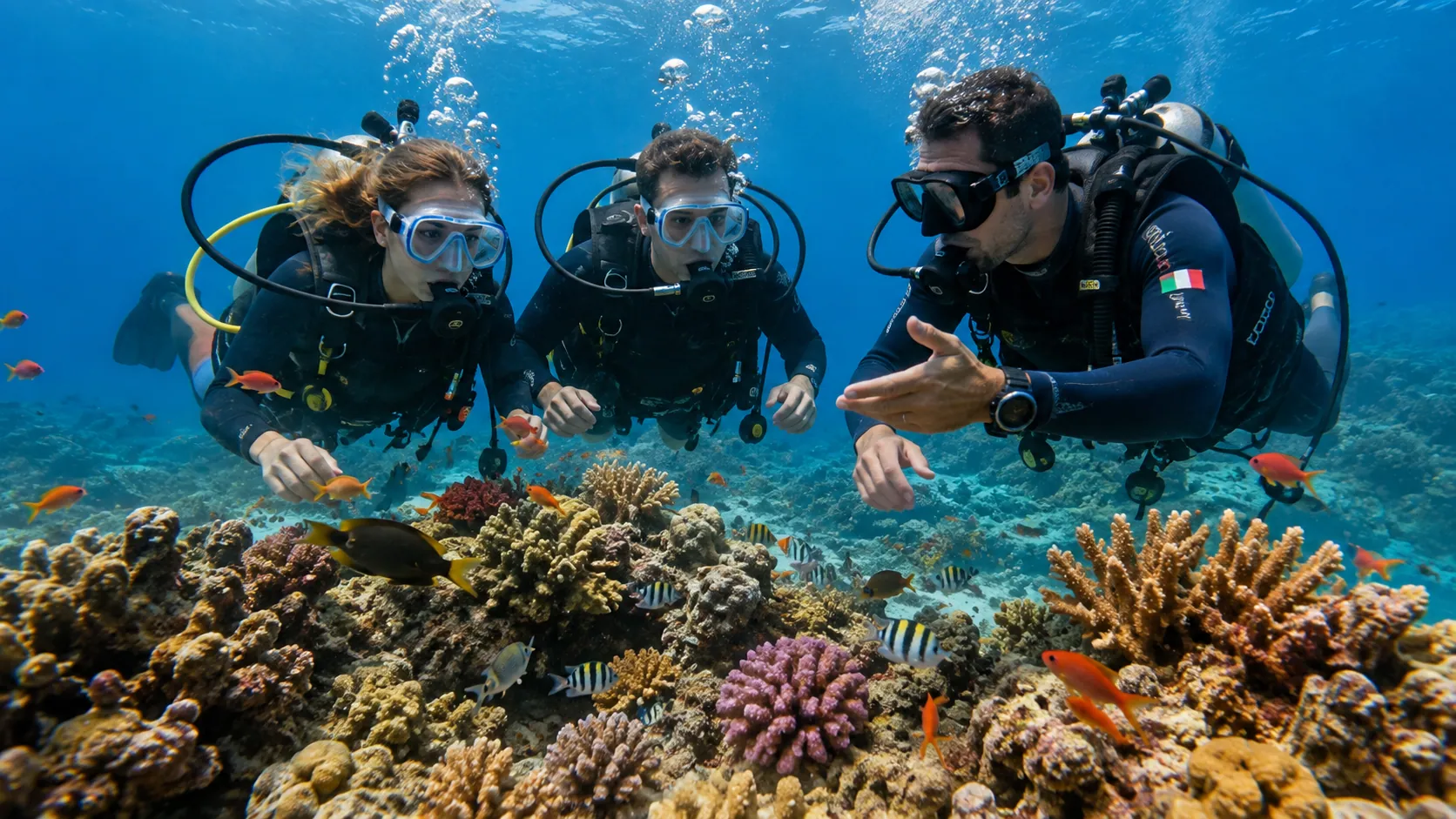
Gota Abu Ramada
A shallow oval reef with a sandy bottom and schools of butterflyfish – perfect for training, second and night dives.
- Depth
- 4–14m
- Boat
- 55min
- Species
- 5
The Red Sea will not wait forever.
Book today – seats on the boat are limited, your excitement is not.