Red Sea bannerfish
Heniochus intermedius
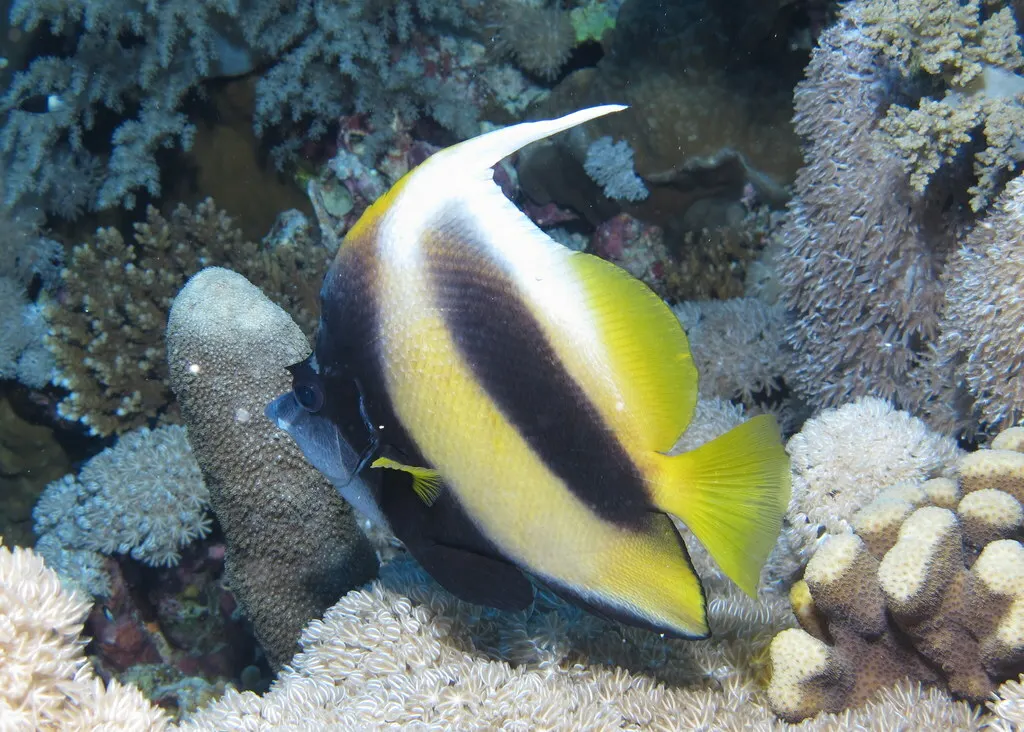
With its long white dorsal fin streaming like a banner, it is one of the Red Sea's most elegant endemic fish – found nowhere else on Earth.
The Red Sea bannerfish (Heniochus intermedius) is endemic to the Red Sea and the Gulf of Aden – this elegant fish exists nowhere else. Two broad, slanted black bands cross its yellowish-white body, and the fourth spine of its dorsal fin is drawn out into a long white streamer that trails behind it like a banner. Hence the name.
It is often confused with the Moorish idol, yet the bannerfish belongs to the butterflyfish family, and up close the differences are clear: a yellower body, a shorter snout and a pure-white pennant. It usually lives in pairs, but along reef walls and around wrecks it gathers into loose groups of dozens – a cloud of streaming white banners that is hard to forget. It feeds on plankton and small bottom invertebrates, and juveniles occasionally pick parasites off larger fish, working as part-time cleaners.
Around Hurghada it is very common: nearly every reef holds a pair or two, with small schools on the shaded sides of walls and around prominent coral blocks. The bannerfish squadron hovering over the El Mina wreck is one of the most photogenic scenes in the area. It is not shy – move slowly and it will let you within arm's reach, making it a rewarding subject for snorkelers and new divers alike.
Did you know?
The long white pennant is more than decoration: it draws a predator's aim away from the body, and if it does get torn, the streamer grows back – much like a lizard's tail.
Where can you meet it?
Present on nearly every Hurghada reef: in pairs on the walls of Giftun and Abu Ramada, and in small schools around the El Mina wreck and the coral blocks of Gota Abu Ramada.
Frequently asked questions
No, they just look alike. The bannerfish is a butterflyfish relative with a yellower body and shorter snout; the Moorish idol is the sole member of its own family, with a longer snout and an orange saddle on it. You can see both at Hurghada – telling them apart is a fun game.
Yes, easily: pairs often cruise along shallow reef edges and are not skittish. The bigger schools are usually a diver's treat, around walls and wrecks.
Yes – outside the Red Sea and the Gulf of Aden it occurs naturally nowhere in the world. When you photograph one at Hurghada, you are taking home a true local exclusive.
Best sites for Red Sea bannerfish
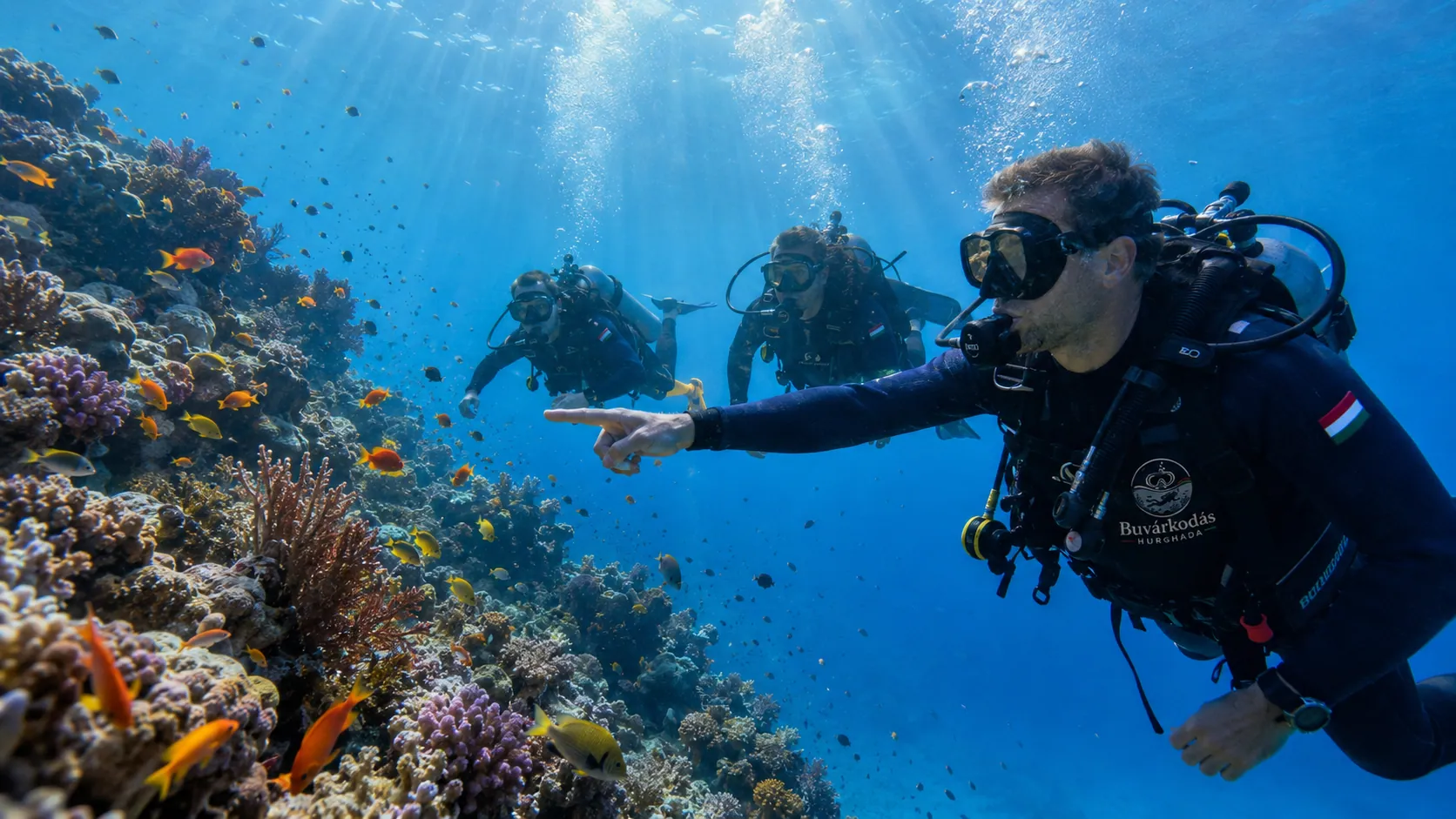
Giftun-szigetek
A national park island pair with a dozen dive sites: coral gardens, turtles and perhaps the richest fish life in the area.
- Depth
- 5–25m
- Boat
- 45min
- Species
- 6
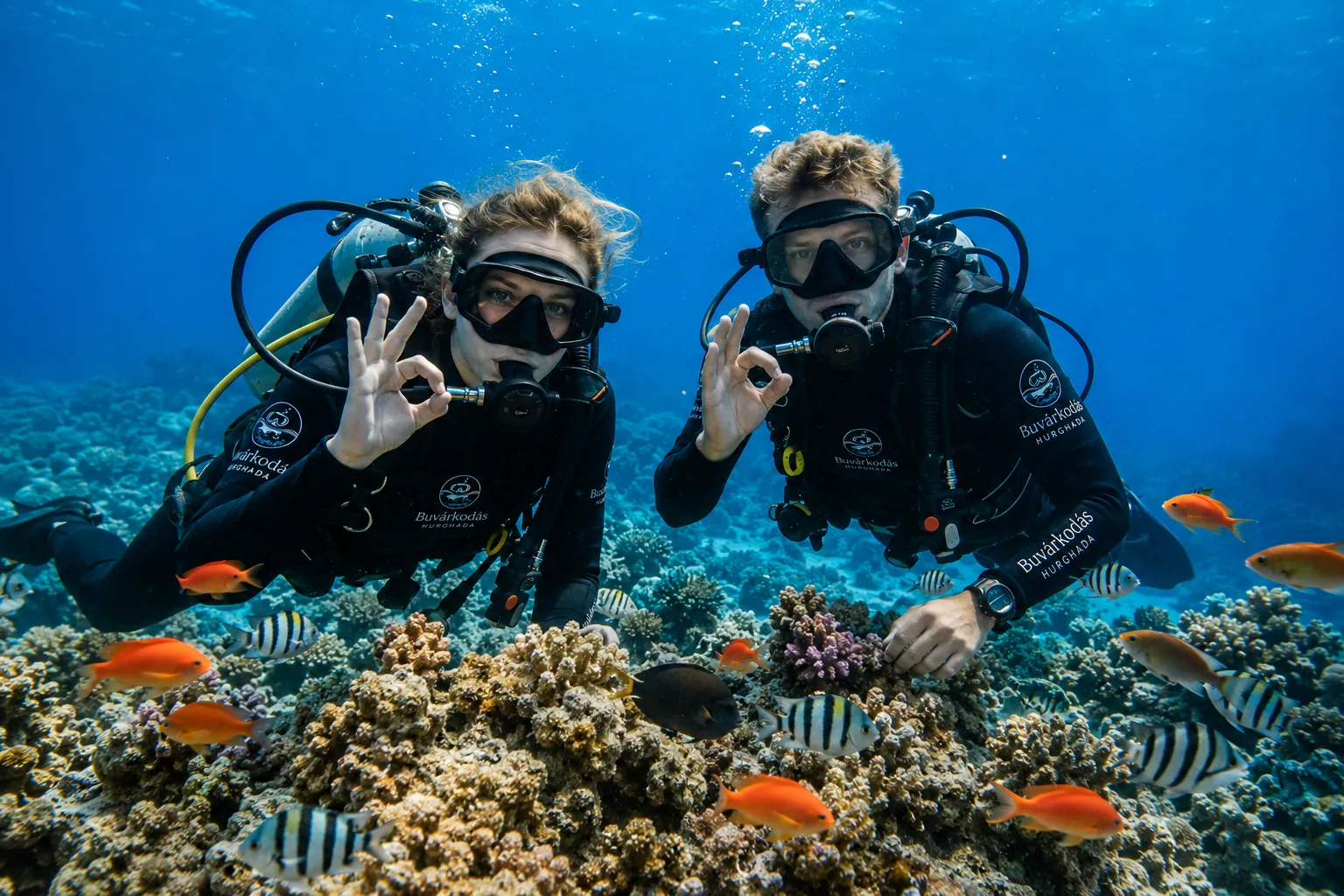
Abu Ramada („Az Akvárium”)
The Aquarium nickname is well earned: the fish schools swirling around the coral towers can be so dense you lose sight of the reef.
- Depth
- 6–26m
- Boat
- 50min
- Species
- 6
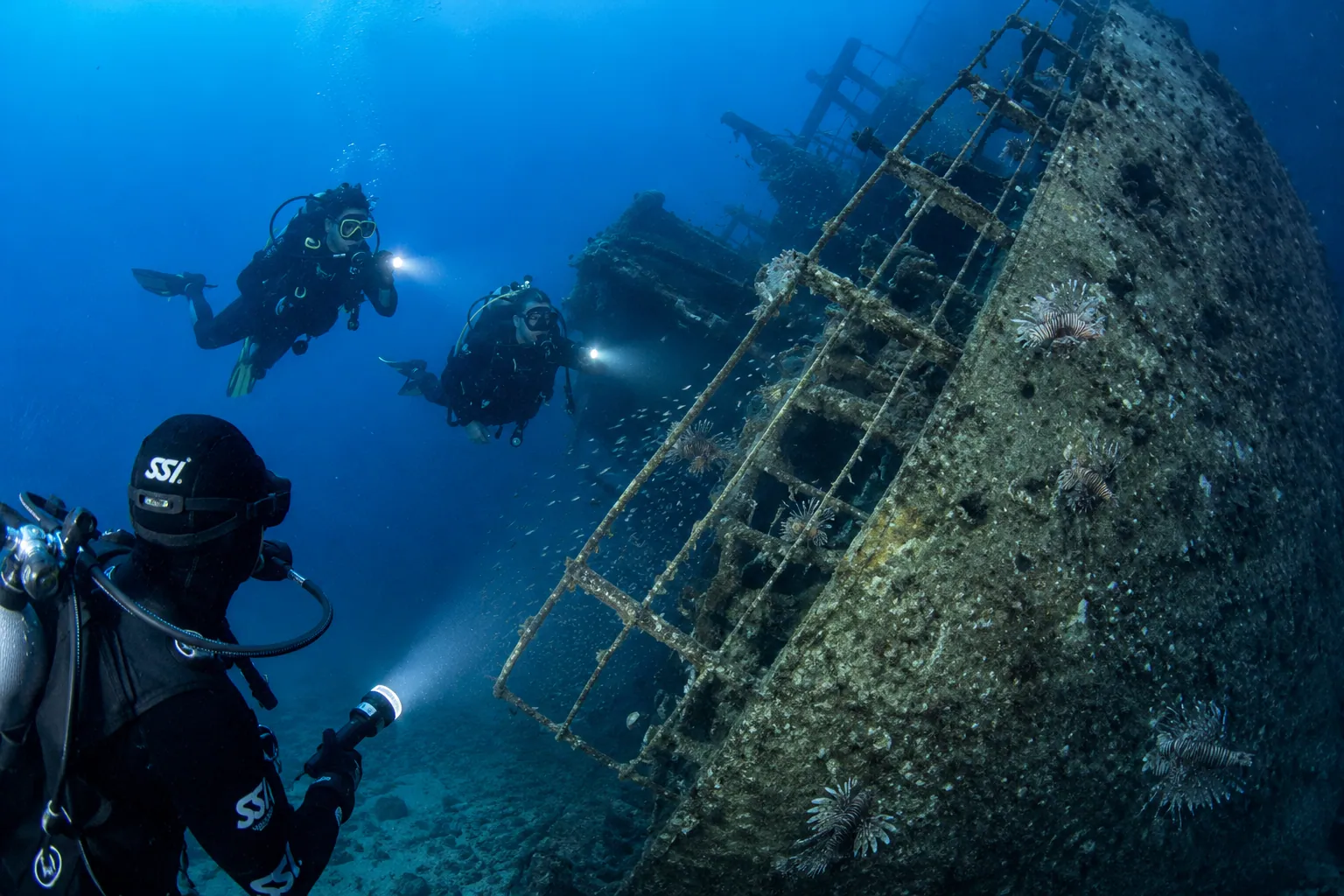
El Mina roncs
A genuine warship wreck 20 minutes from the marina: an Egyptian minesweeper sunk in 1969, resting on sand at 30 metres.
- Depth
- 16–30m
- Boat
- 20min
- Species
- 5
The Red Sea will not wait forever.
Book today – seats on the boat are limited, your excitement is not.