Red Sea garden eel
Gorgasia sillneri
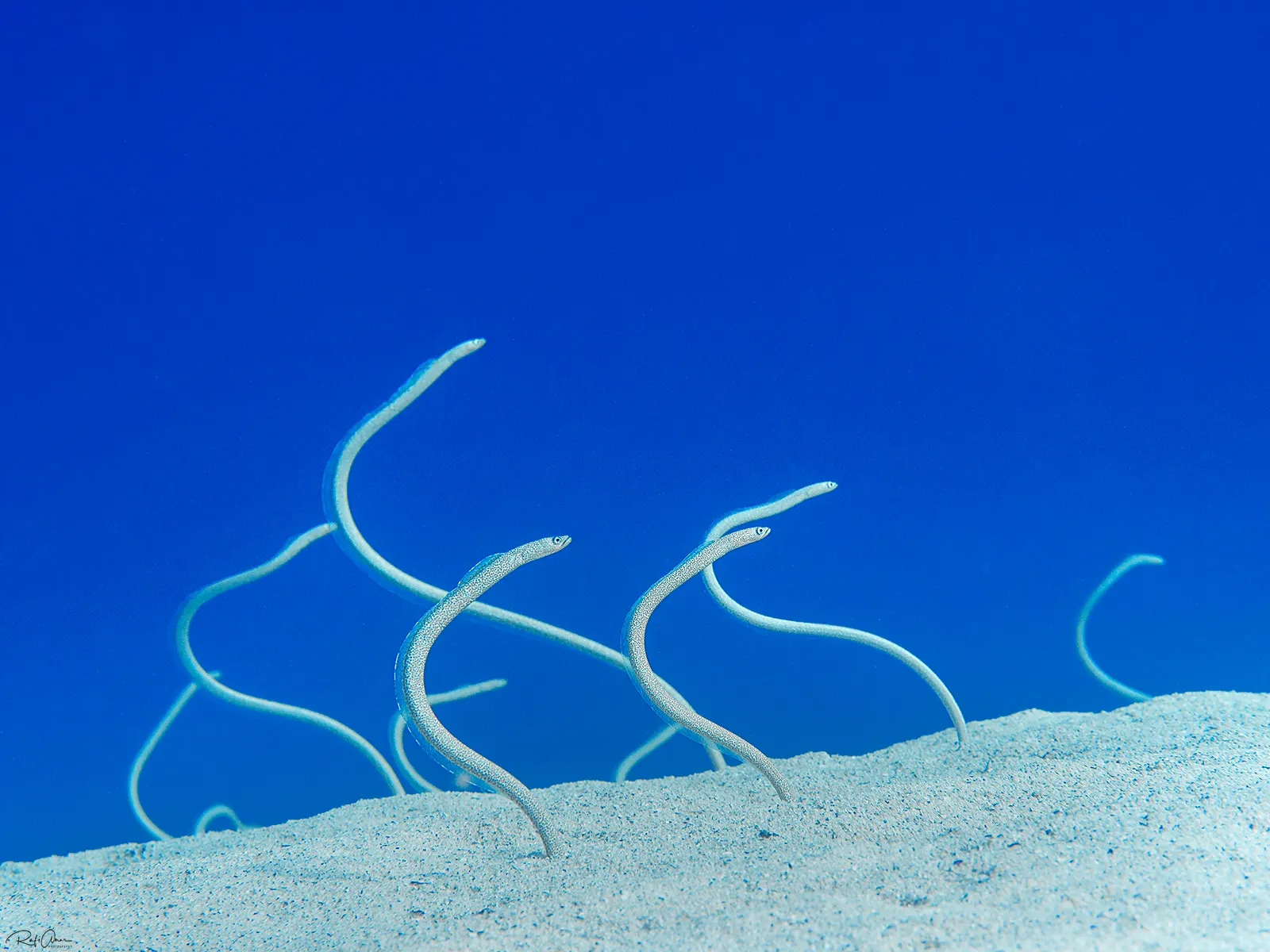
They sway by the hundreds over the sand slopes like grass in the wind – the Red Sea's own garden eel lives nowhere else on Earth.
The Red Sea garden eel (Gorgasia sillneri) is endemic to the Red Sea: this slender, finger-thick, pale grey eel can be seen here and nowhere else. It grows to some 60 centimetres, but never shows more than about two-thirds of that at once – the tail always stays anchored in its sand burrow, whose walls it reinforces with mucus. From a distance a whole colony looks like nothing so much as a garden of swaying grass, hence the name.
Garden eels are colonial: from a dozen to several hundred line up on a single sand slope, each above its own burrow, all facing into the current. They pick tiny planktonic crustaceans out of the drifting water – which is why they need a steady gentle flow, and why you find them on the sandy slopes of the reefs at 10–40 metres. At any sign of danger the whole "garden" sinks into the sand in eerie synchrony, and hundreds of heads periscope back up once the alarm has passed.
Around Hurghada they are a reliable feature of the sandy-plateau sites: big colonies live on the slopes of El Fanadir, the sand flats of Abu Hashish and the lagoon rim of Shaab El Erg (Dolphin House). Watching them is an art of its own: stay low, inch forward slowly with minimal fin strokes – done well, you can get within a few metres of the swaying heads before the garden "sinks".
Did you know?
A garden eel never once leaves its burrow voluntarily – not even to mate: a pair in neighbouring burrows stretch across and entwine to spawn while each keeps its tail anchored in its own tube of sand.
Where can you meet it?
Look on the sandy slopes: the largest Hurghada colonies live on the sand plateau of El Fanadir, the lagoon slopes of Abu Hashish and the sand flats of Dolphin House (Shaab El Erg).
Frequently asked questions
Not at all – it is one of the most harmless fish in the Red Sea. It feeds on plankton and is so shy that it withdraws into the sand long before you could get close.
Typically no: the colonies live on sand slopes deeper than 10 metres and look like tiny sticks from the surface. The real experience requires diving, approaching the garden low and slow.
Garden eels have sharp eyesight and slide into the sand at sudden movement and bubble noise. The trick: stay near the bottom, move slowly and wait motionless for a few minutes – the heads will pop back up one by one.
Best sites for Red Sea garden eel
El Fanadir
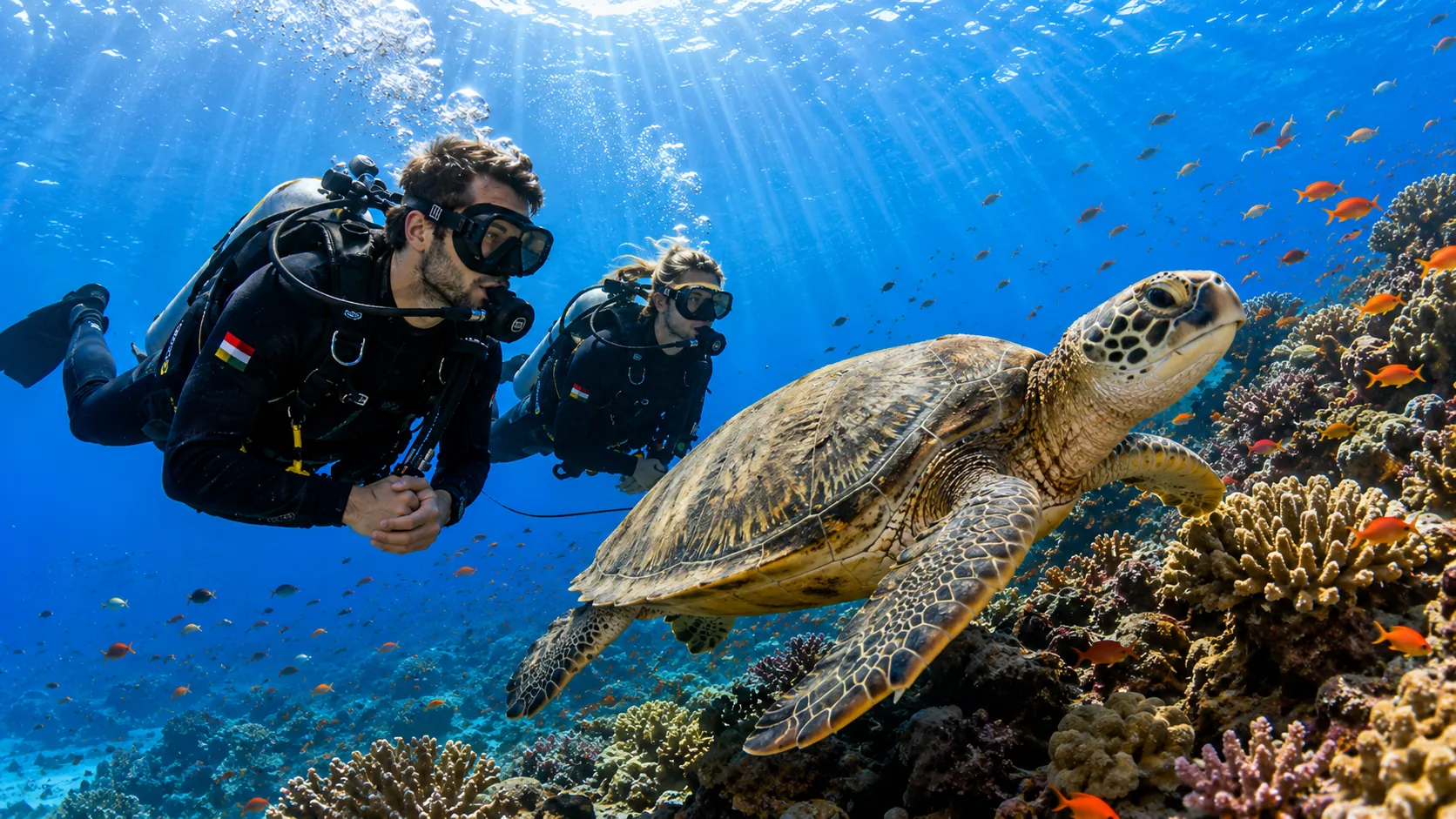
A long reef ridge barely half an hour from the marina: a gentle wall, blue-spotted rays and seagrass patches with turtles.
- Depth
- 6–25m
- Boat
- 30min
- Species
- 5
Abu Hashish-fok
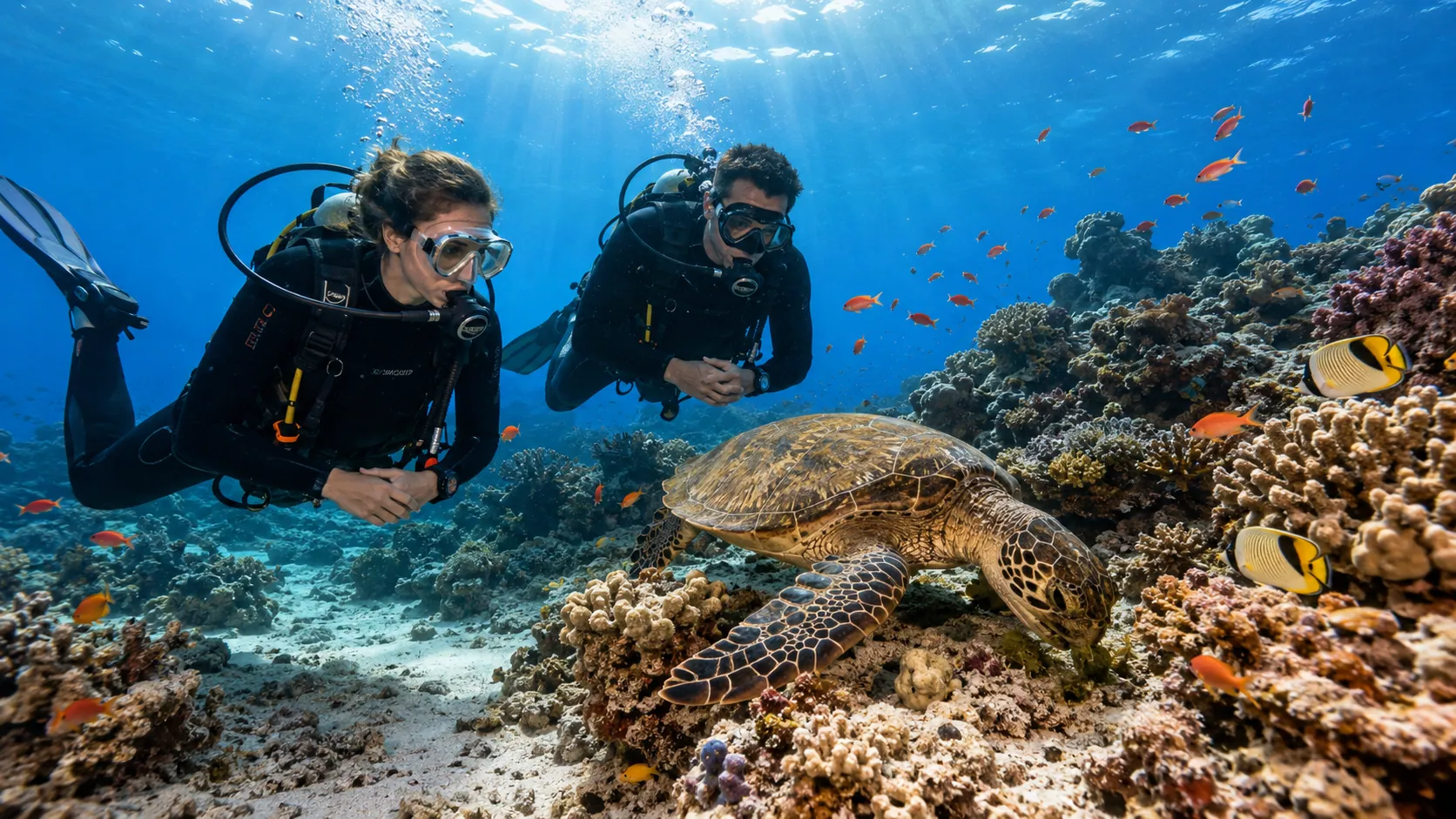
A quiet southern cape with seagrass meadows and an atmospheric cavern – turtles almost for sure, a dugong with some luck.
- Depth
- 5–20m
- Boat
- 60min
- Species
- 5
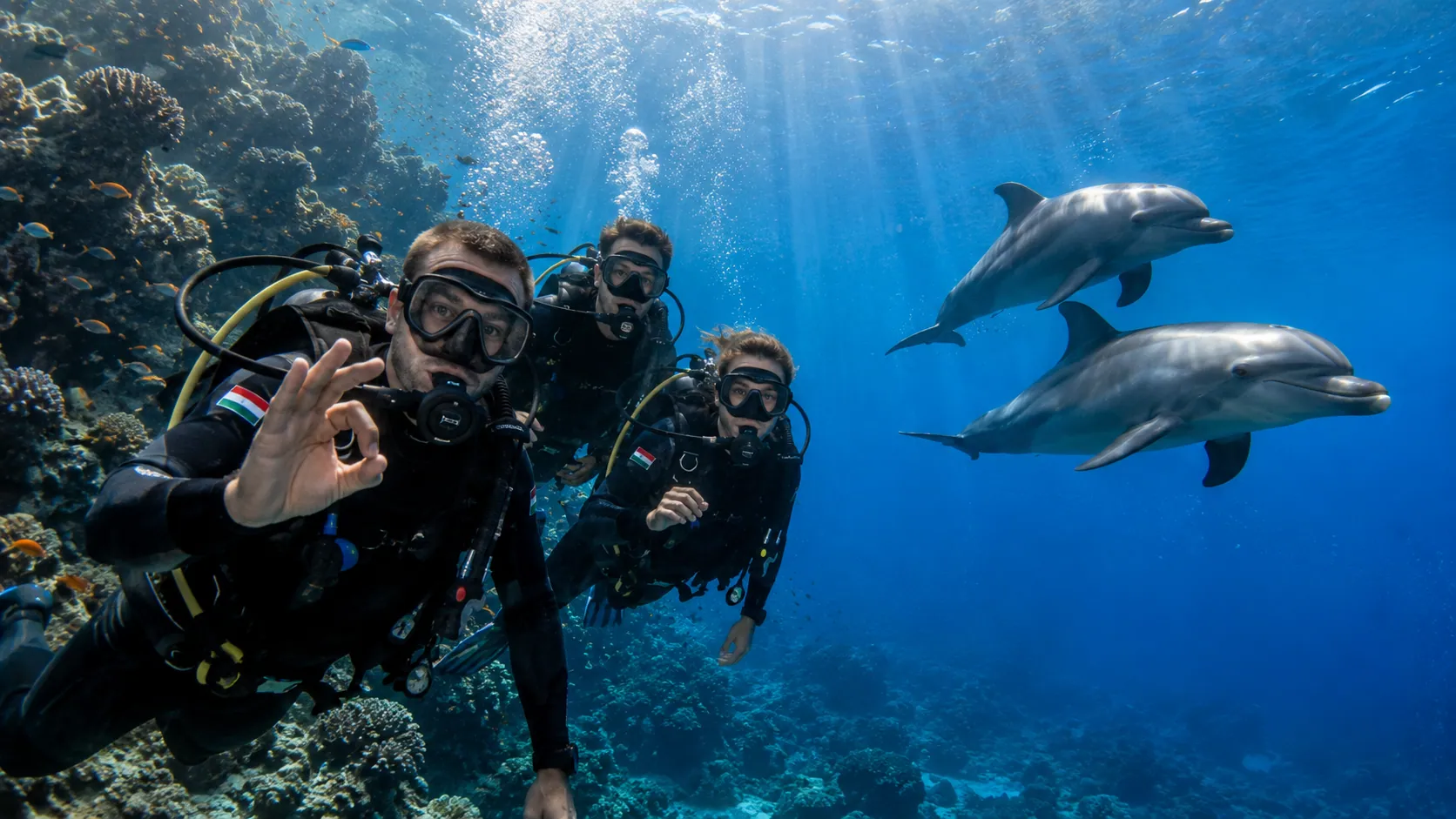
Dolphin House (Sha'ab El Erg)
A horseshoe reef with a sheltered lagoon where you can swim with wild dolphins – Hurghada's most famous dive site.
- Depth
- 5–16m
- Boat
- 90min
- Species
- 5
The Red Sea will not wait forever.
Book today – seats on the boat are limited, your excitement is not.