Red Sea goatfish
Parupeneus forsskali
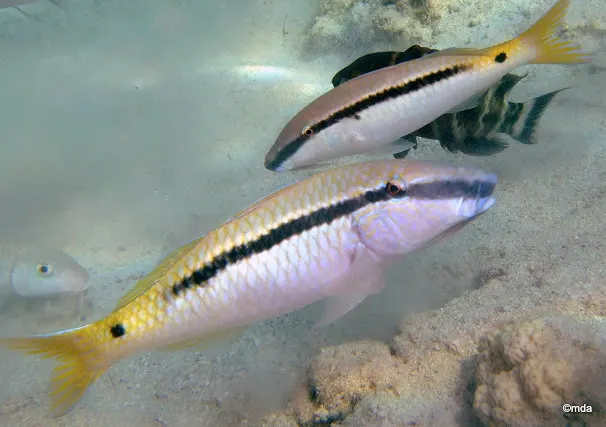
The busy "metal detectorist" of the sand flats: with its black side stripe and yellow tail spot, the Red Sea's own goatfish sweeps every square inch of the bottom.
The Red Sea goatfish (Parupeneus forsskali) is native to the Red Sea and the Gulf of Aden, named after the 18th-century Swedish-Finnish naturalist Peter Forsskål. A bold black stripe runs along its whitish body from snout to rear dorsal fin, and a round black spot sits on the tail base in a field of yellow – you will recognise it instantly. The two white barbels under its chin are the goatfish trademark.
You could watch it feed for hours: it "scans" the sand and rubble with its barbels like a detectorist sweeping a beach, and the moment it senses a worm, crab or shellfish it plunges into the bottom in a flash. Regular companions gather around the stirred-up sand cloud – wrasses and other opportunists waiting for missed morsels. At rest the barbels fold tightly under the chin and the fish hangs almost motionless above the bottom.
It is one of the most common bottom dwellers at Hurghada: it forages in small groups on the sandy channels between the reefs, often at barely one or two metres' depth, so it is a superb snorkeling subject. The sand flats of shallow Shaab Sabina and Dolphin House are near-guaranteed spots. Since it ignores people completely, you can follow the whole "excavation" from close range.
Did you know?
The Red Sea goatfish is a hero of the so-called Lessepsian migration: swimming through the Suez Canal, it has now established itself in the eastern Mediterranean – this Hurghada fish literally emigrated to Europe's shores under its own power.
Where can you meet it?
Present wherever there is sand: it digs in groups on the shallow banks of Shaab Sabina, in the Dolphin House lagoon, in the "aquarium" of Gota Abu Ramada and along the sandy channels of Giftun.
Frequently asked questions
They are sensory organs packed with taste and touch receptors: the fish "tastes" its way across the sand and senses exactly where a worm, crab or shellfish hides beneath the surface. After hunting, the barbels fold neatly under the chin.
Yes, almost certainly: shallow sand flats are its favourite terrain and it often feeds at 1–2 metres. Snorkeling at Shaab Sabina or in the Dolphin House lagoon, just look for the little sand clouds – a team is working beneath each one.
No, it is completely harmless: no venom, no spines, and it pays no attention to people. You can approach it calmly while it digs – at worst it stirs a sand cloud into your face.
Best sites for Red Sea goatfish
Sha'ab Sabina
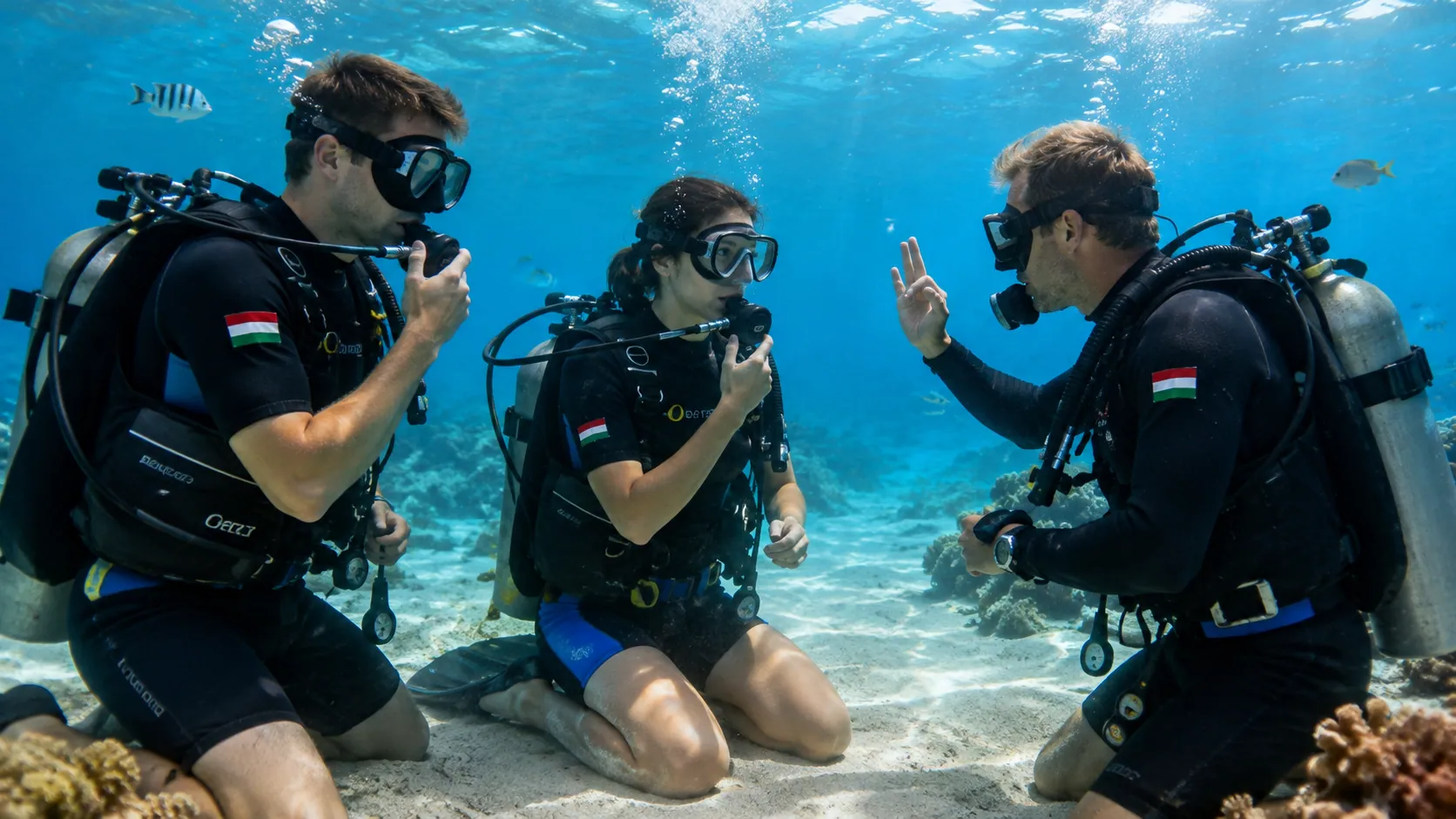
A sheltered shallow reef with a sandy lagoon – this is where most of our try dives and OWD skill sessions happen.
- Depth
- 4–12m
- Boat
- 40min
- Species
- 5
Dolphin House (Sha'ab El Erg)
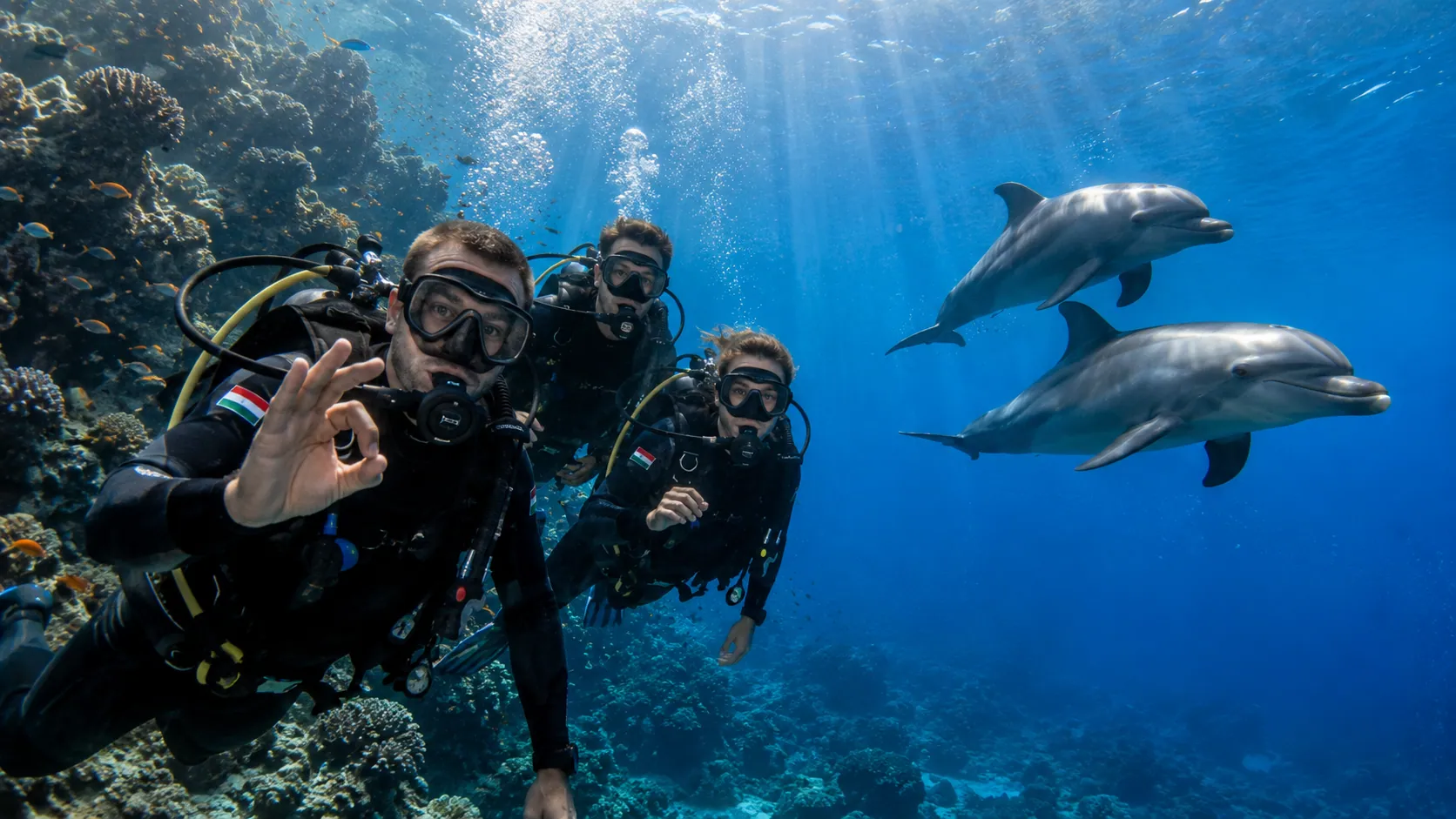
A horseshoe reef with a sheltered lagoon where you can swim with wild dolphins – Hurghada's most famous dive site.
- Depth
- 5–16m
- Boat
- 90min
- Species
- 5
Gota Abu Ramada
A shallow oval reef with a sandy bottom and schools of butterflyfish – perfect for training, second and night dives.
- Depth
- 4–14m
- Boat
- 55min
- Species
- 5
The Red Sea will not wait forever.
Book today – seats on the boat are limited, your excitement is not.