Reef manta ray
Mobula alfredi
A four-metre wingspan giant that is completely harmless, "flying" in slow circles through the blue – one of the most uplifting encounters the Red Sea can offer.
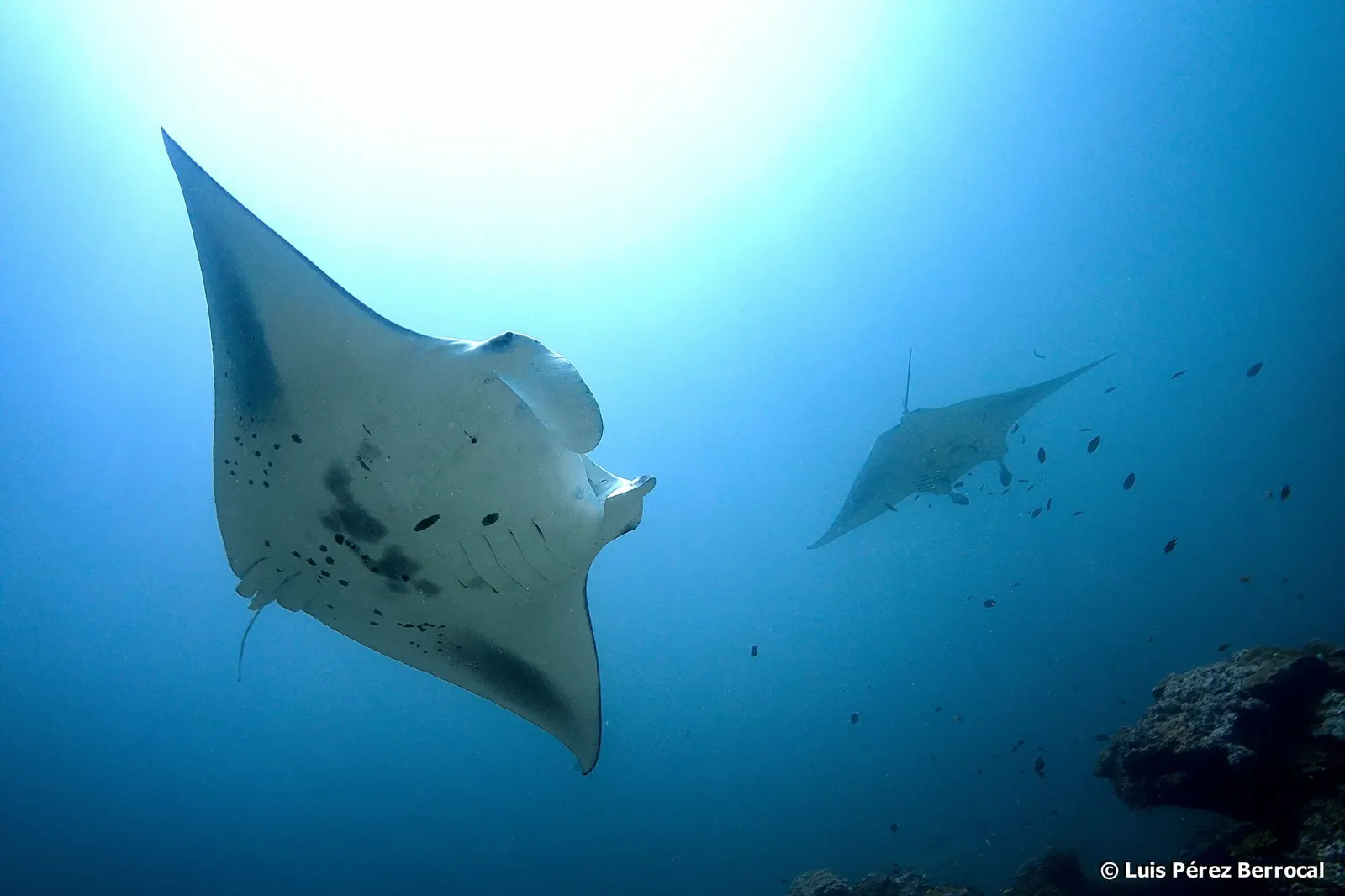
The reef manta (Mobula alfredi) is the world's second-largest ray: its wingspan reaches 3–4 metres, yet it feeds exclusively on plankton. You cannot mistake it for anything else – a diamond-shaped body, black back, white belly, and two cephalic fins ("horns") on either side of its head that it can roll into funnels. When feeding it unfurls these fins, opens its cavernous mouth and strains tiny crustaceans and fish eggs from the water in slow loops and occasional backward somersaults. It has no sting; it cannot bite or hurt you.
Mantas have the largest brain-to-body ratio of any fish, and it shows: they are curious, quick to learn, and return faithfully to the same "cleaning stations", where wrasses pick parasites off their skin. Every individual carries a unique spot pattern on its belly – like a fingerprint – and researchers track them by name from photographs. A female gives birth to a single pup, already nearly one and a half metres wide, only every one to two years, so populations grow very slowly and the species is threatened worldwide.
Around Hurghada the manta is a rare but recurring guest: it appears most often in spring and early summer, when plankton-rich water drifts along the outer reefs – Umm Gamar, Carless Reef and the walls of the Giftun Islands. With luck, one may glide beneath you even while snorkeling. The rule is simple: stay calm, never chase and never touch – the protective mucus on its skin is delicate, and a relaxed diver is exactly the company a manta chooses to linger with.
Did you know?
The manta is the only fish known to have passed the mirror test: instead of treating its reflection as another animal, it twists and turns to examine itself – a sign of self-recognition previously seen only in primates, dolphins and elephants.
Where can you meet it?
Your best chances are at the plankton-rich outer reefs: along the walls of Umm Gamar and Carless Reef and on the deeper side of the Giftun Islands in spring and early summer.
Frequently asked questions
No: unlike stingrays, the manta has no sting, its teeth are tiny and vestigial, and it eats nothing but plankton. Despite its four-metre size it is one of the gentlest animals in the sea – the worst it can do is majestically swim away from you.
Honestly: mantas are rare here and cannot be planned – which is exactly why every boat erupts in cheers when one shows up. Your odds are best in spring and early summer, in plankton-rich water at the outer reefs. If one appears, don't chase it: it will circle and come back to you on its own.
The eagle ray is smaller, spotted on the back, with a long whip-like tail and a sting, and digs molluscs out of the sand. The manta is far larger, has no sting and filters plankton in open water – the two "horns" on its head identify it instantly.
Best sites for Reef manta ray
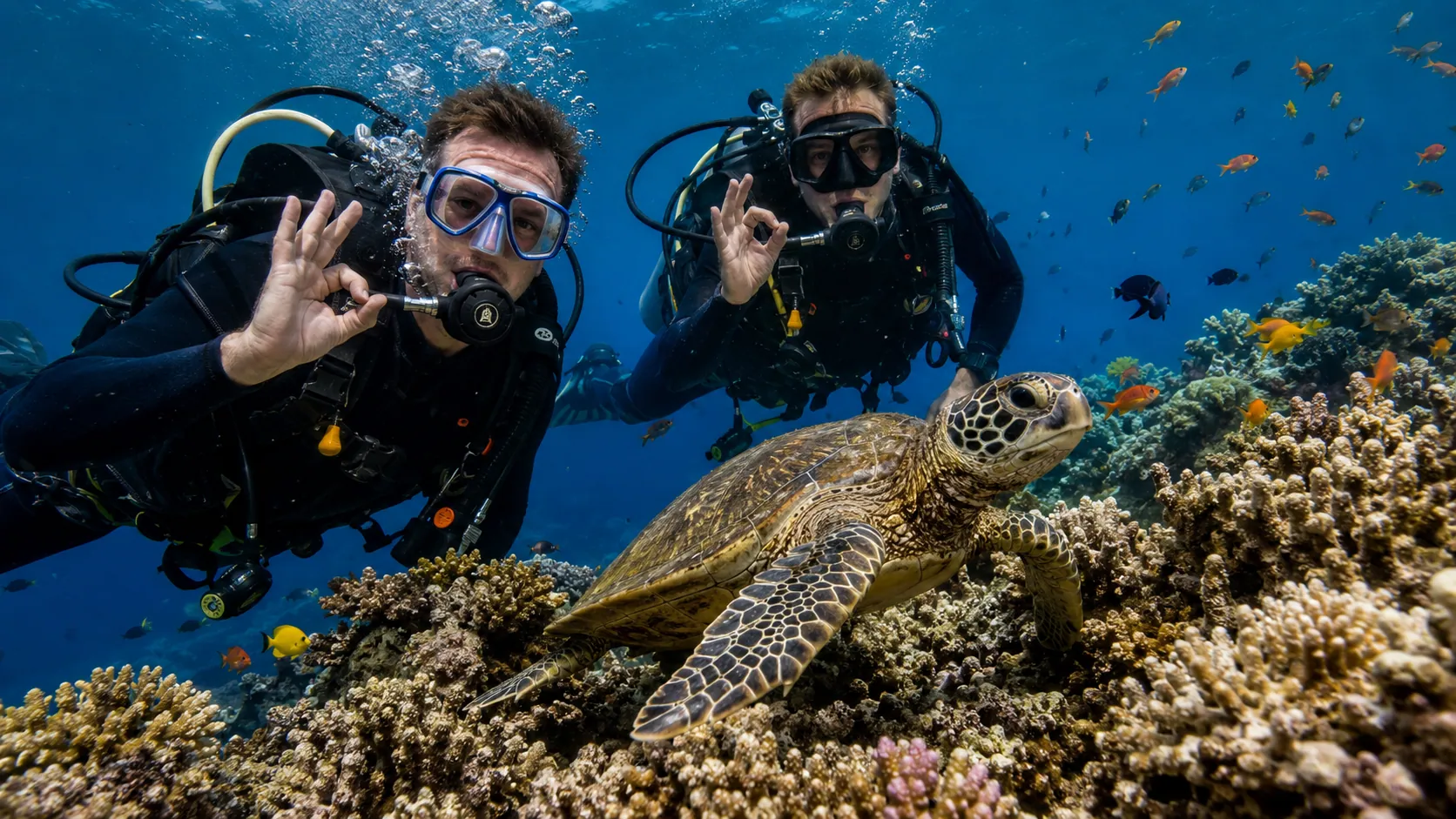
Umm Gamar
An elongated island in the north: a plateau with three coral towers, small caves and big predators out in the blue.
- Depth
- 10–30m
- Boat
- 75min
- Species
- 5
Carless Reef
An offshore twin-erg reef famous for its legendary moray colony – for experienced divers, weather permitting.
- Depth
- 12–30m
- Boat
- 70min
- Species
- 5
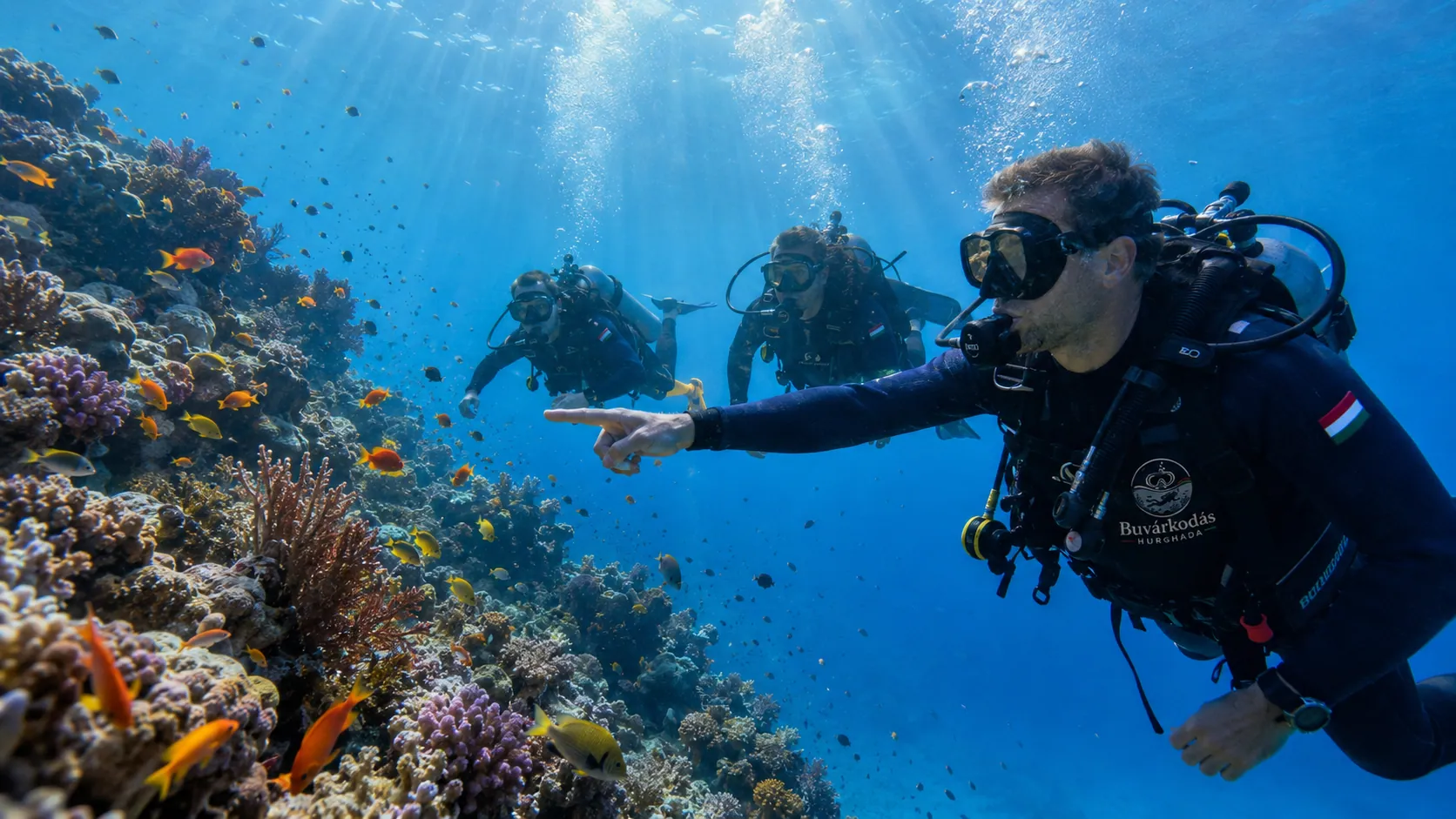
Giftun-szigetek
A national park island pair with a dozen dive sites: coral gardens, turtles and perhaps the richest fish life in the area.
- Depth
- 5–25m
- Boat
- 45min
- Species
- 6
The Red Sea will not wait forever.
Book today – seats on the boat are limited, your excitement is not.