Ribbon eel
Rhinomuraena quaesita
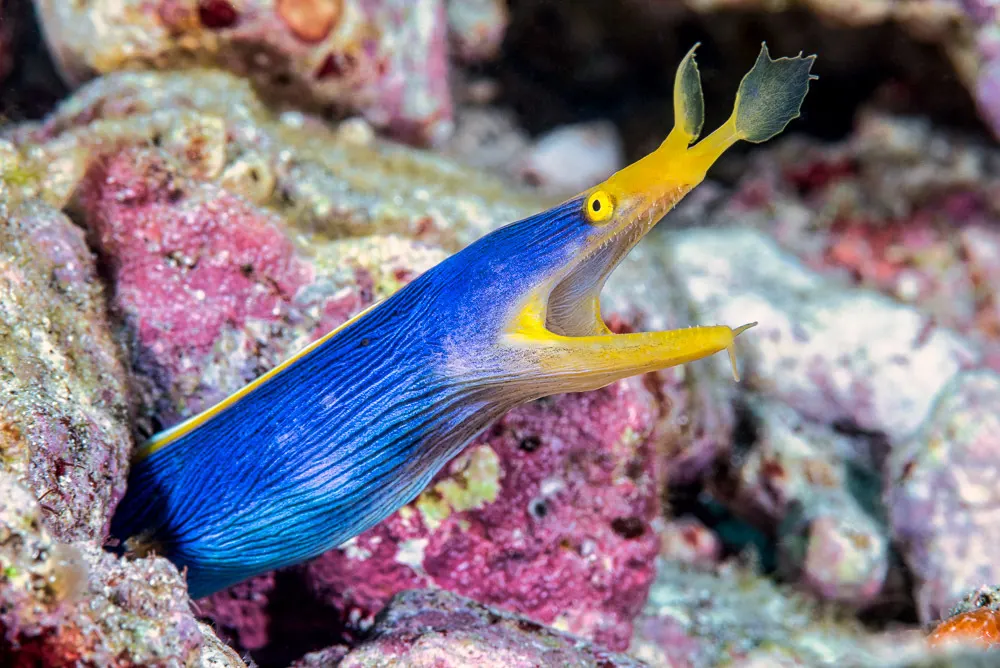
Electric-blue body, canary-yellow snout and flaring, fan-like nostrils – the ribbon eel looks like a miniature Chinese dragon living in the sand.
The ribbon eel (Rhinomuraena quaesita) actually belongs to the moray family, though nobody would guess it: the body is paper-thin and ribbon-like, and the snout carries flaring, sail-like nostril lobes that "harvest" scent from the water. Strangest of all is its wardrobe: juveniles are jet black with a yellow dorsal fin, adult males glow electric blue with a yellow snout, and old individuals that have turned female become yellow almost from head to tail.
Behind the colour changes lies a full change of sex: a ribbon eel matures as a male and transforms into a female late in life – a blue "manhood" followed by a yellow "womanhood". It spends most of its time in a burrow dug into sand or rubble, with only the head and the front third of the body rising out in a constant rippling sway. It hunts small fish, snatching them from passing shoals with lightning strikes.
It is rare in the Red Sea, so every sighting around Hurghada causes a small sensation among divers. Search the sandy, rubbly patches: it has turned up on the slopes of El Fanadir and in the lagoon of Gota Abu Ramada. If your guide finds one, approach from the side and slowly – ribbon eels are sensitive to sudden movement, but a patient diver gets a long show of that dragon head.
Did you know?
The ribbon eel changes outfit three times in a lifetime: black juvenile to blue male, blue male to yellow female – it is the only moray known to change sex, and it announces the switch with a full change of colour.
Where can you meet it?
It takes rare luck: watch for the blue-and-yellow head rising from the sand mainly on the sandy, rubbly slopes of El Fanadir, in the lagoon of Gota Abu Ramada and on the Small Giftun plateau.
Frequently asked questions
No: although it is a moray relative, it has a tiny mouth and a slender body, and is completely harmless to people. It fears you far more – one sudden move and it retreats into its burrow.
Small: the species is rare in the Red Sea, so it is an unexpected gift rather than a plannable event. Experienced guides keep track of known burrows – if one is "occupied", they will take you there.
The fan-like nostril lobes sample dissolved scents over a huge surface area and likely sense prey-driven water movement too – it "sniffs through" passing fish shoals without ever leaving its burrow.
Best sites for Ribbon eel
El Fanadir
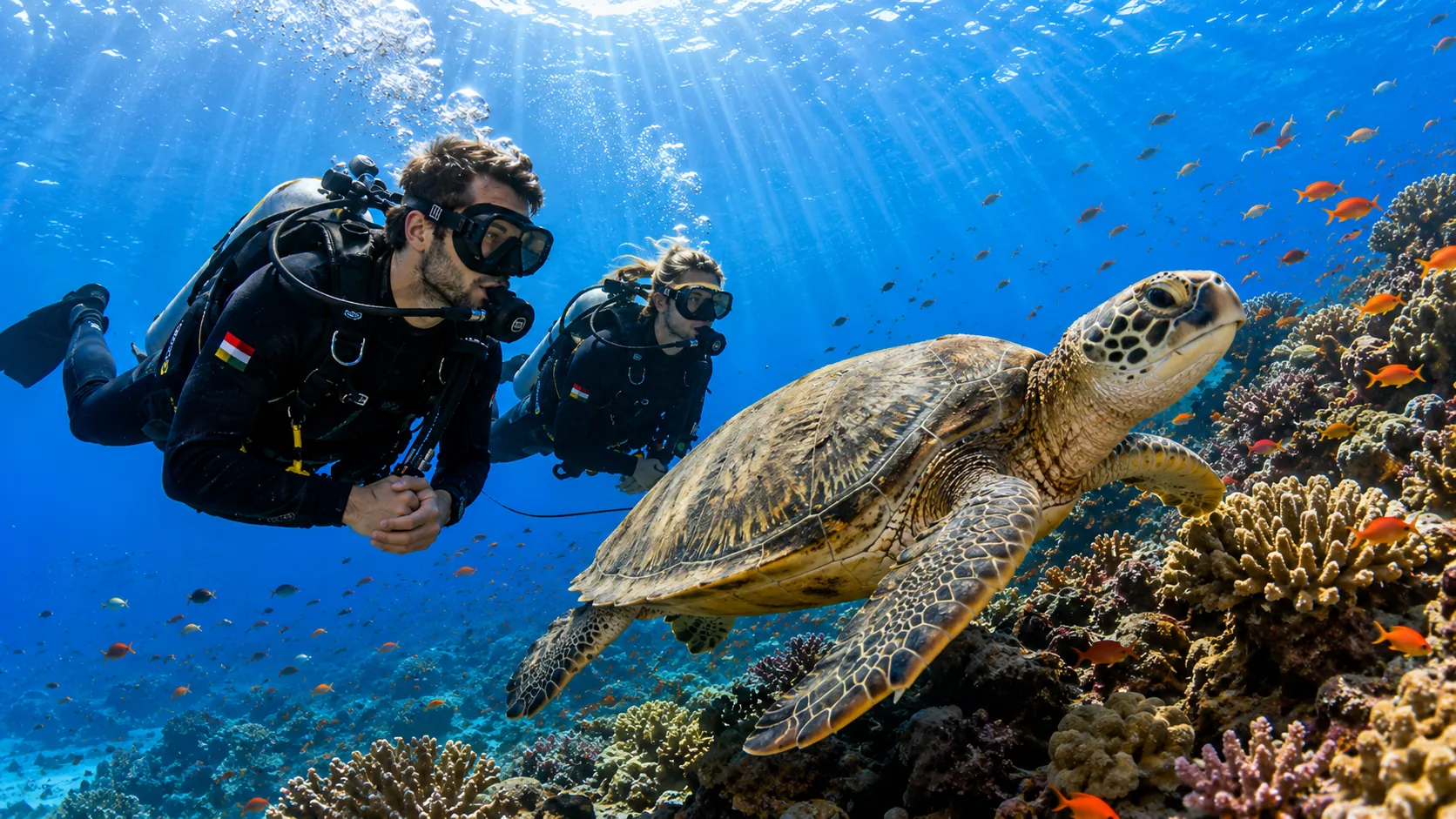
A long reef ridge barely half an hour from the marina: a gentle wall, blue-spotted rays and seagrass patches with turtles.
- Depth
- 6–25m
- Boat
- 30min
- Species
- 5
Gota Abu Ramada
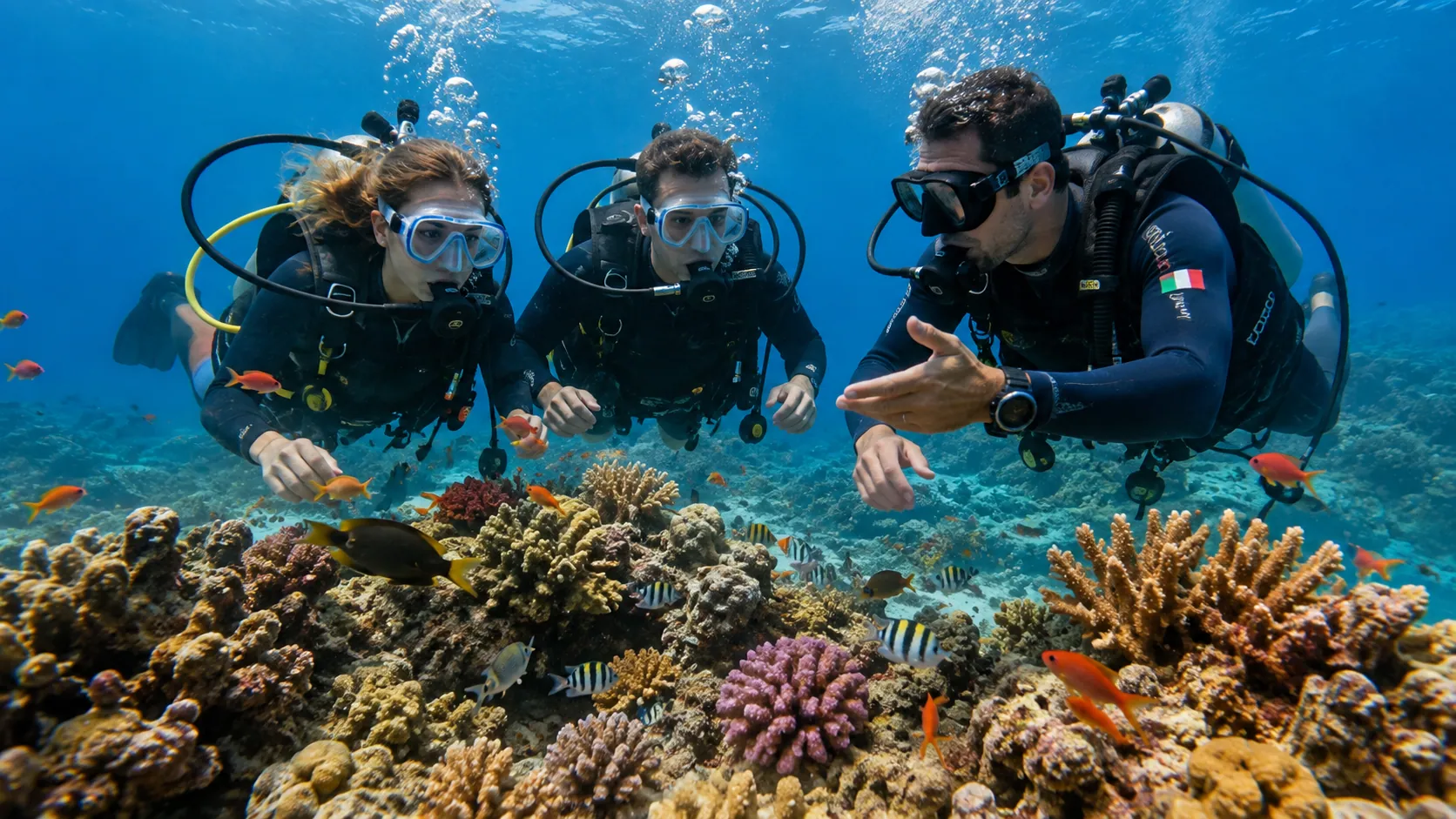
A shallow oval reef with a sandy bottom and schools of butterflyfish – perfect for training, second and night dives.
- Depth
- 4–14m
- Boat
- 55min
- Species
- 5
Small Giftun fal
Hurghada's classic drift dive: a sheer wall with gorgonian fans, eagle rays and a coral-tower plateau at 20–30 metres.
- Depth
- 8–30m
- Boat
- 50min
- Species
- 5
The Red Sea will not wait forever.
Book today – seats on the boat are limited, your excitement is not.