Robust ghostpipefish
Solenostomus cyanopterus
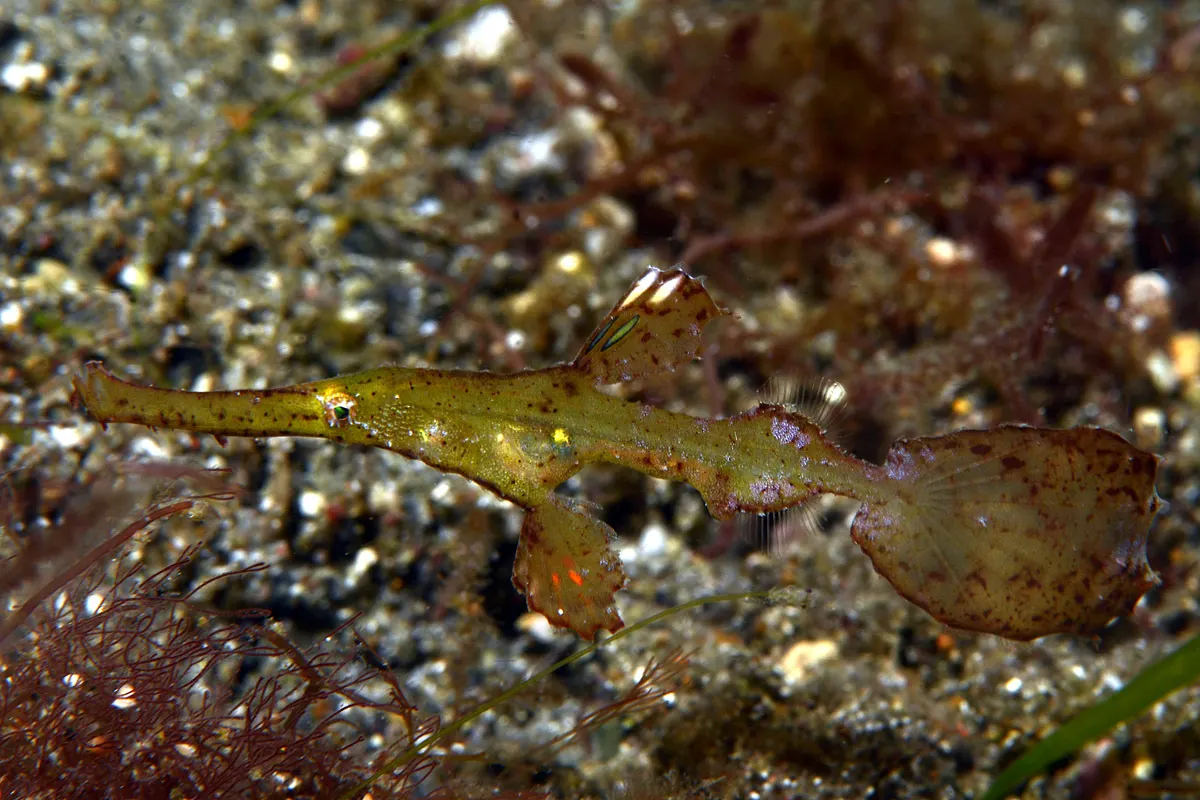
A drifting piece of dead seagrass… that suddenly blinks: the robust ghostpipefish is one of the Red Sea's best-hidden treasures.
The robust ghostpipefish (Solenostomus cyanopterus) is a curious relative of seahorses and pipefishes that has raised camouflage to an art form: in colour, shape and even "raggedness" its body imitates a dead seagrass blade or a drifting scrap of algae. It may be greenish, brown, grey or nearly black, with tattered skin flaps along its edges – it hovers head-down above the bottom and lets the surge rock it back and forth, exactly the way the water would carry a real leaf.
Its life history is unusual too: it spends most of its life as a larva in the open ocean and only settles on the reef for the breeding season – the adult stage often lasts just a few weeks. Unlike in seahorses, here the female runs the nursery: her greatly enlarged pelvic fins close into a brood pouch in which she carries the eggs until hatching. It feeds on tiny shrimps and crustaceans, slurped up through its long tubular snout.
Around Hurghada it is a rare, seasonal guest, appearing mostly in late summer and autumn, alone or in pairs, over rubble bottoms near seagrass patches and soft corals. Finding one is a serious challenge – even experienced guides double-check every piece of "drifting debris" – which is exactly why it counts as one of Hurghada's greatest macro trophies.
Did you know?
The ghostpipefish reverses the famous seahorse arrangement: it is the female, not the male, who broods the eggs – inside a sealable pouch formed from her huge pelvic fins.
Where can you meet it?
Search rubble and sheltered bottoms: it turns up on the lagoon side of El Fanadir, on the sand patches of Gota Abu Ramada and occasionally on the rubble slopes around Abu Ramada.
Frequently asked questions
Mostly in late summer and autumn, when individuals arriving from the open sea settle down to breed. Even then it is rare: tell your guide in advance that you are keen, because they know where one was last seen.
Because it does not behave like a fish: it hangs head-down in the water and lets the surge carry it like a dead leaf. Your brain simply filters it out as "debris" – the trick is to take a closer look at every leaf that sways a little too rhythmically.
Not at all: it has no venom, no teeth, and its entire defence consists of pretending to be a leaf. It is delicate, though: do not blast it with a strong light for long, and never touch it.
Best sites for Robust ghostpipefish
El Fanadir
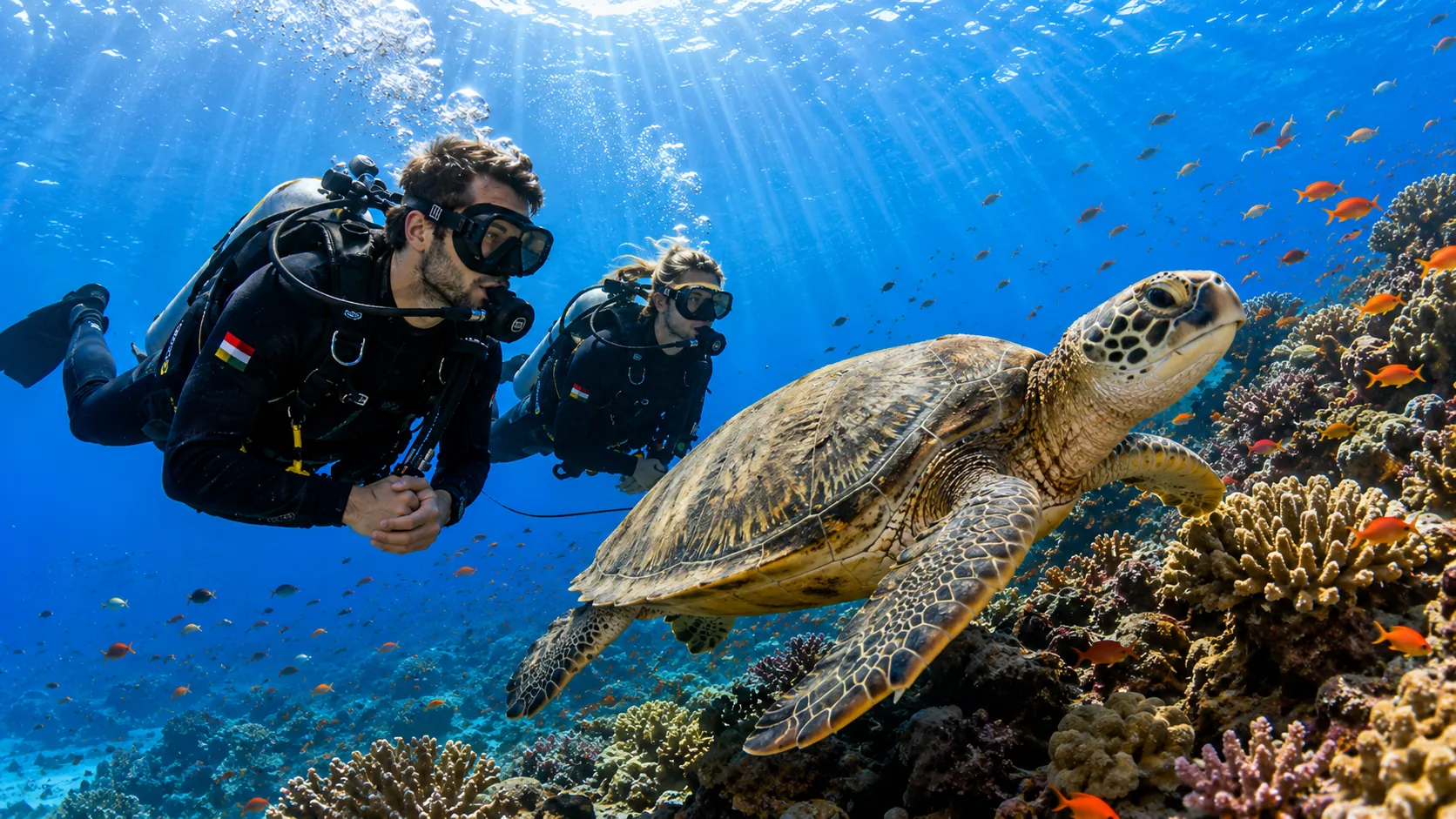
A long reef ridge barely half an hour from the marina: a gentle wall, blue-spotted rays and seagrass patches with turtles.
- Depth
- 6–25m
- Boat
- 30min
- Species
- 5
Gota Abu Ramada
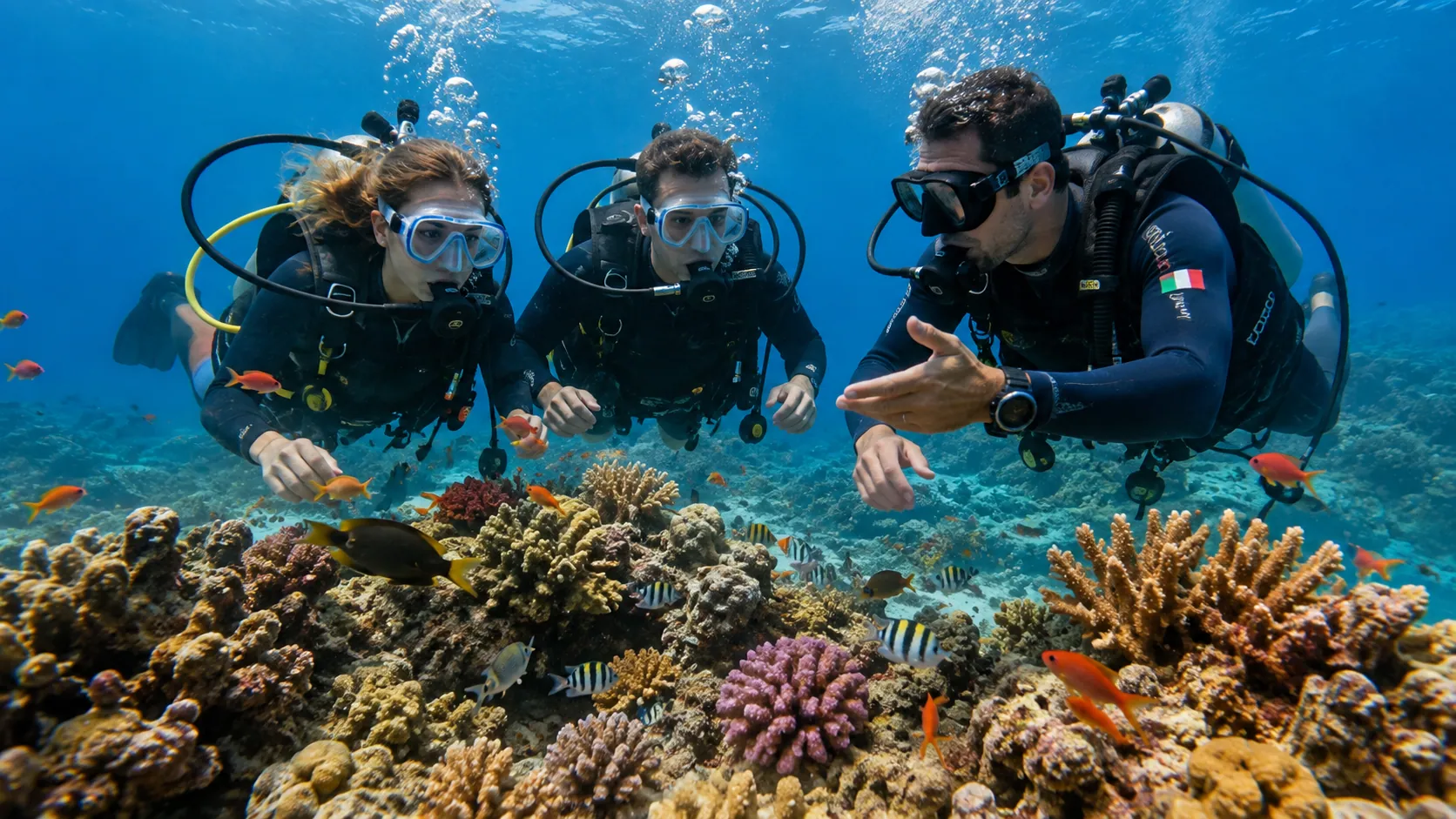
A shallow oval reef with a sandy bottom and schools of butterflyfish – perfect for training, second and night dives.
- Depth
- 4–14m
- Boat
- 55min
- Species
- 5
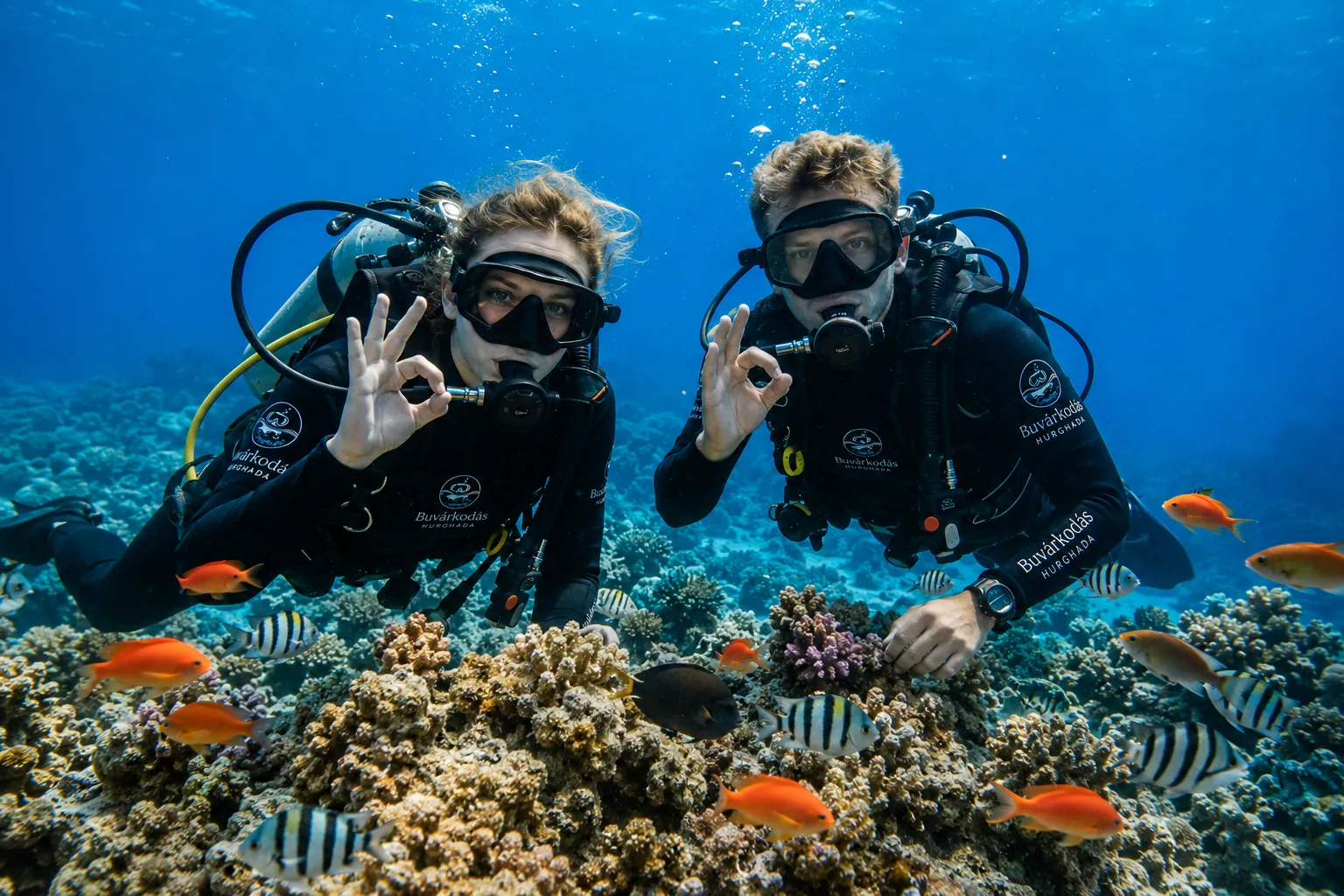
Abu Ramada („Az Akvárium”)
The Aquarium nickname is well earned: the fish schools swirling around the coral towers can be so dense you lose sight of the reef.
- Depth
- 6–26m
- Boat
- 50min
- Species
- 6
The Red Sea will not wait forever.
Book today – seats on the boat are limited, your excitement is not.