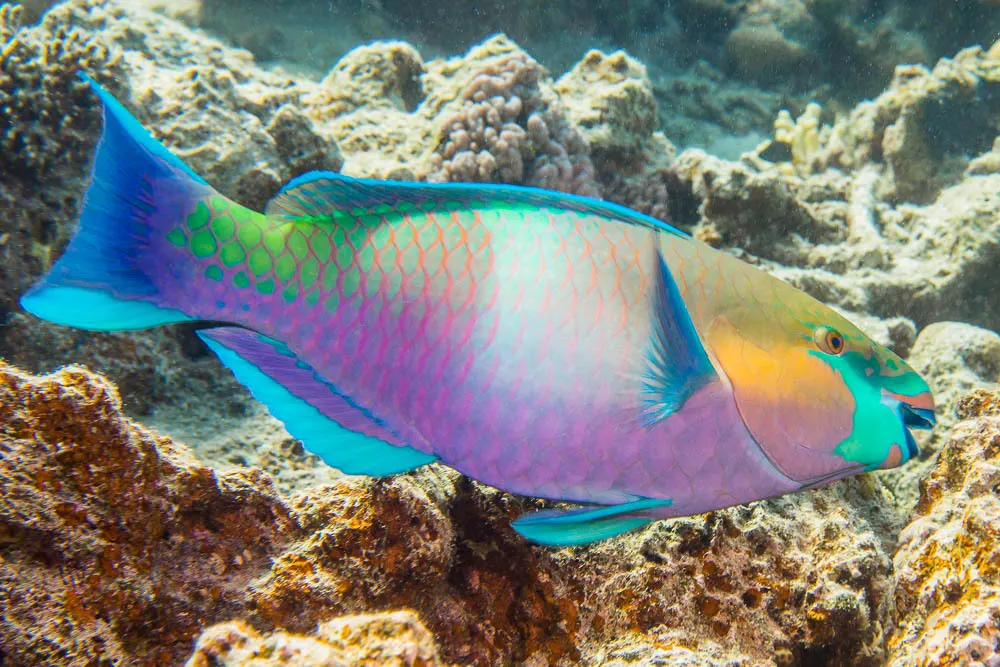
Rusty parrotfish
Scarus ferrugineus
The reef's noisiest vegetarian: it crunches the coral rock with its parrot-beak teeth, manufacturing sand as it goes.
The rusty parrotfish (Scarus ferrugineus) is the Red Sea's and the Arabian Gulf's very own parrotfish – you will not meet it anywhere else. It takes its name from the rusty-brown colour of females and juveniles, while mature males wear a completely different outfit: blue-green bodies with a glowing yellow patch and turquoise scribbles across the cheeks. The "parrot" part is about the mouth: its teeth are fused into beak-like plates used to rasp algae off the coral rock.
On a dive you often hear it before you see it: the loud, rasping crunch of the beak carries far underwater. Along with the algae it bites off chips of coral rock, which its throat teeth grind to flour – and the indigestible limestone leaves its body as fine sand. Parrotfish are thus the reef's most important "maintenance crew": by mowing back the algae they clear space for new corals, and as a by-product they spread sand across the lagoons.
Around Hurghada this is one of the most common parrotfish: it grazes everywhere in the shallow coral gardens, keeping snorkelers company the whole time. It works non-stop by day – just follow the crunching sound on the Giftun or El Fanadir plateaus. On a night dive you see a completely different animal: it sleeps motionless in a coral recess, often wrapped in a transparent mucus cocoon.
Did you know?
Parrotfish are among the main producers of tropical sand: they grind the coral rock they bite off into sand, and a single large individual can "manufacture" tens of kilograms of fine sand a year – part of every paradise sandbank has literally passed through a parrotfish.
Where can you meet it?
It grazes in all of Hurghada's shallow coral gardens: sightings are guaranteed on the plateaus of the Giftun Islands, El Fanadir and Gota Abu Ramada, and it is common while snorkeling on the Shaab Sabina sandbank too.
Frequently asked questions
Most likely a parrotfish is grazing nearby: it rasps algae off the coral rock with its beak-like teeth, and the crunching carries surprisingly far underwater. Follow the sound and you will find the "machine" at work.
Quite the opposite: it mainly grazes algae, preventing it from overgrowing and smothering the corals. The rock it scrapes off becomes sand – the parrotfish is one of the reef's most important caretakers.
Yes, it is one of the easiest fish to watch at Hurghada: it grazes all day on the shallow reef tops and pays little attention to swimmers. You can spot the blue-green males right from the surface.
Best sites for Rusty parrotfish
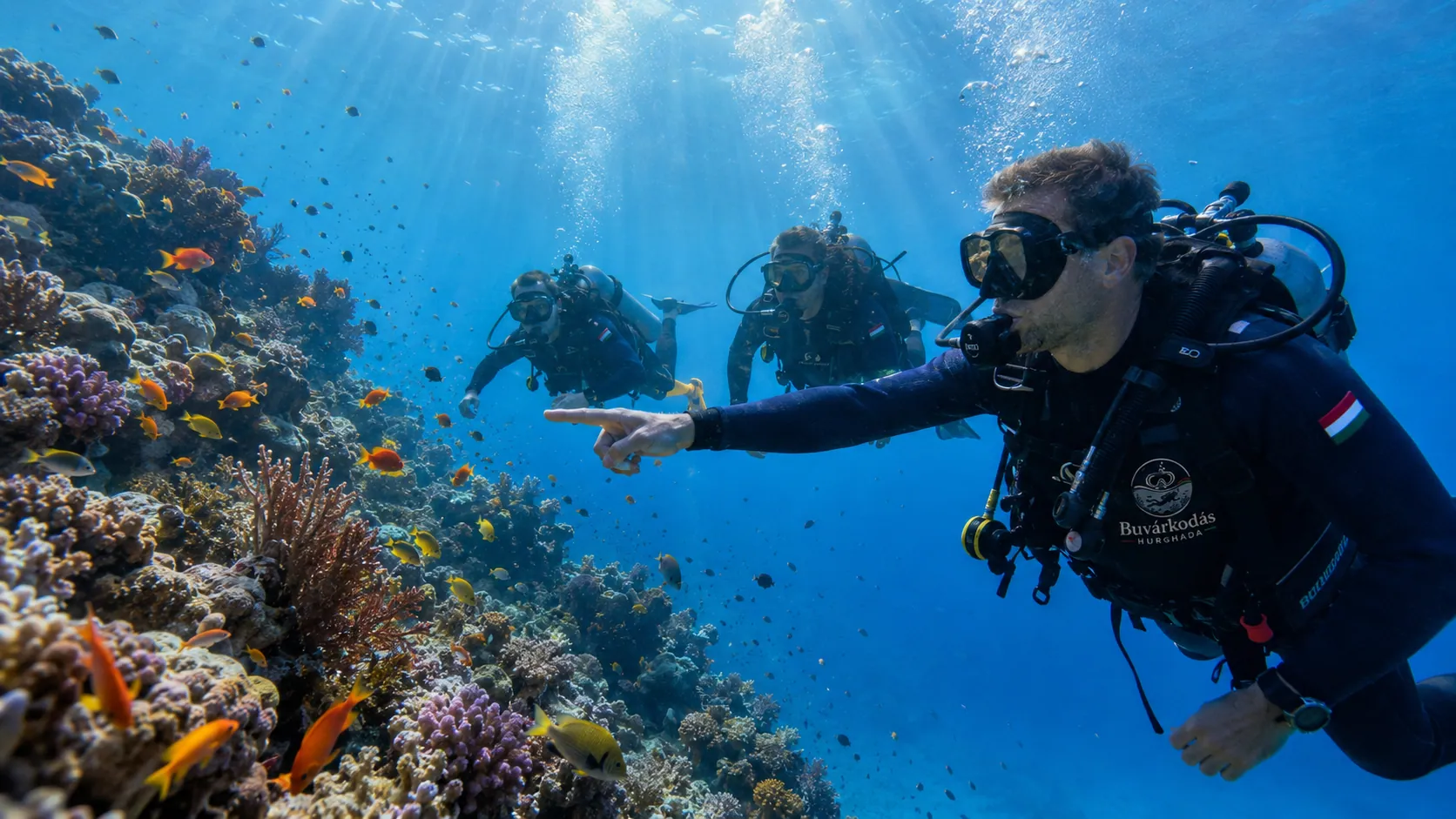
Giftun-szigetek
A national park island pair with a dozen dive sites: coral gardens, turtles and perhaps the richest fish life in the area.
- Depth
- 5–25m
- Boat
- 45min
- Species
- 6
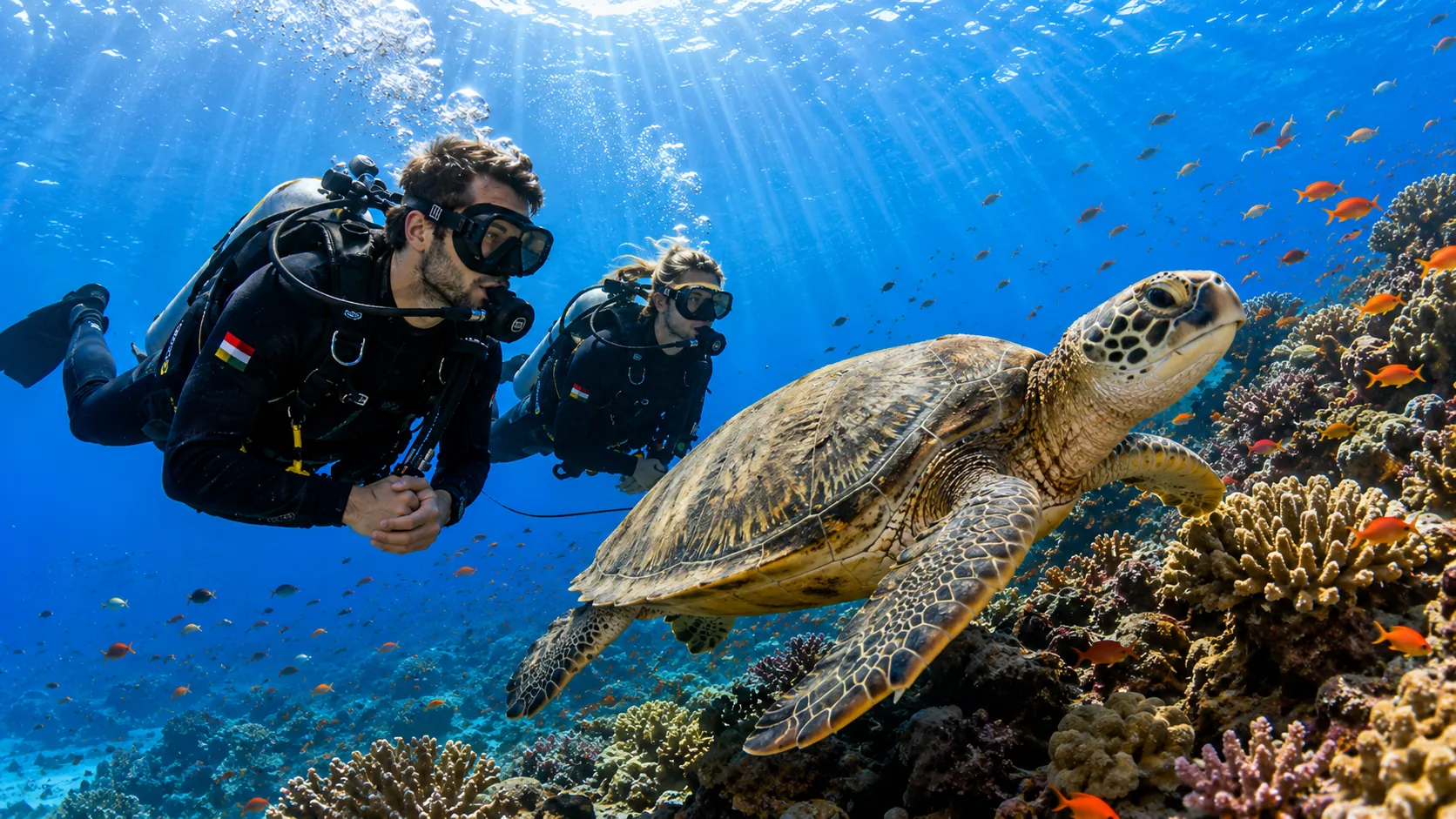
El Fanadir
A long reef ridge barely half an hour from the marina: a gentle wall, blue-spotted rays and seagrass patches with turtles.
- Depth
- 6–25m
- Boat
- 30min
- Species
- 5
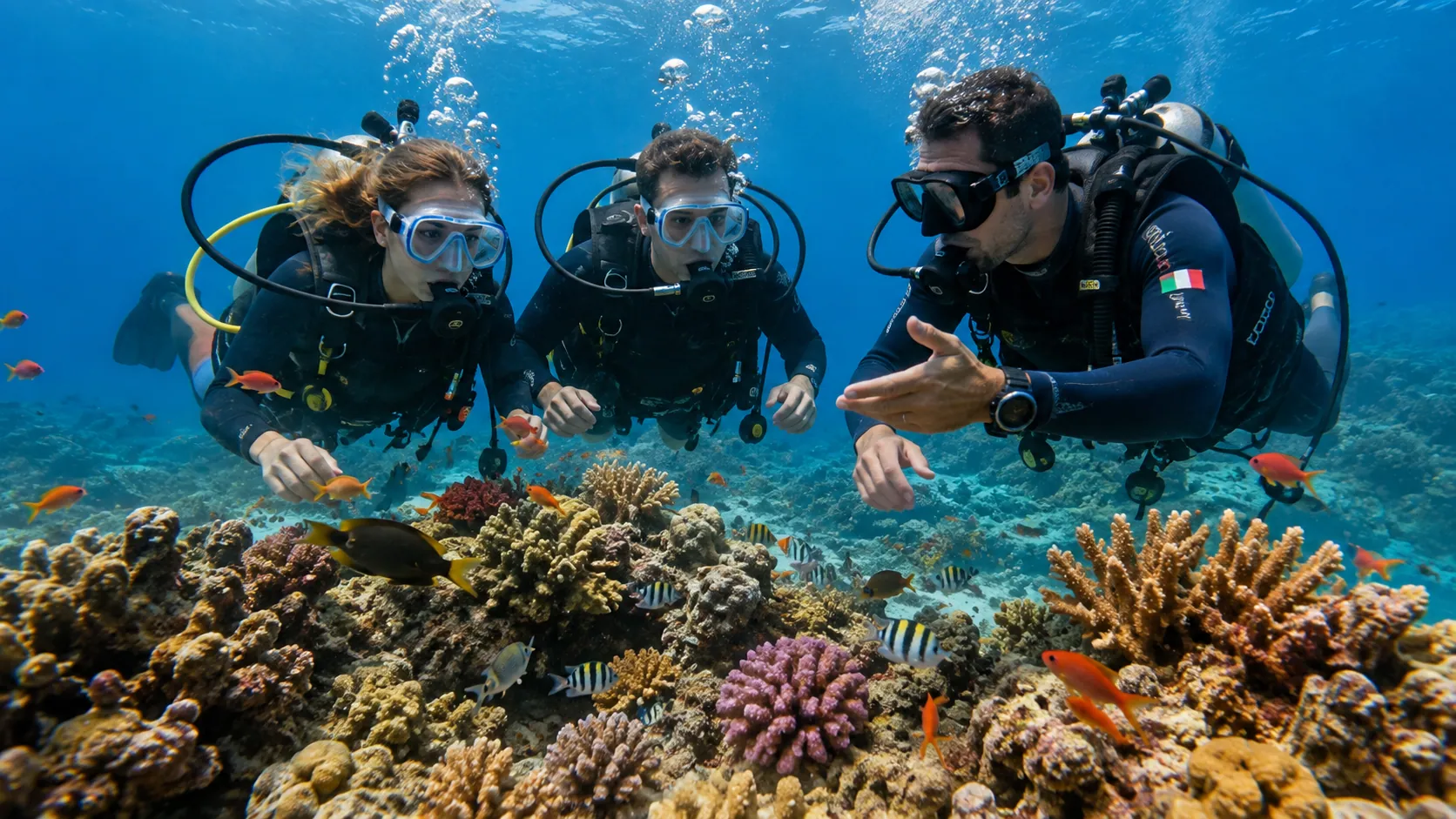
Gota Abu Ramada
A shallow oval reef with a sandy bottom and schools of butterflyfish – perfect for training, second and night dives.
- Depth
- 4–14m
- Boat
- 55min
- Species
- 5
The Red Sea will not wait forever.
Book today – seats on the boat are limited, your excitement is not.