Sabre squirrelfish
Sargocentron spiniferum
The giant among squirrelfish: a ruby-red armoured knight that guards its ledge all day and only sets out to hunt after dark.
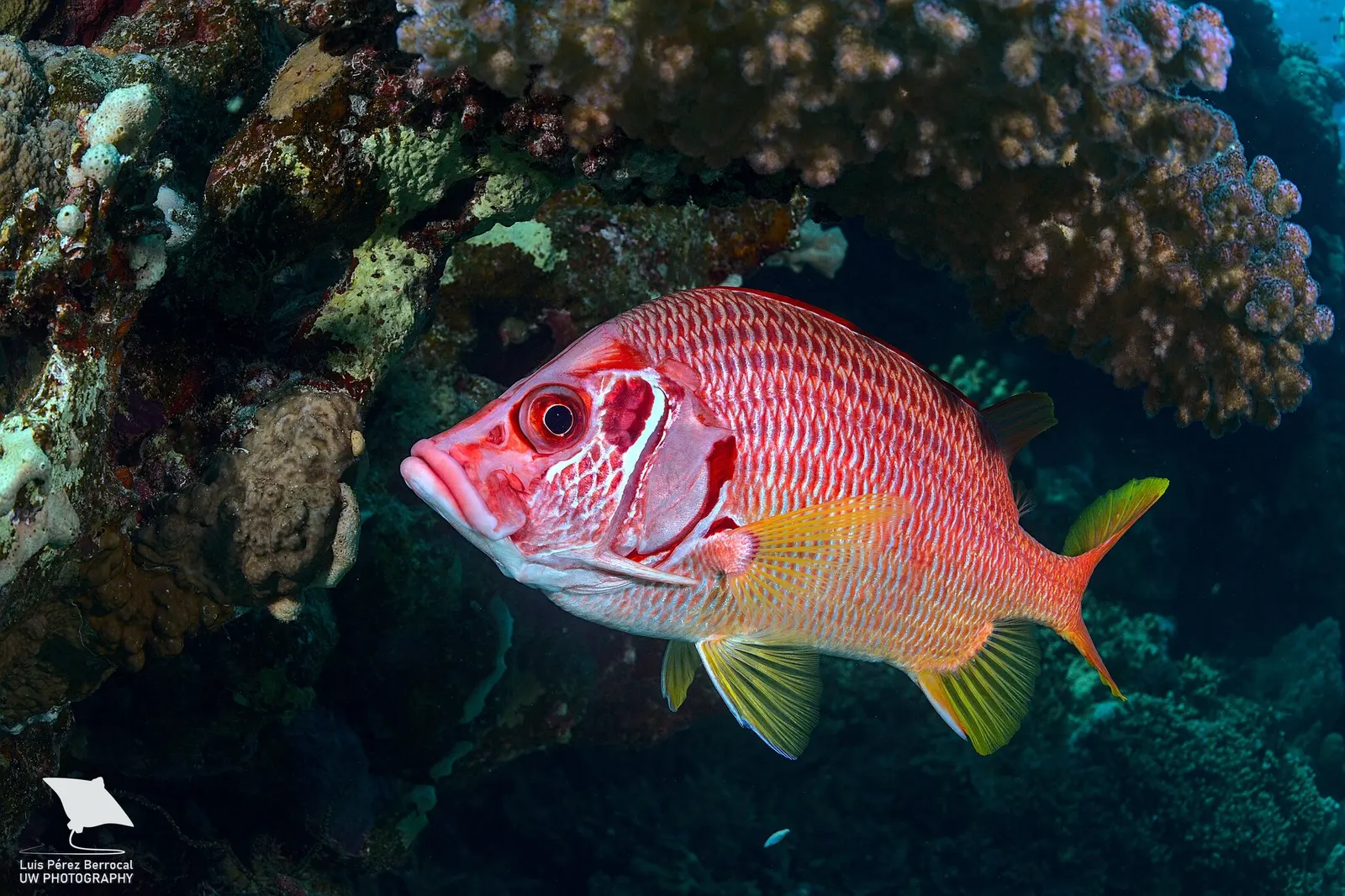
The sabre squirrelfish (Sargocentron spiniferum) is the largest of all squirrelfish – around Hurghada, 35–45 cm individuals are an everyday sight. Its brilliant red body is etched with silvery scale margins, a dark crimson blotch sits behind the eye, and the fins glow yellowish-orange. The name comes from the sabre-shaped spine pointing backwards from its gill cover – not an ornament but a defensive weapon connected to venom glands.
It is a classic nocturnal predator: those enormous eyes see superbly in dim light. By day it hovers alone or in loose groups beneath table corals and overhangs, facing the open water as if standing guard. After dark it fans out over the sand and the reef edge, hunting crabs, shrimps and small fish. Using its swim bladder it also produces grunting and clicking sounds to communicate with its own kind.
You will meet it on virtually every Hurghada dive: shine your torch under any larger overhang and one or two stately red figures will be glowing back at you. Snorkelers can spot it too on broken, shallow reef tops, for instance in the recesses of the Giftun Islands and Shaab Sabina. It is a true star of night dives, when it hunts in open water and its red blazes spectacularly in the torch light.
Did you know?
Red is the perfect camouflage at depth: water absorbs red light within the first few metres, so this flamboyantly ruby fish appears greyish-black – nearly invisible – while hunting in the darkness.
How to behave around it
The long spine on its gill cover is mildly venomous and its jab is painful – but the fish never attacks; you can only get hurt by grabbing or cornering it. Watch and photograph it from as close as you like, just keep your hands to yourself.
Where can you meet it?
Present under the ledges of every Hurghada reef: the El Fanadir wall, the coral gardens of the Giftun Islands and the shallow recesses of Shaab Sabina are guaranteed spots.
Frequently asked questions
It poses no danger at all to divers or snorkelers because it never attacks. The spine on its gill cover is mildly venomous, but you could only get hurt by handling the fish – something we never do on the reef anyway.
Yes! Although more common on deeper walls, on shallow, cavernous reef tops – Shaab Sabina for example – a big red individual often shows up in the shade of a ledge. Peek into the holes; that is where it waits.
Its huge eyes are tuned to low light, and the night offers fewer competitors and predators alike. So by day it merely parks beneath the ledges, then fans out over the sand after dusk to hunt crabs and shrimps.
Best sites for Sabre squirrelfish
El Fanadir
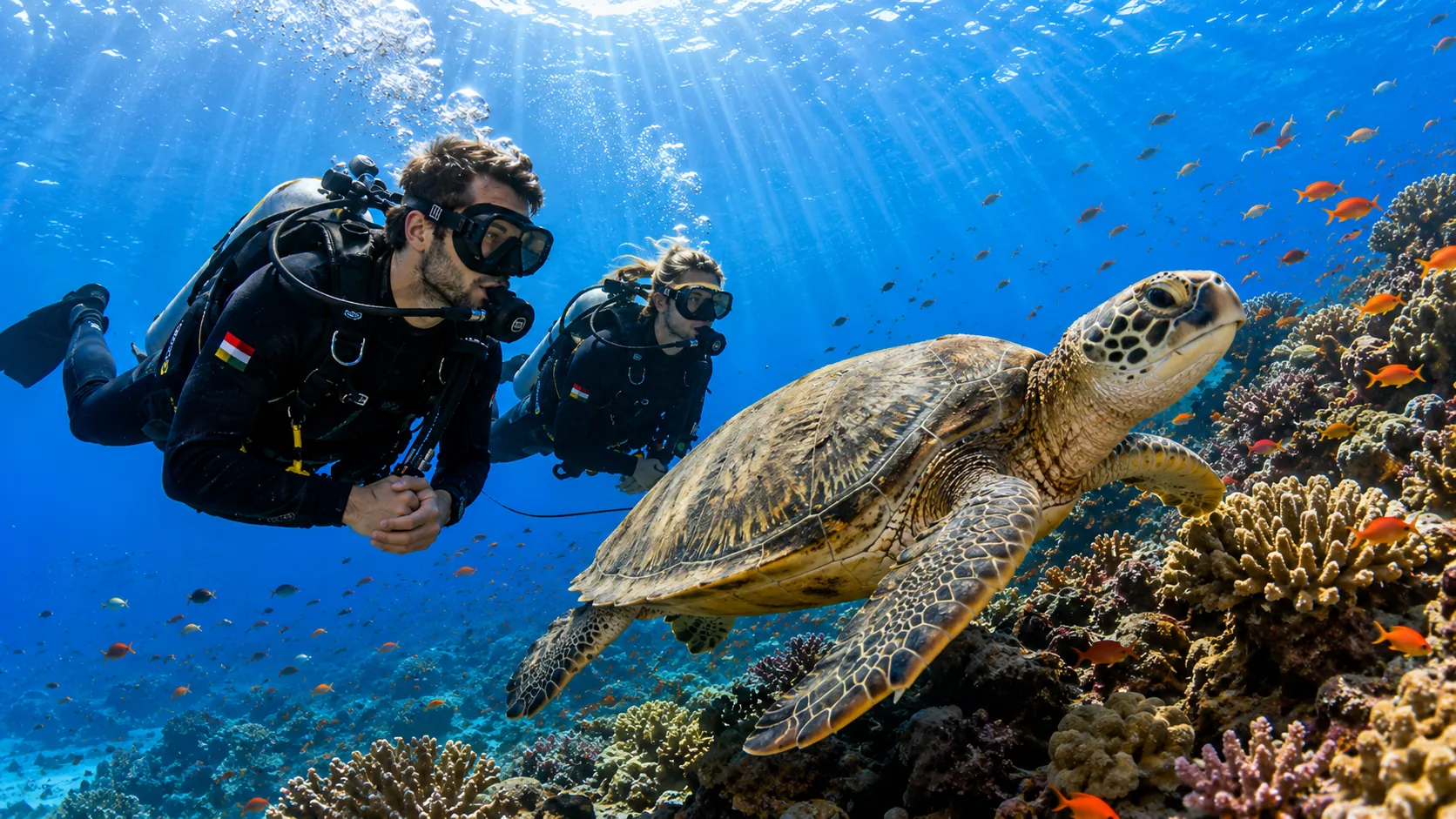
A long reef ridge barely half an hour from the marina: a gentle wall, blue-spotted rays and seagrass patches with turtles.
- Depth
- 6–25m
- Boat
- 30min
- Species
- 5
Giftun-szigetek
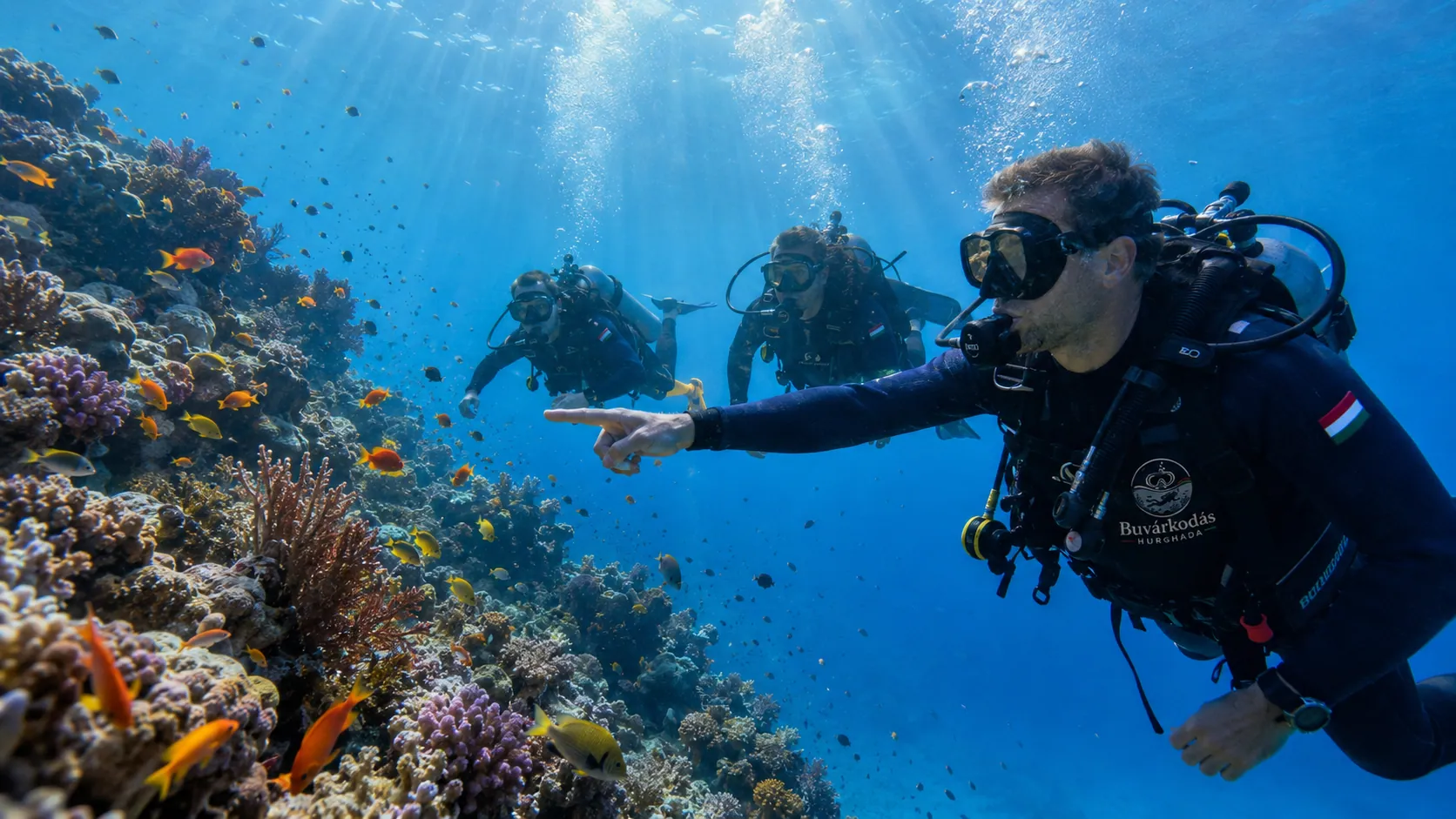
A national park island pair with a dozen dive sites: coral gardens, turtles and perhaps the richest fish life in the area.
- Depth
- 5–25m
- Boat
- 45min
- Species
- 6
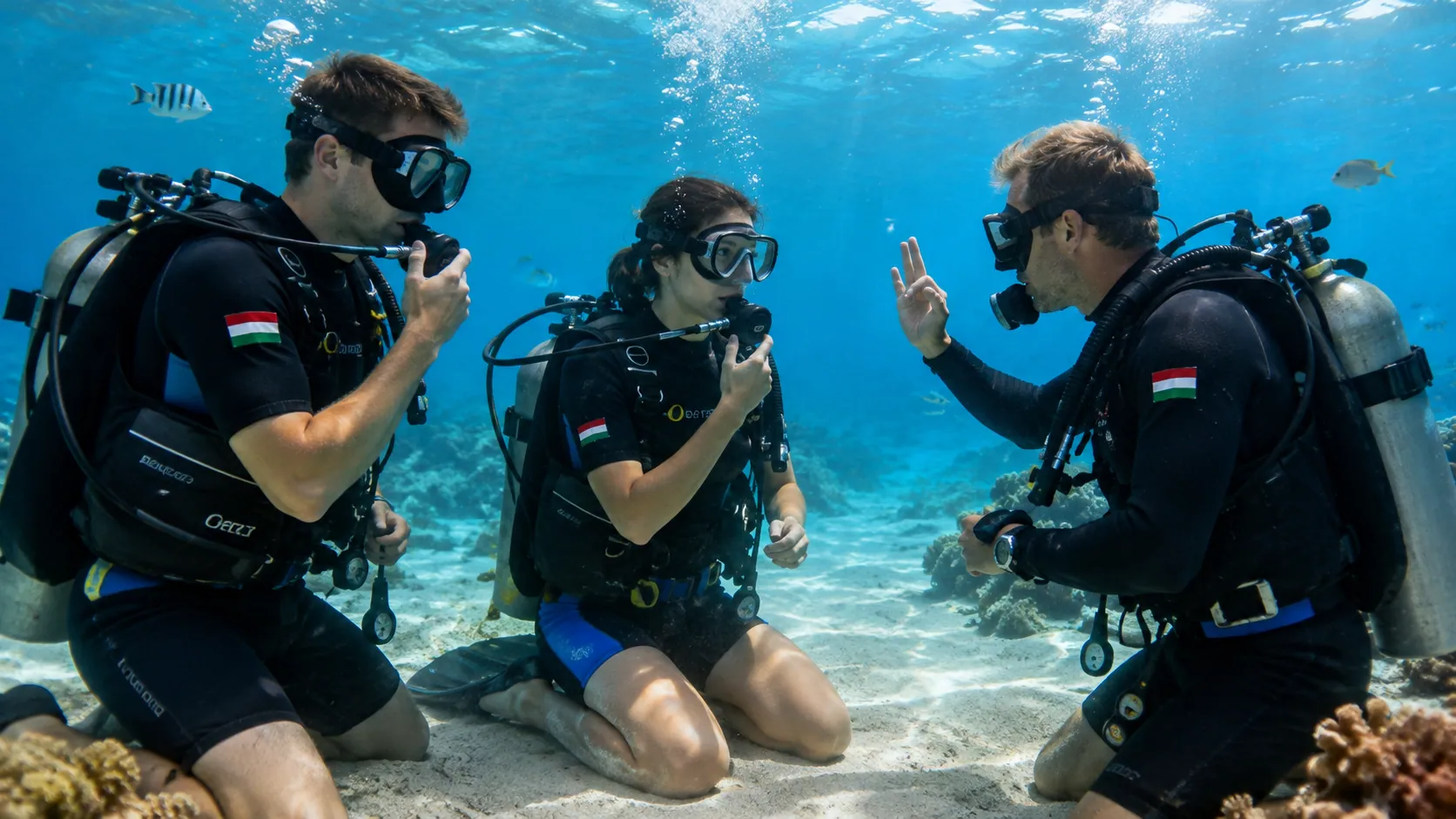
Sha'ab Sabina
A sheltered shallow reef with a sandy lagoon – this is where most of our try dives and OWD skill sessions happen.
- Depth
- 4–12m
- Boat
- 40min
- Species
- 5
The Red Sea will not wait forever.
Book today – seats on the boat are limited, your excitement is not.