Desjardin's sailfin tang
Zebrasoma desjardinii
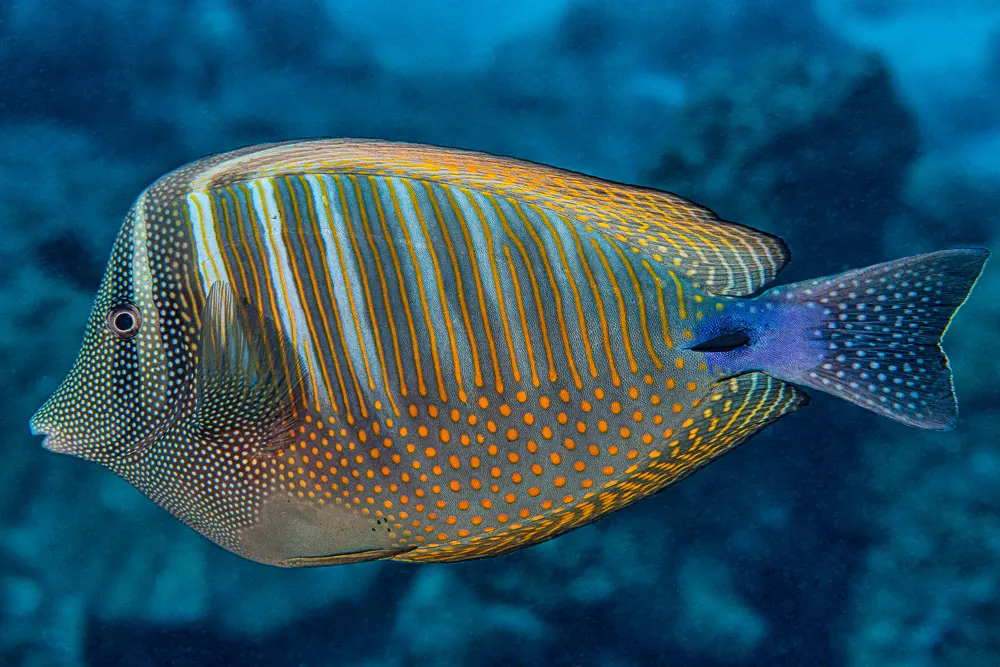
When it spreads its huge dorsal and anal fins, the sailfin tang doubles in apparent size in an instant – one of the reef's best tricks.
Desjardin's sailfin tang (Zebrasoma desjardinii) is named for its enormous, sail-like dorsal and anal fins: with both spread, the fish is almost as tall as it is long, looking less like a disc and more like an ornate fan. Its body is covered in dense alternating dark and light bands, with orange spots on the head and belly and white dots on the tail – seen up close, it has one of the most intricate patterns of any Red Sea fish.
Juveniles are striped on a yellowish background and hide among branching corals in sheltered lagoons, while adults roam the reef slopes in pairs or alone. They feed on algae, and with the elongated snout typical of the genus Zebrasoma they pick vegetation out of crevices no other surgeonfish can reach. The spectacular fin display is mostly communication: it is how they impress each other and how they try to look bigger to intruders.
Native to the western Indian Ocean and the Red Sea, it is a genuinely common sight around Hurghada: it appears regularly on the El Fanadir slope, in the coral gardens of the Giftun Islands and on shallow Sha'ab Sabina. It is not shy, but it keeps its personal space – approach slowly and you can get beautiful photos of it posing with sails fully spread.
Did you know?
It can hoist its sails in seconds: at the sight of danger or a rival it spreads its fins and suddenly shows a silhouette nearly twice as big – bluffing like a poker player, because underneath it remains a completely peaceful fish.
Where can you meet it?
You will meet it most often on the El Fanadir slope, in the Giftun coral gardens and on shallow Sha'ab Sabina, frequently in pairs.
Frequently asked questions
No, it is a completely peaceful algae grazer. Like every surgeonfish it carries a small spine at the tail base, but it only uses it as a last resort – never against divers. The dramatic fin display is a bluff, not an attack.
Yes: it grazes in shallow coral gardens and lagoons too, so you have a good chance of meeting it while snorkeling – the striped juveniles particularly favour shallow, sheltered spots.
When it sees a rival, when courting, or when it is startled – for instance by a diver approaching too fast. Move slowly and calmly, though, and it will often strike the pose on its own – a perfect photo subject.
Best sites for Desjardin's sailfin tang
El Fanadir
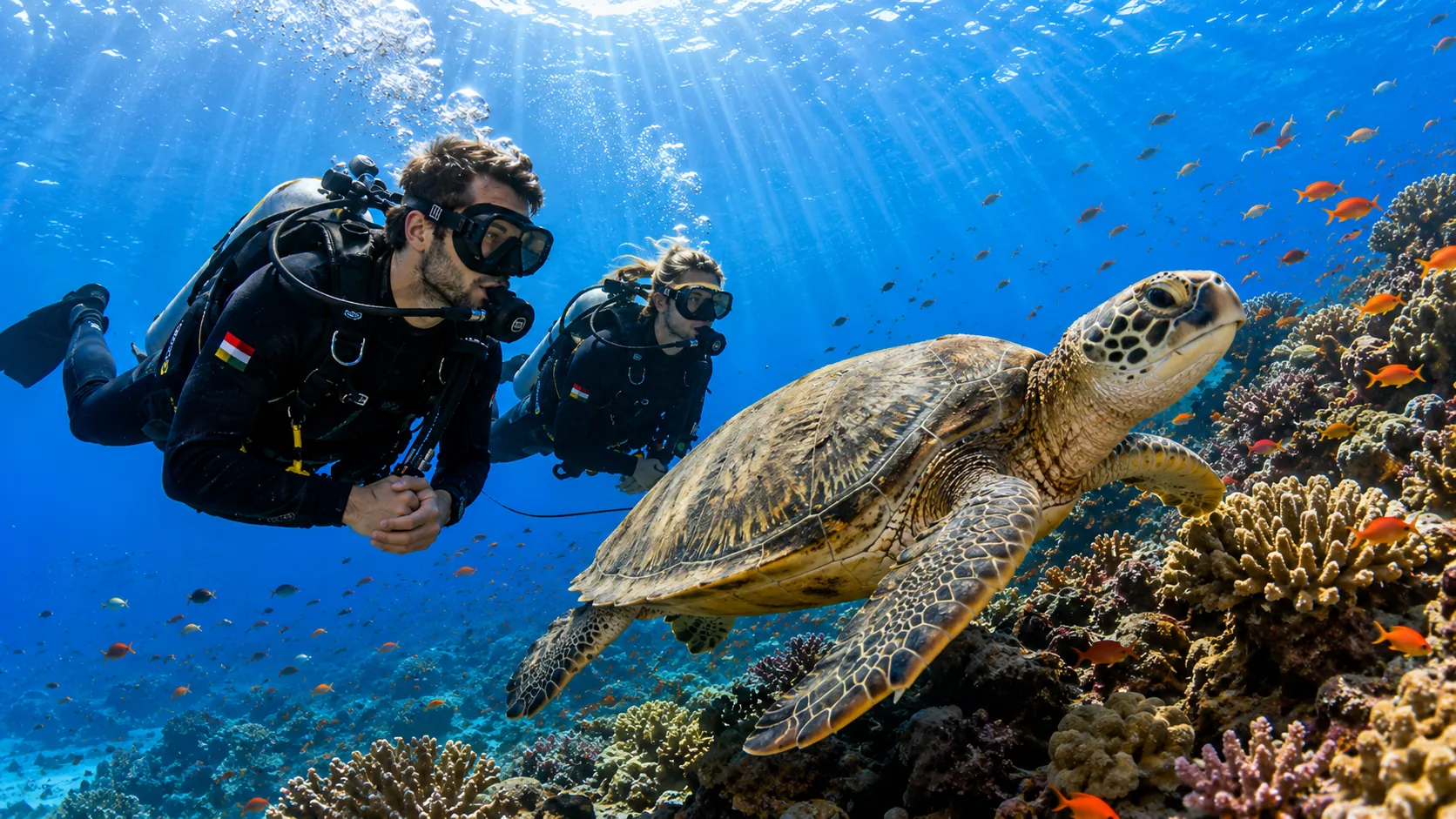
A long reef ridge barely half an hour from the marina: a gentle wall, blue-spotted rays and seagrass patches with turtles.
- Depth
- 6–25m
- Boat
- 30min
- Species
- 5
Giftun-szigetek
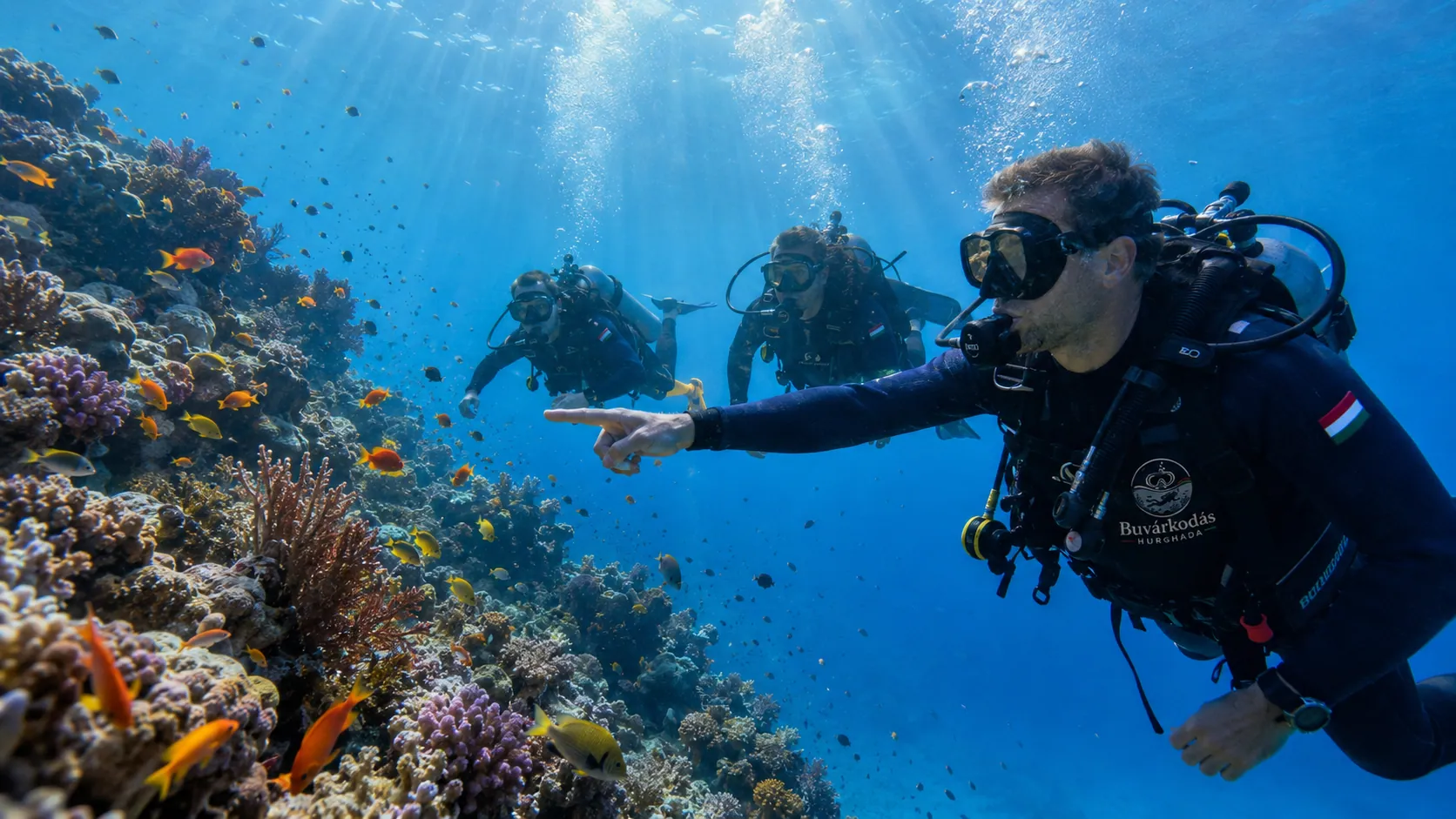
A national park island pair with a dozen dive sites: coral gardens, turtles and perhaps the richest fish life in the area.
- Depth
- 5–25m
- Boat
- 45min
- Species
- 6
Sha'ab Sabina
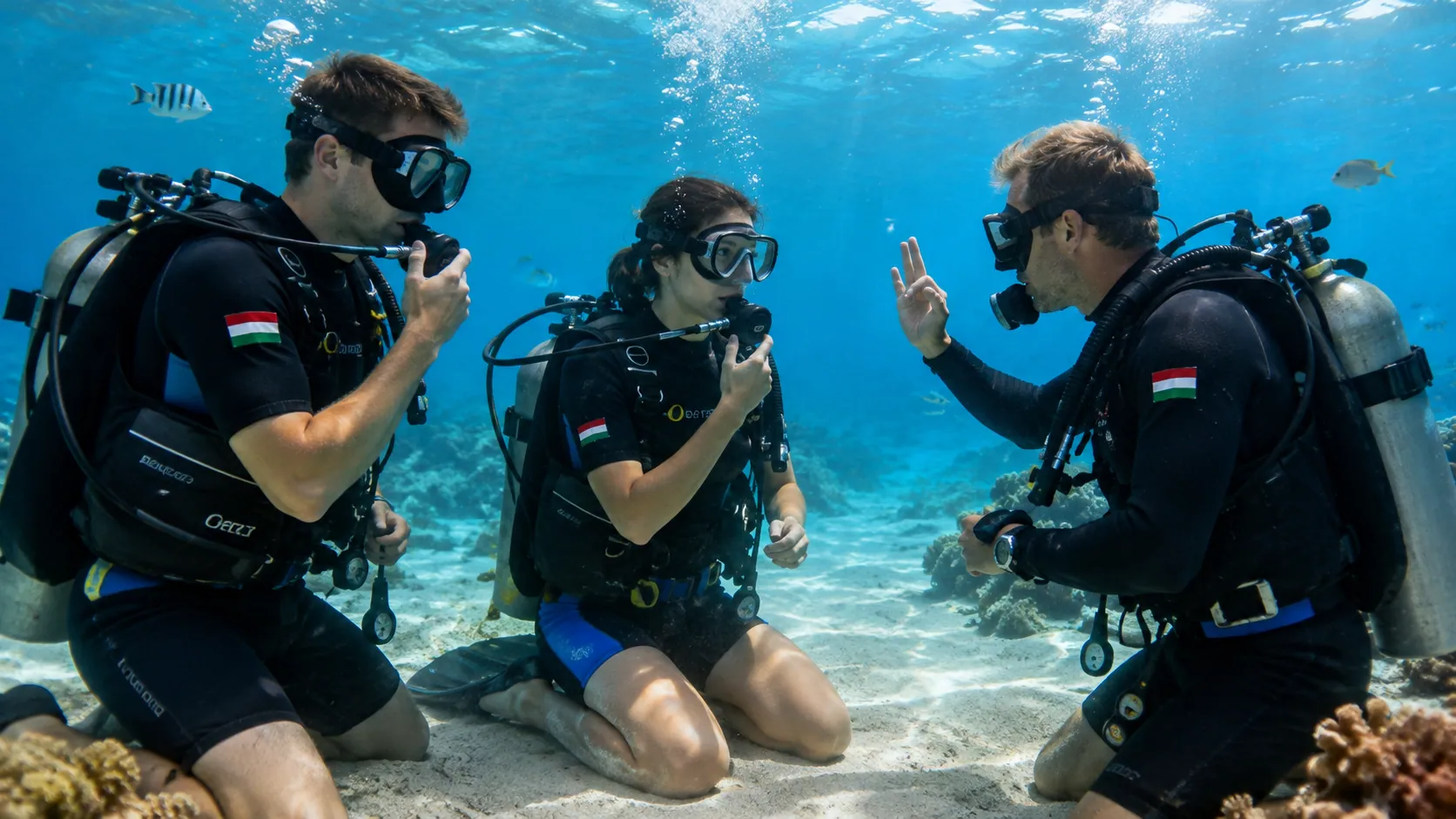
A sheltered shallow reef with a sandy lagoon – this is where most of our try dives and OWD skill sessions happen.
- Depth
- 4–12m
- Boat
- 40min
- Species
- 5
The Red Sea will not wait forever.
Book today – seats on the boat are limited, your excitement is not.