Scalloped hammerhead
Sphyrna lewini
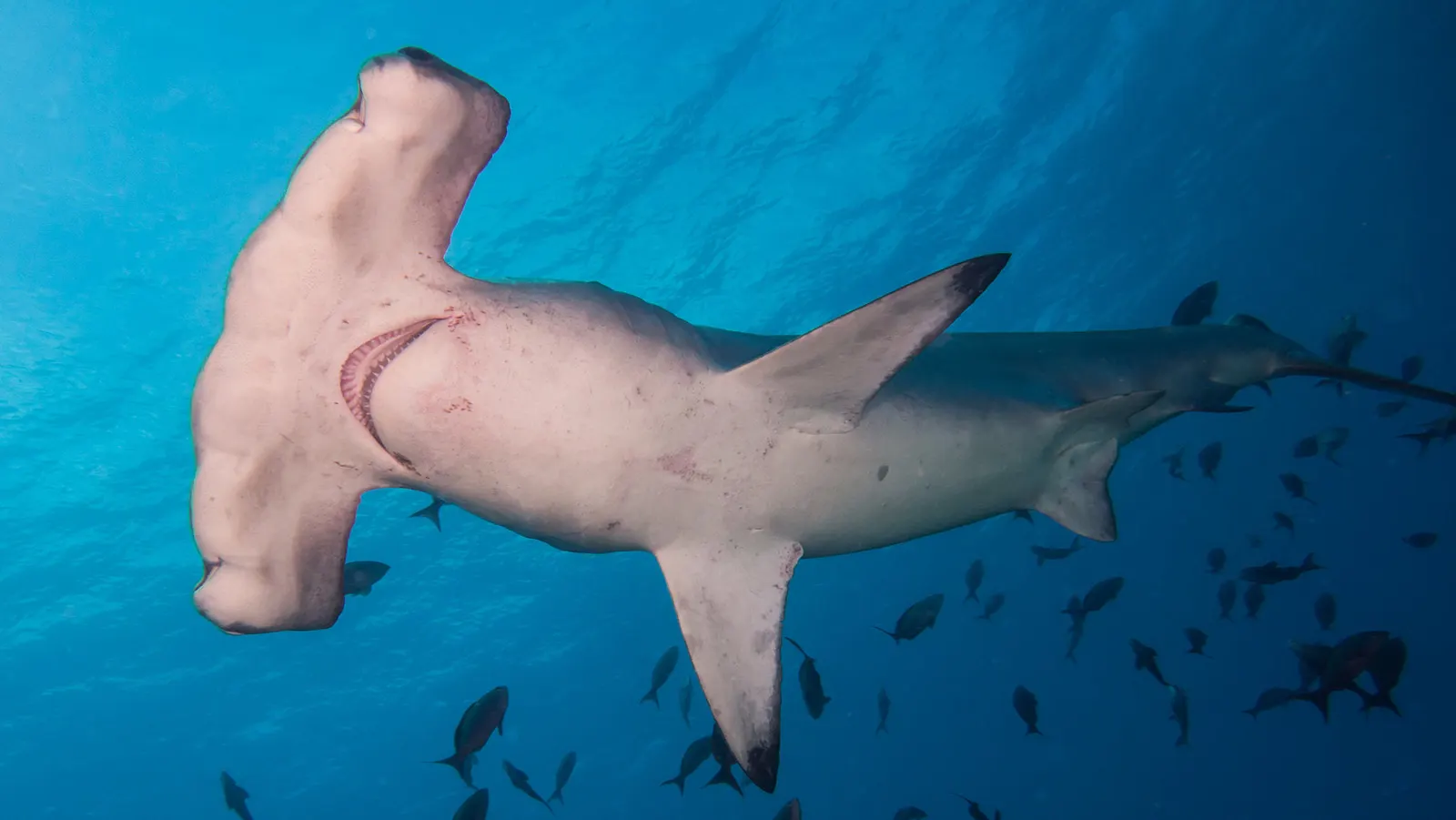
One of the sea's most extraordinary silhouettes: the hammerhead's mallet-shaped head emerging from the deep blue is a rare, unforgettable sight.
The scalloped hammerhead (Sphyrna lewini) cannot be mistaken for anything else: its head extends sideways into a wide, mallet-like blade – the cephalofoil – whose front edge carries the distinctive notches that give the species its name. The slender, 2.5–3 metre shark's strange head is no ornament but a super-sense organ: with eyes placed at either tip it sees almost all the way around, and the Lorenzini ampullae concentrated under the head detect the faintest electrical signals of its prey's muscles – even of rays hidden beneath the sand.
Scalloped hammerheads are famous for gathering by day into spectacular schools of up to several hundred around offshore reefs and seamounts, then heading off alone to hunt at night. In the Red Sea the big schools appear at the remote offshore reefs – the Brothers, Daedalus – mainly in summer. The species is listed as critically endangered by the IUCN: fishing for its fins has wiped out much of the global population, which makes every sighting of a live hammerhead a genuine treasure – and the Red Sea's protected waters an important refuge.
Around Hurghada, honestly, encounters are rare: your best odds are at the deep, current-swept outer reefs – Umm Gamar, Carless Reef, the Small Giftun wall – typically early in the morning, scanning the deep blue. The hammerhead is decidedly shy: the noise of bubbles usually drives it away, so it almost never approaches divers. If that unmistakable silhouette does appear, stay calm and don't swim towards it – just watch and savour a moment most divers never get in their entire diving career.
Did you know?
Scalloped hammerheads dive as deep as 800 metres into ice-cold water to hunt – and researchers found they effectively "hold their breath" while doing it, closing their gill slits so their warm muscles don't chill.
How to behave around it
The hammerhead is a shy species that avoids people – incidents with divers are practically unheard of. The etiquette is simple: stay close to the reef wall, never chase it, skip the flash and breathe calmly – that gives you the best chance it will linger nearby.
Where can you meet it?
A great rarity around Hurghada: your chances lie at the deep, current-swept outer reefs – Umm Gamar, Carless Reef, Small Giftun – mainly early morning, watching the blue.
Frequently asked questions
The shark species seen at the reefs – the hammerhead among them – are shy and avoid divers; incidents are practically non-existent. A shark is a sign of a healthy reef: seeing one is good news. The rule is the same as always: watch calmly, never chase, never feed.
The wide head is rudder and sensor array in one: the wide-set eyes give near all-round vision, while the electroreceptors lining its underside sweep the sand like a metal detector for hidden prey. The scalloped front edge gave the species its name.
Honestly: slim. Hammerheads are rare around Hurghada, appearing mostly at the deep outer reefs early in the morning. Which is exactly why, if you do glimpse that unmistakable silhouette in the blue, you will never forget that dive.
Best sites for Scalloped hammerhead
Umm Gamar
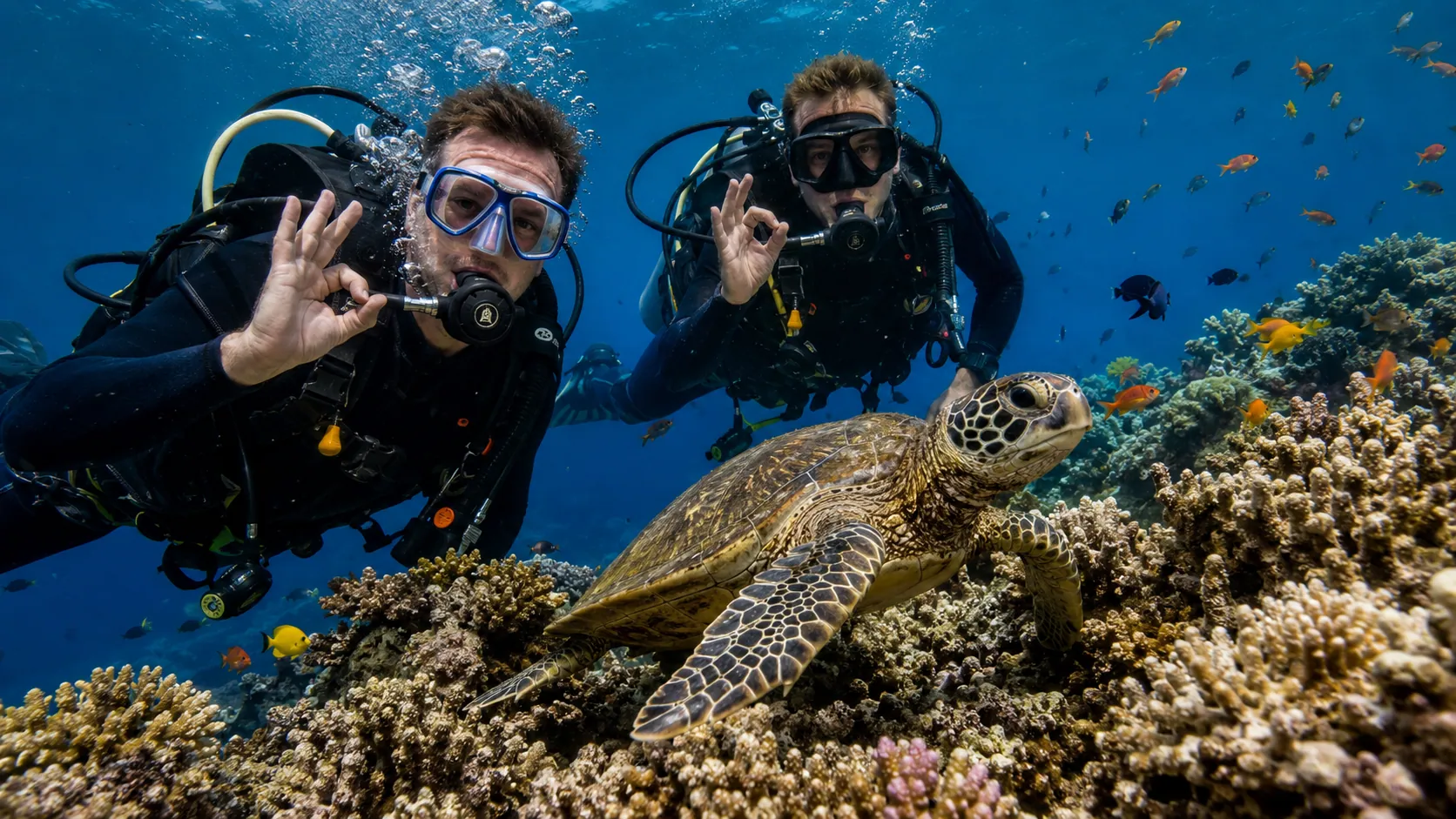
An elongated island in the north: a plateau with three coral towers, small caves and big predators out in the blue.
- Depth
- 10–30m
- Boat
- 75min
- Species
- 5
Carless Reef
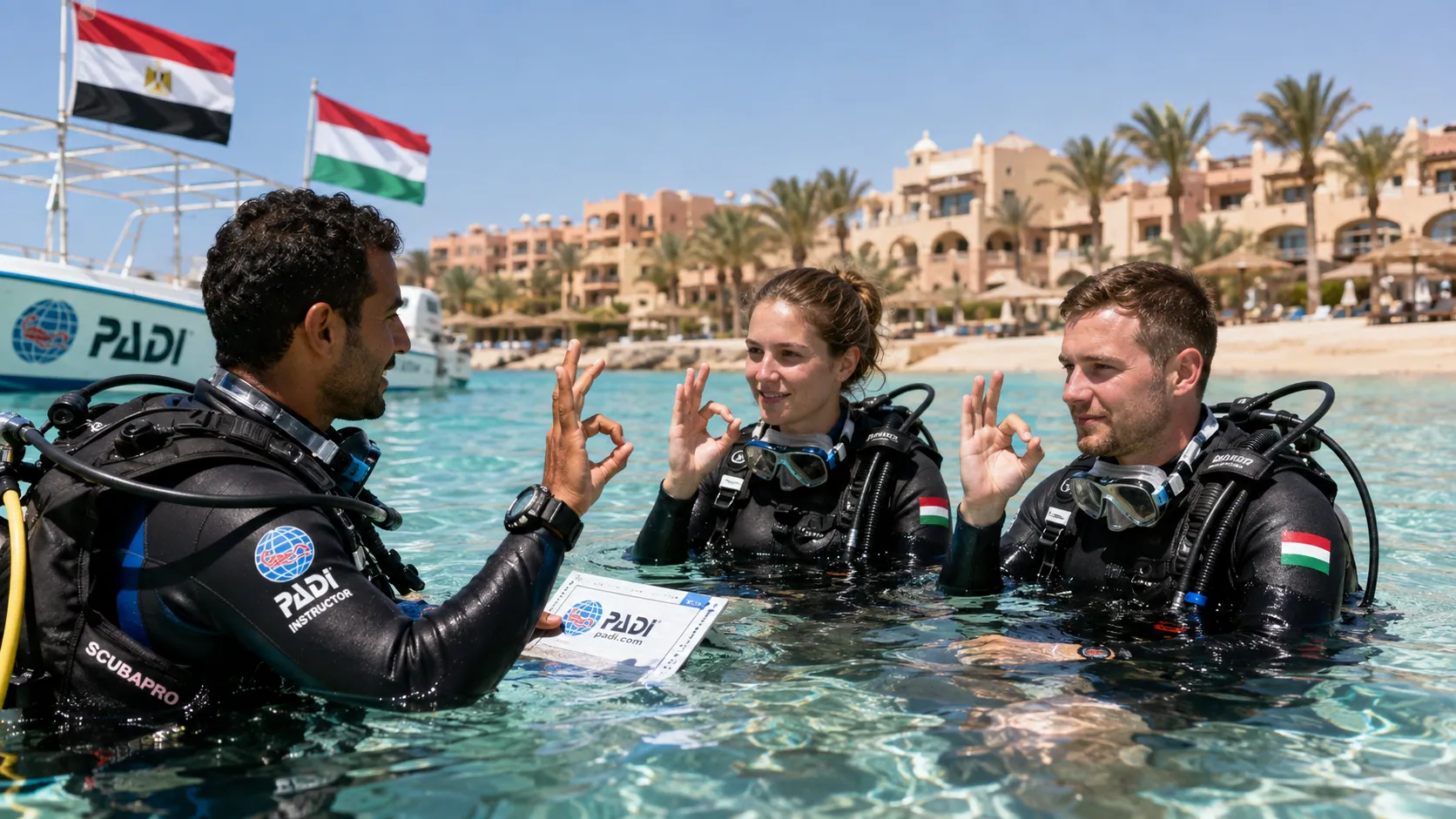
An offshore twin-erg reef famous for its legendary moray colony – for experienced divers, weather permitting.
- Depth
- 12–30m
- Boat
- 70min
- Species
- 5
Small Giftun fal
Hurghada's classic drift dive: a sheer wall with gorgonian fans, eagle rays and a coral-tower plateau at 20–30 metres.
- Depth
- 8–30m
- Boat
- 50min
- Species
- 5
The Red Sea will not wait forever.
Book today – seats on the boat are limited, your excitement is not.