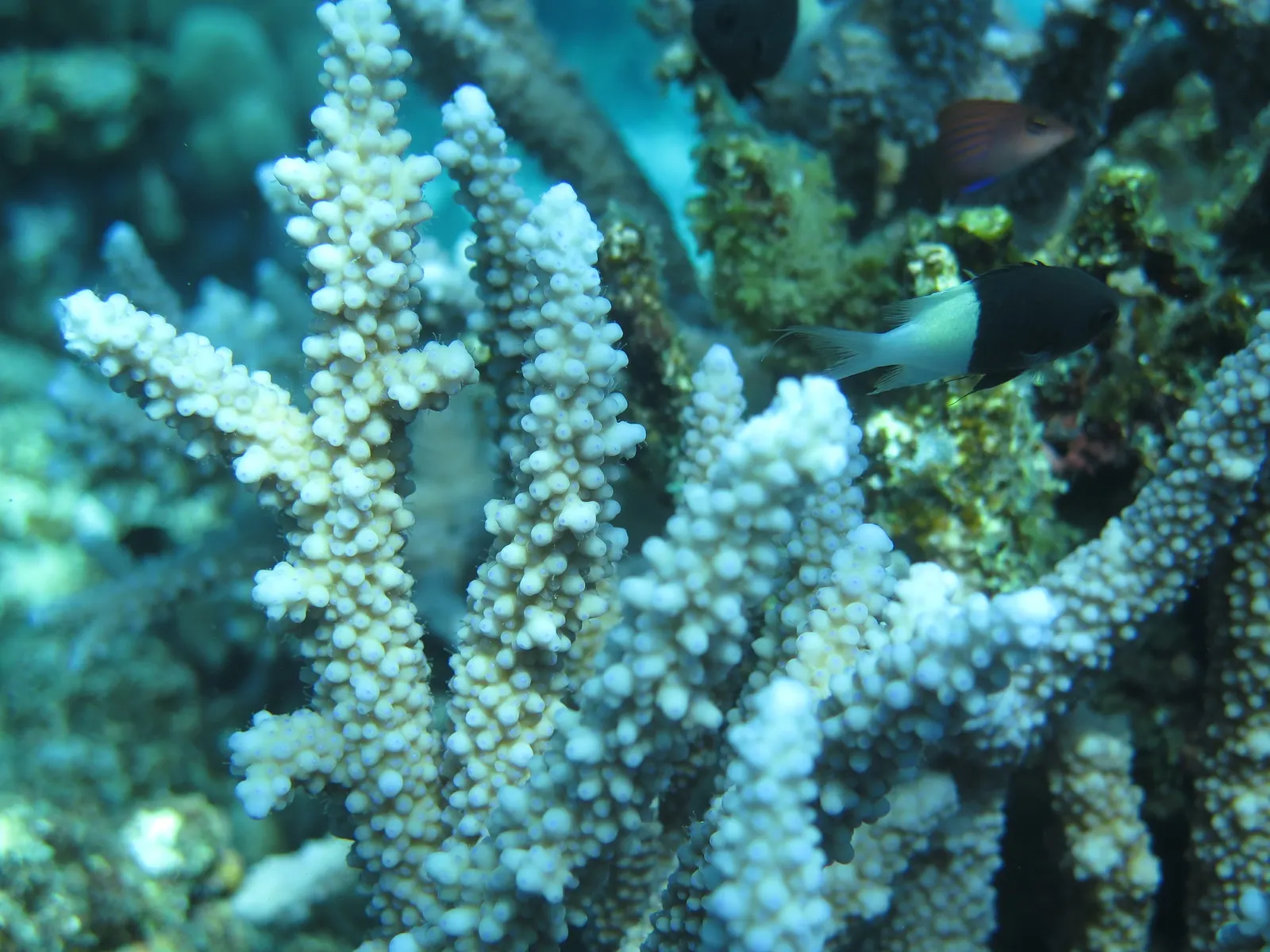
Staghorn coral
Acropora hemprichii
Its cream-to-violet thickets branch like a stag's antlers – the fastest-built "housing estates" of the reef, home to thousands of small fish.
The staghorn coral (Acropora hemprichii) is one of the Red Sea's signature reef builders: its densely branching, antler-like arms form cream, brownish or pale-violet thickets in colonies up to a metre and a half across. Look closely and every branch is covered in tiny tubular cups – these hold the polyps, the colony's true inhabitants. The secret of Acropora corals is the "leader polyp" at each branch tip: a single larger polyp that directs growth, which is why the branches extend in such regular, pointed form.
However stone-like it appears, coral is an animal – or rather an alliance of thousands of tiny animals and a built-in "solar farm". Microscopic algae called zooxanthellae live inside the polyps' tissues, producing most of the colony's energy through photosynthesis; they also give the coral its colour. This partnership makes Acropora the fastest builder on the reef, capable of 5–10 centimetres of branch growth per year. Once a year, on the nights after a full moon, colonies release their egg-sperm bundles into the water in synchrony – an underwater "snowfall" that is one of the most extraordinary sights in diving.
Around Hurghada you will find staghorn fields on the sheltered, shallow coral gardens: the plateaus of Shaab Sabina and Gota Abu Ramada, around the coral towers of El Aruk and in the gardens of the Giftun Islands. Life hums between the branches: clouds of blue-green damselfish, tiny gobies and coral crabs dive into the thicket at any hint of danger. The brittle branches, however, can snap from a single fin kick, so good buoyancy matters here more than anywhere: never stand on or grab coral, and use only reef-safe sunscreen – Red Sea corals are among the most heat-tolerant on the planet, but they have no defence against physical damage.
Did you know?
Corals know the date: staghorn colonies across an entire reef spawn on the very same night, synchronised to the minute by the full moon, water temperature and sunset light – without possessing a single brain cell.
Where can you meet it?
It forms fields in the shallow, sheltered coral gardens: you can glide over them on the plateaus of Shaab Sabina and Gota Abu Ramada, around the towers of El Aruk and in the gardens of the Giftun Islands.
Frequently asked questions
A little of all three – but officially an animal: the colony consists of thousands of tiny cnidarian polyps building a shared limestone skeleton beneath themselves. The zooxanthellae algae in their tissues photosynthesise like plants, and the skeleton eventually becomes rock. What you see as a reef is a thin layer of living animals atop the limestone of many generations.
Coral polyps are covered by a film of living tissue thinner than a hair, damaged by even the gentlest touch – and through that wound, algae and pathogens invade the colony. Staghorn coral is also extremely brittle: one fin kick can snap off a decade of growth. Good buoyancy is the finest form of respect for coral.
Staghorn is the sprinter of the reef: it can grow 5–10 centimetres a year, so a thicket of a metre and a half is roughly 15–25 years old. Compared with slow boulder corals that is lightning pace – yet the reef as a whole is still the work of centuries and millennia.
Best sites for Staghorn coral
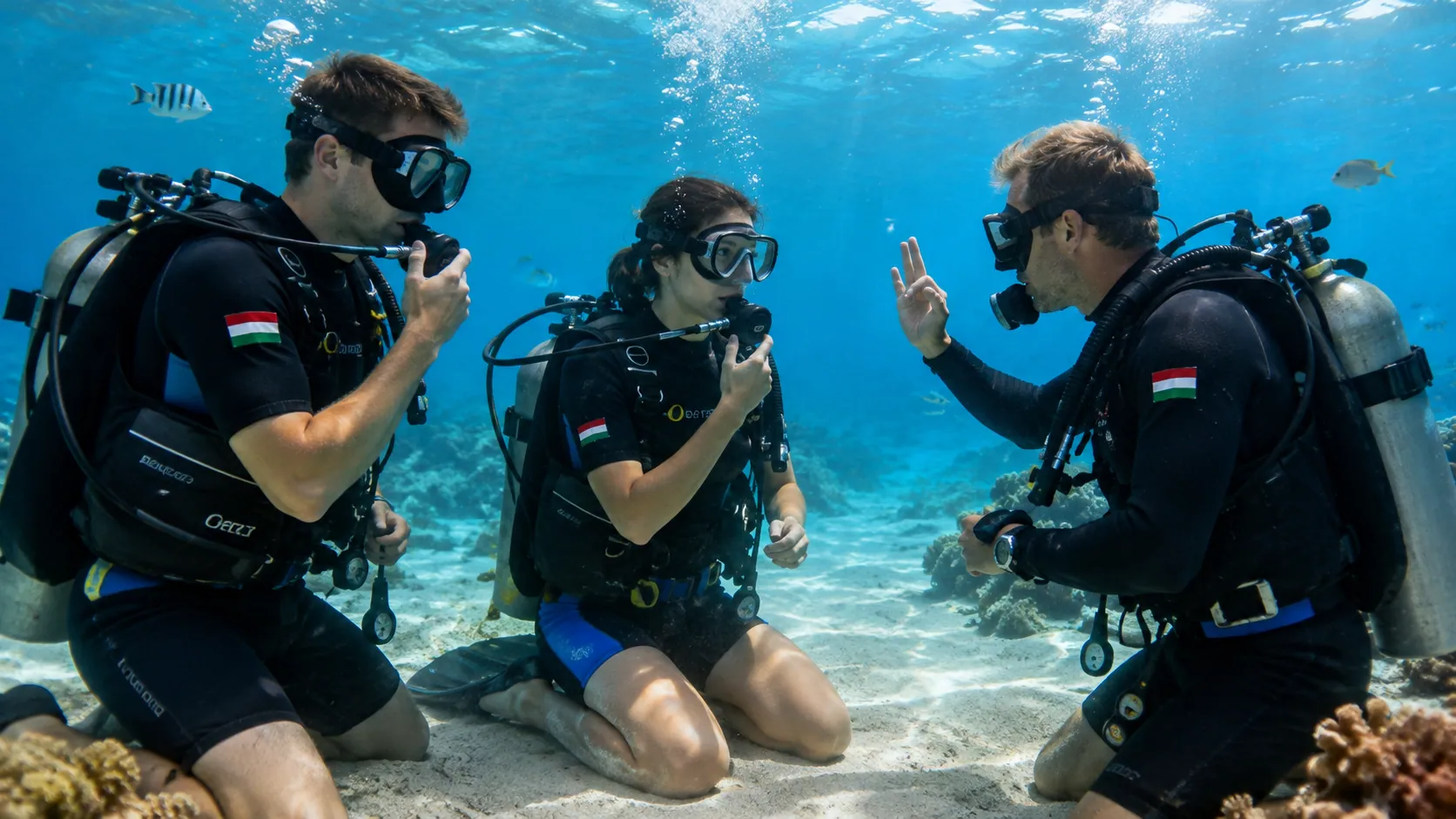
Sha'ab Sabina
A sheltered shallow reef with a sandy lagoon – this is where most of our try dives and OWD skill sessions happen.
- Depth
- 4–12m
- Boat
- 40min
- Species
- 5
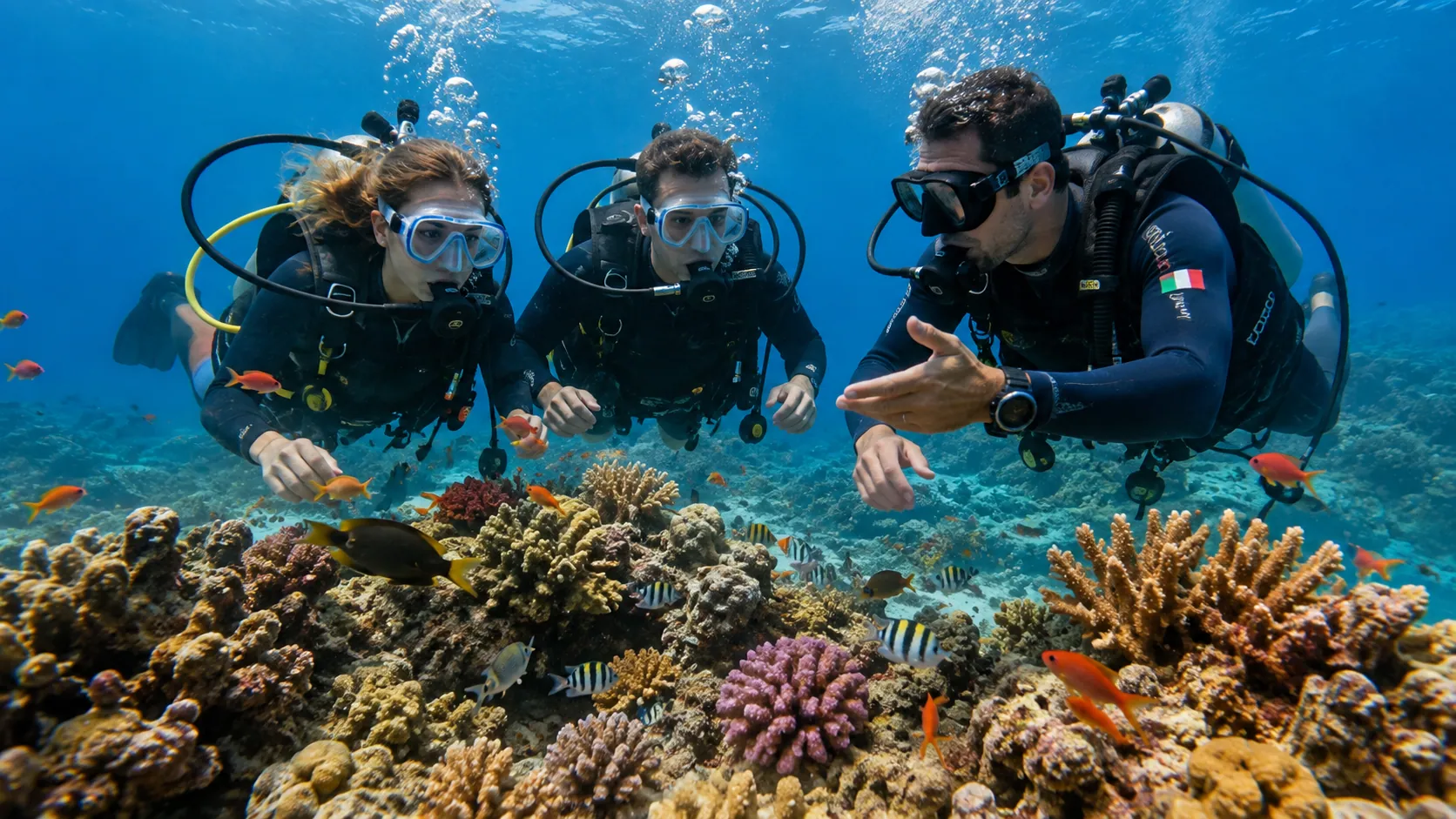
Gota Abu Ramada
A shallow oval reef with a sandy bottom and schools of butterflyfish – perfect for training, second and night dives.
- Depth
- 4–14m
- Boat
- 55min
- Species
- 5
El Aruk (Gigi)
A playground of coral towers on white sand: easy navigation, clouds of glassfish and light made for photography.
- Depth
- 5–14m
- Boat
- 35min
- Species
- 5
The Red Sea will not wait forever.
Book today – seats on the boat are limited, your excitement is not.