Starry puffer
Arothron stellatus
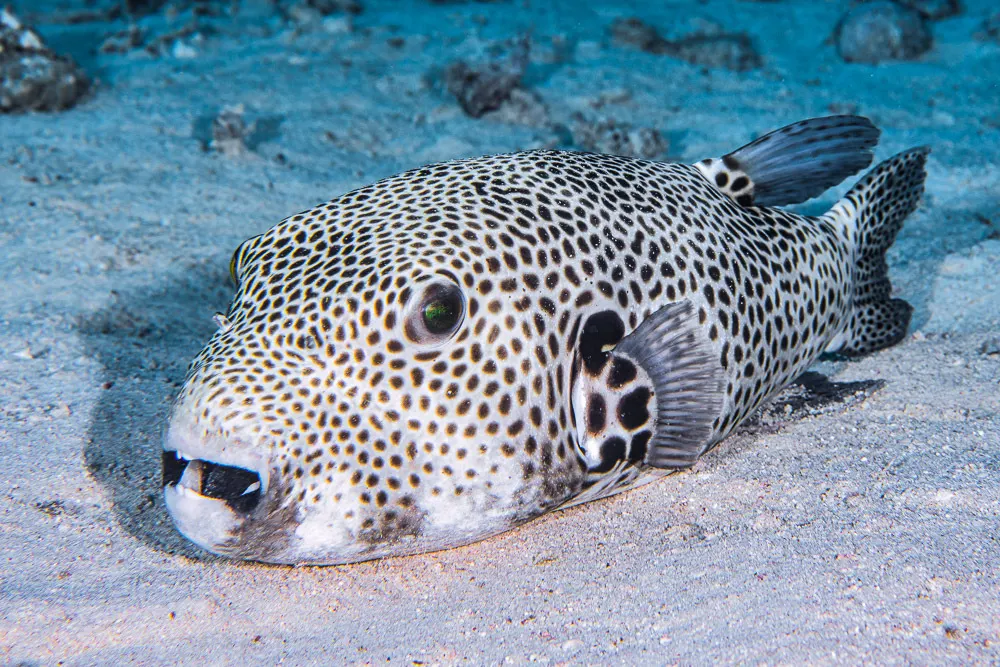
The giant of the puffer family: this polka-dot heavyweight can approach a metre in length and cruises the reef with the calm of a small airship.
The starry puffer (Arothron stellatus) is one of the largest members of the puffer family: around Hurghada you will typically meet specimens of 60–90 cm, though the species can exceed a metre. Its pale grey or cream body is covered in thousands of tiny black dots – hence the name. Juveniles look completely different, orange with bold black stripes, so different in fact that the two age groups were once thought to be separate species.
This sluggish giant is actually a serious predator: with its beak of fused teeth it cracks open sea urchins, crabs, shellfish and corals, and it happily eats prey that no other fish dares to touch. Tetrodotoxin accumulates in its body, so it has almost no natural enemies. It lives alone, often resting on the sand or in the shadow of a wreck by day, moving only when it truly must.
It is not an everyday sight at Hurghada, but it turns up time and again on the deeper reef slopes, sandy plateaus and around the wrecks – a starry puffer resting at the El Mina wreck tends to be the highlight of the dive. Its slow pace makes it easy to approach and photograph; respect its calm and it will pose for you generously.
Did you know?
The juvenile starry puffer is orange with black stripes like a tiger – then "changes outfit" to polka dots as an adult. The two looks differ so much that scientists long described them as two separate species.
Where can you meet it?
Expect it mostly at the deeper sites: it shows up resting on the sand at the El Mina wreck, on the slopes of Abu Ramada and around the plateau of Umm Gamar.
Frequently asked questions
No – despite its impressive size it is a completely peaceful fish that would rather swim off than get into trouble. Its toxin sits in its tissues, so it is dangerous only if eaten. Do not touch or startle it: inflating is extremely stressful for the animal.
Rarely, because the starry puffer typically stays deeper, around slopes and wrecks. Your best chance is on a scuba dive – especially at the El Mina wreck or on the sandy plateaus of Abu Ramada.
The starry puffer holds the record: adults run 60–90 cm and the species can exceptionally top a metre – a fish the size of a large suitcase drifting past you on the reef.
Best sites for Starry puffer
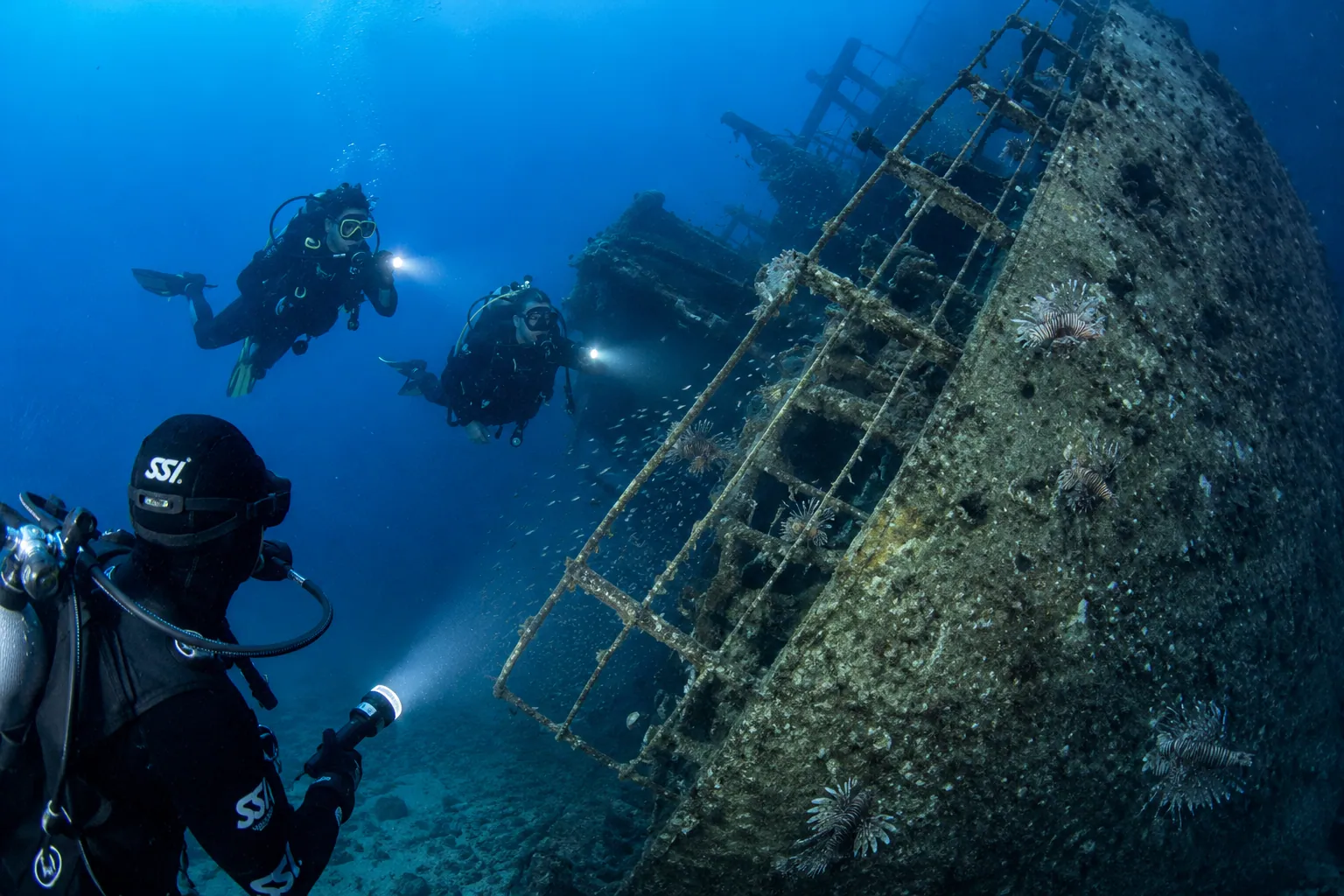
El Mina roncs
A genuine warship wreck 20 minutes from the marina: an Egyptian minesweeper sunk in 1969, resting on sand at 30 metres.
- Depth
- 16–30m
- Boat
- 20min
- Species
- 5
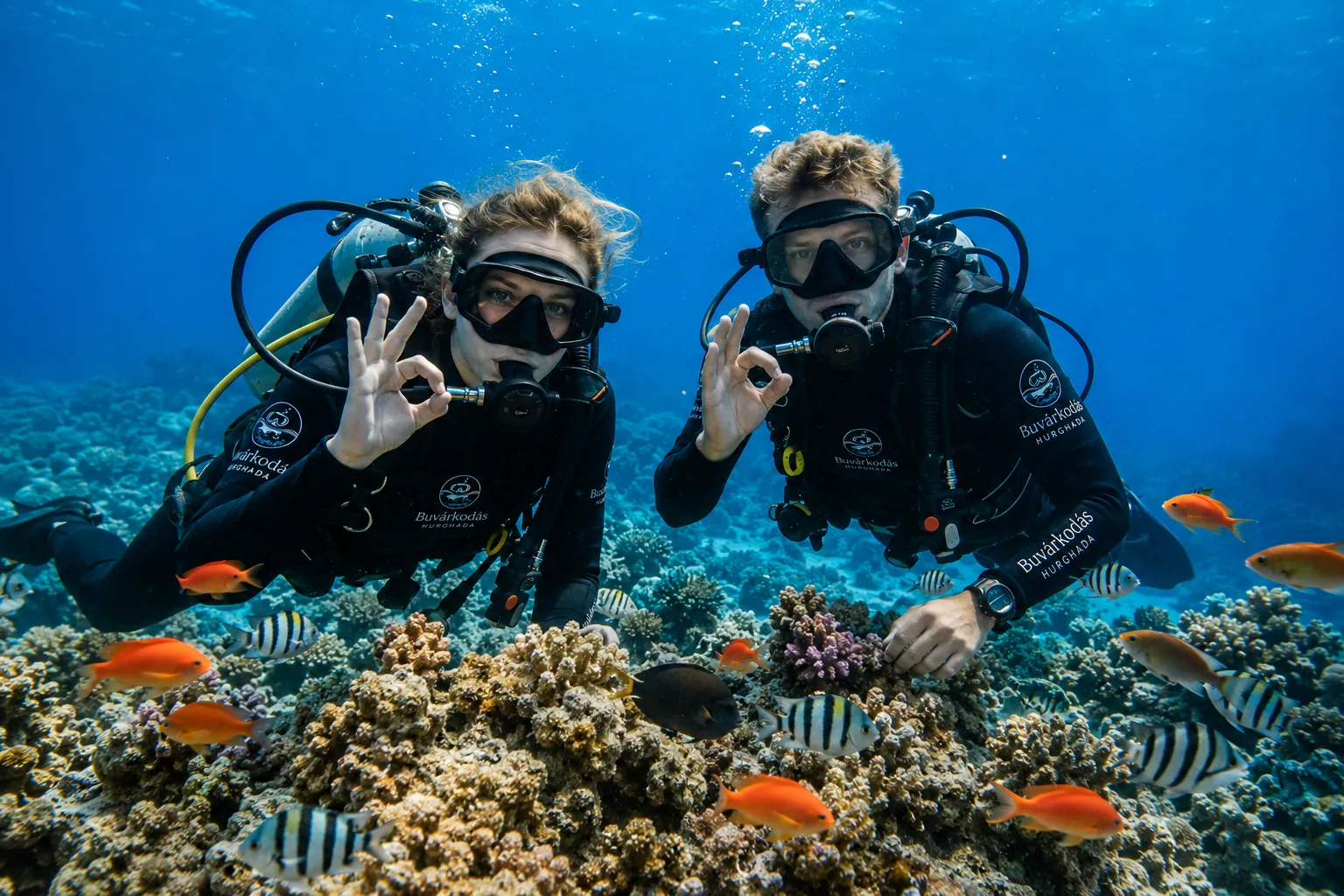
Abu Ramada („Az Akvárium”)
The Aquarium nickname is well earned: the fish schools swirling around the coral towers can be so dense you lose sight of the reef.
- Depth
- 6–26m
- Boat
- 50min
- Species
- 6
Umm Gamar
An elongated island in the north: a plateau with three coral towers, small caves and big predators out in the blue.
- Depth
- 10–30m
- Boat
- 75min
- Species
- 5
The Red Sea will not wait forever.
Book today – seats on the boat are limited, your excitement is not.