Stonefish
Synanceia verrucosa
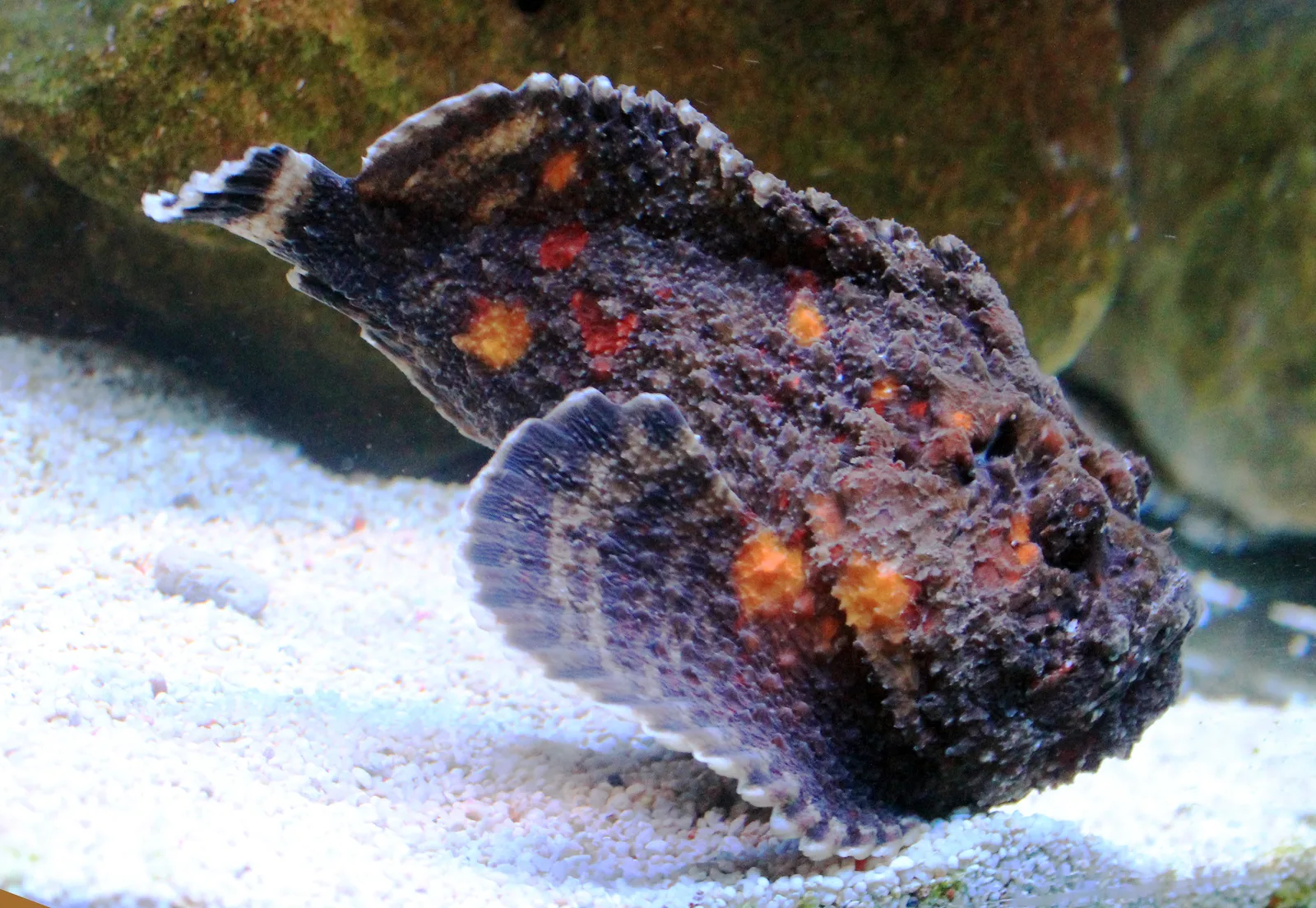
The world's most venomous fish in perfect disguise: the stonefish looks exactly like an algae-covered rock – one more reason we never touch anything underwater.
The stonefish (Synanceia verrucosa) is the most venomous fish in the world: each of its 13 dorsal spines is connected to a venom gland, and the venom can cause serious injury requiring immediate medical care. Its warty, algae-encrusted skin is perfect camouflage – even a trained diver's eye slides right past it.
The stonefish is a grand master of ambush hunting: it can wait almost motionless at the same spot for weeks, half-buried in sand or "turned to stone" on a coral ledge. When a small fish strays too close, it strikes with one of the fastest attacks of any vertebrate: the prey is engulfed within hundredths of a second.
Around Hurghada it lives on sandy, rubble-strewn reef sections, such as the shallower plateaus of El Fanadir or the sand between the towers of El Aruk. Finding one is a real challenge – but our guides' eyes are well trained, and when they point one out, you are guaranteed goosebumps at how close you swam past it without noticing.
Did you know?
The stonefish's strike is one of the fastest movements of any vertebrate: its mouth snaps open and engulfs the prey in under 0.015 seconds. Stranded by low tide, it can even survive out of the water for hours.
How to behave around it
The stonefish never attacks – accidents happen when someone steps or leans on one. The rule is simple: touch nothing underwater, never kneel and never stand on the reef. Always wear dive boots when entering shallow water. A sting requires immediate hot-water treatment and medical care.
Where can you meet it?
We come across it now and then on the sandy plateaus of El Fanadir, among the coral towers of El Aruk and in the shallow bay of Abu Hashish – it takes a sharp eye.
Frequently asked questions
Stonefish venom is the strongest of any fish and can be life-threatening if untreated. Immerse the stung limb in water as hot as bearable, around 40–45 °C, and seek medical care immediately – antivenom is available in Egypt. The good news: stings are extremely rare among divers, because we touch nothing.
Look for the "rock that is too perfect": a warty, algae-covered surface, a wide, down-turned mouth and two tiny upward-facing eyes. If a lump of rock seems to wear a face, it is quite possibly a stonefish. The most reliable method: watch your guide, who will happily point one out – from a safe distance.
Its entire survival strategy is built on stillness: it is counting on you mistaking it for a rock. For divers this is actually an advantage – a stonefish will not budge even when photographed from half a metre. The only danger lies in touching, so never rest your hands on the bottom.
Best sites for Stonefish
El Fanadir
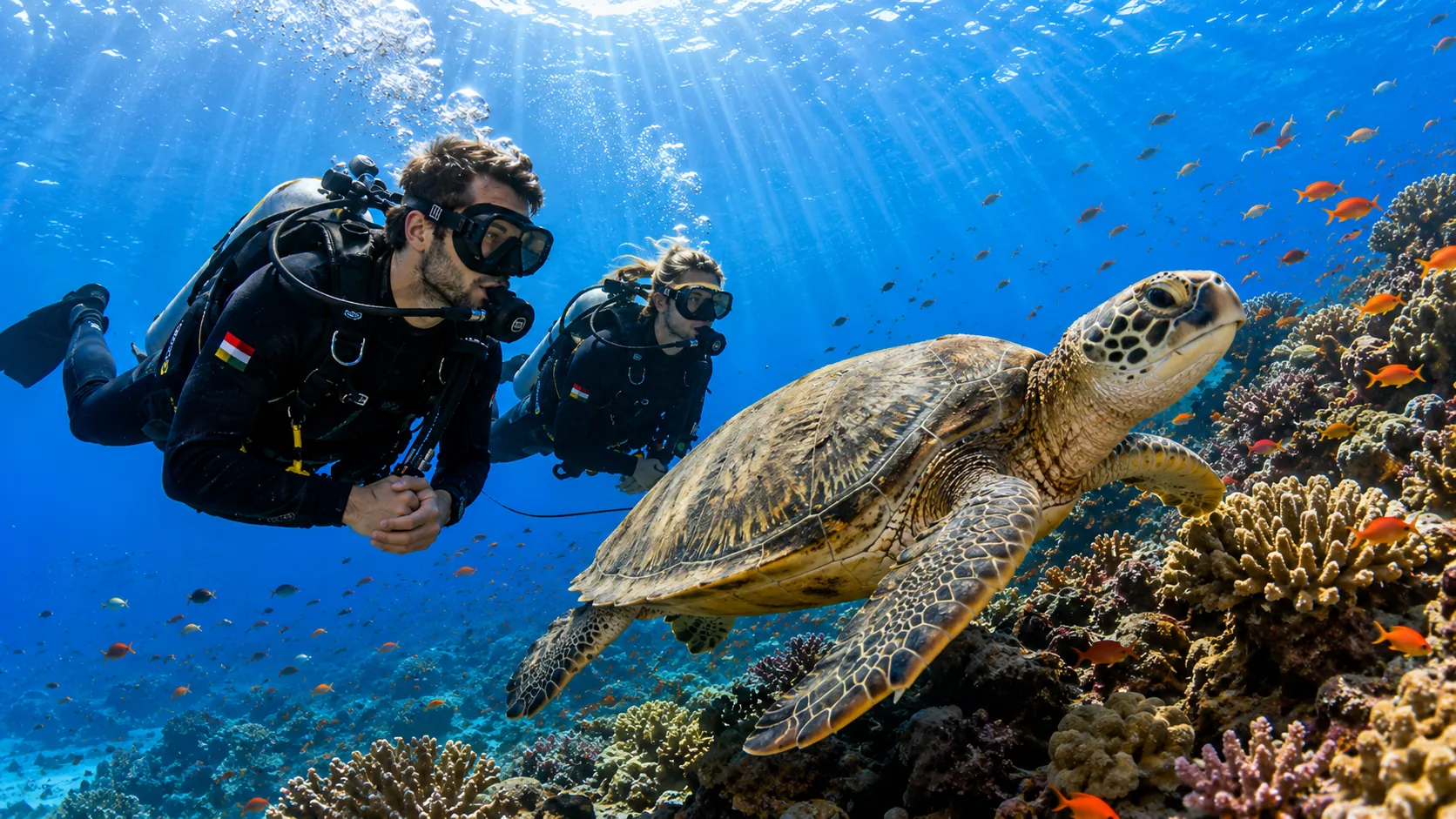
A long reef ridge barely half an hour from the marina: a gentle wall, blue-spotted rays and seagrass patches with turtles.
- Depth
- 6–25m
- Boat
- 30min
- Species
- 5
El Aruk (Gigi)
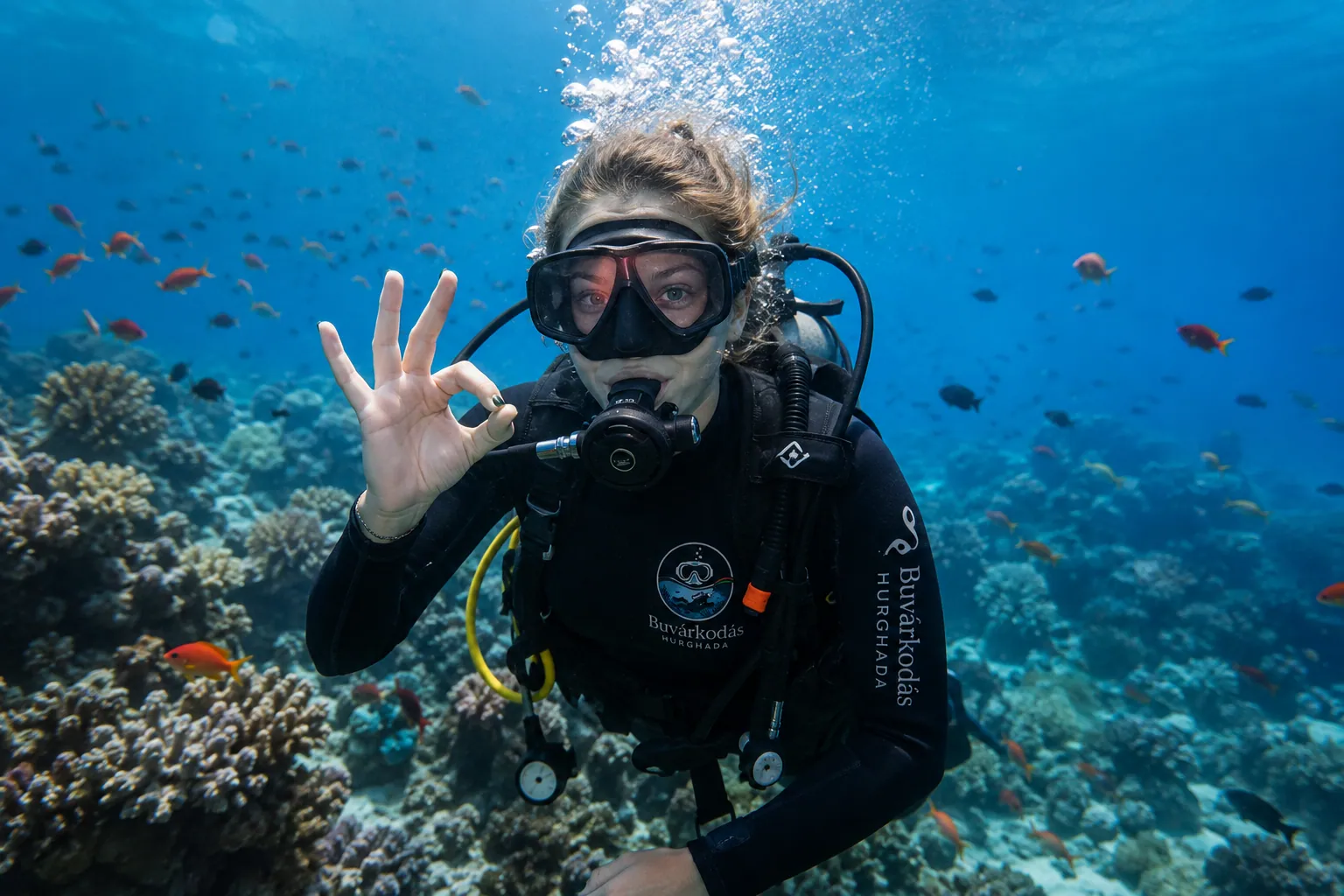
A playground of coral towers on white sand: easy navigation, clouds of glassfish and light made for photography.
- Depth
- 5–14m
- Boat
- 35min
- Species
- 5
Abu Hashish-fok
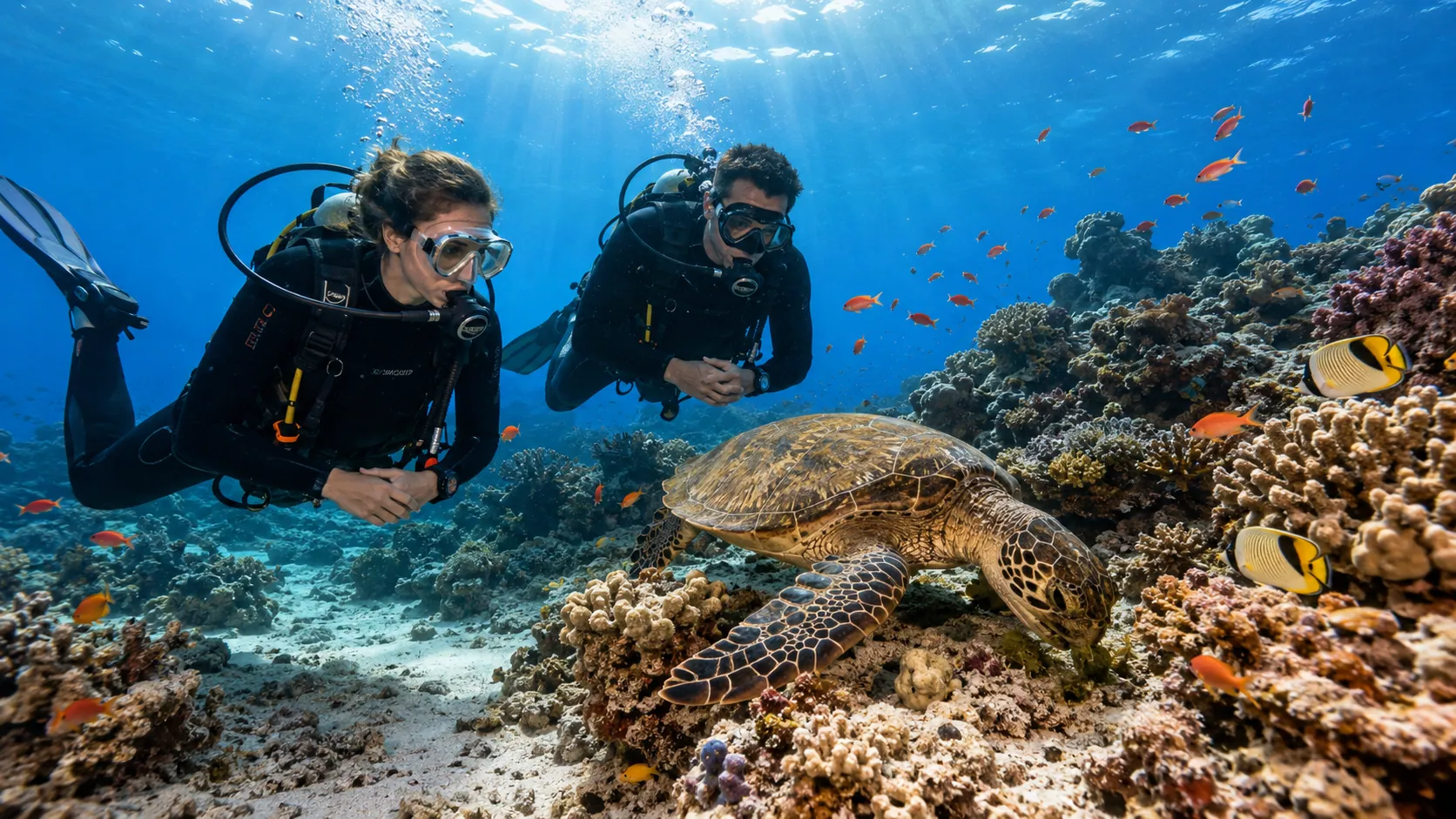
A quiet southern cape with seagrass meadows and an atmospheric cavern – turtles almost for sure, a dugong with some luck.
- Depth
- 5–20m
- Boat
- 60min
- Species
- 5
The Red Sea will not wait forever.
Book today – seats on the boat are limited, your excitement is not.