Titan triggerfish
Balistoides viridescens
The reef's biggest and boldest triggerfish: it crunches sea urchins with its powerful teeth, and at nesting time even divers receive a firm eviction notice.
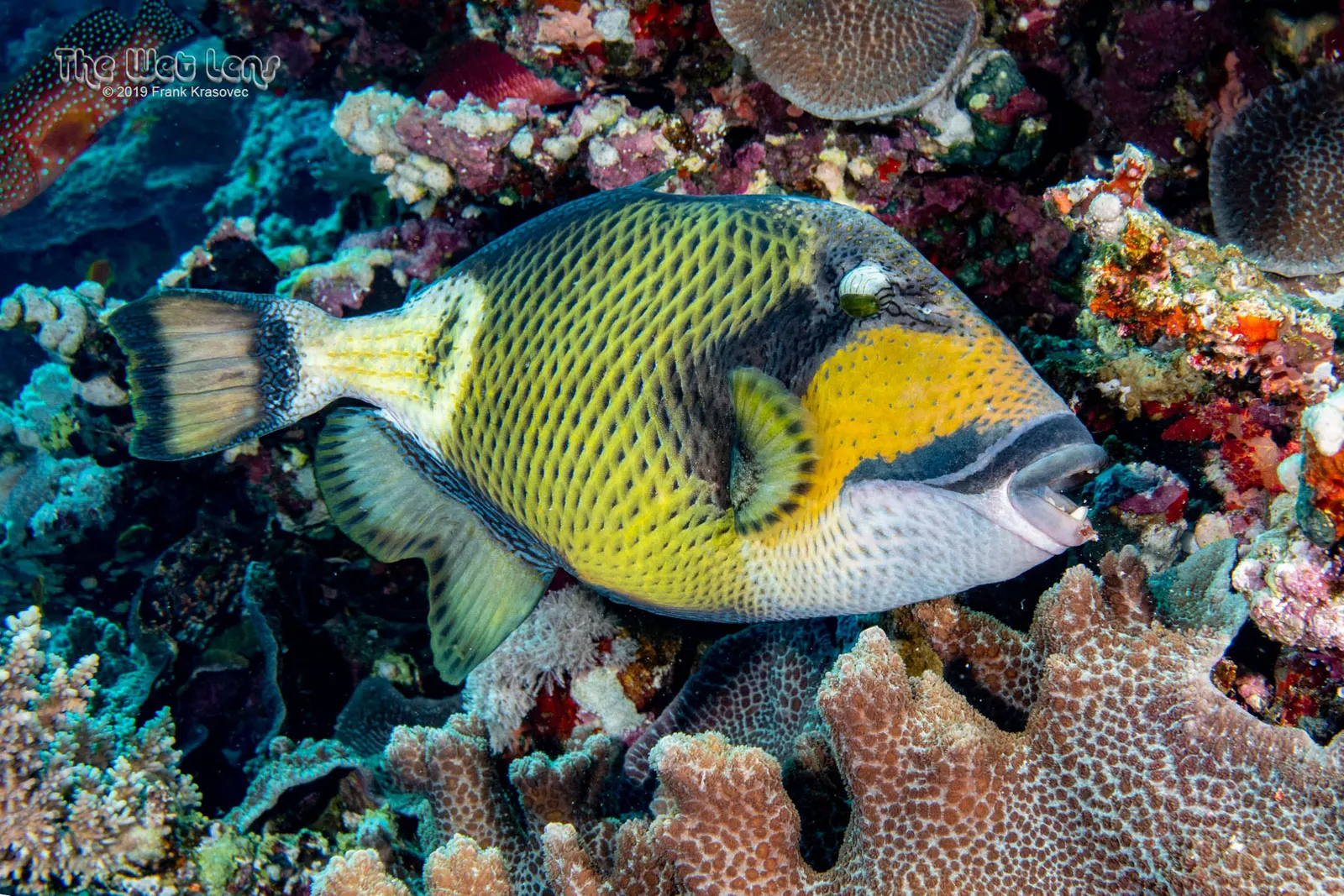
The titan triggerfish (Balistoides viridescens) is the largest triggerfish in the Red Sea: reaching 75 cm, this stocky, powerful fish wears a yellowish-green to olive body with dark scale-net markings, a dark "moustache" band and conspicuously strong, chisel-like teeth. The family name comes from a clever mechanism: the thick first dorsal spine is locked upright by a smaller second spine – the "trigger" – so a fish wedged into a crevice is practically impossible to remove.
The titan is one of the reef's great engineers: it flips rocks, snaps coral branches and blasts sand away to reach its favourite food – sea urchins, molluscs, crabs and tube worms. Its excavations are usually attended by an entourage of wrasses and other opportunists snacking on the stirred-up debris. The female lays her eggs in a crater-like nest scooped into the sand, and the pair – especially in the summer months – obsessively defends a territory that widens upward from the nest like an inverted cone.
Around Hurghada you see titans on nearly every dive over sandy-coral plateaus and lagoons, standing head-down as they dismantle the reef. For most of the year it is a calm, dignified animal that ignores divers completely – but in nesting season, respect its territory: if it turns towards you, raises its trigger spine or tilts on its side to "eye" you, move away horizontally at once. Watching one take a sea urchin apart is well worth keeping a safe distance.
Did you know?
A titan's territory is not a circle but an inverted cone widening upward from the nest – so a startled diver who bolts towards the surface actually swims deeper into the fish's domain. The correct escape is always horizontal, away from the nest.
How to behave around it
For most of the year it is a peaceful fish, but at nesting time – mainly summer around Hurghada – it firmly defends a cone-shaped territory widening upward from its sand nest. If a titan turns towards you, tilts on its side or raises its dorsal spine, stop taking photos: swim calmly and horizontally away from the nest – never upward. Its bite can be painful, but keeping your fins between you and the fish easily fends it off while you back out of its territory. Never corner it and never feed it.
Where can you meet it?
Common on reefs with sandy plateaus: you meet it regularly on the plateaus of El Fanadir and Gota Abu Ramada, around the Giftun Islands and in the lagoon of Abu Hashish.
Frequently asked questions
Only at nesting time, and even then predictably: it defends only the territory around its nest and never hunts divers. Recognise the warning signs and swim away horizontally, and nothing will happen. Its bite is painful, but most incidents happen simply because someone failed to notice the nest.
The nest is a crater-like depression in the sand, above which the fish circles conspicuously instead of feeding calmly. If a titan stops eating, turns towards you, tilts sideways or raises its spine, that is a clear notice – increase your distance horizontally.
Hard-shelled prey: sea urchins, molluscs, crabs and coral. It flips urchins over with its mouth and cracks them open at the unprotected underside – a spectacular operation always watched by a crowd of smaller fish waiting for scraps.
Best sites for Titan triggerfish
El Fanadir
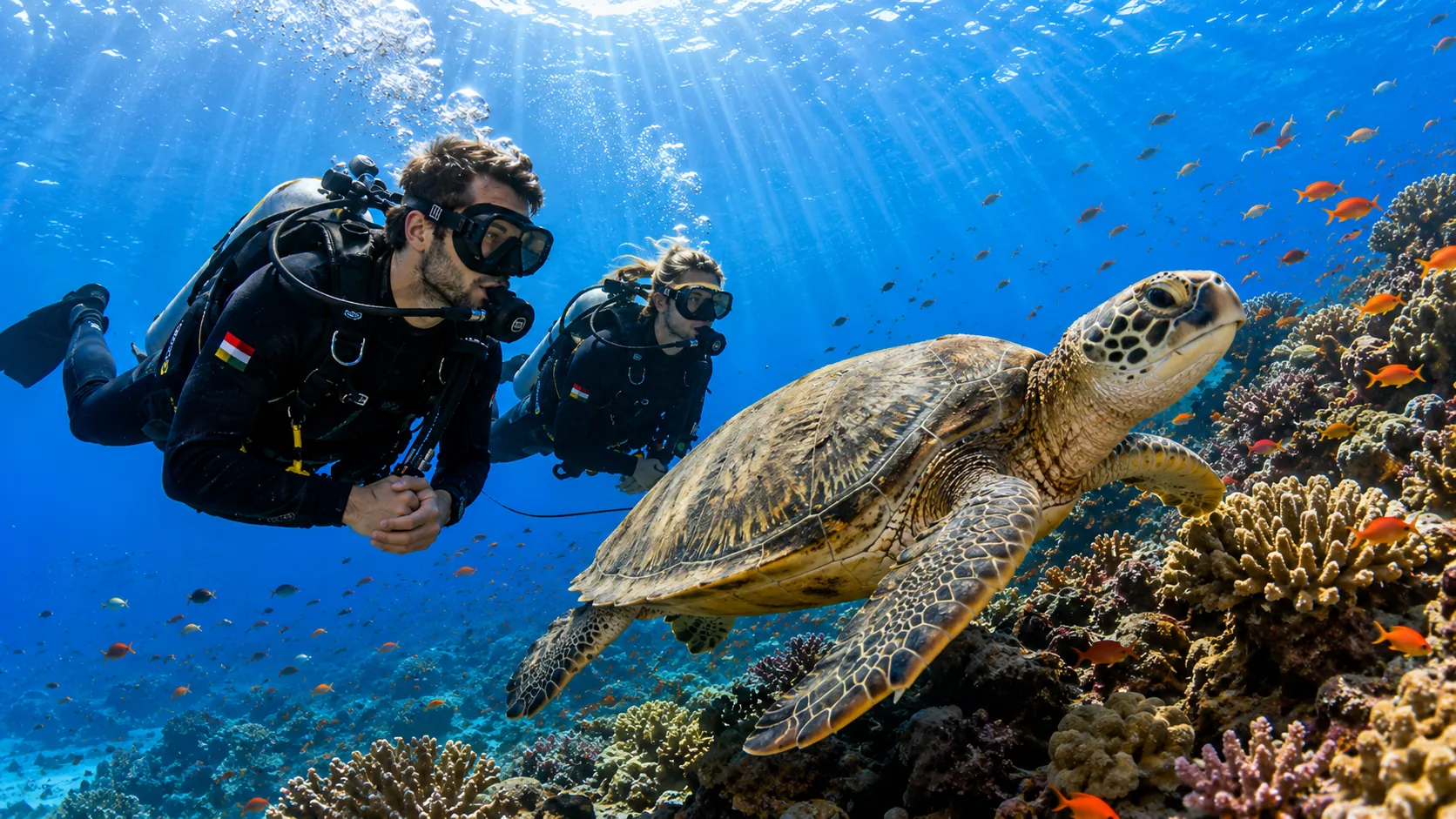
A long reef ridge barely half an hour from the marina: a gentle wall, blue-spotted rays and seagrass patches with turtles.
- Depth
- 6–25m
- Boat
- 30min
- Species
- 5
Gota Abu Ramada
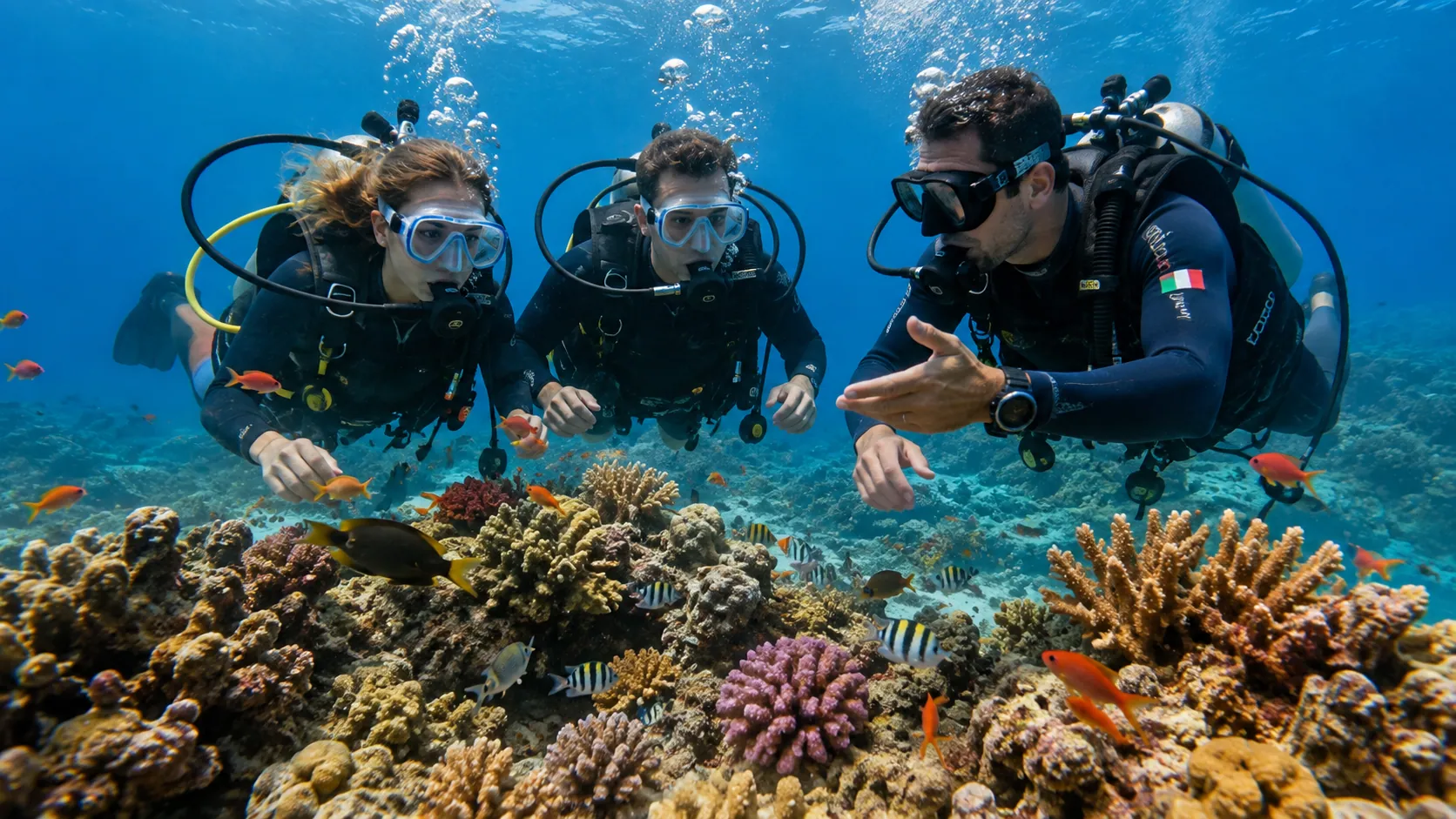
A shallow oval reef with a sandy bottom and schools of butterflyfish – perfect for training, second and night dives.
- Depth
- 4–14m
- Boat
- 55min
- Species
- 5
Giftun-szigetek
A national park island pair with a dozen dive sites: coral gardens, turtles and perhaps the richest fish life in the area.
- Depth
- 5–25m
- Boat
- 45min
- Species
- 6
The Red Sea will not wait forever.
Book today – seats on the boat are limited, your excitement is not.