Toadstool leather coral
Sarcophyton glaucum
A cream-coloured, toadstool-shaped soft coral that wears a velvet fur of polyps one day and bare leather the next – and periodically "moults" like a snake.
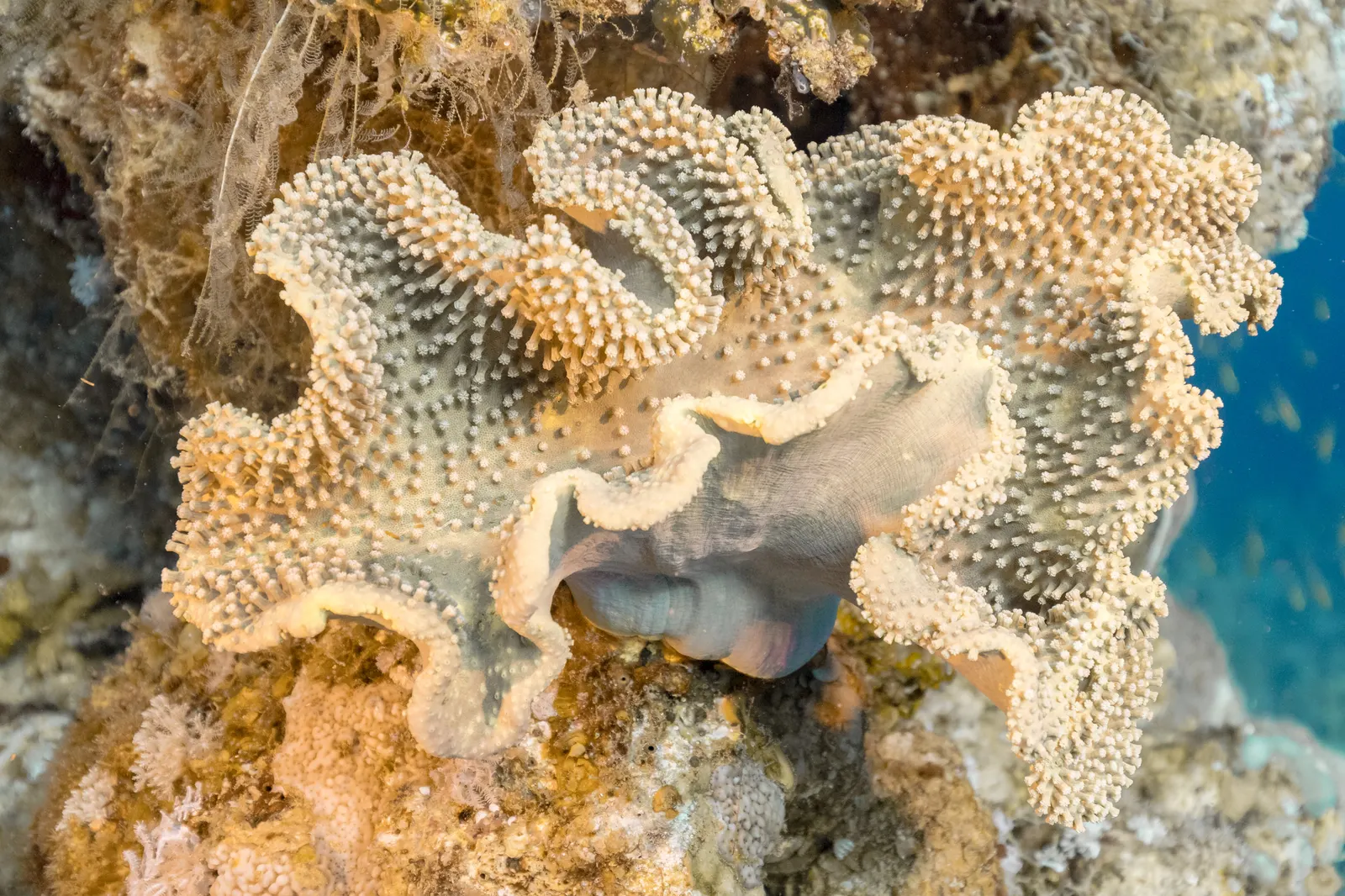
You recognise the toadstool leather coral by its shape: a fleshy stalk topped with a wavy-edged "mushroom cap" ranging from creamy yellow to grey-green. When its thousands of tiny polyps are out, the cap surface looks velvety and furry; when they are retracted, what remains is smooth matte leather – hence the name in both languages. A colony can reach half a metre and live for decades on the same spot.
Its oddest habit is "moulting": from time to time the leather coral secretes a translucent wax layer over its surface, which collects settled algae and sediment and then peels off in rags after a few days – leaving the coral clean and renewed. So if you see a dull, glossy-coated, closed-up colony, don't assume it is sick: it is probably mid spring-clean. It also keeps a chemical arsenal, using terpene compounds to hold rival corals at bay.
You will meet it all over Hurghada's sheltered reefs and lagoons: whole toadstool fields grow in the coral gardens of the Giftun Islands, among the pinnacles of El Aruk and on the sandy Gota Abu Ramada plateau, shallow enough for snorkelers too. Although it looks tougher than stony corals, touching damages its mucus and tissue layers just the same – stay an arm's length away and watch instead whether its "fur" is currently out.
Did you know?
The leather coral is a favourite of drug researchers: the sarcophyton compounds produced in its tissue are being studied in labs worldwide for anti-cancer and anti-inflammatory effects – the reef's toadstool is in fact a floating chemistry plant.
Where can you meet it?
A resident of shallow, sheltered coral gardens: whole stands of it grow in the Giftun Island lagoons, at the El Aruk pinnacles and on the Gota Abu Ramada plateau.
Frequently asked questions
Probably not – the leather coral regularly grows a wax layer that peels away accumulated algae and sediment, like us using a face mask. During this it keeps its polyps closed for days and the colony looks dull. Come back a few days later and you will likely find it back in its velvet "fur".
An animal – a shared colony of thousands of tiny eight-armed polyps, related to sea anemones and jellyfish. The toadstool is just the colony's shape. It does "graze" sunlight though: symbiotic algae living in its tissue produce most of its food by photosynthesis.
Don't – beneath the leathery surface lies sensitive living tissue, and every touch wipes off the protective mucus layer, opening the door to infection. Hurghada's reefs are also protected areas where disturbing marine life is forbidden. The good diver's rule is simple: everything for the eyes, nothing for the hands.
Best sites for Toadstool leather coral
Giftun-szigetek
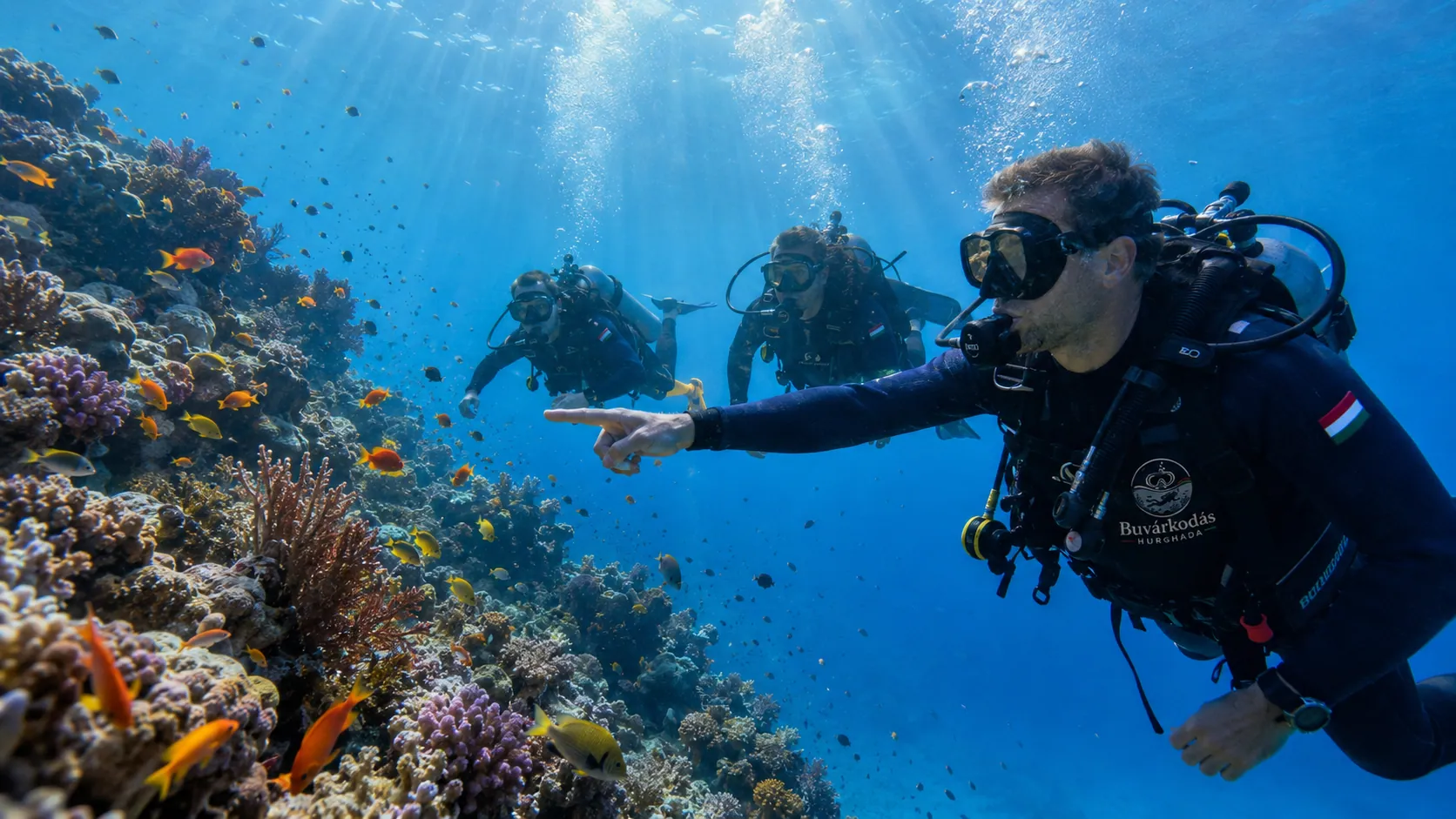
A national park island pair with a dozen dive sites: coral gardens, turtles and perhaps the richest fish life in the area.
- Depth
- 5–25m
- Boat
- 45min
- Species
- 6
El Aruk (Gigi)
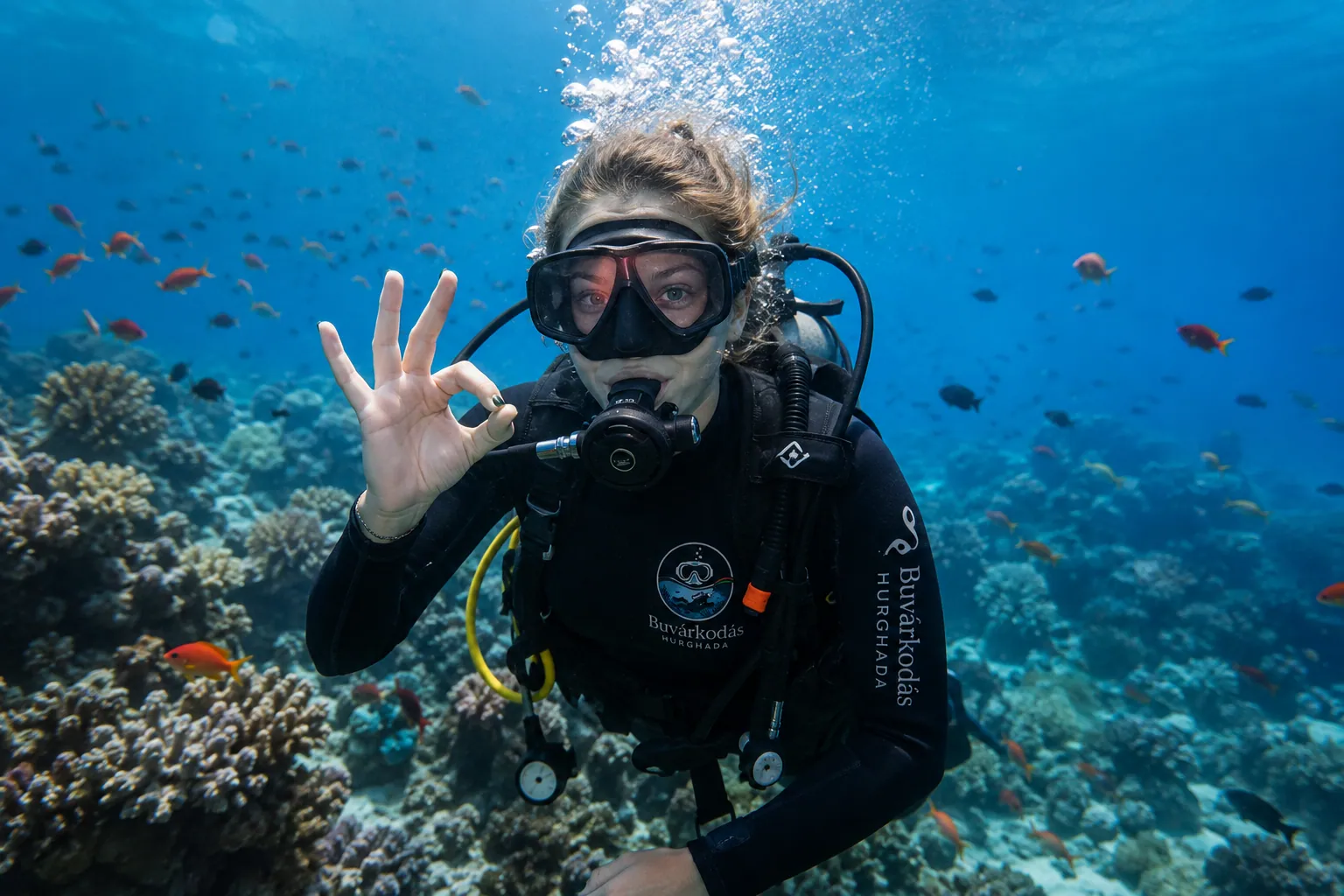
A playground of coral towers on white sand: easy navigation, clouds of glassfish and light made for photography.
- Depth
- 5–14m
- Boat
- 35min
- Species
- 5
Gota Abu Ramada
A shallow oval reef with a sandy bottom and schools of butterflyfish – perfect for training, second and night dives.
- Depth
- 4–14m
- Boat
- 55min
- Species
- 5
The Red Sea will not wait forever.
Book today – seats on the boat are limited, your excitement is not.