Twinspot snapper
Lutjanus bohar
A copper-red, heavyweight reef predator that disguises itself as an innocent damselfish when young – and rules the reef as an adult.
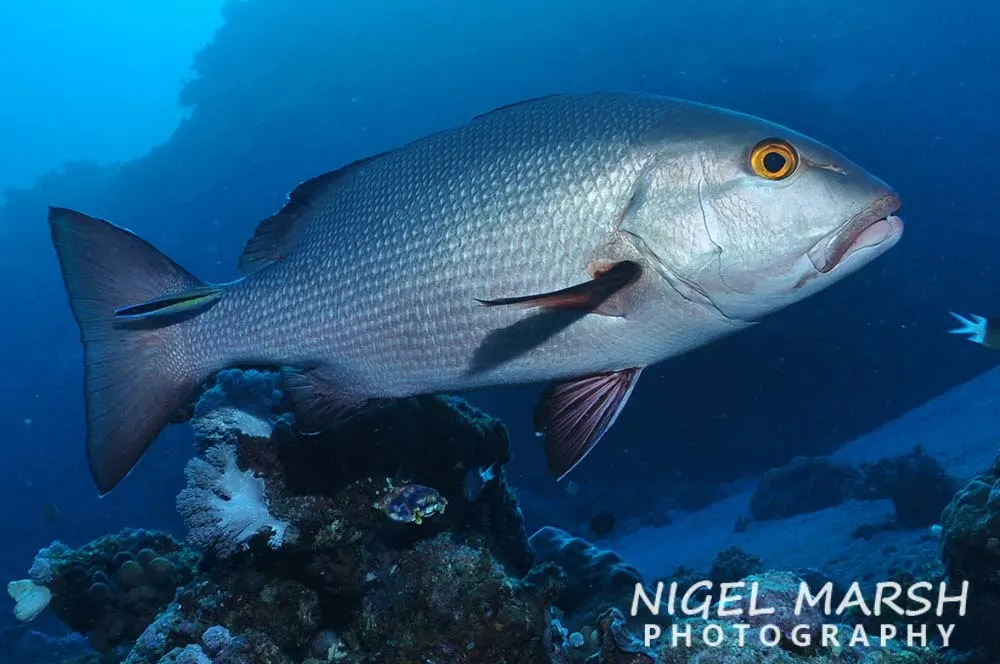
The twinspot snapper (Lutjanus bohar) is the heavyweight champion among the Red Sea's snappers: adults reach 60–80 cm, and their solid, muscular bodies and copper-bronze colour command respect from a distance. The name refers to the juveniles, which carry two silvery-white spots on the back that gradually fade with age. The big head, thick lips and strong canine teeth mark it as a serious predator.
Young twinspots use one of nature's slyest tricks: with their colour and swimming style they mimic peaceful, plankton-eating damselfish (Chromis species) and slip into their schools. The little fish do not flee from their "companion" – until the predator in disguise strikes one of them at lightning speed. Adults hunt openly, taking fish, crustaceans and even smaller snappers, and they are remarkably long-lived – individuals can survive for more than half a century.
Around Hurghada you will meet it on the deeper outer reefs: it patrols the walls of Carless Reef and Umm Gamar, often in pairs or small groups, and is a regular on the deeper plateaus of Abu Ramada. It is a genuinely curious fish – it is not unusual for it to approach the diver and make an inspection circle or two before cruising majestically on. With its bulk and unhurried swimming, many divers mistake it for a grouper at first.
Did you know?
The juvenile twinspot snapper is a wolf in sheep's clothing: it disguises itself as a harmless damselfish, joins their school, then strikes its unsuspecting schoolmates from within – one of the animal kingdom's finest examples of aggressive mimicry.
Where can you meet it?
Look for it on the deeper outer reefs: it is a regular along the walls of Carless Reef and Umm Gamar, and often cruises over the plateaus of Abu Ramada and Small Giftun.
Frequently asked questions
No – although it is a sizeable predator, towards people it is merely curious. It may calmly circle you for a look, but there is no attack to fear; enjoy the close encounter.
Rarely – it favours the deeper reef walls. This is more of a diver's encounter: you have a good chance on Carless Reef or Umm Gamar dives, typically along the plateaus and walls.
The two silvery-white back spots are the juveniles' trademark – part of their disguise. As the fish grows and switches to open hunting, the spots fade away, leaving the uniform copper-red colour.
Best sites for Twinspot snapper
Carless Reef
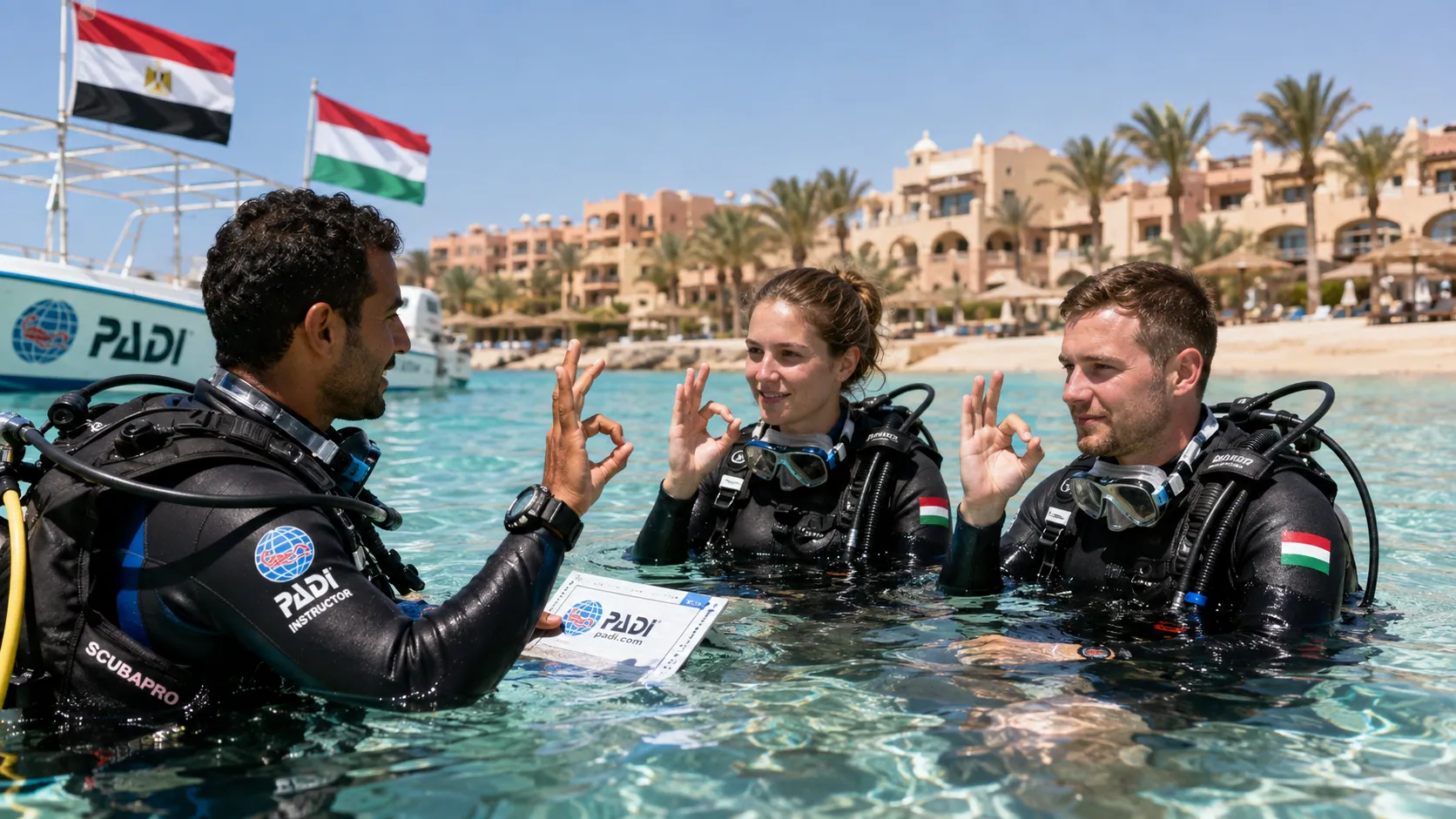
An offshore twin-erg reef famous for its legendary moray colony – for experienced divers, weather permitting.
- Depth
- 12–30m
- Boat
- 70min
- Species
- 5
Umm Gamar
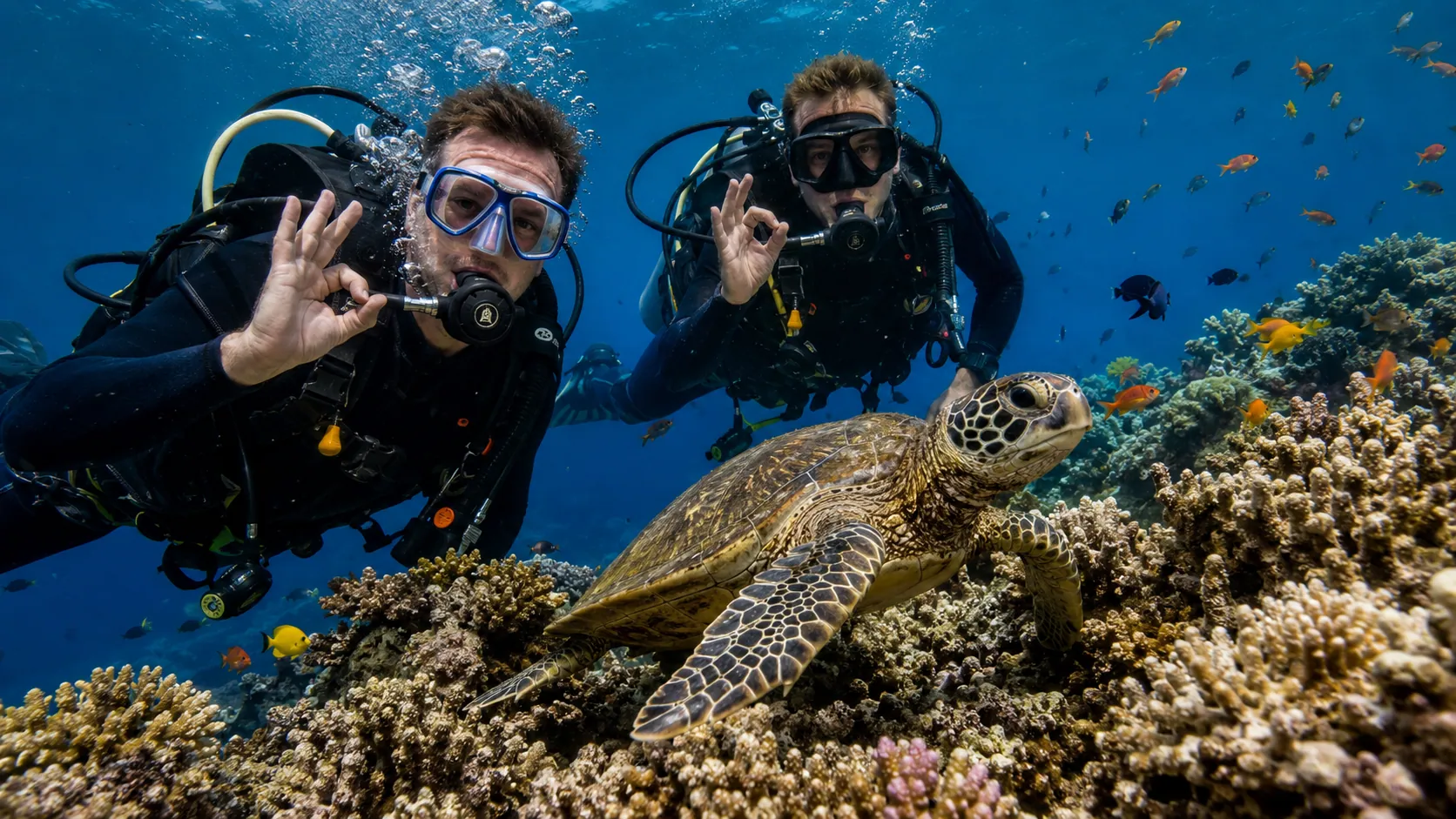
An elongated island in the north: a plateau with three coral towers, small caves and big predators out in the blue.
- Depth
- 10–30m
- Boat
- 75min
- Species
- 5
Abu Ramada („Az Akvárium”)
The Aquarium nickname is well earned: the fish schools swirling around the coral towers can be so dense you lose sight of the reef.
- Depth
- 6–26m
- Boat
- 50min
- Species
- 6
The Red Sea will not wait forever.
Book today – seats on the boat are limited, your excitement is not.