Variegated lizardfish
Synodus variegatus
Lizard-headed, needle-toothed and endlessly patient on its coral perch – the reef's little dragon that launches like a rocket after prey.
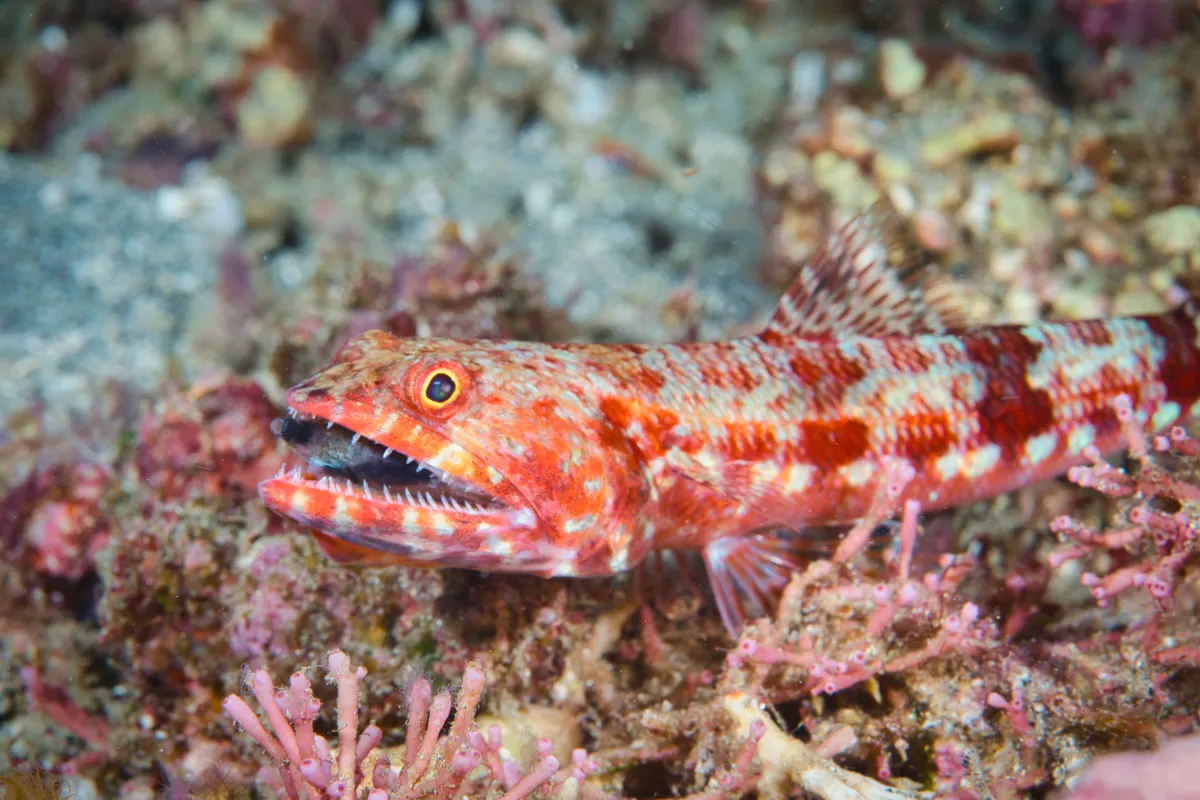
The variegated lizardfish (Synodus variegatus) earns its name honestly: its pointed snout and wide-mouthed head look eerily like a lizard's, and even its pose is reptilian – propped on its pectoral fins with head raised, it sits on coral or sand like a lizard basking on a rock. Its reddish-brown marbled pattern adapts to the surroundings, fading on sand and glowing on red coral rock, so you often notice it only when you have almost swum right over it.
It is an ambush predator and a champion of patience: it waits motionless, eyes trained upward, and when a smaller fish passes overhead it launches like a rocket, seizing it in open water. Its mouth is a genuine trap – tiny, needle-sharp, backward-curving teeth line not only the jaws but even the tongue, leaving no way out. It handles surprisingly large meals too, swallowing prey approaching its own body length.
Around Hurghada you can meet it on almost every dive and snorkel trip – you just need to know where to look: scan the tops of coral heads and the sand patches. Two individuals often sit side by side, perpendicular or "parked" across one another – a favourite composition of underwater photographers. Approach slowly and it lets you within arm's reach, then materialises somewhere else in the blink of an eye.
Did you know?
The lizardfish even has teeth on its tongue: the tiny, backward-curving needles usher the prey further in with every movement – whatever enters that mouth can travel in one direction only.
Where can you meet it?
It is most at home in coral gardens dotted with sand: it often sits on the Gota Abu Ramada plateau, the reefs of El Fanadir and Abu Hashish, and in the shallows on the sand of Shaab Sabina.
Frequently asked questions
Because that is its hunting tactic: the camouflaged, motionless body is invisible to small fish that swim past unsuspecting. The lizardfish does not move a muscle until the moment of attack – then strikes with a single explosive burst.
No – the lizardfish hunts only smaller fish and tolerates humans merely as photographers. It is not venomous, it does not bite, it simply darts away if you get too close. Its teeth are a trap only for prey a few centimetres long.
Variegated lizardfish often form pairs, and around spawning time they rest close together, sometimes draped across one another. Photographers adore the scene – two "posing lizards" on a coral head is one of the most rewarding subjects in Hurghada.
Best sites for Variegated lizardfish
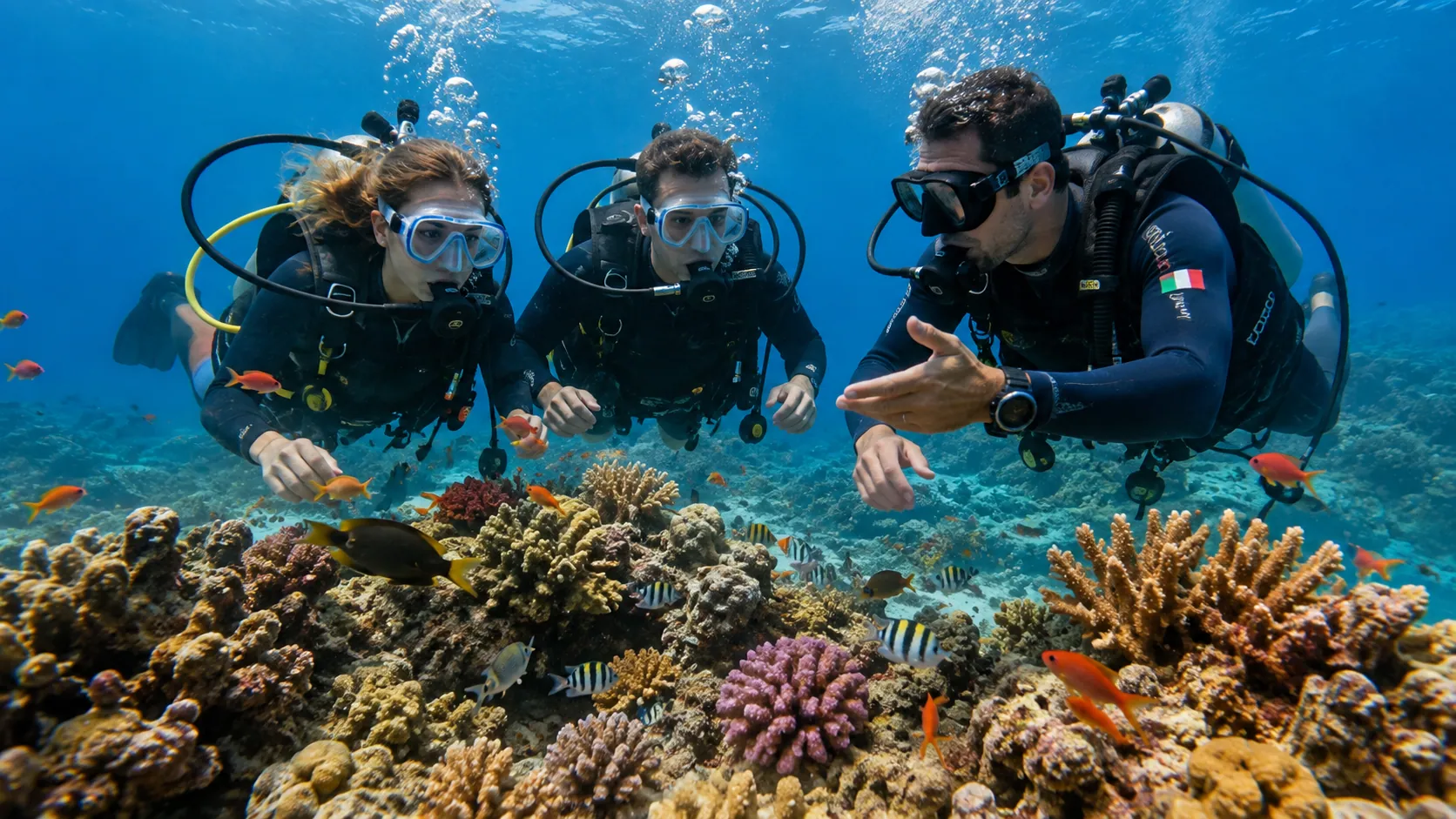
Gota Abu Ramada
A shallow oval reef with a sandy bottom and schools of butterflyfish – perfect for training, second and night dives.
- Depth
- 4–14m
- Boat
- 55min
- Species
- 5
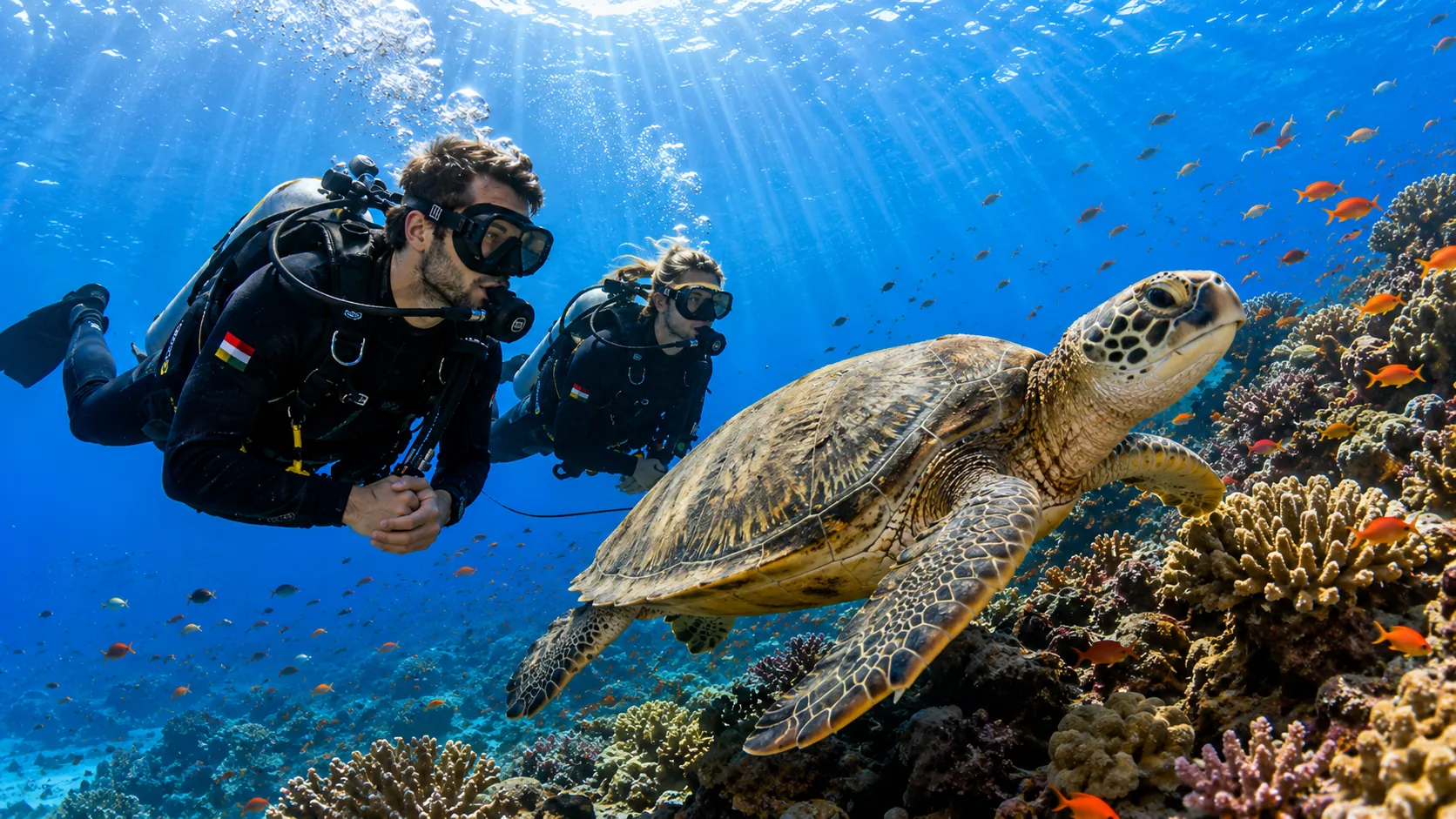
El Fanadir
A long reef ridge barely half an hour from the marina: a gentle wall, blue-spotted rays and seagrass patches with turtles.
- Depth
- 6–25m
- Boat
- 30min
- Species
- 5
Abu Hashish-fok
A quiet southern cape with seagrass meadows and an atmospheric cavern – turtles almost for sure, a dugong with some luck.
- Depth
- 5–20m
- Boat
- 60min
- Species
- 5
The Red Sea will not wait forever.
Book today – seats on the boat are limited, your excitement is not.