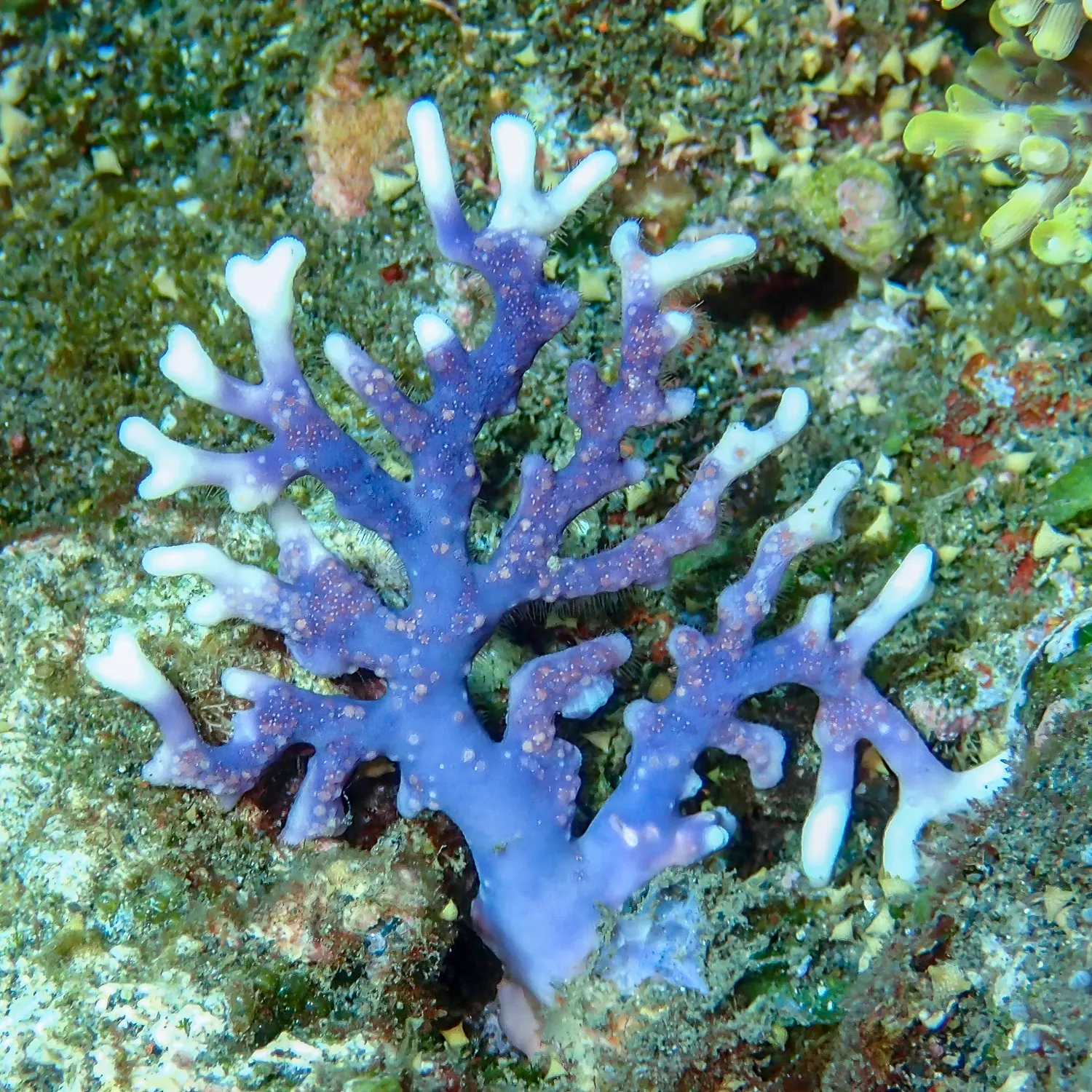
Lace coral
Distichopora violacea
A palm-sized, vivid purple lace ornament in the reef's dark corners – blooming exactly where the sun never shines.
The lace coral is one of the reef's prettiest small jewels: its palm-sized, fan-shaped colonies are vivid purple or violet, with white or yellowish branch tips. The flat, forking branchlets genuinely resemble fine lace. Don't look for it on the sunlit reef top: it grows on cave ceilings, under overhangs and in dark crevices, always facing downwards or sideways.
Like the fire corals, the lace coral is not a true coral but a limestone-skeleton hydrozoan – though here is the good news: it is harmless to humans, its stinging cells cannot punch through our skin. It lives in the shade because it has no symbiotic algae and therefore no need for light: with hair-thin polyps it filters tiny plankton from the water. That is why you always find it where a gentle current flows through a dark hollow – a cave is not a hideout for it, but a laid table.
Look for it on Hurghada's deeper, more sculpted reefs: it appears in the caves of Umm Gamar, under the overhangs of Carless Reef and in the recesses of the Small Giftun wall. Shine your torch into the dark corners and suddenly the purple lace lights up. The colonies grow slowly and are extremely fragile – one careless fin kick snaps off decades of growth, so let only your light beam touch it.
Did you know?
The lace coral's purple is not from algae but from pigment built into its limestone skeleton itself – so it stays purple even when broken. It was once harvested for jewellery, which nearly became its undoing; today it is protected and belongs on the reef.
Where can you meet it?
Look for it on cavernous wall dives: it lives in the hollows of Umm Gamar, under the ledges of Carless Reef and in the shaded nooks of the Small Giftun wall.
Frequently asked questions
Because it doesn't live on light: it has no photosynthetic algae and filters all its food from the water. On the sunny reef top the fast-growing algae-powered corals would crowd it out – but in dark hollows the territory is its own. It is easy to swim past without a torch, so always light up the crevices on your dive.
No – although they are relatives, the lace coral's stinging cells are too weak to penetrate human skin. You still must not touch it: the colony is so brittle that even the gentlest contact snaps it, and a fan this size takes decades to grow.
Without strobe or torch you have no chance: at depth and in shadow the purple looks almost black. But in a close-up lit from the side, its true violet glows against the white branch tips – just mind your buoyancy, because you will be working in tight corners.
Best sites for Lace coral
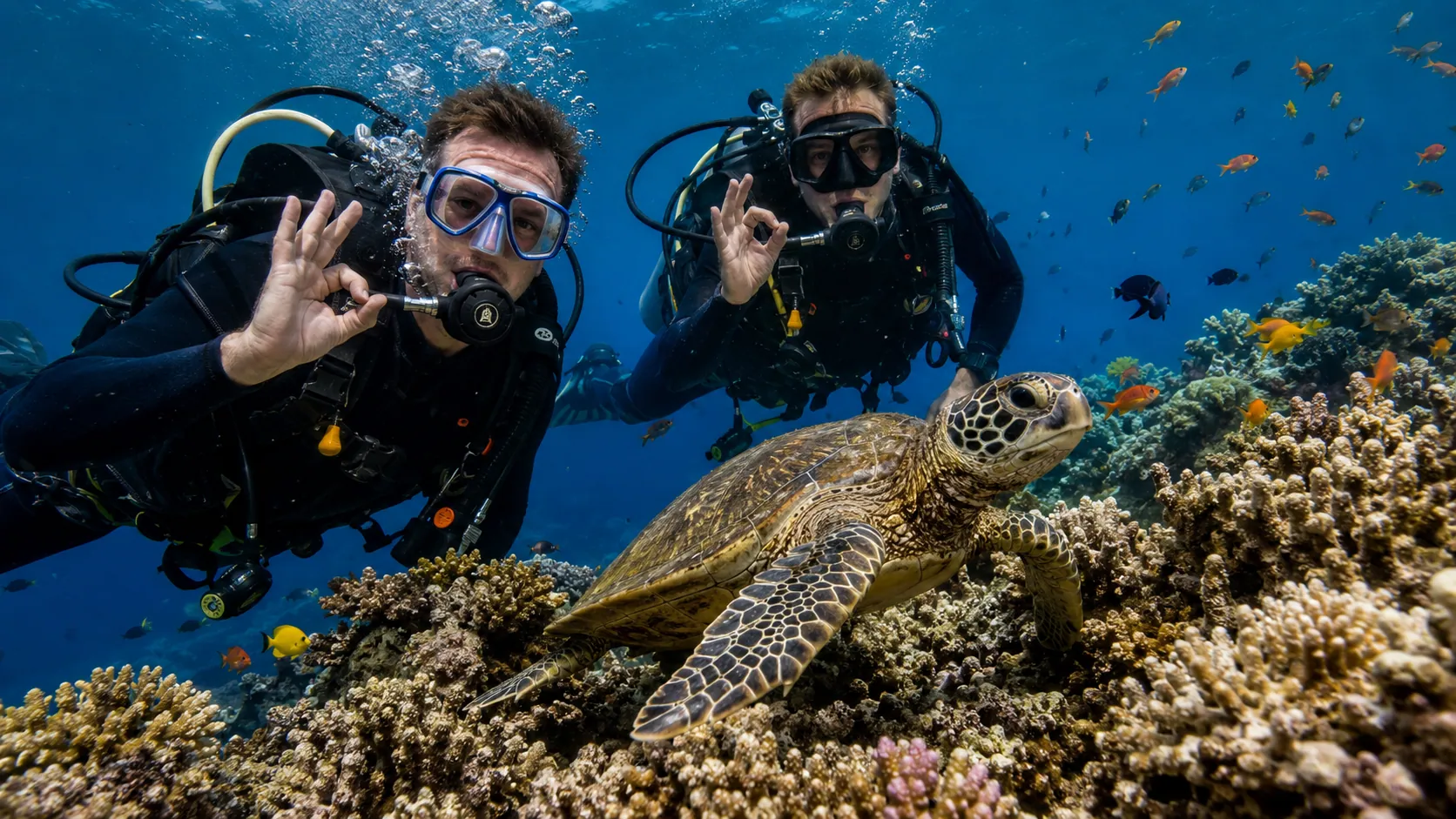
Umm Gamar
An elongated island in the north: a plateau with three coral towers, small caves and big predators out in the blue.
- Depth
- 10–30m
- Boat
- 75min
- Species
- 5
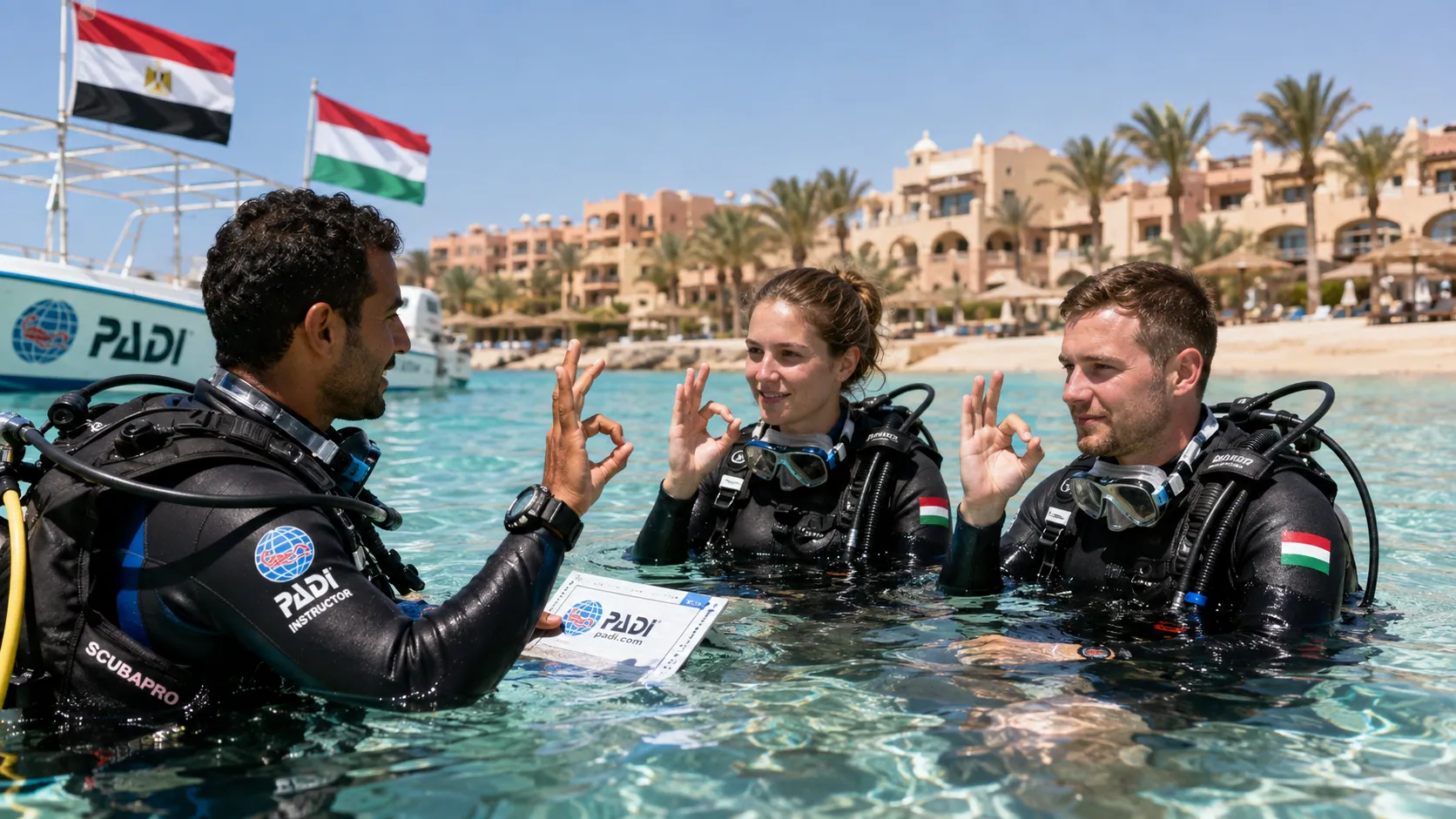
Carless Reef
An offshore twin-erg reef famous for its legendary moray colony – for experienced divers, weather permitting.
- Depth
- 12–30m
- Boat
- 70min
- Species
- 5
Small Giftun fal
Hurghada's classic drift dive: a sheer wall with gorgonian fans, eagle rays and a coral-tower plateau at 20–30 metres.
- Depth
- 8–30m
- Boat
- 50min
- Species
- 5
The Red Sea will not wait forever.
Book today – seats on the boat are limited, your excitement is not.