Whale shark
Rhincodon typus
The largest fish on Earth: a gentle, spotted giant that cruises along filtering plankton – meeting one is every diver's and snorkeler's dream.
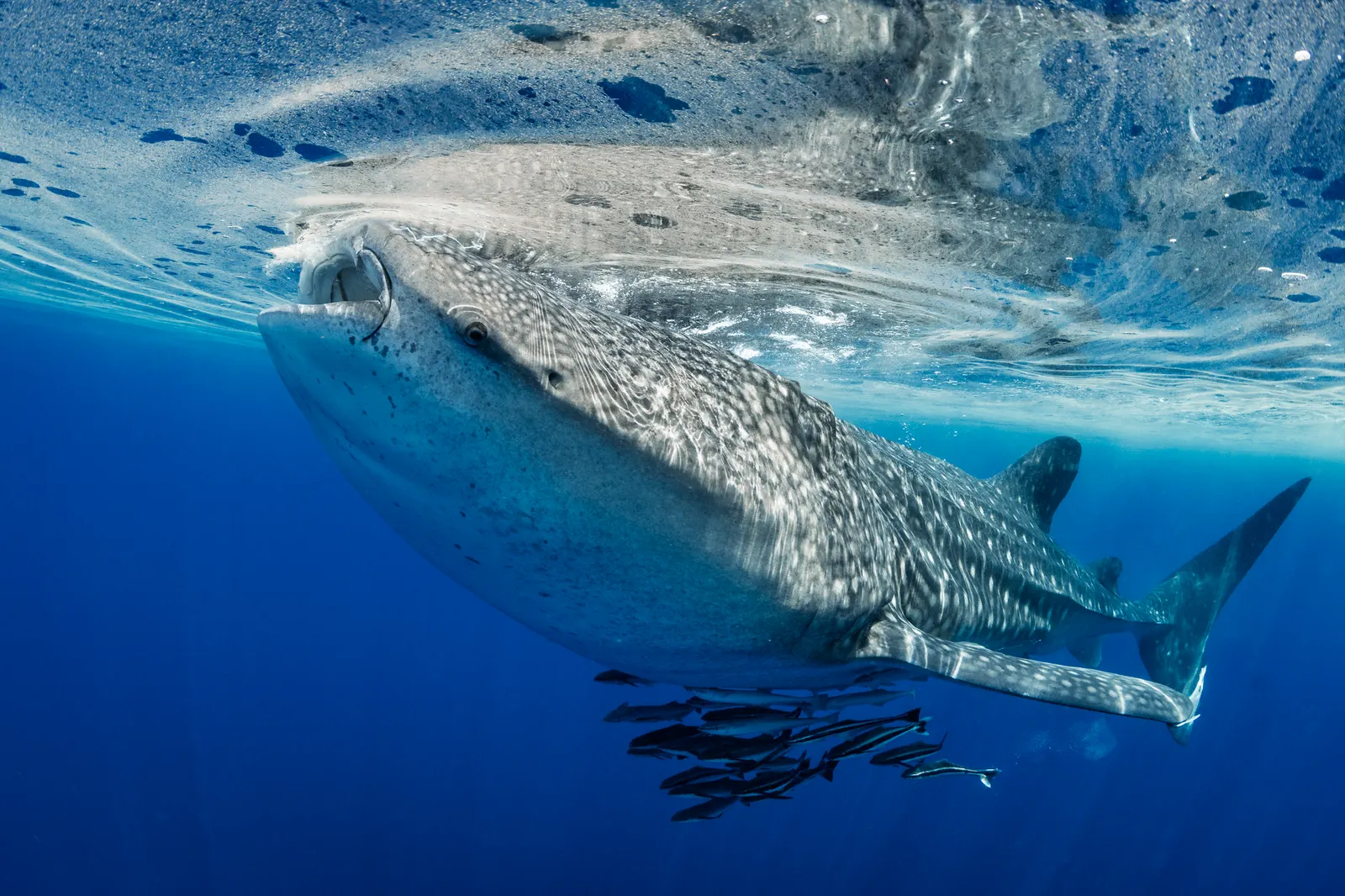
The whale shark (Rhincodon typus) is the largest fish in the world: adults can exceed 12 metres, although in the Red Sea you mostly meet juveniles of 4–8 metres. Don't let the name fool you: it is not a whale but a shark – yet a completely harmless one. With its enormous mouth, up to a metre and a half wide, it filters plankton, fish eggs and tiny crustaceans from the water; its teeth are tiny and insignificant. Its grey-blue back is covered in white spots and stripes, and this pattern is unique to every individual, just like a human fingerprint.
Whale sharks are wandering giants: they turn up wherever plankton concentrates. In the Egyptian Red Sea this happens mostly between May and July, when the spring plankton bloom draws them into coastal waters – that is also when your chances around Hurghada are highest. The species is listed as endangered by the IUCN: researchers track individuals by photo-identification of their spot patterns, so every good underwater photo also supports their protection.
Let's be honest: the whale shark is a rare guest around Hurghada, and an encounter is a matter of luck – most often the huge, unmistakable shadow appears in the blue water around the Giftun Islands during the boat ride. If the miracle happens, the rules are simple: swim alongside calmly, keep 3–4 metres of distance, never touch it and never block its path. A whale shark looks slow, but a single tail beat leaves you behind – let it set the pace, and you will come home with one of the greatest experiences of your life.
Did you know?
A whale shark's spot pattern is so unique that researchers identify individuals with an algorithm originally developed for astronomy – the same method NASA uses to map star constellations.
How to behave around it
The whale shark is a completely harmless filter feeder. The etiquette exists for its protection: keep 3–4 metres of distance, never touch it, avoid close-range flash and never block its path – that way the encounter stays stress-free for the animal too.
Where can you meet it?
It appears mostly in open blue water around the Giftun Islands and the outer reefs – Carless Reef, Umm Gamar – chiefly between May and July.
Frequently asked questions
Not at all. Despite being the largest fish in the world, it filters only plankton and tiny organisms from the water – it poses zero danger to people. The only rule is that you don't disturb it either: keep your distance, no touching.
The best window is between May and July, when the plankton bloom draws them into coastal waters. But honestly: whale sharks are rare around Hurghada and an encounter is always a matter of luck – which is exactly what makes it a once-in-a-lifetime experience.
Yes – in fact whale sharks often feed near the surface, so with a snorkel you frequently see them better than on scuba. If one is spotted from the boat, slip into the water quietly without splashing and accompany it from the side, 3–4 metres away.
Best sites for Whale shark
Giftun-szigetek
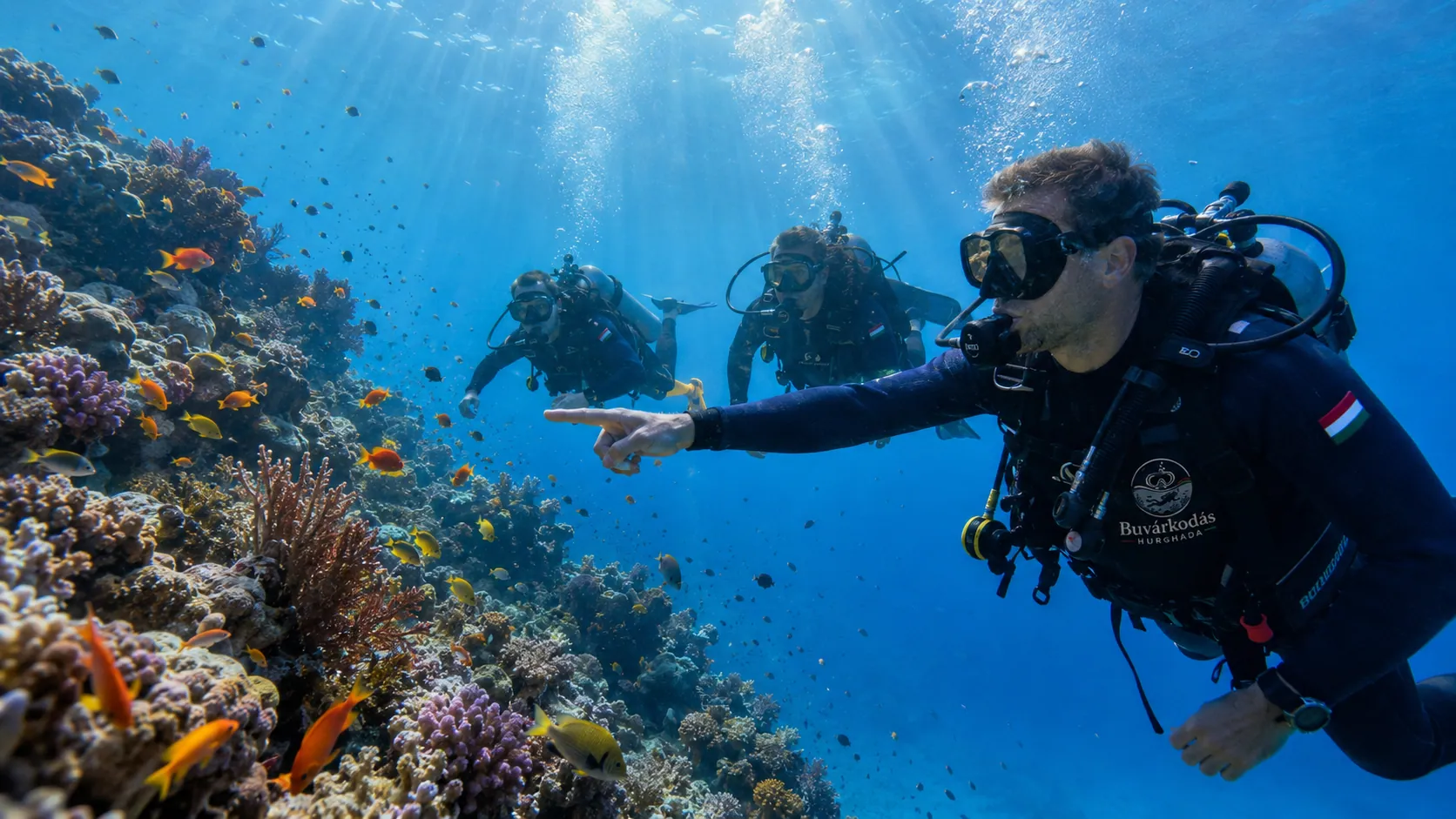
A national park island pair with a dozen dive sites: coral gardens, turtles and perhaps the richest fish life in the area.
- Depth
- 5–25m
- Boat
- 45min
- Species
- 6
Small Giftun fal
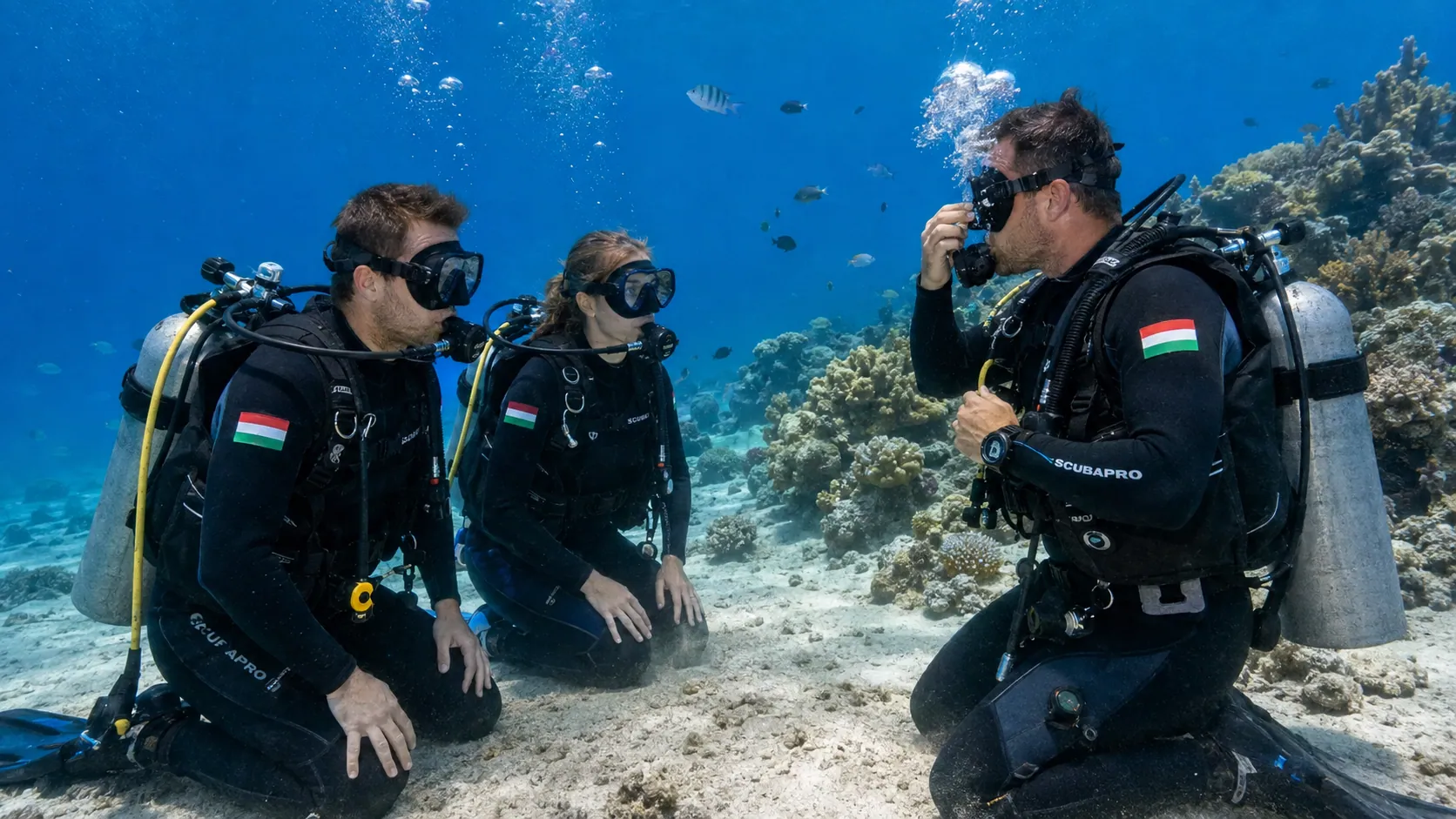
Hurghada's classic drift dive: a sheer wall with gorgonian fans, eagle rays and a coral-tower plateau at 20–30 metres.
- Depth
- 8–30m
- Boat
- 50min
- Species
- 5
Carless Reef
An offshore twin-erg reef famous for its legendary moray colony – for experienced divers, weather permitting.
- Depth
- 12–30m
- Boat
- 70min
- Species
- 5
The Red Sea will not wait forever.
Book today – seats on the boat are limited, your excitement is not.