Yellow boxfish
Ostracion cubicus
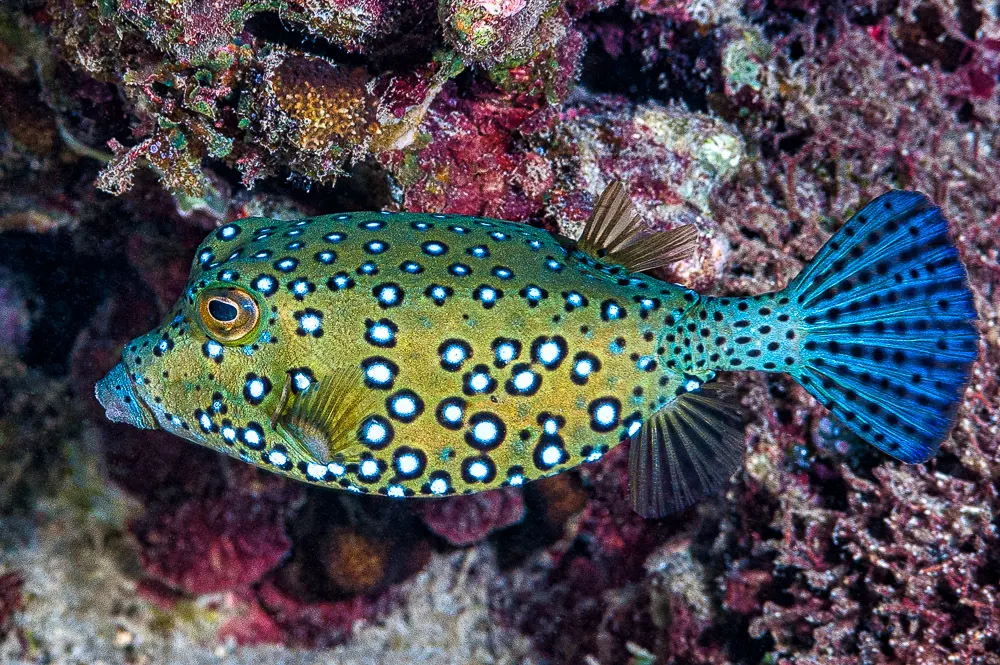
A swimming dice: the juvenile yellow boxfish is a bright yellow, black-spotted cube – one of the most comical sights on the reef.
The yellow boxfish (Ostracion cubicus) is literally a box: beneath its skin, hexagonal bony plates have fused into a rigid carapace from which only the fins, eyes, mouth and tail protrude. Juveniles are tiny, brilliant yellow cubes with black spots – genuinely like a runaway dice. As they grow, the body elongates and the colour fades to bluish grey and brown, and large adults look more like a well-travelled old suitcase than a cube.
Because of the rigid armour a boxfish cannot flex its body: it sculls with its small pectoral, dorsal and anal fins and uses the tail as a rudder. The motion looks slow yet is astonishingly precise – the fish hovers on the spot, shifts into reverse and manoeuvres to the centimetre between coral branches. Under serious stress it can release a toxic skin secretion (pahutoxin) that deters predators.
It is common around Hurghada: it forages in the sheltered corners of the coral gardens and under overhangs for sponges, algae and small invertebrates. The spotted yellow juveniles hide in shallow lagoons and in crevices on the reef tops – you can find them while snorkeling if you patiently scan the shadows of the corals. Photographers adore it: it is slow, and a cube is funny from every angle.
Did you know?
In 2005 Mercedes-Benz designed a concept car – the Bionic Car – based on the boxfish's shape, because engineers found the angular body surprisingly streamlined. The box form is not just funny, it is an engineering marvel.
Where can you meet it?
Common in the coral gardens: it appears among the towers of El Aruk, in the nooks of Gota Abu Ramada and in the lagoons of the Giftun Islands, and you can find the yellow juveniles at the shallow Shaab Sabina too.
Frequently asked questions
Not to you at all: it does not bite or sting, and prefers to manoeuvre away. Under stress it can release a toxic skin secretion, but that is aimed at predators – all you need to do is not touch or chase it.
Juveniles hide in shallow, sheltered spots: in lagoons and in the shade of coral branches and overhangs, often at barely 1–3 metres. Swim slowly and check the dark corners – the brilliant yellow gives them away.
Because its body is a rigid bony carapace it cannot bend – so it can only scull with its tiny fins. In exchange it manoeuvres like a drone: hovering, sidestepping, even reversing, which few fish can do.
Best sites for Yellow boxfish
El Aruk (Gigi)
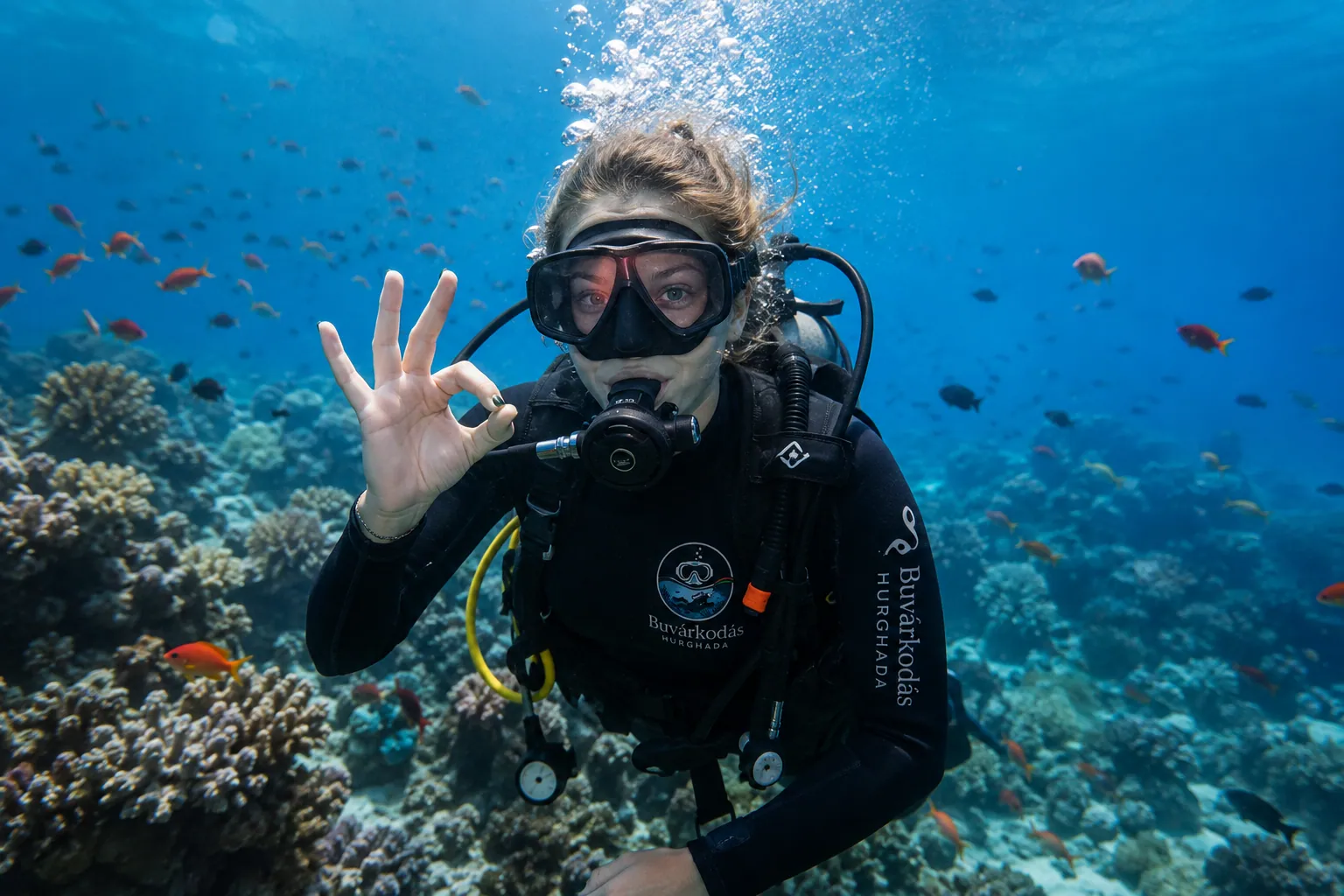
A playground of coral towers on white sand: easy navigation, clouds of glassfish and light made for photography.
- Depth
- 5–14m
- Boat
- 35min
- Species
- 5
Gota Abu Ramada
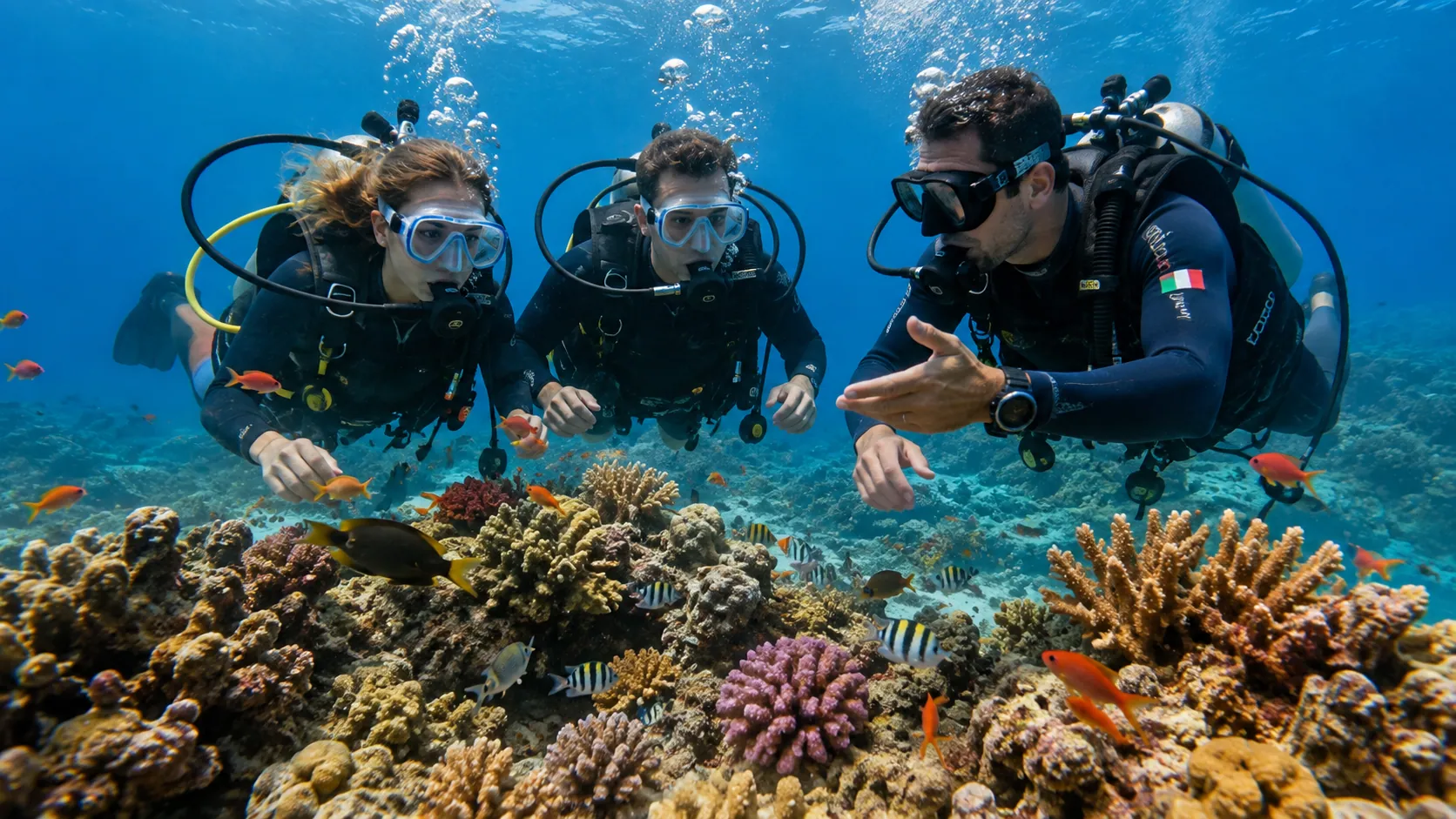
A shallow oval reef with a sandy bottom and schools of butterflyfish – perfect for training, second and night dives.
- Depth
- 4–14m
- Boat
- 55min
- Species
- 5
Giftun-szigetek
A national park island pair with a dozen dive sites: coral gardens, turtles and perhaps the richest fish life in the area.
- Depth
- 5–25m
- Boat
- 45min
- Species
- 6
The Red Sea will not wait forever.
Book today – seats on the boat are limited, your excitement is not.