Yellow encrusting soft coral
Rhytisma fulvum
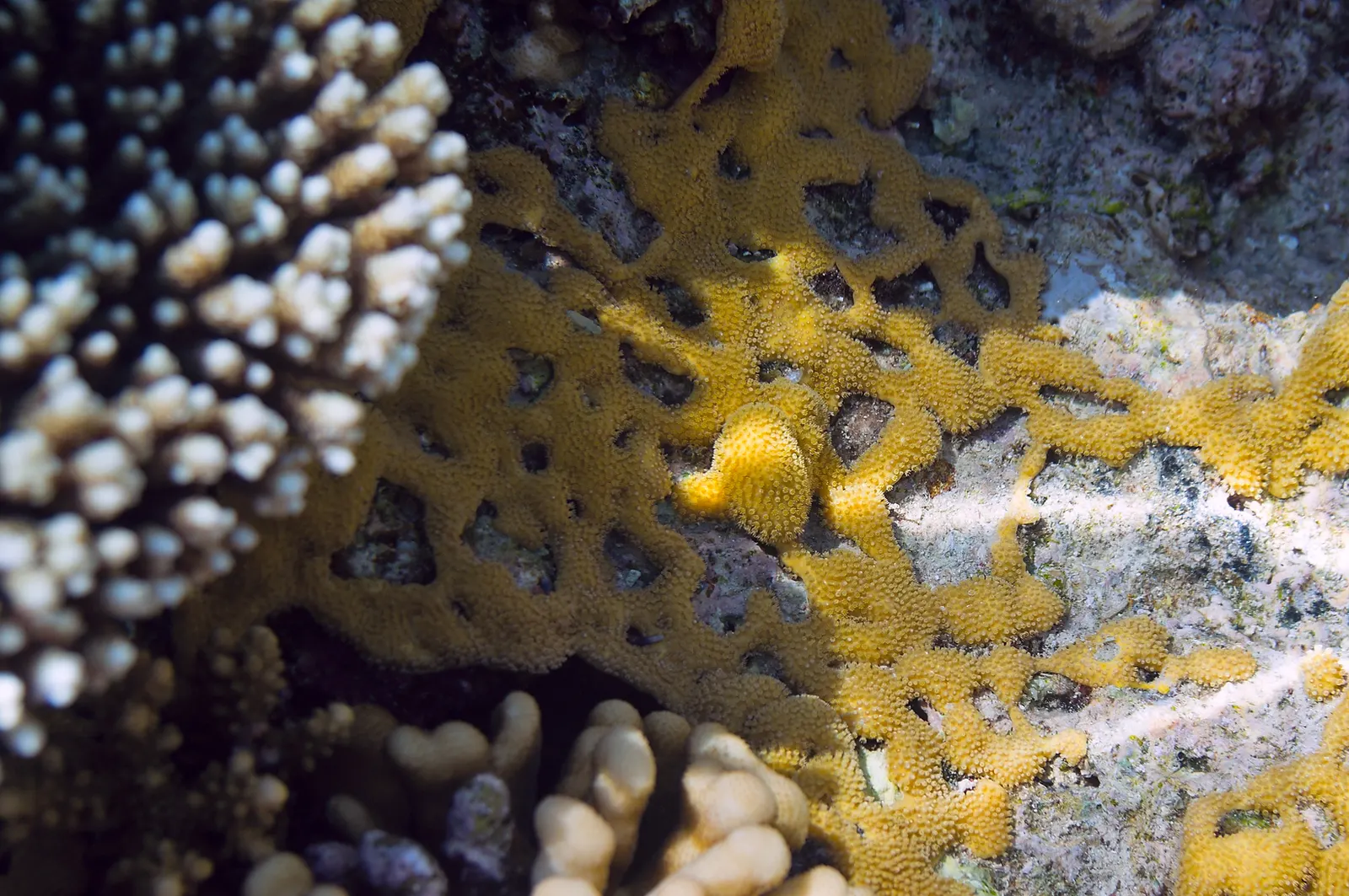
As if someone had poured mustard-yellow wax over the reef: this soft coral spreads across the rocks as a flat, living carpet.
The yellow encrusting soft coral (Rhytisma fulvum) builds no towers – it weaves a carpet: the mustard-yellow to ochre-brown colony coats rock surfaces, even dead coral skeletons, as a thin leathery layer. Thousands of tiny eight-armed polyps extend from its surface – when the colony is "open" it looks fuzzy; with polyps withdrawn it resembles a smooth, waxy film. Many divers mistake it for a sponge at first.
Creeping growth is a cunning strategy: while other corals race upwards for light, the encrusting coral spreads sideways, claiming free surfaces on a conveyor belt. Symbiotic algae work in its tissues, and it filters food from the water as well. Its reproduction is remarkable: instead of releasing larvae into open water, it broods them in a yellow mucus layer right on the colony's surface – the young slide off from there onto the neighbouring rock.
Around Hurghada you meet it on reef slopes and plateaus on nearly every dive, and it is easy to spot while snorkeling in the shallows. Common as it is, its role matters: soft coral carpets stabilise surfaces and shelter small invertebrates. Watch where you put your hands and fins – the thin colony tears easily, and the wound heals slowly.
Did you know?
The yellow encrusting coral broods its larvae in a mucus "nursery" on its own surface – in early summer the whole colony can be coated in a yellow film of offspring, a rare form of parental care among corals.
Where can you meet it?
A constant resident of Hurghada's reef slopes: along the El Fanadir wall, in the rock gardens of Abu Hashish and on the Shaab Sabina plateau it covers the surface in large yellow patches.
Frequently asked questions
Easy to confuse, but look closely: tiny eight-armed, flower-like polyps extend from the encrusting coral's surface, while a sponge's surface is porous with no polyps. If the "carpet" looks fuzzy, you are looking at coral.
Because it chose a different tactic: instead of building towers for light, it creeps sideways and quickly claims free rock surfaces – including the dead skeletons of other corals. On a reef, territory is power as much as height is.
Not dangerous to you – but you are to it. The thin, leathery colony can tear from a single touch and takes months to heal. A good diver's hands stay by their sides.
Best sites for Yellow encrusting soft coral
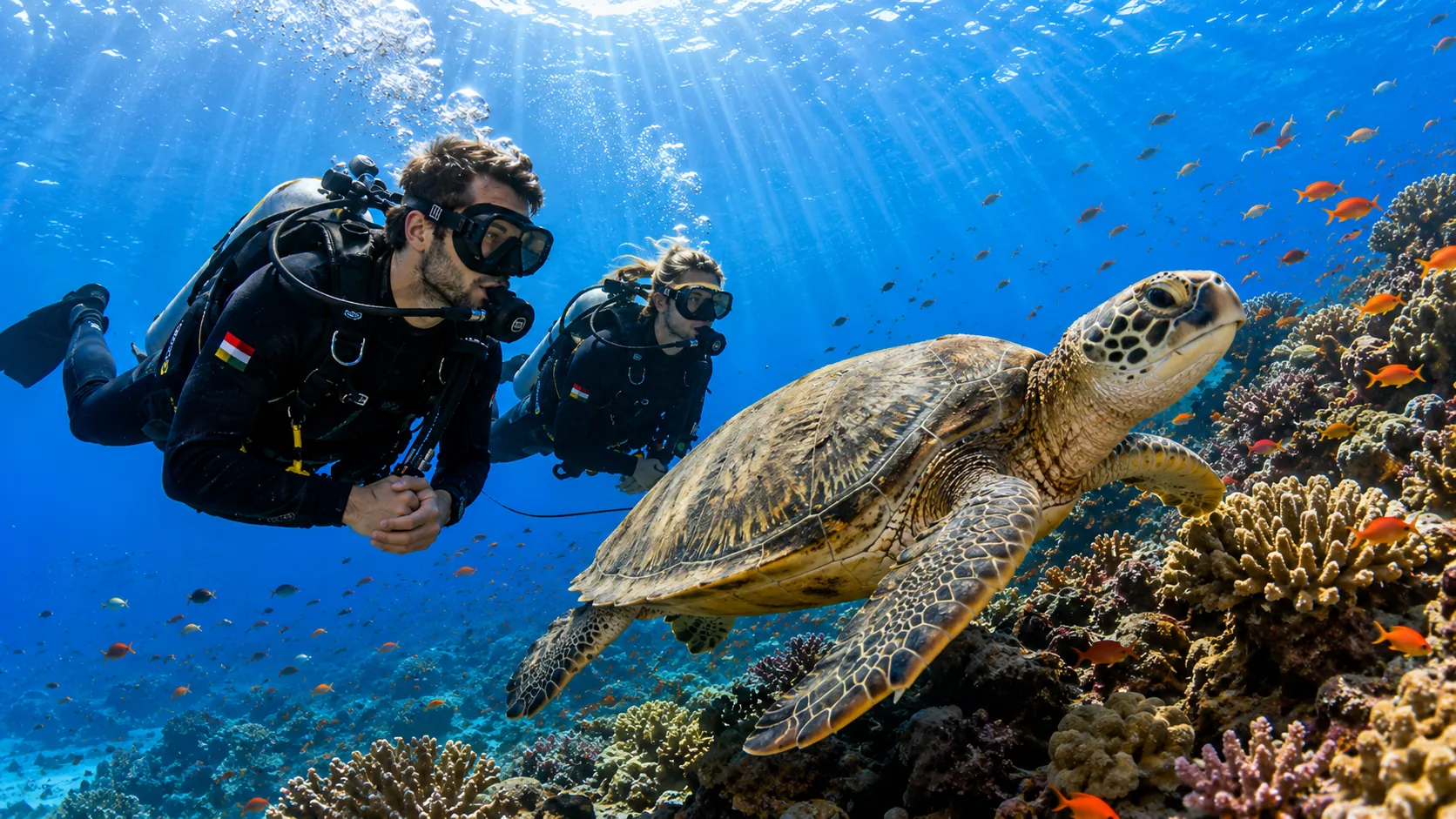
El Fanadir
A long reef ridge barely half an hour from the marina: a gentle wall, blue-spotted rays and seagrass patches with turtles.
- Depth
- 6–25m
- Boat
- 30min
- Species
- 5
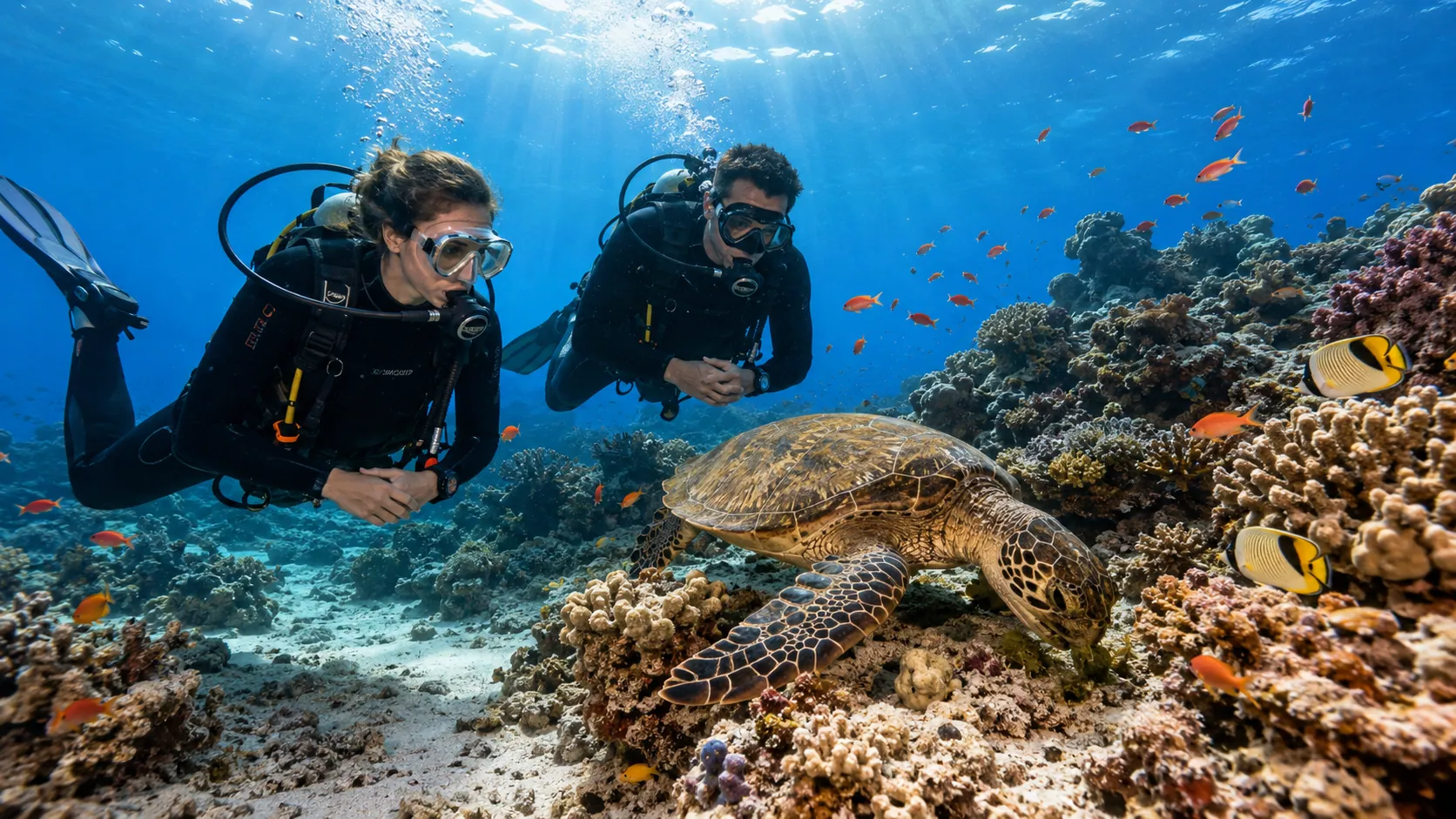
Abu Hashish-fok
A quiet southern cape with seagrass meadows and an atmospheric cavern – turtles almost for sure, a dugong with some luck.
- Depth
- 5–20m
- Boat
- 60min
- Species
- 5
Sha'ab Sabina
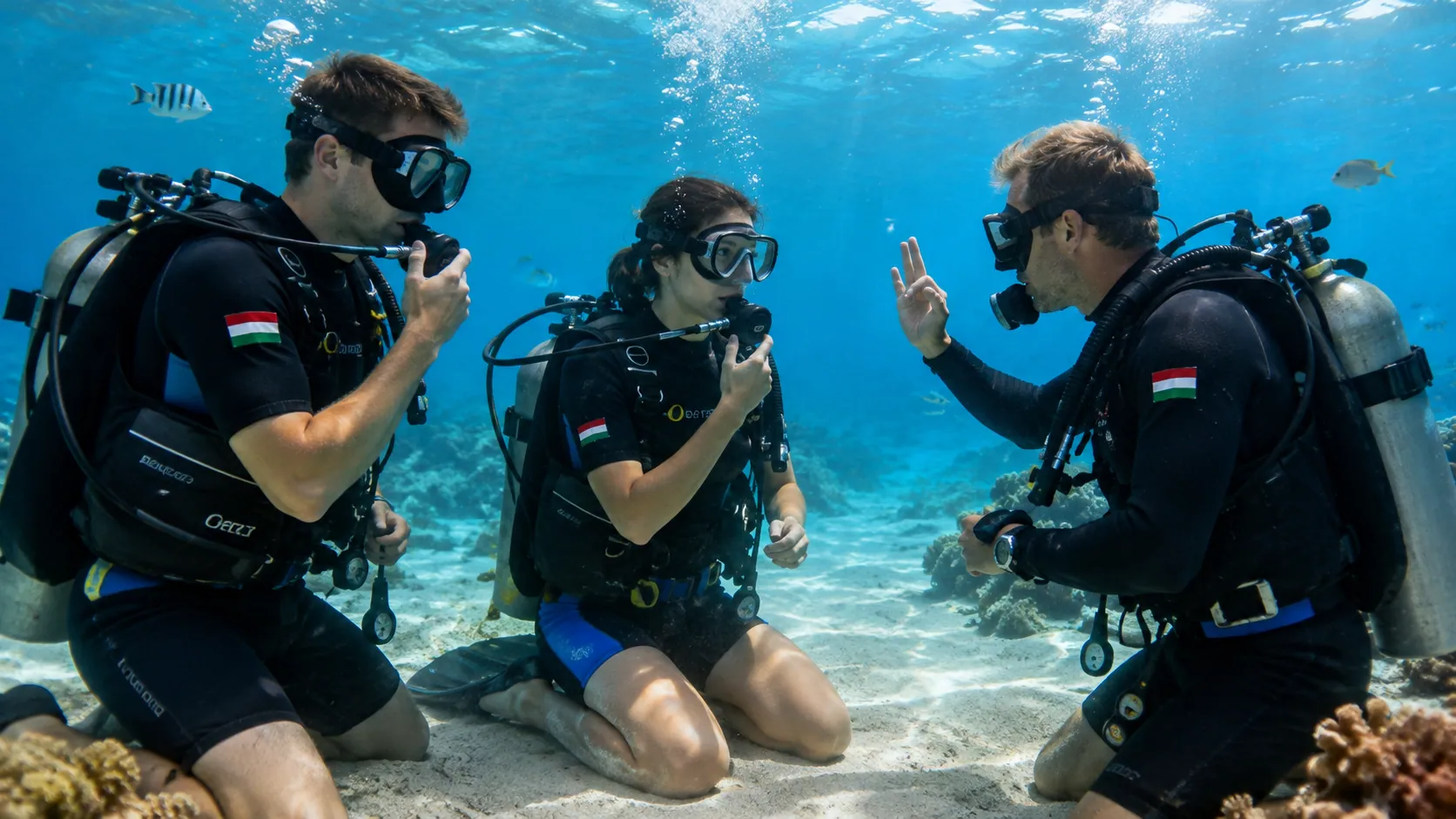
A sheltered shallow reef with a sandy lagoon – this is where most of our try dives and OWD skill sessions happen.
- Depth
- 4–12m
- Boat
- 40min
- Species
- 5
The Red Sea will not wait forever.
Book today – seats on the boat are limited, your excitement is not.