Yellowsaddle goatfish
Parupeneus cyclostomus
The reef's pack hunter: the yellowsaddle goatfish corners small fish in coordinated group drives – just like wolves.
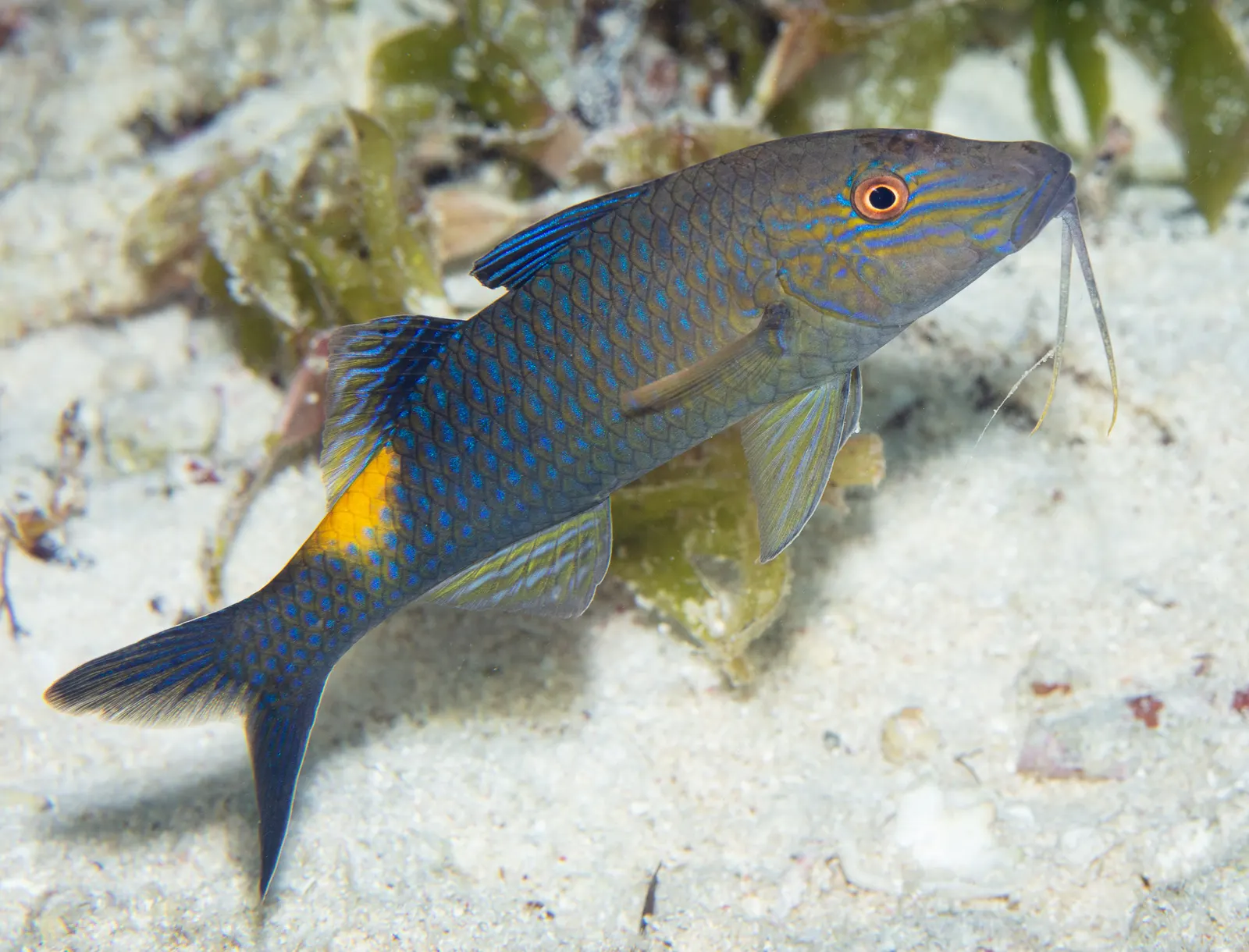
The yellowsaddle goatfish (Parupeneus cyclostomus) is a slender fish of 30–40 cm with two long yellow barbels hanging from its chin – the "goatee" that gave the family its name. Its base colour is bluish grey, netted with fine blue lines, and a distinctive yellow "saddle" sits on the tail base. There is also an all-golden colour morph that glows in the blue water like a swimming gold bar.
Unlike its relatives it does not sift sand: this goatfish hunts fish, and with impressive tactics. It works in small teams with divided roles: some individuals hover above the coral branches to block the escape routes, while the others probe the crevices with their sensitive barbels to flush out hiding small fish. Freeloaders often join these drives – trevallies, groupers, wrasses – ready to snap up whatever bolts out.
It is common around Hurghada, and happily its behaviour is easy to observe: teams darting over the coral gardens, jabbing their barbels into every nook, make one of the most exciting scenes of a dive. You can also meet it while snorkeling on the shallower plateaus, especially in the morning hours when it hunts most actively. The golden morph is scarcer – if you see one, know that it is your lucky day.
Did you know?
The yellowsaddle goatfish is one of very few fish that hunts in true role-divided packs: some individuals act as "blockers" sealing the escape routes while others "drive" the prey out – researchers compare the tactic to that of wolf packs.
Where can you meet it?
A hunter of the coral-garden plateaus: you can regularly watch it in action along the long reef wall of El Fanadir, in the gardens of the Giftun Islands, among the towers of El Aruk and in the bay of Abu Hashish.
Frequently asked questions
Because of the two long barbels hanging from its chin like a goat's beard. Those barbels are actually high-tech sensors packed with taste and touch receptors, used to locate prey hiding in the crevices.
Not at all: it has no venom or spines and completely ignores people. It is only dangerous to small fish – your only "risk" is forgetting to check your air while watching it hunt.
Yes: it also hunts on the shallow coral plateaus, so you have a good chance while snorkeling – especially in the morning when the teams are most active. Look for the yellow-barbeled fish darting over the reef top.
Best sites for Yellowsaddle goatfish
El Fanadir
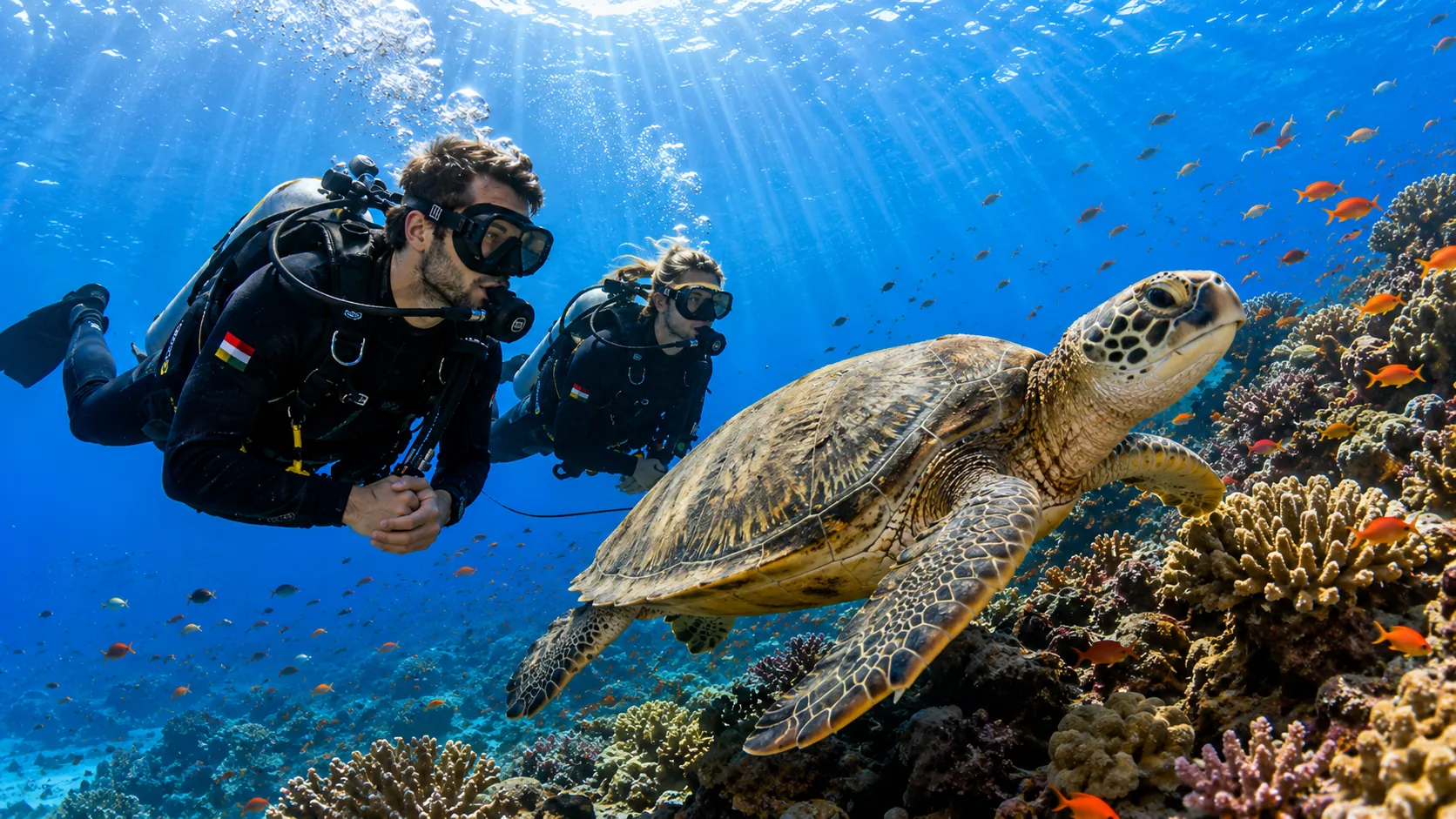
A long reef ridge barely half an hour from the marina: a gentle wall, blue-spotted rays and seagrass patches with turtles.
- Depth
- 6–25m
- Boat
- 30min
- Species
- 5
Giftun-szigetek
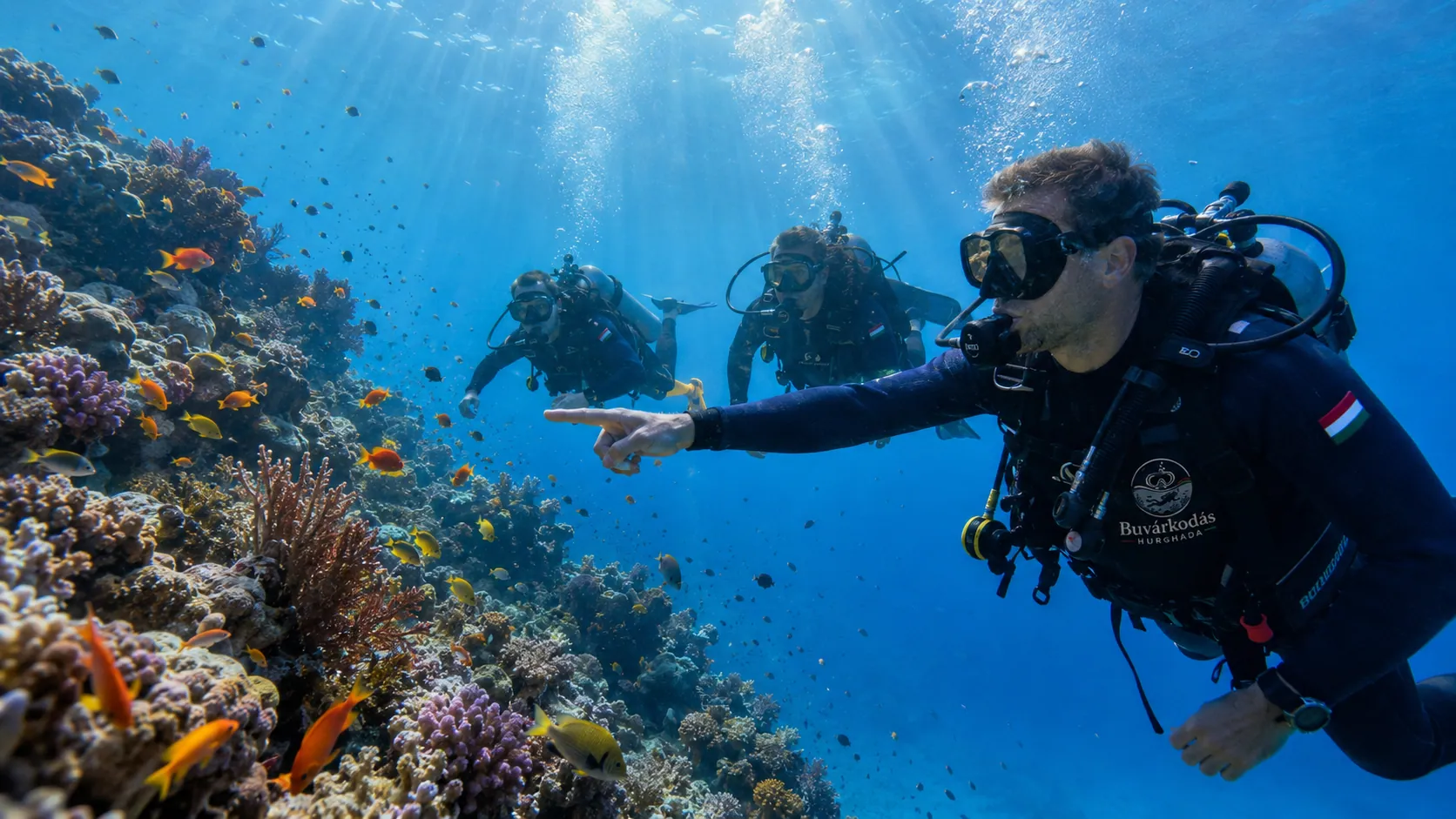
A national park island pair with a dozen dive sites: coral gardens, turtles and perhaps the richest fish life in the area.
- Depth
- 5–25m
- Boat
- 45min
- Species
- 6
El Aruk (Gigi)
A playground of coral towers on white sand: easy navigation, clouds of glassfish and light made for photography.
- Depth
- 5–14m
- Boat
- 35min
- Species
- 5
The Red Sea will not wait forever.
Book today – seats on the boat are limited, your excitement is not.